






If you go on vacation just to exhaust yourself, drag yourself back to home base, and dive straight back into work that wasn't a vacation, that was just an expensive, tiring field trip.
Think about the absurdity of the modern "break"
You work hard all year to buy a few days of freedom, only to spend that freedom rushing through airports, chasing schedules, and running yourself into the ground.
By the time you get back to home base, your energy is at zero and Monday morning is waiting.
Rest isn't just changing your GPS coordinates while keeping the same frantic pace. True recovery requires doing less, not relocating your exhaustion.
What’s the point of going away if you come back weaker?!>!
Sad state of Modern vacation!
1
36
In 1987, Howard Schultz had 60–90 days to buy Starbucks for $3.8 million. Yes the same Starbucks as we know of now
The good news - he had the deal.
The bad news - he had no money.
Two weeks into fundraising, one of his own early investors a Seattle business titan went behind Schultz’s back with an all-cash offer to steal the company.
Heartbroken and outgunned, Schultz walked into Bill Gates Sr.’s office and laid out the whole story. Gates didn't ask for a pitch deck. He asked two straight questions:
"Is everything you told me true?" "Have you left anything out?"
When Schultz said no, Gates walked him straight across the street into the rival investor’s office, stood over his desk, and said:
"You are going to stand down, and Howard Schultz and Starbucks are never going to hear from you again. Are we clear?"
The investor backed down. Bill Gates Sr. and his son helped finance the deal, and Schultz closed Starbucks for $3.8M.
In business, all-cash leverage looks unbeatable until it runs into character, reputation, and one high-integrity ally in your corner.
58

Vinoth Gopalakrishnan retweeted

There would be a massive market opportunity unlocked if there were good local models that could run on a mobile device.
There are vast amounts of data on our phones that is too private and too large to give to a frontier model—especially in today’s cybersecurity environment.
The benefits may not accrue to the model developer but it would be a big win for society.

When a handful of trillion-dollar tech giants pull the entire market upward, almost all index gains get attributed to the top.
The catch?
Gravity works both ways.
Look at yesterday’s market close
Nasdaq: -5.28% (22,617.73) capping a -10.02% week, its largest weekly point drop in history
S&P 500: -3.70% (6,910.39)
Russell 2000: -2.76% (2,581.79)
Dow 30: -1.93% (48,147.33)
Why did the Nasdaq fall nearly 3x harder than the Dow? Compare today with the 2000 dot-com peak
2000 Peak: The top 10 stocks made up 27% of the S&P 500. The largest company (Cisco) peaked at $579B.
Today, The top 10 stocks make up ~40% of the S&P 500 and ~47% of the Nasdaq-100 with individual leaders valued at $3T–$5T (nearly 8x larger than 2000’s biggest giant).
Yesterday, most stocks outside of tech actually finished green.
Yet double digit drops in heavyweights like Nvidia (-14%) and Broadcom (-12.2%) still wiped out trillions and dragged the entire market into correction.
In a market-cap-weighted index, you don't really own 500 companies. You're riding 10 giants and when they stumble, there's nowhere for the index to hide.

1
84
Random story i read and felt good, sharing it along.
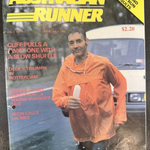
In 1983, a 61-year-old Australian potato farmer showed up to an 875 km (544-mile) ultramarathon wearing overalls and work boots.
World class athletes laughed. Reporters thought he was a lost spectator. Five days later, he shattered the course record by nearly two full days, and gave away every dollar of the prize money.
The inaugural Westfield Sydney to Melbourne Ultramarathon was one of the most grueling races on earth: 875 km of relentless highway running between Australia's two largest cities. When Cliff Young stepped up to the starting line in farming gear, journalists rushed over to ask if he was serious.
Cliff calmly explained his training: "I grew up on a 2,000-acre farm with 2,000 sheep. We couldn't afford horses. Whenever storms rolled in, I'd have to round them up on foot. Sometimes it took two or three days straight. This race is just two more days."
The gun went off, and the elite runners immediately left him in the dust.
Every pro in the field followed strict sports science, run for 18 hours, sleep for 6.
Cliff didn't read that playbook. While the world's best ultrarunners went to sleep each night, the 61-year-old farmer just kept moving through the dark using an awkward, low-impact, energy-saving gait now taught by distance coaches worldwide as the "Cliff Young Shuffle."
Night after night, while the leaders rested, Cliff quietly erased their lead.
By the final stretch, he had passed every single professional athlete in the race. Cliff crossed the finish line in 5 days, 15 hours, and 4 minutes, almost 10 full hours ahead of second place.
Then came the moment that made him a legend.
Organizers handed Cliff a $10,000 winner's check, a prize he didn't even know existed when he entered.
Without hesitating, Cliff said the five other finishers had worked just as hard as he did, and split the entire $10,000 equally among them, keeping $0 for himself. That's legend move!
No sponsors. No elite gear. No textbook form.
Just decades of quiet, unglamorous work, a pace he could sustain when everyone else stopped, and zero ego at the finish line. You don't always win by being the fastest.
Sometimes you win by refusing to stop.
Cliff Young passed away on November 2, 2003, at the age of 81 in Queensland, Australia, following a battle with cancer.
Between his 1983 triumph and his death twenty years later, he never stopped running or living simply .
National Honors & Fame: Overnight, the humble potato farmer became an Australian folk hero. In 1984, he was awarded the Medal of the Order of Australia (OAM) for his contributions to long-distance running.
Relentless Racing Career: Young didn't treat 1983 as a one-off stunt he logged more than 20,000 kilometers in competitive races over his career. In 1984, he returned to the Sydney-to-Melbourne Ultramarathon and finished 7th, running through the pain of a displaced hip.
Running Into His Late 70s: In 1997, at age 75, he attempted to run around the entire perimeter of Australia to raise money for homeless children, only stopping after his support crew member fell ill. In 2000, at age 78 after already being diagnosed with cancer he set a world age-group record at a six-day ultramarathon in Victoria.
Life Off the Road, Following his newfound fame, Young briefly married a 23-year-old woman named Mary Howell, though the marriage ended in divorce five years later. True to his character, he consistently gave away his race winnings to fellow runners or charities and spent his final years volunteering for wildlife groups like Waterbird Rescue.
His legacy remains cemented in endurance sports: the low-impact, energy-saving "Young Shuffle" is still taught to ultramarathoners worldwide, his life was adapted into the 2013 Australian biographical film Cliffy, and a memorial featuring a giant rubber gumboot stands in his hometown of Beech Forest, Victoria

2
117


It’s like comparing apples 🍎 with Lemons 🍋
No pun intended.

Anthropic, an AI company known for Claude, listed at a valuation of $ 1.5 trillion. It did not exist till ~ 5 years ago. This is more than the combined market cap of the top 10 Indian companies. Are we undervalued, or do we need to catch up in the new world? Or both?
50
Finest cataract surgeon 🧑⚕️

Mutualism at its finest: a small bird carefully extracts a parasitic larva from beneath a wild cat’s eyelid, showing extraordinary trust and precision in the wild.
Readers added context they thought people might want to know
This video does not depict real wildlife; no small birds extract parasitic larvae from wild cats' eyelids in mutualism. Oxpeckers remove skin parasites like ticks from large African herbivores, not felid eyes, and similar clips are AI-generated or fabricated.
en.wikipedia.org/wiki/Oxpecker
tsavotrust.org/oxpeckers-rhin…
x.com/ponydoc/status…
youtube.com/shorts/bFspoOb…
94
Ramp up 🔝

eleven years ago Karim and I were in YC S15 with an app that read your inbox, found receipts, and emailed stores asking for your money back when prices dropped. we’d applied twice. Garry was one of the people who bet on us.
Paribus could see waste. we were reading hundreds of millions of emails a day and knew exactly where people overpaid. but all we could do about it was write a polite note to customer service and hope. Ramp started from the opposite question: what if you were close enough to the money movement to actually stop it?
I didn’t expect to relearn that lesson inside our own company a decade later.
early this year, AI was breaking Ramp. a handful of people got 100x more productive and whole functions fell behind them. the teams using the least AI asked for the most headcount. it got bad enough that, while we were growing revenue 100%+, we stopped hiring for a quarter.
the problem wasn’t the models. it was the same problem Paribus had. most people could see what AI could do and couldn’t let it act. we’d tell someone in sales to use Claude Code, and the first question was “what’s terminal?” then: can it see our data? our Slack? our customers? no, no, and no.
so we connected it to everything. in Q2, 7,000 pull requests at Ramp came from non-engineers, mostly our CX team. two years ago that number was zero. a customer emails about a bug, the fix ships, and the customer gets a reply the same afternoon.
I think most of the economy is stuck in that same spot. business spend on AI tokens grew more than 5x from December to August. since then it’s gone a bit sideways, even as the models keep getting better and cheaper. model progress didn’t stall. organizations did. most companies are Paribus with AI. they can see everything and act on almost nothing.
that’s the best news I can give anyone starting a company today. the advantage isn’t access to intelligence anymore. it’s being willing to let it do the work.
thank you @garrytan, for this and for betting on two guys with a refund bot a decade ago.
2
38
Innovation needs risk capital and appetite.
I think Indian got talent(need to prune) but not the “risk” capital.

Bad example. Every disruption creates new cos with huge valuation. It is the nature of markets. Comparing is silly. The question to ask is - what should @udaykotak do in India to create conditions for an Anthropic to study? Why is He not investing hugely in innovation and Deep tech to grow this sector fast? Why is innovation starved of adequate capital in India? India’s eminent banker should answer this and lead the way. @CNBCTV18Live @ShereenBhan
29
100%.
Capital won’t come before traction, traction won’t come before capital it’s “death valley” in between.
Crossing the dead valley is founders ability and the timing.

You work your ass off solving really hard problems day after day for decades, and this is what you get: anyone could have done it.
As an investor, I can tell you the limiting factor isn't investment. It's founder ability.

1
35
Failure is first step towards success, keep at it.

Based on data received by our Launch Director, we confirm that the Vulcan vehicle launched from Space Launch Complex 41 suffered an anomaly 10 minutes into the flight and failed to deliver the Amazon mission to orbit.
Every flight generates data, and every flight teaches us something. Since the anomaly just occurred, we don’t have any specific data yet to understand what occurred today.
ULA exists to provide assured access to space for our nation and for the customers who depend on us. That purpose is why we take on some of the hardest missions in spaceflight, and why we hold ourselves to the standard of mission success. Today, we did not meet that standard.
We will work closely with our customer and other appropriate organizations to find the cause, determine the appropriate corrective action, and return to flight as quickly as possible.
ULA is committed to full transparency with our customers, and they will have visibility into the investigation process, which utilizes rigorous methodology and corrective action.
We will provide further updates when new information becomes available.
27


150 KM of pure Indian road reality:
Coimbatore → Pollachi → Erode
(With suggestions for NHAI & authorities)
Clocking roughly 40–45 km from Coimbatore to Pollachi (about an hour) and another 120–130 km from Pollachi to Erode (2–2.5 hours) puts the full trip in the 160–170 km range. The route mixes the Pollachi Road /NH-209–SH-78 stretch with connections toward Tiruppur or other corridors into Erode. Here’s the unfiltered breakdown, plus concrete ideas for improvement.
The Journey/ Start early from Coimbatore to beat the exit traffic. The first leg is generally smooth and scenic coconut groves, agricultural land, and well-maintained stretches with no major tolls on the primary route. You pass through places like Kinathukadavu. Pollachi feels like a gateway to the Western Ghats foothills, with greener, more open landscapes.
From Pollachi onward toward Erode (via Tiruppur/Palladam or alternatives), the character shifts. Expect more mixed traffic, some tolls (around ₹200–250 on faster routes), and stretches that range from decent four-lane highways to areas with trucks, local traffic, and occasional construction. Total driving time often stretches to 3.5–4.5+ hours depending on the hour, weather, and slowdowns. Direct Coimbatore–Erode is shorter (~100 km via NH), so this via-Pollachi path is the scenic or purposeful detour.
Pros
1. Improving highways in stretches: Many sections are decently maintained, with fuel stations, and connectivity between Coimbatore’s industrial belt and Erode works well.
2. Local flavor and flexibility: Easy stops for filter coffee, roadside eats, or a quick break in Pollachi.
3. Practical for short trips: Manageable distance with train or bus backups.
Cons
4. Traffic is the main character: Mix of trucks, buses, autos, two-wheelers, and cars. City exits around Coimbatore (especially junctions like the L&T Bypass–Pollachi Road at Eachanari) can crawl due to long signal waits and peak-hour volumes. Aggressive driving and sudden overtakes are constant.
5. Variable road quality and safety: Good stretches alternate with potholes, diversions, or construction. Tamil Nadu ranks high nationally for NH accidents, driven largely by overspeeding and mixed traffic. Nearby ghat roads face monsoon disruptions.
6. Fatigue and pollution: Constant honking, heavy vehicles, and urban exits wear you down.
Suggestions to NHAI and Government Authorities
Progress is visible , road renewals on Coimbatore to Pollachi stretches, NH takeovers in the district, the Kamalapuram–Pollachi corridor upgrades, and planned safety works elsewhere in TN show intent. But this corridor still needs targeted, faster action:
- Fix critical junctions first Prioritize grade separators, underpasses, or smart adaptive signals at high-delay points like the Eachanari / L&T Bypass–Pollachi Road intersection.
- Accelerate and better manage ongoing projects Complete ring road phases, Pollachi Road renewals, and NH handovers on schedule. Mandate proper temporary service roads and clear diversions during construction.
- Black-spot rectification and safe-system design Fast-track long-term fixes at accident-prone spots. Add crash barriers, better median control, lighting, and pedestrian/two-wheeler facilities. Pair with more highway patrols, speed cameras, and trauma care access.
- Separate heavy and local traffic Expand service roads, bus bays, and better heavy-vehicle management. Improve coordination between NHAI and State Highways.
- Technology and monsoon readiness Deploy ATMS for real-time monitoring. Strengthen slopes and drainage on vulnerable Ghat-adjacent sections.
Tagging for attention:
@NHAI_Official @nitin_gadkari @MORTHIndia @AadhavArjuna
Please look into the Coimbatore–Pollachi–Erode corridor for quicker junction improvements, project completion, and safety upgrades. Better roads benefit everyone.
Safe travels and better infrastructure ahead!
1
169