

Hedge Fund Insights | Public Equity Career Advisor
Jobs, newsletter 👉
Joined January 2022
- Tweets20.2K
- Following654
- Followers14.9K
- Likes30.6K
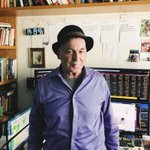







His scout judged Thailand's economy by long cigarette butts and freshly renovated brothels. Then he lost hundreds of millions on it.

ALT Victor Niederhoffer
In 1998, after mortgaging his house and selling his antique silver, he traded again via the Wimbledon Fund. In 2002, he launched the offshore Matador Fund. From 2001, it compounded 50% a year for five years, then closed in September 2007 in the subprime crisis, down over 75%.
Niederhoffer died of natural causes on August 4, 2026, at 82.
For those aiming for the buy-side, I shared everything I know in my free 160-page buy-side career guide: newsletter.richardtoad.com/
Robert Pohly’s Samlyn Capital is letting go of all senior analysts covering industries other than financials. The firm will trade only Global Financials going forward.
Samlyn is a “Tiger seed” hedge fund, one of the funds Julian Robertson backed financially and/or provided office space to after he shut down Tiger Management.
Pohly founded Samlyn after working at Sigma Capital, a subsidiary of Steve Cohen’s SAC Capital. Before joining Sigma, he worked at Julian Robertson’s Tiger Management, covering Financials.
Hema Parmar @parmarhema of Bloomberg has the scoop in the comment.


Most hedge fund founders began career in IB/PE/equity research. Julian Robertson made his early money in sales, which taught him something bankers never learn.
To prove his conviction, Robertson ran his own money while still a broker. Word got around. Colleagues started asking him to manage their money, and he developed a reputation for making money in any kind of market. People didn't care where his ideas came from - they trusted his instinct and his conviction.
That reputation eventually built him a legendary rolodex.
Learn the story of Julian Robertson and the rise and fall of Tiger Management: richard-toad.ghost.io/tiger-…

A commonly missed point about why cutting losses quickly is crucial for survival in the investing business
“The brutal arithmetic: a 50% loss demands a 100% gain to recover, a 90% loss demands 900%. Permanent capital impairment (destroying money so thoroughly it cannot realistically be earned back) is what actually ruins wealth.”
— Lee Freeman-Shor, The Art of Execution: How the World's Best Investors Get it Wrong and Still Make Millions
For those aiming for the buy-side, I shared everything I know in my free 160-page buy-side career guide: newsletter.richardtoad.com/
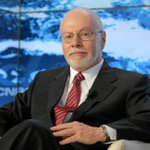
This billionaire has no M.D. or Ph.D., but he made 30% annualized for 20 years trading pre-commercialization biotech stocks.

ALT Joseph Edelman
His finance career began in biotech equity research, first at Labe, Simpson & Co., then at Prudential Securities. He later joined the buy side as a senior analyst at the Aries Fund, a biotech hedge fund affiliated with Paramount Capital.
In February 1999, Edelman managed a $6 million biotech-focused book at First New York Securities. That same year, he launched Perceptive Advisors with a strategy rooted in exploiting the disconnect between market perception and scientific reality. His approach emphasized deep, data-driven diligence and a contrarian mindset, often betting on misunderstood or undervalued therapeutic innovations.
Under Edelman’s leadership, Perceptive has grown into a multi-billion-dollar firm staffed with MDs and PhDs, while Edelman himself remains a psychology-trained outsider—a vantage point that became central to the firm's distinct edge in biotech investing.
🚀 Unlock my free interactive directory of world-class investors: richard-toad.ghost.io/invest…
