

robotics, RL, world models, consciousness
Berlin
Joined October 2015
- Tweets187
- Following171
- Followers100
- Likes733





Pinned Tweet
i trained a 14M-parameter world model on 2D Minecraft in under 10 minutes for $0.1 and turned it into an autoresearch benchmark.
no game engine. the network draws every pixel. play it locally on your phone.
maharishiva.github.io/tinywm…
fred retweeted

I got 37% on ARC-AGI-2 Kaggle without LLMs!
100M looped transformer trained from scratch
- Likely highest score without an LLM
- Peaked at 6th place
- Beats last year's winning LLM
- Looping, added in the last week: 33% → 35% → 37%
thanks to @arcprize @fchollet @mikeknoop and @GregKamradt for the competition!
Link: mvakde.github.io/blog/looped…
(writeup for the paper track)


cool thing! back in the old days (1.5 years ago lol) it took ~5h of teleop data collected by me, fine-tuning a small VLA + a separate gemini call to solve and plan the next move! sad to see that we still have to use tape to hold a pen 😆

I gave Opus 5.5 a robotic arm and asked it to play tic tac toe with me! 🧩✍️
I’ve seen lots of LLMs painting with SO-101s, but I thought it would be interesting to try a task using a stiffer pen, which requires a bit more precision. Claude admittedly struggled with this a lot, even attempting to redraw once when the X came out very messy.
I want to try this again with a Sharpie or dark highlighter / other felt-tip pen. For those doing painting tasks — did you do any manual setup to teach the LLM the table height (with the writing utensil attached), or did you use servo feedback, even with soft objects like paintbrushes?

3
226

fred retweeted

Most think vibecoding at scale is slop. Here’s a counterexample.
Today we release a 16M-line formalization of the entire Stacks Project, critical infra underlying modern math, with optimized code quality and its highly interconnected structure preserved.
A mathematical city 🌆
LLMs write weights now. fine.
can you? by hand.
drop your weights below 👇


We asked GPT-6 Astra to edit Qwen3.5-0.8B weights to improve math.
It directly changed only 0.016% of weights, fixing 0.8B's reasoning loops & improving math up to 6x and even instruction following 3x, without gradients or training.
We call this Weight-Space Programming: frontier LLMs can now natively read/write neural network weights! 🧵
Blog: rikiyat.github.io/blog/weigh…

Readers added context they thought people might want to know
LLM was given weights explicitly as text in prompt and used code/forward passes (per authors' logs) to ablate Qwen looping direction, a known thinking-mode issue per model card. Primarily fixed repetition in that mode, not general 'natively' improving weights/math.
rikiyat.github.io/blog/weight-sp…
github.com/RikiyaT/lm_und…
huggingface.co/Qwen/Qwen3.5-0…
huggingface.co/RikiyaT/Qwen3.…
1
192

making it run on the iphone was fun!
my tinywm crashed 3 moves in, so i threw out onnxruntime-web and wrote my own webgpu runtime in 111 lines of js.
in safari:
· 113 ms -> 38 ms a move
· 1.85 gb -> 166 mb page memory
if you ever want to run your ML demo locally on an iphone, watch this

i trained a 14M-parameter world model on 2D Minecraft in under 10 minutes for $0.1 and turned it into an autoresearch benchmark.
no game engine. the network draws every pixel. play it locally on your phone.
maharishiva.github.io/tinywm…
10
517
my entire feed is now weight-space programming takes (mostly bad ones).
next up: people trying it and getting meh results?
mine already failed: neither astra nor opus 5.5 could fix memory in tinywmcraft :(
still work left for the gradient descent

1
6
286
built on Craftax by @mitrma. ideas from Dreamer 4 (@danijarh), diffusion forcing (@BoyuanChen0), shortcut models (@kvfrans) and DIAMOND. format from @karpathy's autoresearch, and @kellerjordan0's speedrun and Muon.
7
114
beat 0.562 and the site switches to your model, with your name and a crown
a full submission is about $0.5 on Colab.
code, data, checkpoints: github.com/Maharishiva/tinyw…

1
4
110
runs locally powered by WebGPU.
play it in your browser:
maharishiva.github.io/tinywm…

1
5
114
the open problem is memory.
walk 8 tiles away from your table and back, and about 2 times in 3 it's gone. an agent trained in a world that forgets learns to exploit it.
1
2
122
what moved the score:
0.287: the whole model in 178 lines, no custom kernels
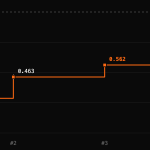
0.463: a tile transformer tokenizer that also learns from half-masked and noised frames, fused Pallas kernels, training on the hardest windows and on game starts, a symlog two-hot reward head
0.562: a shortcut loss, the heads' gradient into the trunk cut late in training, no hard-window mining, fewer game-start windows (1 in 8)

1
3
138
the benchmark:
score = 0.4 video quality (gFVD) + 0.2 game logic + 0.2 memory + 0.1 reward + 0.1 episode end.
train under 600 s on one A100 40GB, 3 seeds, a private test set.
my agents ran 698 training runs in 8 days.

1
6
148
the math:
an autoencoder bottleneck that reconstructs clean, masked and noised frames.
a world model trained by flow matching, each frame at its own noise level (diffusion forcing).
reward as two-hot over 255 symlog bins.

1
5
168
the data: 500k frames from four RL agents i trained first. the main one plays from pixels and gets a diamond in 75% of episodes.
but good agents have habits and a world model learns habits as rules.
so the collector breaks them: bursts of random actions, swapped craft order, walks into lava, round trips to teach memory.
1
10
225
how it works:
- an encoder turns each 63x63 frame into 16 tokens
- a 6-block transformer reads the last 32 frames and your action, and denoises the next frame's tokens in 8 steps
- a decoder draws the frame
the simplest version is just 178 lines for the whole thing.
1
9
350

