

Voice Actor (best known as Mojo Jojo & Ghostface Killer), Artist, Puppeteer, Writer, Director. Feed your soul.
Past Time and Timbuktu
Joined October 2013
- Tweets10.6K
- Following673
- Followers6.8K
- Likes9.1K


Roger L. Jackson retweeted

This is the moment for us to flex our people power. Voting is one of the most powerful tools available—we must never give up on elections.
My new op-comic, with artwork from Ivan Ehlers, is in the LA Times today. I hope one of these resonates with you. /1


Roger L. Jackson retweeted

The comedy-drama film Limelight opened on this day, October 23, 1952 at the Astor Theatre and at the Trans-Lux 60th Street Theatre in New York City.
Video | The two silent-era legends Charlie Chaplin and Buster Keaton perform a chaotic musical act filled with physical comedy, sheet-music struggles, wardrobe malfunctions, and Chaplin tumbling off the stage into a large bass drum.
Roger L. Jackson retweeted
Strongmen know that having people imagine violence and having violence be part of everyday life is crucial to getting people to accept violence. That is exactly what we see when Hegseth called for “lethality.”
More about this on my Substack, Lucid.Substack.com.


Roger L. Jackson retweeted
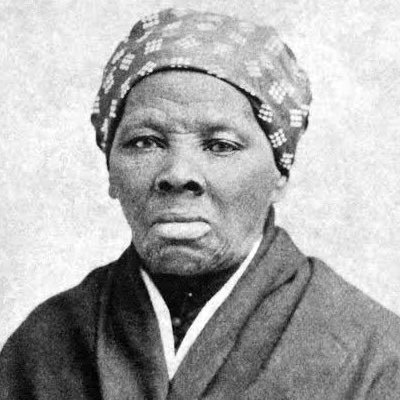
Abdulrahman Ibrahim Ibn Sori was an African prince spent 40 years enslaved in America.
Born in the late 18th century in what is now Guinea, Abdulrahman was the son of a powerful ruler of the Futa Jallon region. He was educated, multilingual, and trained in leadership. While traveling during a military conflict, he was captured, sold into the transatlantic slave trade, and eventually taken to the United States.
Abdulrahman spent more than 40 years enslaved in Mississippi, working on plantations despite his royal background. For decades, he tried to explain who he was, but few believed that an enslaved Black man could be a prince.
Everything changed when a visitor recognized him and helped carry his story beyond the plantation. His case eventually reached international attention and involved diplomatic efforts that extended as far as Morocco. Through negotiations and pressure from foreign officials, Abdulrahman was finally granted his freedom in 1828.
After gaining his freedom, he traveled across the United States raising money in an attempt to free his wife and children, who were still enslaved. Although he never succeeded in freeing all of them, his story became one of the earliest documented cases of international diplomacy being used to challenge American slavery.
Abdulrahman Ibrahim Ibn Sori’s life reminds us that slavery did not erase identity, lineage, or dignity—even when it tried to.

Roger L. Jackson retweeted

Enjoying my sneak of @thescrewballgrl's upcoming #VirginiaGrey bio 🤩 Shown here rehearsing with #GeorgeCukor & new friend #JoanCrawford for the perfume counter scene in #TheWomen. IRL the independent Grey definitely had opinions about her rather controlling new pal. 😉 #TCMParty


Roger L. Jackson retweeted
In 1969, when Black Americans were prevented from swimming alongside whites, Mr. Rogers decided to invite officer Clemmons to join him and cool his feet in a pool, breaking a well known color barrier.
On an episode of Mister Rogers’ Neighborhood, he invited François Clemmons, who played Officer Clemmons, to sit beside him and cool their feet together in a small pool. No speeches. No shouting. No confrontation. Just two men, side by side, sharing water.
At a moment when shared pools symbolized exclusion, this simple act became a powerful rebuke to racism. Mr. Rogers didn’t preach at children—he showed them. He modeled equality, dignity, and friendship in a way that even the youngest viewers could understand. And when he gently dried Officer Clemmons’ feet afterward, he reinforced something even deeper: care, respect, and shared humanity.
This wasn’t accidental. It was intentional. It was courageous. And it was revolutionary in its softness.
Change doesn’t always arrive loudly. Sometimes it comes quietly, through kindness, through example, through the decision to treat another person as fully human when the world says otherwise.
This moment reminds us that representation matters. That teaching children love is one of the most powerful tools we have. And that small actions—done sincerely—can ripple across generations.


Roger L. Jackson retweeted
Queen Nzinga was one of the most formidable rulers in 17th-century Africa.
Queen of the Ndongo and Matamba kingdoms (in present-day Angola), Nzinga Mbande became one of the strongest opponents of Portuguese expansion into Central Africa.
In 1622, she first appeared on the political stage when her brother, the Ngola (king) of Ndongo, sent her to negotiate with the Portuguese governor in Luanda. Determined to establish equality in diplomacy, Nzinga famously refused to sit on the floor before the Portuguese representative. Instead, she had one of her attendants kneel so she could sit at eye level with the governor — a symbolic statement that she represented a sovereign state.
She converted to Christianity during negotiations and took the name Dona Ana de Sousa, using diplomacy as strategically as she used warfare.
When her brother died in 1626, Nzinga became ruler. She reorganized her kingdom, formed alliances with neighboring states, and later aligned with the Dutch when they challenged Portuguese power in the region. In 1647, with Dutch support, she helped defeat a Portuguese army. Even after the Dutch withdrew, she continued resisting Portuguese expansion for decades.
Well into her sixties, Nzinga personally led troops in battle and organized long-term resistance strategies that shaped the region’s political future.
She ruled for nearly 40 years and died peacefully in 1663, having preserved significant autonomy for her kingdom during one of the most turbulent periods in Central African history.
Queen Nzinga remains one of Africa’s most studied and respected monarchs — remembered for her diplomacy, military leadership, and political intelligence.

Roger L. Jackson retweeted
From #TheBestYearsofOurLives' shooting script when Homer (#HaroldRussell) raises his arm to wave to Fred (#DanaAndrews) & Al (#FredricMarch) as their taxi pulls away. Direction for Mrs. Parrish (#MinnaGombell): "...she is forced into a great sobbing release of tears." #TCMParty

Roger L. Jackson retweeted

Very valuable and very sober analysis
"The plot against Ukraine (and Europe): We are now part of the axis of evil."
By David R. Lurie
publicnotice.co/p/trump-puti…

Roger L. Jackson retweeted

Here’s a new 16mm scan of a ‘Screen Song’ cartoon
Ain't She Sweet | 1933 | Screen Songs | Fleischer Studios Cartoon
youtu.be/4DFOagx5Ef0

Roger L. Jackson retweeted
In 1943, the same year #TeresaWright won a Best Supporting Oscar for MRS. MINIVER, she was also nominated in the Lead Actress category for #PrideoftheYankees (losing to MINIVER co-star #GreerGarson). PRIDE is on #TCM this morning! #TCMParty #LouGehrig #BabeRuth

Roger L. Jackson retweeted

Why do you think armed Federal agents are seizing voting ballots from this and other local election facilities across the Country?
Roger L. Jackson retweeted
These courageous testimonies are very much worth knowing about, and also worth keeping in mind (as the author pointed out to me) as we consider what it means to take Russia’s side.
"Rape as a weapon of war: The voices of Ukrainians"
by @Sara_Cincurova
snyder.substack.com/p/rape-a…
Roger L. Jackson retweeted
When Mussolini or Gaddafi would have rallies, their secret police were scouting for women. From Mussolini to present day, there has been toxic blend of wealth, power, and influence that gives rise to systems of sexual predation.
Roger L. Jackson retweeted
When people hear the Black Panther Party, most think only of armed patrols and confrontations with police. That image is incomplete.
What’s often left out is the work they did at the community level. The Panthers created survival programs to address basic needs that government institutions ignored in Black neighborhoods.
They operated free medical clinics that provided testing and treatment when hospitals were inaccessible or discriminatory.
They ran the Free Breakfast Program, feeding tens of thousands of children before school so hunger wouldn’t interfere with learning.
They organized free grocery programs for the elderly, many of whom were living on limited incomes.
They established free schools, where children were taught academic skills alongside Black history and political education.
These programs were structured, disciplined, and effective. They weren’t symbolic gestures. They filled real gaps in housing, healthcare, nutrition, and education.
Reducing the Black Panther Party to a single narrative ignores the reality of what they built and why they existed.

Roger L. Jackson retweeted
An attendee named Tommy at an Abdul El-Sayed Michigan Town Hall meeting asked him if he would disavow his Muslim brotherhood and his response was Epic and genuine.
Roger L. Jackson retweeted

This strikes me as a peaceful way to push back against an administration that you disagree with: the Citizen Historians are photographing and documenting all of the current Smithsonian exhibitions, in case political pressure removes some of them and wipes the historical record of their existence.
I've been fairly critical on this page of people without historical training who call themselves historians. (David Barton, I'm looking at you.) But the Citizen Historians are volunteers who are simply creating a record that can survive the possibility of future purges.
What do you think of this effort?
From Brian Boucher's piece on Artnet.com:
**
When Donald Trump published an August 12 letter addressed to the secretary of the Smithsonian Institution, informing him of “a comprehensive internal review” of the shows and explanatory materials at the network of national museums, something snapped for historian James Millward. It was just a month after the president, on the pretext of a “public safety emergency” (and despite a historic low crime rate), had deployed the National Guard to the streets of Washington. D.C., where Millward is a history professor at Georgetown University. Many who opposed the president were desperate for something they could do to demonstrate their resistance, Millward said in a phone conversation...
Thus was born the idea for Citizen Historians for the Smithsonian, which has recruited hundreds of volunteers to document every gallery, every object, and every wall label at the Smithsonian Institution’s museums as a safeguard against politically motivated erasure or censorship.
That’s not an idle worry. Trump has singled out Smithsonian museums for criticism, posting in August on his Truth Social platform that he was ordering a review of museums’ displays, partly because, in his view, they have focused too much on “how bad Slavery was.” That same month, the National Museum of American History removed a placard describing Trump’s two impeachments, before reinstating it following an outcry. Earlier still, Amy Sherald pulled her solo show, “American Sublime,” from its stop at the National Portrait Gallery, citing censorship concerns...
“There’s a common approach of authoritarian governments to history,” he said. “I’m aware of efforts to shape the narrative—because culture wars are also narrative wars—in the media and social media. But institutions are also very much used by authoritarian powers to try to influence the world. One pushes back as one can...”
Millward teamed up with his colleague Chandra Manning, who teaches U.S. history and is director of the Georgetown Institute for Global History...Manning alerted him to Save Our Signs, a volunteer initiative by the Data Rescue Project that called on volunteers to preserve didactics at the country’s National Parks after the Secretary of the Interior called for Americans to report signs that “inappropriately disparage Americans past or living.”
...“The changes that scare me are changes of erasure, of editing out, of exclusion,” [Manning] said, or attempts “to substitute a narrative of uniformity and homage, and create a past that never existed and use that as a template for the present. If you can edit people and conflict and groups out of the past, that justifies editing them out of the present. If you can do that for one group, you can do it for anybody. Right now, it’s risky for everyone that doesn’t align with the president’s priorities, but it’s really risky for everyone.”
**
Read more at these links:
news.artnet.com/art-world/ci…
citizenhistorians.org/
thehoya.com/news/city-news/c…