
Eventually opinionated. Opinions are my own, but I change them very often.
Barcelona, España
Joined March 2008
- Tweets3.8K
- Following1.3K
- Followers893
- Likes2.7K





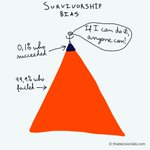




I have a skill /you-have-no-users specifically for this.

One thing the engineering community will (re)discover is that every program can be ① hardened (edge cases squashed, inputs tightened, errors handled) and ② optimized (profiled, benchmarked, rewritten) basically ad infinitum.
There are real costs in every direction: time, attention, opportunity. You can literally explore input spaces that will never be hit or optimize performance of something that will never be used ("you have no users".) Even in an infinite token world, you need to know when to stop and what tradeoffs to accept. Agents will happily drill no matter what.
I used to put this as the first requirement in job offers when I was a CTO/Tech Lead:
"You have an intrinsic bias towards simplicity and a constant willingness to simplify complex systems."
No idea where I originally got the phrase from, probably stole it somewhere, but I’ve had it burned into my brain ever since.
With how fast the models are improving, this feels more important than ever.

Ronny López retweeted
Just so we are all on the same page:
* The Rust version has hundreds of commits, with multiple optimizations rounds, over several days. The others have 1 or 2 commits from an initial agentic rewrite
* Based on the available documentation, different things were asked from each attempt. The agents.md from Go mentions the Rust version was the canonical example. The Elixir one mentions it was the Rails one
* While we don’t have the full prompts, it seems they were vague, allowing the agents to make non-language architectural decisions that impact results (such as how closely it should replicate Rails’ drawbacks)
It is actually amazing how quickly we can have full-blown rewrites up and running. But if we want to take conclusions from the data presented, it is important to understand the process behind it.

The agents finished porting Campfire to Laravel and Django too. I'm sure there are optimizations that could be found there too, but the whole point is to get a sense of how frontier agents do with different environments out the box. github.com/basecamp/once-cam…

Pensaba que se habían acabado ya estas discusiones sin sentido.
Debe ser la nostalgia.

"El frontend nunca será más complejo que el backend"
Un buen front:
fetching → loading → error → cache → invalidation → optimistic update → rollback → retries → auth → hydration → responsive UI → accessibility → browser quirks → routing → URL state → ...

El frontend nunca será más complejo que el back porque vive en un navegador que es el entorno más limitado del mundo.
Las redes de procesamiento de tarjetas de crédito no tienen frontend, los aviones que despegan en un aropuerto no tienen frontend, los coches autónomos no tienen frontend.
El frontend está limitado únicamente a lo que un humano quiera hacer con una página web, y demandado solo por las ganas de romper las pelotas de un diseñador.
Tiene mérito, pero no es más difícil.

Ronny López retweeted

Holded anuncia que cerró 2025 con €35,5M de ARR.
En 2021, el año en el que fue vendida a Visma por más de €190M, aseguran que tenían €6,8M.
En octubre publiqué sus cuentas depositadas. 2024: 19,5M de ventas devengadas (no es ARR) y 3,8M de pérdidas.

An engineer who prevents an unnecessary feature can save more work than an agent that builds it overnight.

Ronny López retweeted

There is clear evidence that the nature of software development is changing. I use @claudeai daily, and I experience those changes myself first hand.
However.
To claim that this is the “end of programming” based on your experience in migrating an established system from one programming language to another wherein there was no meaningful change in functionality and no reported architectural change is complete overreach.
The world of computing is far grander than your world, Paul. It may be the end of programming for you, perhaps, but not for millions of others.
Ronny López retweeted

The problem with “AI teammates” (e.g. Grokbot, Claude tag, Devin) is that I actually don't want to interact with more people (real or virtual) in order to do my job better. I want the opposite actually.
I want to automate work, not have more conversations, so that I can focus, and so stuff gets done without me having to constantly guide it.
The goal of AI tooling should be automation, not interaction.
Ronny López retweeted

If you’re not reading the code, whether explicitly or through agentic inquiry, one or more of these is true:
○ You’re a beginner
○ Software is throwaway
○ You’re prototyping
○ You have no users / revenue
○ You’re taking on debt & risk
○ Your problems are basic
And btw. All of this is fine. But the reality is that models are still not at the “full autonomy” stage yet.
They make rookie mistakes, they go down bad architectural paths. I just had the best model in the world add a nonsensical 700ms delay to “settle” something and it told me “you’re right, I was cargo-culting” 🤨
I am on the camp that this need will diminish more and more. Most code is indeed going to be assembly-like. But we also have the global internet and software infrastructure riding on these models and narrative, and we have to respect that.
Ronny López retweeted

Building large software remains hard. And it always will be, because our ambition will forever outstrip the metal.

Engineers and CTOs on X: I wrote this for you. yegge.ai/essays/the-shape-of…
Models and devs on X: I wrote this for you both. yegge.ai/essays/model-welfar…
Enjoy. Or not. Some of you definitely won't. But I invite you to debate it. The world's changing very fast now.

Sea lo que sea que construya @mitchellh, lo necesito 😀

I've started a new company: @superlogical! We're going to begin by building a terminal multiplexer. The entire vision is much larger, but the multiplexer is the foundation. Sign up for the newsletter to get beta access and devlogs (product updates only I promise).
superlogical.com/



Ronny López retweeted

I've heard this too many times now. "We cycled through a few different Heads of Product... they never work out."
The pattern looks like this...
1. Founders notice they aren't shipping product.
2. They think a Head of Product will fix it.
3. Head of Product comes in, and spends time/energy at the "strategy" level of framing.
4. The strategy from the Head of Product misses the mark.
5. Founders realize they probably have better ideas about strategy.
6. Founders explain what's important to the Head of Product.
7. Head of Product doesn't have the right skills to translate "this is what we want to solve" to a blueprint of what to specifically build.
In the end, it's a mix of wrong output and no output.
What went wrong here? The #1 mismatch I see is that founders don't know what to expect from the Head of Product, and vice versa.
Founders think they should delegate strategy, which is often not the case.
Heads of Product think they should contribute strategy, which is often not the case.
What's missing is this ... very often Founders have a good nose for what needs to get solved. What they need is someone who can NARROW DOWN and TRANSLATE that into a specific concept with good UX that's technically legible.
But instead what happens is both compete for the "set the strategy" role. And nobody is problems into frames into shapes to go build.
My #1 advice to founders thinking they need a head of product. Ask yourself: do you actually NOT know what you want, strategically? Are you really looking to outsource strategy?
If it's not actually about bringing in someone from outside to set the direction for your whole product ... then you need someone who is skilled ONE LEVEL DOWN in concreteness. Meaning someone who can listen to you about what matters, whiteboard the solution that pulls it all together, and work with technical people to make it happen.
There is a HUGE gap in the market today. We need product people who can work ABOVE the level of Figma-visuals and BELOW the level of "company strategy". So much work of getting to what we actually ship — the blueprint — is in-between.
And let me tell you ... if you EVER go to a product conference, prepare to be deeply misled. There are WAY TOO MANY talks about "strategy" when nobody in the room is truly responsible for strategy.
Product is ultimately about understanding the purpose and translating that into a specific design. A Head of Product who can't whiteboard a UI flow or make technical trade-offs with engineers isn't heading product. They're trying to play CEO.

taps sign: agents and prompt engineering is cool but we got real problems to solve. don’t get distracted by the new shiny substrate.
there are cool problems to solve that are enabled through this new substrate but the substrate itself is not the solve xitter.cf/Vivek4real_/status/207…