

Asst Professor @USC with interest in the brain, BBB, stem cells, AI + what can go wrong after stroke & AD. Alum @ETH_en. Fixing science @ResearchHub
Los Angeles, USA
Joined June 2019
- Tweets4.4K
- Following2.1K
- Followers3.3K
- Likes8.7K




Ruslan Rust retweeted

Do astroglia have a role in human cognition? Our research reveals that an increase in abnormal astroglia is linked to age-associated decline in fluid intelligence.
frontiersin.org/journals/cel…
#Astrocytes #Cognition #Epilepsy #Aging #TranslationalNeuroscience #BrainHealth

Ruslan Rust retweeted

Borrowing an idea from one research discipline to solve a thorny problem in another is an age-old scientific trick. Charles Darwin’s theory of natural selection, for example, famously inspired algorithms in computer science that “evolve” solutions to complex problems.
But such clever leaps are fleetingly rare. For #AI, however, hopping between fields can be a breeze.
Researchers highlighted that ability with the release of 36 preprints produced with a single suite of AI tools called BootLoops. The so-called harness can be used with any large language model, such as Anthropic’s Claude or OpenAI’s ChatGPT.
And in just 3 months, researchers used Claude outfitted with BootLoops to cross-pollinate at a massive scale, spotting—and precisely solving—problems in seemingly unrelated fields that share the same mathematical structures.
The resulting papers range widely, from figuring out the age of sunspots, to analyzing government health policies, to attempting to decipher a mysterious medieval manuscript.
Learn more: scim.ag/3TUUyDJ

Ruslan Rust retweeted

We love to see it! Great work, everyone✌️

Brains on every screen 🧠
NIIN students got hands-on with fMRI data, learning how brain scans become maps of brain activity.
Want to learn neuroimaging this way?
➡️ Visit niin.usc.edu

Wow! Sounds really interesting 👇 congrats @m_r_williamson

Really happy to share the last of my postdoc work in @Nature! Along with co-first author Junsung Woo, we identified functionally distinct astrocyte subpopulations in vivo!
nature.com/articles/s41586-0…

Ruslan Rust retweeted

The paperclip problem has arrived. AI has seduced everyone on my tl into becoming a protein designer, thereby flooding the world with rubbery little 4-alpha-helical bundles that bind the crevices of every protein known to cause disease or distress in the known universe. Solution?
Ruslan Rust retweeted

The Ross Prize at Feinstein Institutes @NorthwellHealth is an incredibly prestigious prize that rewards fundamental work that led to real breakthroughs for patients? Who do you think should be nominated this coming year?
molecularmedicine.submittabl…
Ruslan Rust retweeted

David Baker’s team just unveiled Chaperone, an AI agent harness for protein design.
🧬 86% fewer tokens
⚡ 64% fewer GPU-hours
📈 Computational pass rate nearly doubled (6.1% → 11.7%)
Plus, a 1.32 nM cortisol binder designed in just 2 weeks.
🔗 github.com/RosettaCommons/ch…
🤖 Made with AI


Ruslan Rust retweeted

We’re opening a research preview of Claude Duet, a new app where Claude works as a proactive agent.
It comes to you with what needs your attention, completes tasks you ask of it, keeps working when you step away, and checks with you before it acts on your behalf.
Ruslan Rust retweeted

ai x bio just had a ridiculous 48 hours:
- Omnii-1: AI-designed phage given to a patient
- Claude designed scorpion toxin binders
- OpenAI acquires Orchestra Bio
- Baker Lab: RFD4-Proteina
- Chaperone: agent framework for protein design
- BioEmu2: protein simulations
- Artios: enzyme design model
- OpenAI + PerturbAI: agents find brain disease clues
- Xaira X-Scientist
anything missing?
Ruslan Rust retweeted

🧬 Design proteins with natural language.
Pinal is now online in Nature!
Pinal democratizes computational protein design by turning functional intent into protein candidates.
Open weights + code: github.com/westlake-repl/Den…
Paper: nature.com/articles/s41586-0…

Ruslan Rust retweeted

🚩 When Polymarket or Kalshi says there's a 70% chance something will happen, should we believe it?
Excited to share our new paper, just published in PNAS, in which we examined more than ONE MILLION forecasts from Polymarket, Kalshi, Manifold, and Metaculus, spanning 12 domains and forecasting horizons ranging from hours to years.
The main finding is striking: Prediction markets and collective forecasting platforms are remarkably well calibrated. When they assign events a 70% probability, those events really do happen about 70% of the time. And this pattern holds surprisingly well across different platforms, domains, and forecasting horizons.
But there's an important twist. When we looked more closely, we discovered systematic biases in some of the domains where forecasting matters most (wars, elections).
For decades, psychologists have documented how poorly humans often reason about probability and uncertainty. Our findings offer an encouraging counterpoint: When judgments and information are aggregated, we can achieve a surprisingly accurate understanding of an uncertain future.
That doesn't mean we can predict what will happen next with certainty. But it does mean that we can be remarkably good at estimating how uncertain the future really is.
This work was a great collaboration. The data for this project was meticulously collected for years by Justin Dickerson, the project was led by Hilla Shinitzky and Maayan Peer, with @mattansb leading the analyses.
📄 Read the paper:
pnas.org/doi/10.1073/pnas.26…
#Forecasting #Polymarket #Kalshi #DecisionScience #PNAS

Ruslan Rust retweeted

momics: Multi-modal data integration for machine learning applications biorxiv.org/content/10.1101/…

Ruslan Rust retweeted

I’m incredibly excited to share this video, in which I had the extraordinary privilege of mentioning the transformative impact of @OpenAI Codex and AI models on biomedicine, as well as what I’m working to develop using these technologies. I believe the video is beginning to air across various media outlets.
I hope it inspires others to explore the incredible possibilities AI is opening up for biomedical science and humanity! 🖖
I am truly grateful and thankful to OpenAI team for the opportunity and a tiny drop of contribution in this most important era of human existence.🙏
Ruslan Rust retweeted

GPT-Rosalind surfaced a new lead for drug discovery: could restoring cholesterol transport protect neurons from degeneration?
DCTN1 is a gene linked to Perry syndrome, a rare neurodegenerative disorder. In mouse-brain data, disrupting it increased expression of genes involved in making cholesterol. GPT-Rosalind suggested a possible explanation: cholesterol may not be reaching where neurons need it.
That gives scientists a specific mechanism to test and, if confirmed, a direction for developing new treatments for neurodegenerative disorders.
With @perturbai_tx and @scrippsresearch, a team of thousands of GPT-Rosalind agents worked in parallel, connecting gene-expression results from millions of mouse brain cells with scientific literature in just 32 minutes. We’re now expanding this collaboration to identify new drug targets.
openai.com/index/scaling-ai-…

Ruslan Rust retweeted

We're excited to share results from our latest wet lab campaign with @AnthropicAI and @citrini.
Claude designed novel proteins to neutralize scorpion toxins and we tested 211 of these protein designs in our automated wet lab. 17 of them showed binding to the toxins in our experiments, with all data now available on @proteinbase.
This is a great example of what we're building towards: A world where anyone can run drug discovery campaigns on our automated wet lab.
Ruslan Rust retweeted

We deimmunized a clinical CD19 CAR binder with experimentally detected HLA-I epitope depletion while retaining tumor killing, and rescued a secreted protease to function in the cytosol.
Both done with one unified design framework: ProVADA.
How it works and what we tested 🧵 (1/11)

Multiscale Markov models + diffusion maps compare behavioral phenotypes in reanalyses of bacteria and 463 larval zebrafish, filtering finite-sampling noise. Assumes approximate stationarity and a common state space. #Behavior
biorxiv.org/content/10.64898…

Ruslan Rust retweeted
How we are approaching AI at openRxiv - new blog post prompted by growing adoption by researchers, submission patterns, and questions from the community. 1/n
Ruslan Rust retweeted
Astroglia are star-shaped brain cells that support brain function. A @USCStemCell study links abnormal immature ones to lower fluid intelligence in older adults with epilepsy. #StemCellResearch stemcell.keck.usc.edu/immatu…
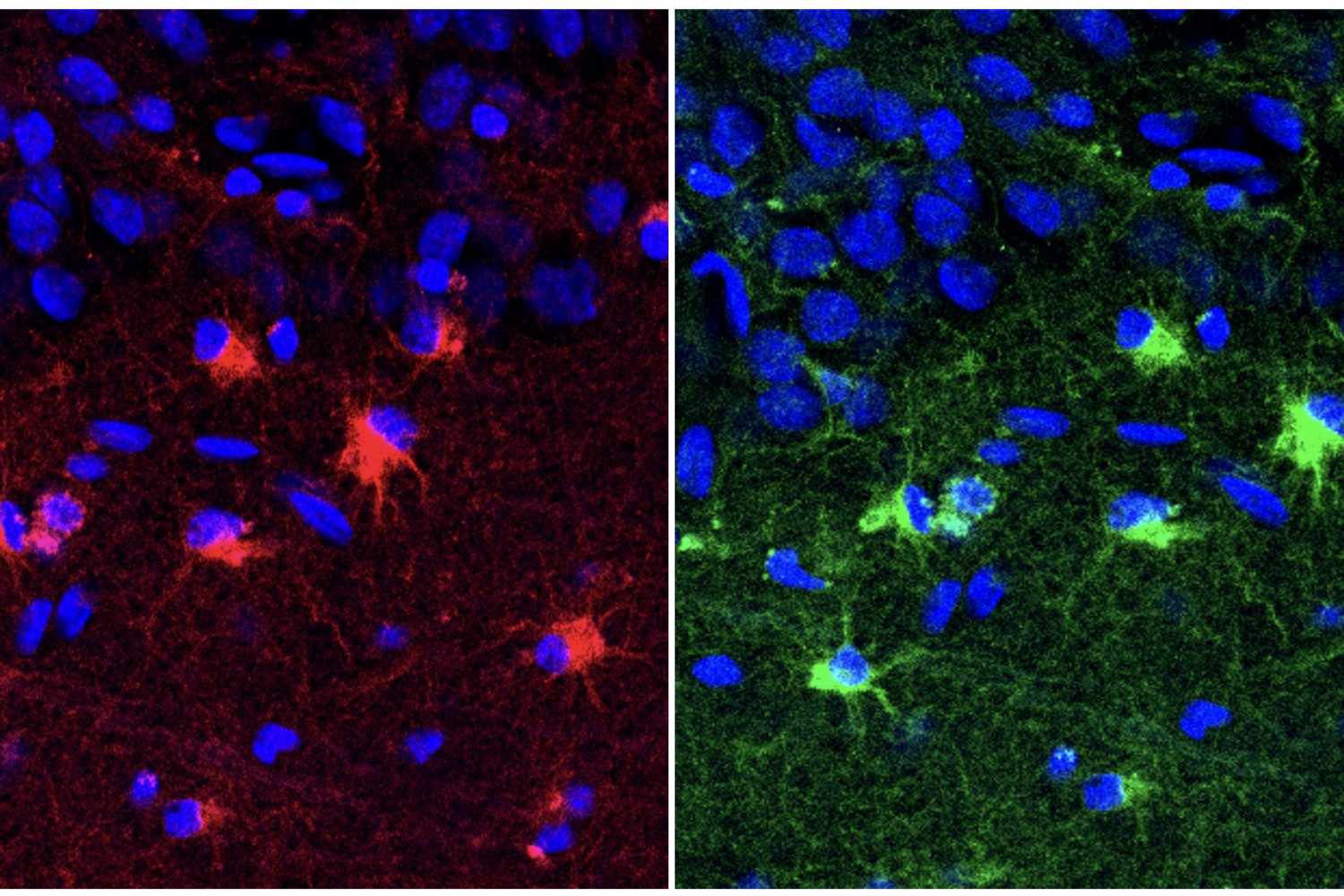
ALT Microscopic images show cells with a combination of red and blue staining on the left, and green and blue staining on the right, highlighting different structures and features.
If you’re working on hair loss research, we’d love your input on our latest funding call at @ResearchHub!
Join the discussion, share your ideas, and help shape what gets funded.
researchhub.com/grant/33066/…

