








#news #UK
US maker of Malboro mulls bid for FTSE 100 giant Imperial Brands . Via @CityAM
cityam.com/us-maker-of-malbo…

12
Will the Lame Duck preserve continuity?
The real issue is not the turbulence itself, but America’s ability to maintain strategic coherence under constraint.
Full text 👇
#LameDuck #USPolitics #Trump
gettr.com/post/p464qxo5b82

20

@Reuters Events
register :
SMR & Advanced Reactor 2027
May 11 - 12 | Austin, Texas | #SMRAR
Des pénuries aux solutions : fournir la main-d'œuvre nécessaire au développement des SMR
events.reutersevents.com/nuc…

13
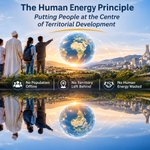
The power of a system is measured not only by what it controls, but by what it enables populations to build.
#HumanDevelopment #GlobalNetworks #TerritorialDevelopment #Governance #SSDZ
13
Systems and power
- synchronize systems to prevent disruptions, rather than managing each crisis in isolation.
- develop capabilities for cooperation...
11
...transforming technology into human and productive capacity, rather than viewing it merely as an investment.
8
Construction Methods
"Bringing the realities of the local context up to the institutions, rather than imposing a purely top-down structure."
11
“It is better to measure results by their actual impact on populations rather than by decisions and indicators alone.”
9
The vision
- Vertically: connecting decision-making, administration, the territory, and the citizen.
- Horizontally: connecting territories, nations, networks, and populations.
- Over time: synchronizing technological deployment with the human capacity to adopt it.
13
Politics governs power relations; doctrine seeks to organize the relationships between systems, territories, and populations.
8
Do not wait for politicians to transform the world so that people can move forward; instead, build the conditions that allow people to become the agents of this transformation themselves.
8
A policy can change with shifting mandates, governments, and alliances. A territorial doctrine must be capable of continuing to generate value, regardless of such changes.
1/2
1
16
Perhaps the greatest geopolitical blind spot is this human and territorial chasm, which continues to widen in the wake of the global race for power.
13
Looking ahead, geopolitical resilience may depend less on the capacity to dominate than on the capacity to synchronize: aligning technology with human capabilities, global strategy with territorial realities, and institutional decisions with the daily needs of citizens.
8
The risk is not simply that countries become disconnected from one another, but that entire populations become disconnected from the systems of progress, production, decision-making and opportunity.
8
The world is investing in technologies, strategic corridors, energy systems, AI and new power structures, but insufficient attention is given to the synchronization of these developments with the people and territories expected to sustain them.
1/2
1
15