
“The most likely outcome is an age of Amazing Abundance, where anyone can have anything they can think of.” by Elon Musk This is also the future I want.
Taipei, Taiwan
Joined May 2018
- Tweets8.1K
- Following2K
- Followers2.2K
- Likes121K



Must to read

A dinner with Michael Burry
Yesterday, I was invited to dinner with @michaeljburry in San Francisco, and listened to his thoughts on investing, markets, and the world. He struck me as a genuinely nice guy, but also someone who sees the world through a very different lens than I do, or perhaps most people (hehe).
I didn’t agree with everything he said, nor do I share his investment philosophies or prognostications. But, Burry is no dummy. He’s spent decades studying markets, developing convictions, making difficult decisions, and accumulating experiences that most investors have only read about. There’s tremendous value in understanding how he thinks, even when you disagree him.
One of the most important lessons I’ve learned is that intelligence doesn’t always manifest itself in familiar ways. Some of the most interesting thinkers approach problems differently, focus on variables we barely consider, and arrive at conclusions that initially seem unreasonable. Sometimes they’re wrong, sometimes we’re wrong, and sometimes we’re simply seeing different pieces of a larger puzzle.
I think one of the greatest obstacles to intellectual growth is our natural desire to be right. When someone challenges a belief we hold, our instinct is to construct a rebuttal rather than understand their argument. We search for weaknesses and prepare our response before the other person has finished speaking. In doing so, we’re defending what we already know rather than expanding what we understand.
I’ve increasingly learned to approach these conversations differently. I’m not interested in proving my investment philosophy is superior or that someone else’s conclusions are mistaken. I’m interested in understanding how another intelligent person thinks, what experiences shaped their judgment, and what they might recognize that I’ve overlooked.
Consider two experienced investors examining the same company. One sees an extraordinary opportunity while the other sees a disaster, despite both having access to the same information. Perhaps one understands the competitive advantages better, while the other recognizes risks that haven’t yet appeared. The fascinating question isn’t simply who’s right, but what each understands that the other might be missing.
And that’s where intellectual curiosity becomes an advantage. Instead of dismissing an opposing argument, ask what assumptions would have to be true for that person’s conclusions to make sense. More importantly, what evidence would convince you that your own assumptions are mistaken? Those questions can teach you more than another conversation with someone who agrees with everything you already believe.
Perhaps I disagree with 80% of someone’s conclusions, but the remaining 20% introduces an idea I’ve never considered. Maybe it’s a better way of evaluating risk, understanding capital allocation, or recognizing a weakness in my thesis.
Something else I’ve come to appreciate is that learning doesn’t always require changing your mind. Sometimes a conversation strengthens your existing conviction while deepening your understanding of why you hold it. Other times, it exposes risks or questions you hadn’t considered. Either way, your thinking becomes more complete.
I left my conversation with Burry with no desire to become Michael Burry or invest the way he does. But I did leave with a greater appreciation for how differently intelligent people can interpret the same world. The objective isn’t to borrow someone else’s conviction, but to examine their reasoning, challenge it against your own understanding, and incorporate whatever makes you a better thinker.
The goal isn’t to think like Burry, Buffett, or anyone else. The goal is to become a better version of yourself as a thinker and investor. And sometimes the people who teach us the most are precisely the ones we disagree with.
As always, wishing each and every one of you success on your investment journey! 🌹


China’s individual tax on offshore trusts took effect on July 24, and today is the final day of the transitional period for back tax payments.
When the US Democratic Party is short of money, they go after the assets of the wealthy; when the Chinese Communist Party is short of money, they do the same.

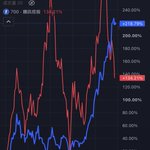
China (including Hong Kong stocks) has almost become the weakest market in the world. If the trajectory since June 2026 mirrors the path after February 2021, then with A-shares already leading the decline, the RMB may soon reverse its recent years of appreciation.
(note: CSI300 red line, USDCNY blue line)
It seems the next ER will have to be held as a video conference on the Cybercab!
If the results are bad, they’ll just have to strap Elon to the Roadster and do a Grand Canyon jump stunt. 😆😆😆


@mengkunghsieh , one of the best retail investors at Taiwan, raised a great point yesterday (at his podcast) that I had overlooked.
People often assume that semiconductor companies signing LTAs brings predictability and stability, which helps earnings and the stock price - but this may be a misreading.
What $SPCX said in yesterday’s earnings call is a good example of this: when you have strong confidence in the future price trajectory of your product, you are not going to easily lock in prices now.
An LTA, on the contrary, implies that you don’t have enough confidence in the price upside.
It looks like even James, who has been harshly critical of $TSLA, has turned positive.

Overall thoughts on the call and quarter:
The core business is mature, but still delivering growth - with more to come. Semi will be a huge success. Model Y and Model 3 are still the best passenger vehicles you could buy. Energy is still scaling, with a new factory ramping now.
We are still in this long phase of investment and refinement before the next leg up of revenue and profit begins for Tesla. But the signs are there and the groundwork is happening now. I personally have not felt this excited about Tesla in a long time. Maybe not SpaceX-level excitement (bc SpaceX's growth is explosive right now), but building to it.
$TSLA $SPCX
Phil has very good earning call take away
I just have one point to add. From last quarter through this quarter, one constraint that has been repeatedly mentioned is batteries- batteries appear to be the main factor currently limiting overall vehicle production.
However, compared with the situation in China, overall battery prices have been clearly declining (just look at the poor stock performance of CATL), yet Tesla does not seem to have taken this opportunity to aggressively push imports of batteries from China into the US. From this, I speculate that Elon has made up his mind to achieve full battery self-sufficiency outside of China.

The Tesla 3Q CC had tons of consequential information. Here’s my analysis rather than just a data dump that you can get elsewhere.
Two of my Say questions were answered!
When will mapping/nav errors get fixed?!? They are in the process of a brand new map architecture, integrated with FSD V15 and AI/SI will allow fine-tuned voice directions like “pull over past that shrub” and “always slow down here for the road dip”.
While we didn’t get a renewed FSD V15 timeline, it is expected end of 2026/early 2027. Maps will continue to get better even after V15 release.
When will we see new factories? Tesla is instead increasing production density at all factories. GigaTexas is continually being internally and externally expanded, Berlin is being expanded, new factories in Reno (Semi, batteries). New target is 5M vehicles/yr by 2030.
Bullish numbers: In Q3, 75% of US new customers paid for monthly FSD at time of delivery even though they had one month free. They didn’t need to be sold on it, just give me my FSD and don’t stop it!
Margins keep increasing. Both automotive manufacturing margins, but also service margins (Supercharger and Insurance). Somehow cash keeps increasing! They ended the Q at $45B cash, an approx. $4B increase. And this with massive capex spending.
@p_ferragu in a question estimated FSD ARR to already be $1B now, and Tesla implied that was more or less correct.
Optimus update: Elon again confirmed what I’ve been saying that the first 5K to 10K Optimus robots will all be used for internal training. There is no major silver bullet for AI robot training (yet) so Elon does what he always does, just accept current technology limitations and scale it up to make it work. Very few companies are going to be able to build 10,000 non-revenue generating robots for training (can you spell “moat”).
Training Optimus will be as conceptually simple as showing it videos of humans doing things, and then having the bot fumble around trying to replicate those delicate movements and getting fingertip sensor input, data which goes into the next backprop training run. A huge RL training cycle.
Hands continue to be the most challenging part of Optimus along with AI algorithms/processes.
AI5 for Optimus was originally expected by June 2027, but Elon now estimates April 2027 for volume production. This will give Optimus an order of magnitude more compute.
First customer Optimus shipments estimated end of 2027 at which point they should be making 20,000 Optimus a WEEK from their Fremont line. I expect we will see videos of Optimus in internal Tesla factories 2H27.
Elon reiterated that initial target markets will be for dangerous, repetitive, 24/7 tasks. Home eventually as they scale.
Optimus pricing was asked, answer was that it was still too early to give a reliable estimate.
FSD Unsupervised for customer owned cars: 2Q27 for customer owned unsupervised. Such customer owned cars will have the same geofence as whatever robotaxi has at that point in time.
@MKBHD hair is still in quantum superposition as Elon said they will try to sell some Cybercabs to customers by the end of 2026. Didn’t sound like it would be high volume. Elon did say that most Cybercabs would be Tesla owned.
They said Cybercab was the easiest ever vehicle to scale. 50% fewer parts than any other vehicle they’ve made. They’ve done burst production tests and verified they can go higher than 125K/yr rate in current facility. This is presumably due to their revolutionary new unboxed production method including eliminating the paint shop.
Robotaxi: Team said they see path to $0.30/mile Robotaxi cost (is that cost to Tesla or cost to customers, please be unambiguous guys!). They said their goal is to own all transport. Like all of it. Won’t get there of course due to regulatory hurdles and antitrust, but they’ll make a good run, tons of growth ahead of them. At these Cybercab prices, it even replaces public transit (at a minimum, cities will find it cheaper to subsidize Robotaxi than to run their expensive buses/light rail).
They said Robotaxi will become a noticeable part of revenue/profit by 27Q2, and a big deal by Q3 or Q4 of 2027.
Competition: The perennial question. For both FSD and Optimus, the team emphatically said no one can compete, which I’ve been saying for a while. No one has done even the initial setup to replicate FSD, let alone getting into the meat of training, and yes that includes China. Unfortunately China isn’t currently allowing supervised FSD, so direct comparisons are hard, but I continue to personally believe that Tesla has an insurmountable lead even there once they get approval.
Terafab: The giant factory is expected 2Q28, useful volumes in 3Q28, but the R&D test fab at GigaTexas is expected to get a test chip out by 2Q27(!). Elon expects Terafab to be the most valuable building in the world when built.
Still need to figure out Tesla/SpaceX split for costs (maybe they’ll merge and won’t have to think about this 😅)
Megapod: Concept for distributed compute everywhere (like at Superchargers). Still figuring it out, may see more info by 2Q27.
Conclusion: Tesla has set a ton of stones in motion to create an avalanche starting mid next year. Meanwhile their energy, vehicle, and services sales will continue to ramp from here. $TSLA after hours is down 3%, presumably because the next few quarters don’t have huge profit catalysts. Position your chips accordingly.

The direct reason for $SMCI’s better-than-expected earnings is that they are one of the biggest beneficiaries of $SPCX’s expansion.

Gigawatt AI Datacenter infrastructure takes tons of effort, however, delivering massive scale fast with maximum uptime is what @supermicro does best! @elonmusk and @spacexai, we are moving full speed ahead with DCBBS to make your TTO goal a reality! Special thanks to @nvidia and @jensenhuang for powering this amazing momentum with GB300 and more. Please get ready for a surprise xmas gift before year-end! 🎁🚀

Suddenly noticed two things from @BigTechAlert
1. Recently, SpaceX and Tesla executives have been mutually following each other on X, but I don’t seem to see @aelluswamy being followed or following anyone else.
2. @elonmusk relationship with Anthropic has improved a lot lately, but what’s notable is that while many tech giants have at least some light interaction with Elon on X, @DarioAmodei and Elon have almost no interaction on X at all.

DeepSeek’s Token Business and What It Means for AI Data Centers
On October 20, 2026, DeepSeek open-sourced its inference framework DeepInfer and shared some rare production numbers. One cluster handles about 155 trillion tokens a day. At valley pricing, that works out to roughly $38 in revenue per GPU-hour.
The interesting part is not that GPUs got cheaper. It’s that most of the work doesn’t need to be redone.
DeepSeek’s average input is around 77,000 tokens, but the cache hit rate is about 96%. Almost all of the input has been seen before, so the system can reuse it. Only about 4% needs to be calculated from scratch.
They split the job into two parts. Prefill reads the input. On a cache miss, each GPU can handle around 60,000 tokens per second. Decode writes the answer. Each GPU generates about 14,000 tokens per second. DeepSeek says the smallest efficient setup is 64 GPUs for prefill and 64 for decode. Working backward from 155 trillion tokens, the cluster needs roughly 2,300 to 2,400 GPUs and draws around 5 MW in total.
At those numbers, 2,400 GPUs at $38 per hour would generate about $800 million a year, or roughly $160 million per MW. If GPU rental costs are $3 to $6 an hour, gross margins could land in the 84% to 92% range.
For AI data center investors, this changes the math. A lot of models assume revenue scales with GPU count while prices get competed down. DeepSeek’s data suggest that with very high cache reuse, output per GPU can be much higher than a simple “more GPUs, more capacity” view. If other workloads can hit similar reuse rates, the return on a data center investment could be better than many current models expect, and payback could be faster.
The catch is the cache hit rate. Drop it from 96% to 80% and the amount of input that has to be recomputed jumps. Unit cost rises and revenue density falls. Caching also isn’t free. It needs extra storage and multi-day retention of common content. So any real investment model has to count storage and the cost of separating prefill from decode, not just the GPUs.
DeepSeek basically put a public benchmark on the table. If high reuse plus stage separation can be sustained elsewhere, data center return assumptions may need to go up. If it can’t, then the high revenue density is mostly a product of their specific traffic, not something you can assume for every AI data center.


Inference is a beautiful business.
deepseek reports 155T tokens/day from one inference cluster at $38/gpu-hr. I estimate their cluster at ~5 MW, implying ~$160M/MW/year in API revenue and 84–92% margins after $3–6/GPU-hour rent
working assumptions: 96% input-cache hits, ~107 input token/output token ratio -> ~$14.35 revenue per billion tokens at off-peak prices. working backwards from 155T tok/day, 60,000 uncached input tok/sec/gpu prefill + 14,000 output tok/sec/gpu decode, each two-GPU pair handles approximately 1.5m input + 14k output tokens/sec -> 2400 gpus. on blackwell hardware I assume 2 kW/gpu including external networking, cache storage, etc.
No wonder everyone wants be part of the token flow / bid up GPUs :)


One more thing, I’m super confident AI trades are going to be even more amazing throughout 2027 and years beyond.
But I’m not sure for semis, I think possibly some time in Q1(Jan/Feb) the peak Capex growth trade will be a pain in the ass for semis and market will assign them the “cyclical” attributes back with a big P/E multiple compression.