
Emergency, Pre-Hospital & Retrieval Medicine Registrar. Research Fellow in deprivation, isolation & emergency care. Often climbing, sometimes running.
Glasgow
Joined June 2010
- Tweets393
- Following321
- Followers415
- Likes1.8K


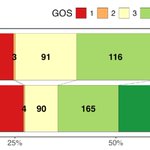




Patients & the public told us they understood there was a crisis in Emergency Departments, but didn't know this came with actual harm.
To fill the gap, we've modelled the excess deaths in Scotland, and tried to make the harms visible crowdingharms.com/
Feedback welcomed

Ryan McHenry retweeted

I tried to replicate what we see during a Flowopoly-style replay of a 'good' day and a 'bad' day. What we see is the fullness of the ED when each patient arrives (x-axis) and the eventual length of stay of each patients (y-axis). I knew the two days would look different. I wasn't expecting them to look as different as this.

Ryan McHenry retweeted

NHSE has had a huge PR coup with this data and journalists have swallowed it hook, line and sinker. The discussion is a huge distraction from their failure to fix the real cause of long A&E waits...

Millions of people are turning up at A&E departments in England with minor ailments, including hiccups, blocked noses and coughs. The latest NHS figures suggest emergency departments are being swamped with patients who should be seen elsewhere.
@lornashaddick with more.
A zombie idea refusing to die, despite overwhelming evidence that ED crowding caused by poor patient flow and bed capacity.
We've just published on the Scottish experience - presentation rates ≠ delays. Though, as ever, the most vulnerable suffer most.
emj.bmj.com/content/early/20…


Headlines
There is no association between the presentation rates of the local population and Emergency Department delays.
However, departments in the most deprived areas are facing the worst of the pressures.

Actions
1 - Zombie ideas are hard to kill. But there's value in keeping focus on patient flow/inpatient capacity as the key driver for change - as in recent @ternfellow UNCORKED work emj.bmj.com/content/early/20…
2 - Resource needs to better match need
Ryan McHenry retweeted
This is a pretty good analysis of the NHS bed problem. But there is some extra evidence that things are even worse, for example this analysis of A&E corridor waits:
emj.bmj.com/content/early/20… ...


Ryan McHenry retweeted

These findings echo our research published last week in the @EmergencyMedBMJ which examined corridor care in 162 UK EDs.
doi.org/10.1136/emermed-2025…
Ryan McHenry retweeted

New article in @PaedCH from @DrGoodalltweets @rymchenry and @DrMikeWhelan available to view free till end Jan 2026
authors.elsevier.com/a/1mFg1…

Ryan McHenry retweeted
Fits with the resuscitation capacity finding from the uncorked study published yesterday.
Sites reporting no resus capacity in the UK ranged from 10.5% to 26.2% (n=17/162 to n=43/164)
doi.org/10.1136/emermed-2025…
Hugely important study published today in @EmergencyMedBMJ from @ternfellow.
Almost every Emergency Department in the UK is forced to deliver unacceptable corridor care, and reasserts that this is almost exclusively due to poor flow through the system. A quick view from the data

The UK @ternfellow EDcorridor study is out!
Key points
1. 1in5 are treated in ED escalation areas (eg corridors)
2. 10-25% of EDs have no available resus cubicle
3. The problem/solution is flow. More patients waiting for beds in ED than in corridors.
doi.org/10.1136/emermed-2025…
The paper contains all the numbers, but if you overlay the proportion of those waiting for an inpatient bed, with those in a temporary escalation area, the scale and solution becomes clear.

On a personal note, it's a real privilege to be involved at the site-level and in the study team. Meaningful action now required.
@RCEMpresident @VP_Scot_RCEM @DrTomRoberts @fraser_birse
Ryan McHenry retweeted
Incredible collaborative piece of work. Glad to hear @wesstreeting commitment to ending corridor care. This works shows the focus needs to be on flow of patients waiting for inpatient beds out of the ED. @sib313 @DrLKVaughan @kurtstat @TheSGEM @TheResusRoom @RCollEM
Ryan McHenry retweeted

Emergency Medicine resident doctors show their value, and how committed they are to patient safety, with this excellent research study showing the extent of corridor care in UK EDs during Mar 2025. @ternfellow @EMTAcommittee @RCollEM
The UK @ternfellow EDcorridor study is out!
Key points
1. 1in5 are treated in ED escalation areas (eg corridors)
2. 10-25% of EDs have no available resus cubicle
3. The problem/solution is flow. More patients waiting for beds in ED than in corridors.
doi.org/10.1136/emermed-2025…
Ryan McHenry retweeted

The UK @ternfellow EDcorridor study is out!
Key points
1. 1in5 are treated in ED escalation areas (eg corridors)
2. 10-25% of EDs have no available resus cubicle
3. The problem/solution is flow. More patients waiting for beds in ED than in corridors.
doi.org/10.1136/emermed-2025…
Hugely important work, demonstrating the horrific scale of ED crowding, yet also pointing clearly to the solution. Demand management doesn't work. Flow does.
A privilege to be involved with the study team.

Well done Ben Clarke presenting the UNCORKED study at #eusem2025 for @ternfellow. Science providing more data around the appalling ED crowding in the UK, and the need to focus efforts on patients needing admission, not demand management as favoured by policy makers. @RCollEM

Ryan McHenry retweeted
Nitrazenes - seriously bad news in toxicology land
stemlynsblog.org/nitazenes-d…
