

Principal Bioinformatics Software Engineer, Roche | Data-centric views of the natural world
San Diego, CA
Joined July 2016
- Tweets236
- Following1.9K
- Followers505
- Likes516


Pinned Tweet
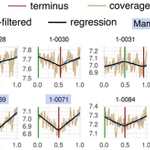
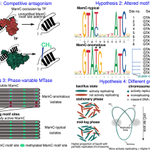
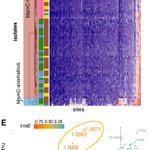
Our work on DNA methylation in M. tuberculosis is finally out in @eLife! elifesciences.org/articles/5… Using sequencing kinetics and @PacBio long reads, we fully assembled DNA methylomes from 93 phylogeographically diverse clinical Mycobacterium tuberculosis complex isolates. (1/7)

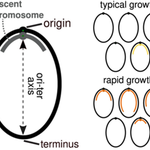
1/ 🎉 Excited to share our lab’s latest work: “Intercellular mosaic methylation in fast-growing Mycobacterium tuberculosis clinical isolates,” now published in @NAR_Open Molecular Medicine: tinyurl.com/tb-imm
Huge thanks to my co-first author, Maryam Ahmadi Jeshvaghane!

11/ This work highlights how integrating biological domain knowledge with @PacBio long-read sequencing can uncover hidden information about bacterial states directly from sequencing reads. 🔎🧬➡️🧠
12/ Immense gratitude to Dr. Monica Espinoza, Derek Conkle-Gutierrez, @FaramarzValafar, and our @SDSUResearch colleagues for turning this curious observation into a paper that raises exciting questions and new hypotheses. #TBResearch #epigenetics #sequencing
Sam Modlin retweeted

Our first research paper on the genomic epidemiology of drug resistant Tuberculosis in Mexico just published! 🧬🇲🇽 Grateful for the incredible team who made this possible @cliconac, @IndGenomics, @rozecu05, Dr. Julio, Dr. Enciso #WGS
journals.plos.org/plosone/ar…

Very happy to have our latest work published in Drug Resistance Updates. It highlights an interesting, clinically important case where targeted molecular diagnostics fail to correctly classify drug-resistant TB due to primer evasion.

Proud of latest article from @Valafarlab led by @sam_modlin, published by Drug Resistance Updates. We show how minority PZA-susceptible #TB population in a sample can prevent detection of the majority resistant population by targeted molecular diagnostics. doi.org/10.1016/j.drup.2023.…
Sam Modlin retweeted

I am proud to announce the latest article from @Valafarlab led by @0xaf1f, published by @OxfordJournals. Here, we evaluate syntenic block detection strategies, build a combined rearrangement/SNP tree for comprehensive phylogeny of clinical #tuberculosis. academic.oup.com/bioinformat…

Sam Modlin retweeted

Humans excel at science when they are emotionally detached from the subjects under investigation.
Emotions can pose a challenge even for self-aware people aiming for objectivity.
Protein to RNA correspondence seems to engender enough feelings to challenge objectivity. 🧵🧵🧵
Sam Modlin retweeted

@Kuldeep_R_Gupta, working together with @celenagwin, discovered that a protein of unknown function in mycobacteria (PgfA) is recruited to one side of the cell by our favorite protein LamA, where it coordinates lipid trafficking and fast polar growth
Sam Modlin retweeted

A few of us from the Single Cell Genomics team went to a stained glass workshop @ColorGlassShop. I asked the friendly sequencing lab techs in the @cnag_eu to save the used @illumina flow cells, and here is my first attempt at sci-art 🧪🎨. It could be a flower, or the sun, or...?

Join us in San Diego! 🌅🔬🦭🧫🐠💻🐟 Work with high-quality long read sequencing data and other cutting edge profiling of interesting TB samples. And exciting opportunities in the wet-lab to improve on current methods and test data-driven hypotheses! DM me or @FaramarzValafar
. @Valafarlab has several predoctoral & postdoctoral positions open. We are focused on Tuberculosis. We house a wet and a dry lab. Members work on all aspects of TB Research: mutagenesis, phenotyping, informatics, ML/AI, evolution, phylogeny, systems biology, metabolic modeling
Cool read from @ewencallaway on protein structure AI from @Meta. My 2 cents -- Protein structures are often highly dependent on their microenvironment. Might the 60x structure prediction speed-up be most useful in exploring the context-dependence of protein structures?

Meta just dropped 600+ million protein structure predictions, made using a large language model.
My latest for @Nature
nature.com/articles/d41586-0…
1/3

@alexrives @ebetica Really cool stuff here. Do your methods allow for physicochemical inputs that influence or constrain the predicted model space? Or might it in the future? Studying this on a smaller set of proteins over large swaths of physicochemical space could yield insight