
Internet è semplice: te lo fanno sembrare complicato. Io te lo spiego. Co-fondatore e Direttore Generale di https://teapawt.org/t.co/yI0ttg3bHv.
Naples
Joined August 2007
- Tweets4.3K
- Following515
- Followers223
- Likes1.4K






Pinned Tweet
Internet è semplice.
Te lo fanno sembrare complicato apposta.
“Fino a 1 Giga”, “fibra mista”, “velocità garantita”… parole costruite per confonderti, non per informarti.
Faccio questo mestiere da una vita. Qui ti spiego come funziona davvero — chiaramente.
1
52
Incredibile quanto sta raccontando #report sulle uova @LeNaturelle_ , avendole acquistate molto spesso anche pochi giorni fa, e visto il collegamento diretto con altre industrie, mi viene davvero voglia di comprare due galline. Molto grave. Spero che si faccia chiarezza.

E’ allucinante il servizio di #Report sullo stabilimento per il trattamento delle uova collegato a “ #Naturelle”. Da domani non compero più nulla di quel marchio come avevo fatto per #Simmenthal. Se facessimo tutti così l’industria si rimetterebbe in regola in pochissimo tempo

These cables carry around 99% of international internet traffic. From voice calls to video streams, financial data to social media

Have you ever wondered how the internet travels from one country to another?
It’s not satellites.
It’s not “just the cloud.”
It’s mostly giant fiber optic cables laid under the ocean, called submarine cables.
These cables carry around 99% of international internet traffic. From voice calls to video streams, financial data to social media—it’s all traveling at light speed across the sea floor.
When you visit a website hosted in another country, your data might be going through:
Local ISP routers
Internet Exchange Points (IXPs)
Transit providers
And then across a submarine cable, thousands of kilometers long
From there, it hits another country’s edge routers, goes through BGP routing policies, and finally reaches the data center hosting that site.
It’s a global agreement of fiber, routing, and peering, all happening in milliseconds.
I'm sharing a map of real submarine cable map below. This is the real "backbone" of the Internet.
And yes, even cutting one cable in the wrong place can cause massive outages across regions.
#serviceprovider #networkdesign #orhanergun

51
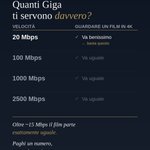
Speed is the wrong metric.
A live 4K video saturates ~12 Mbps. The hundreds, the thousands of Megs? Marketing.
What decides whether you die in matchmaking isn’t speed — it’s the path.
And the path is exactly what @Klik_Network builds. 🧵

Your ISP promised 500Mbps but you are getting only 112Mbps.
Not during a storm. Not during a neighborhood outage. Not on a bad day.
Every day. During peak hours.
While you're paying full price for "up to 500 Mbps."
A 2024 FCC Measuring Broadband America study tested over 1,000 households across every major internet provider.
The finding: the average American receives roughly 22% of their advertised speed during peak evening hours (7 PM - 11 PM) the exact hours you're actually trying to use it.
You're paying for a Ferrari. You're driving a minivan.
And your ISP is counting on the fact that you'll never check the speedometer.
Here's how to actually test your speed, what's causing the gap, and exactly what to do when the numbers don't match. 🧵
7
Raffaele Santopaolo retweeted

In 2021, a company vanished from the internet for six hours. Its servers were fine, it just told the world it no longer existed, and the world believed it.
That’s BGP, short for Border Gateway Protocol (PATH-VECTOR protocol defined by RFC 4271) that runs over TCP port 170, between the ~75,000 networks that make up the internet.
There’s no map. Each network announces what it can reach; the announcement propagates AS-by-AS, stamping an AS_PATH that prevents loops. And it doesn’t pick the shortest path, it picks the one policy prefers. A network will route over a longer path if a cheaper business deal says to. Routing the internet is a money-and-trust problem in a networking costume.
Moreover, BGP is the inter-AS protocol. It runs BETWEEN autonomous systems. eBGP runs between routers in different ASes; iBGP carries those routes inside an AS. (OSPF/IS-IS are the IGPs that run within an AS, different job.)
Below 👇 is a simulation of it failing and rerouting, with the BGP decision code running beside it, in sync. The C file shown in the video is a faithful model of the best-path DECISION process, not a full daemon (no TCP/179 session state machine, UPDATE wire-format parsing, or RIB/FIB).
#Networking #BGP #Routing #InternetInfrastructure #NetworkEngineering
C'è un gesto dell'orologiaio che mi ha sempre colpito.
Passa minuti su un ingranaggio che nessuno vedrà mai, perché sa che è lì che si gioca tutto.
Noi facciamo connettività in KLIK.NETWORK, ma è lo stesso mestiere. 🧵

1
13
Un dettaglio che dice molto: il rilevamento rapido dei guasti (BFD) attivo su tutte le porte di peering. Accorgersi di un link caduto in millisecondi, non in decine di secondi.
Non è scontato per un operatore di questa fascia.
1
16
Quell'ingranaggio che nessuno vede è la differenza tra 1,3 e 8 Gbit.
Noi lo guardiamo. Sempre.
Non i più grandi. I più attenti.
— KLIK.NETWORK
14
𝐋𝐚 𝐟𝐢𝐛𝐫𝐚 𝐢𝐧 𝐈𝐭𝐚𝐥𝐢𝐚 𝐧𝐨𝐧 è 𝐮𝐧 𝐩𝐫𝐨𝐛𝐥𝐞𝐦𝐚 𝐝𝐢𝐠𝐢𝐭𝐚𝐥𝐞. È 𝐮𝐧 𝐩𝐫𝐨𝐛𝐥𝐞𝐦𝐚 𝐝𝐢 𝐞𝐬𝐞𝐜𝐮𝐳𝐢𝐨𝐧𝐞.
Un boutique hotel di lusso in Toscana aveva bisogno di fibra. (Spino Secco Hotel spinosecco.com). linkedin.com/posts/santopaol…

1
29
La trasformazione digitale è sempre e solo per il 10% digitale. IL digitale è facile. Il resto sono processi operativi e persone. Serve solo qualcuno che se ne prenda carico. E sia chiaro, nessuna AI salirà su un ponteggio per risolvere un problema reale.
1
9