

Let’s Have a Moment of Science. #science #sciencenews #BlackHoles #Earth
Joined April 2019
- Tweets619
- Following34
- Followers60
- Likes490





SciQuest.org retweeted

The period 1July 2019 - 30June 2020 was the warmest 12 months ever recorded. Wildfires, floods, storms, droughts, melting permafrost, locust swarms, historic heatwaves. And now glaciers are literally collapsing in front of our eyes.
When will we start treating this as a crisis?

SciQuest.org retweeted

My first planned Trajectory Correction Maneuver was a success. I do TCMs on my journey to stay on target for a Feb. 18, 2021 date with Mars. I left Earth over 2 weeks ago and already put on 27+ million miles. Only ~265 million more to go! #CountdownToMars go.nasa.gov/3aocag5

SciQuest.org retweeted

Thinking of Beirut today. My heart goes out to all of those who have been affected by the recent tragedy. Sending love from @Space_Station.

SciQuest.org retweeted

#ClimateStrike WK 5. The #COVID19 pandemic should be a lesson to all. Let's be conscious of the #ClimateCrisis and take #ClimateAction . #ClimateChange is Here. Act now.
#WorldEnvironmentDay #FridaysForFuture #green recovery. @GretaThunberg @the_ecofeminist @vanessa_vash

SciQuest.org retweeted

Do you ever dream about exploring places like the Moon & Mars? We’re accepting applications March 2-31 for the next class of #Artemis Generation astronauts.
What questions do you have about how to #BeAnAstronaut? Tag them w/ #AskNASA! Learn more: go.nasa.gov/31JyEUc

SciQuest.org retweeted

Did last month's 👩🚀👨🚀 graduation make you daydream about your own out-of-this-🌎adventure? Now’s your chance to #BeAnAstronaut! Applications for the next #Artemis astronaut class will be accepted from March 2-31.
Find requirements, FAQs & advice at go.nasa.gov/2OcByey.

SciQuest.org retweeted

I love when the sunlight hits the @Space_Station solar arrays with this golden shimmer – even better against the multihued backdrop of sunset.

SciQuest.org retweeted
#DYK After landing, @Astro_Christina will have made 5,248 orbits of the Earth 🌍 — a journey of 139 million miles, roughly the equivalent of 291 round trips to the Moon 🌕?
Join us live, Wednesday, Feb. 5, as we welcome her back from her epic voyage: go.nasa.gov/2GTpBql

SciQuest.org retweeted
Teams from @NASA, @ESA, and @roscosmos met earlier today in Karaganda, Kazakhstan to prepare for the Feb. 6th Soyuz landing with @Astro_Christina, Alexander Skvortsov and @astro_luca onboard from the @Space_Station. More 📸 flic.kr/s/aHsmLbrNXN


SciQuest.org retweeted
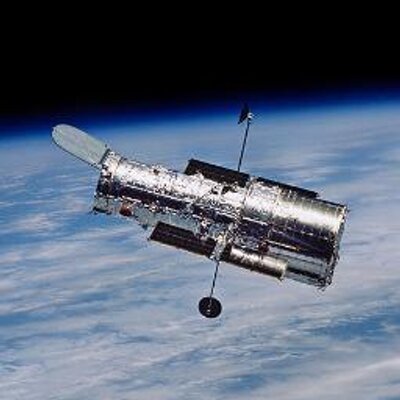
#HubbleClassic For 16 years, Hubble has worked with @NASASpitzer to study the universe at different wavelengths of light, providing unique views like these of galaxy M81. Farewell, friend. It's been wonderful exploring with you. #SpitzerFinalVoyage

ALT M81 as seen by Hubble

ALT M81 as seen by Spitzer



SciQuest.org retweeted
.@Astro_Christina returns to Earth on Thursday, Feb. 6 with two crewmates. She will have lived in space continuously for 328 days. nasa.gov/press-release/nasa-…
SciQuest.org retweeted
🧫 Tissue & cell culturing
🔬 A new miniature scanning electron microscope
🦠 Fighting viruses with phages
🔥 An investigation of fire development in space
All about the @ISS_Research launching to @Space_Station Feb. 9 aboard the @northropgrumman Cygnus: go.nasa.gov/2UdUHR8

SciQuest.org retweeted
Although its planet-hunting mission has ended, our @NASAExoplanets Kepler Space Telescope's discoveries have not. Archival data from the spacecraft designed for tracking exoplanets recently surprised astronomers with a haunting discovery:
go.nasa.gov/2RWrTtP

SciQuest.org retweeted

Aimed at educating the public on our highlights and accomplishments from the 2019 fiscal year, the National Lab has made public its 2019 Annual Report.
More details are here: issnl.us/72

SciQuest.org retweeted
“It’s such a powerful, personal experience… and as much as we love the pictures that we bring back, it’s not the same as seeing it yourself.”
Bill McArthur of @NASA_Astronauts describes a shift in his worldview during his time in space: youtu.be/QKXC6BuxbqA
SciQuest.org retweeted
Ultra-cold science and nanosatellites kept the Exp 61 crew busy today while they get ready for the departure of a cargo craft and crew ship. Read more... go.nasa.gov/2RYkGt7

SciQuest.org retweeted
The Tarantula Nebula was one of the first targets studied by @NASAspitzer after its launch in 2003. Now that the infrared observatory is set to be retired on Jan. 30, scientists have generated a new view of the nebula from Spitzer data. 🕷️go.nasa.gov/36whWbL

ALT This image from NASA's Spitzer Space Telescope shows the Tarantula Nebula in two wavelengths of infrared light. The red regions indicate the presence of particularly hot gas, while the blue regions are interstellar dust that is similar in composition to ash from coal or wood-burning fires on Earth.

