

I help people reconnect with who they really are, through the practice of mind:body attunement 🌕 work with me 👇
- Tweets9.2K
- Following361
- Followers11.2K
- Likes10K


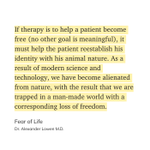






ALT For Jung, the personality is constantly getting stuck in narrow limits, unable to move forward, and is menaced by an other, an antagonist who stands in its path. This other is what psychotherapy calls a neurosis, that is, an emotional disorder in which feelings of anxiety, obsessional thoughts, compulsive acts and physical complaints dominate the personality. The aim of therapy is not exactly to get rid of the neurosis, but to transform and deepen it by understanding why it arose in the first place. Typically, a neurosis emerges when a person's consciousness is not broad enough to encompass the contents of the psyche that demand to be lived and seek expression. The psyche does not tolerate artificial constriction, caused for instance by a morbidly narrow moral view, by an inadequate self-image or by attitudes that stifle and abuse the energies of the personality. The unlived life manifests in neurotic form, and within the neurosis lie the answers that the patient seeks. —David Tacey


