

Serving the western U.S. with a mission to advance the nation’s monetary, financial, and payment systems to build a stronger economy for all. RT ≠ endorsements
San Francisco
Joined February 2010
- Tweets15.4K
- Following1.5K
- Followers68.4K
- Likes5.2K


Federal Reserve Bank of San Francisco retweeted

Hoover Senior Fellow Steven J. Davis welcomes @SFFed Reserve Bank of San Francisco President and CEO @MaryDalyEcon for a return appearance on Economics, Applied—this time directly from the Federal Reserve Bank of San Francisco.
They discuss the Fed's new communications regime, how it should respond to demand overheating and inflationary supply shocks, and how Daly thinks about the implications of AI technologies for the conduct of monetary policy. Other topics include wage stickiness and whether the banking system is safe from cyberattacks.
Watch more on Hoover+: hoover.org/plus/research/fed…
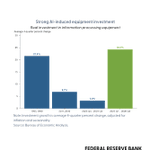
AI investment is surging and reshaping prices. In the latest SF FedViews, EVP and Director of Research Sylvain Leduc examines how the AI buildout, energy prices, and tariffs are shaping the outlook for growth, inflation, and interest rates. sffed.us/4zzr39u


The latest Twelfth District Beige Book indicates that economic activity was broadly steady during the mid-August through September reporting period. sffed.us/beigebook

Employers generally maintained employment levels and increased wages slightly. Prices rose moderately, and elevated diesel and fuel prices pushed up business operating costs across the District.


Retail sales softened slightly, and consumer spending on leisure and hospitality services varied by region and income group. Conditions in other sectors softened slightly or were mixed. Contacts maintained a generally soft economic outlook.


How does monetary policy affect bank lending when rate changes revalue securities? A new Economic Letter finds that how regulators treat bank securities shapes how powerfully monetary policy transmits to the broader economy. sffed.us/4ijgIsw


Do Japanese financial markets behave like U.S. markets? A new Economic Letter finds matched Japanese inflation swaps and breakeven rates are nearly identical, unlike the U.S., where liquidity premiums create a wedge between similarly-matched assets. sffed.us/4jINhBe


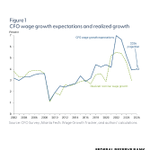
What do financial officers predict for the labor market? A new Economic Letter introduces a CFO Survey measure of expected wage growth. It has tracked wage growth since 2002, beating household surveys. CFOs expect moderating employment gains in 2026. sffed.us/3Tj6fE0


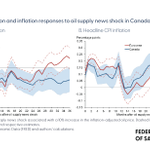
A new Economic Letter finds oil supply shocks raised inflation and cut output in both Canada and the euro area, suggesting the U.S., now a net oil exporter, may not fully benefit from oil disruptions either. sffed.us/4ACV4qd


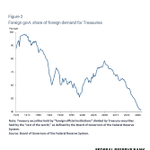
A new Economic Letter highlights that stablecoin issuers' Treasury holdings have grown more than $200B in five years, helping offset the decline in China's holdings. sffed.us/4rG1Ure


Banks have led AI adoption—but what does that mean for lending? A new Economic Letter suggests higher AI usage is linked to higher returns on assets and reduced small business lending—offering early insight into AI's broader economic impacts. sffed.us/46B0W5Q


The US economy continues to expand at a solid pace, supported by stronger labor productivity. In SF FedViews, Research Advisor Huiyu Li examines inflation, the labor market, market expectations of the policy rate, productivity, and AI's role in the economy sffed.us/4xEFxo9


The latest Twelfth District Beige Book describes regional economic activity as little changed during the July to mid-August reporting period. sffed.us/beigebook

Employers largely maintained employment levels, and wages were up slightly. Prices rose modestly, driven by elevated oil prices, tariffs, and higher input costs. Retail sales were stable, while activity in consumer and business services eased slightly.
Employers largely maintained employment levels, and wages were up slightly. Prices rose modestly, driven by elevated oil prices, tariffs, and higher input costs. Retail sales were stable, while activity in consumer and business services eased slightly.
A new Economic Letter finds a modest but asymmetric relationship between expected gas price growth and inflation expectations: upward revisions are associated with higher inflation expectations, while downward revisions have little relationship with them. sffed.us/3UsgTZa


