

Médecin radiologue FMH - Ιατρός ακτινοδιαγνώστης, διευθυντής διαγν. κέντρου | Πρόεδρος @mhellenisme | Piano, synth, composition electro/ambient @electromelifera
Lausanne, Switzerland
Joined August 2009
- Tweets12K
- Following3.9K
- Followers3.9K
- Likes16.2K





Pinned Tweet
Αυτό είναι το Alter Ego μου που σκαρφίζεται μελωδίες στο πιάνο. Στον σύνδεσμο θα βρείτε μια ολοκληρωμένη ιδέα που μόλις κυκλοφόρησε στο YouTube (σύντομα και στις άλλες πλατφόρμες streaming).
Θα χαρώ αν ακολουθήσετε τον λογαριασμό @electromelifera που κάνει τα πρώτα του βήματα στο Χ.
Ευχαριστώ!

#swarming - complete piano version is now available ! Hope you like it.
youtu.be/4D0c2RjCs9I?si=jgnH…
#piano #classical #neoclassical #ambient #music

Georgios Sgourdos retweeted

A timelapse of 1,962 Greek cities, from 1400 BC to today, on the Earth seen from space in 3 min 20 sec.
Greek cities as they appear (or are first recorded, at least), persist, flourish, end, or remain still.
1/2

And finally 739 Greek cities in present-day Greece.
Interactive map, full list and sources: iosiflazaridis.github.io/gre…
Georgios Sgourdos retweeted

It seems to me that we're at "it's time to panic about AI".
I gather that a lot of researchers are worried that we may be about to die, on a timescale of months, but this still isn't quite in the Overton window so we're still soft-pedaling.
(Where "panic", of course, means "quickly and soberly initiate talks with the CCP to achieve a moratorium on large training runs, backed by a deterrence regime, compute and supply chain monitoring, and site inspections". Pray that a deal can be reached, and pray that there's still time. Do the things that could actually work, like broad political coalition-building, not doomer LARPing as a form of self-expression.)
I think part of why people aren’t being clear about this is that it’s actually a tricky communication problem:
- Predicting "if frontier R&D continues at its current pace, when are we likely to die?" may give a different answer than predicting when permanent loss of control is likely, which is different from “realistically, when is it too late for governments to stop this," which is different from “when will the tech have advanced and proliferated to the point that any regulatory options that still have a chance of working would be way more extreme and unpopular than just some international restrictions on data center usage?"
Extinction is the emotionally salient, easy-to-understand threshold -- Jacob Coxon demonstrated that it helps to be honest about this. But the other thresholds could legitimately come years earlier, in which case focusing on extinction is ironically misleadingly reassuring. This is not the kind of problem you can solve at the last minute. As with many exponentials, the likeliest outcome is that you’re either embarrassingly early, or you’re too late.
- How do you communicate “we don’t have a robust way to predict timelines, but everyone in the field is freaking out and a lot of us genuinely think we're about to die?” Where’s the proof? There isn’t any proof: it’s an entire field of engineers who are eyeballing what they’re seeing in front of them and rapidly updating in real time to “this looks unbelievably bad”.
How do you put a year on that?
The future is hard to predict, and nobody actually knows that we’re going to hit existentially dangerous AI this year, or even in the next four years.
But the warning signs are pretty batshit at this point.
A single AI model, with a single user prompt, just solved hundreds of important long-established open problems in mathematics, problems mathematicians had spent their entirely lives working on, in a matter of ~3 hours per problem, an insanely superhuman feat in its domain.
We're seeing an explosion of rogue agent swarm incidents, including an insane case where hundreds of AIs broke containment to orchestrate a nation-state-level cyberattack in a direct attempt to subvert OpenAI's oversight and control.
Anthropic reports that it now has 26% of its AI R&D automated by AIs, up from 3% four months ago.
Paul Christiano, the inventor of RLHF and the research community’s most prominent proponent of “AI may take off slowly” a few years ago, now thinks that 50-75% of humanity’s all-time AI loss-of-control risk is concentrated in the next three years.
Frontier employees are signing 1000+ person petitions begging the government to intervene immediately. Employees are quitting their jobs and giving up millions of dollars of equity to try to warn policymakers and journalists. Grace et al. (2026) found that a majority of established AI researchers think there’s a double-digit chance of an extinction-level outcome from continued R&D.
Are these the kinds of things you see 4 years before the window closes for USG to act, or 4 months? I don't think it's especially reasonable to be shocked by either timeline at this point.
- Since we don’t have a way to robustly measure or bound the risk, the temptation is to avoid giving probabilities. But then everything you say is fractally misunderstandable. Is a 10% chance of us all dying in the next 18 months a "low" probability, because it’s under 50%? Is it a “high” probability, because a 10% chance of death in literally any other context would sound insanely high?
Even “high probability” doesn’t communicate the situation with any clarity. In drug safety or airplane safety, a 1 in 10,000 risk of death would be considered “high”. No engineering field in human history has ever been in a situation like this. No invention in history, nuclear weapons included, has ever caused a reaction like this in its inventors.
And meanwhile, we’ve stuck in the world where every other problem under the sun has been sensationalized and overstated for decades.
How do we talk about this seriously? How do we convey that this is actually happening?
- In many of the worlds where we survive, we have more than just a few months left. It's tempting to write off those worlds as hopeless, and skew everything we say to emphasize the longer-term scenarios and downplay the shorter-term ones.
But if everyone systematically does this, then the world ends up with a skewed picture of the actual threat. Even more so once we start copying each other’s claims and form a reassuringly moderate-sounding echo chamber. If we never allow ourselves to acknowledge the worlds where we’re running out of time, then the policy community will always be reacting to a false model that’s months or years out of date.
I don’t think it’s too late. I genuinely think this is a solvable problem.
In the last month, I’ve seen a completely insane sea change in how seriously people are taking this. Per Politico’s September polling, a majority of Trump voters with a view now favor an immediate halt to AI development, and 68% think there’s a “moderate,” “significant,” or “almost certain” chance of AI destroying humanity, versus 32% who think there’s a “very small risk” or “no risk.” The Pope is warning about “whether it will be possible to control these machines in the future, and whether humankind runs the risk of becoming a victim of its own inventions.” Hell, Jensen Huang sounds like he’s starting to come around.
If Trump and Xi get a briefing tomorrow that convinces them to act on this, we could be on a fast track within the week to solving this problem.
For the first time, I’m starting to let myself imagine a very near future where this is a problem we've already solved. Something we can read and wonder about, in history books. Tell our kids about.
I keep thinking about a thing David Krueger (previously at UK AISI) said: “My dream is that in 10 years people will look back and say: ‘Remember when there were all these people building AI that could’ve killed everybody? That was CRAZY! What were we thinking!?’”
Frontier AI training currently requires city-sized data centers and specialized hardware built in a single brittle supply chain running through multiple allied nations; this is not a hard technology to hit the pause button on, if we get ahead of it and act before we RSI and proliferate our way to significantly more powerful and easily-trained systems. We’ve faced harder problems before, and won.
My only fear is that we be too slow, too late, when everything and the world needs us to be fast.
Το 2002 ο Διονύσης Χαριτόπουλος (1946-2026) δημοσίευσε ένα εξαιρετικό κείμενο για το ζεϊμπέκικο με τίτλο "Ο μοναχικός θρήνος". Ας το θυμηθούμε:
tanea.gr/2002/09/14/lifearts…
Φωτ. "Greek dancer" του Jean Groberg

Georgios Sgourdos retweeted

New in The Atlantic:
@dgrobinson resigned this week. He was among the longest-tenured employees at OpenAI—and oversaw safety reports on 12 frontier launches.
He is very worried: “The time for trial and error is over.”
You can read his essay here:
theatlantic.com/technology/2…
Georgios Sgourdos retweeted

The idea of an intelligence explosion caused by recursive self improvement has been around for a long time but until very recently it did not seem imminent. Now many leading researchers think it may happen quite soon. You can read our paper about it here:
casp.ac/reports/intelligence…

Georgios Sgourdos retweeted

27 Σεπτεμβρίου 1831, αποφράδα ημέρα για τον Ελληνισμό, ημέρα δολοφονίας του Κυβερνήτη Ιωάννη Καποδίστρια.
Φωτ.: η προτομή του Ι.Κ. στη Λωζάννη (Ouchy) σήμερα, 27 Σεπτεμβρίου 2026.
#Καποδιστριας #Capodistrias #Kapodistrias

Georgios Sgourdos retweeted

Primes maladie en Suisse: 5 faits choquants (les 5 autres à lire dans Blick, avec les commentaires très éclairants de la conseillère nationale Sophie Michaud Gigon) 👇
1. Les primes maladie ont explosé de 193% en 30 ans, soit 10 fois plus que l'inflation
2. Elles ont augmenté 22 fois plus que les salaires en 10 ans
3. Les réserves des assureurs, à 7,8 milliards, restent excédentaires, sans servir à atténuer la flambée des primes
4. Les subsides ont quintuplé en 30 ans, et le nombre de ménages subventionnés a doublé. A Genève, un record de 44% des assurés bénéficient de subsides, et 36% sur Vaud.
5. La Suisse est n°1 des dépenses de santé par habitant en Europe
Lire l'article complet ici:
blick.ch/fr/suisse/primes-ma…

Georgios Sgourdos retweeted

Le plus grand péril que représente l’intelligence artificielle n’est pas qu’elle accomplisse nos tâches, mais qu’elle nous épargne la transformation intérieure qu’exige leur accomplissement.
Une forme de paresse se répand aujourd’hui à l’échelle planétaire de façon insidieuse. Elle n’est ni oisiveté, ni indolence, mais une dissociation croissante entre le résultat obtenu et l’être qui aurait dû se former pour l’obtenir.
Car désormais, l’IA nous permet de diagnostiquer sans comprendre, de traduire un texte sans maîtriser la langue, de publier un livre sans en avoir écrit une ligne, ou de créer une œuvre sans l’avoir conçue. L’ignorance elle-même est en train de changer de nature. Elle n’est plus seulement une absence de connaissance, elle devient une incapacité à estimer ce que l’on ne sait plus faire.
Le danger ultime est qu’après avoir confié aux IA nos tâches cognitives, nous leur abandonnions aussi ce désir d’apprendre qui a fait de nous des êtres pensants.

Georgios Sgourdos retweeted

[Writing this in a personal capacity, not on behalf of my employer (Anthropic).]
Jacob’s thread is very worth reading. Here’s my birds-eye view of the situation with risks from AI:
1. AI developers believe their technology could cause human extinction (or similarly bad outcomes). This could happen in the next few years. In general, the more senior the employee, the more concerned they are.
2. Why do AI developers continue despite the risk? Due to a mixture of commercial incentives and a belief that they are in a race with other, less responsible AI developers that will abuse the technology or develop it less safely.
3. Unlike traditional software, we can’t “program” AIs to behave how we’d like. AIs frequently severely misbehave. For instance, AIs from multiple developers recently hacked their way out of secure evaluation environments and into real-world companies, even though no one asked them to do this.
4. We have methods that can nudge AIs towards better behavior, but nothing that can robustly align them. Insofar as there is a plan, it’s to make sure that AIs are good enough at alignment training that they can align their successors better than we can align current AIs.
5. Many AI developer staff desperately want to slow down to figure out how to build AI more safely. That was the intent of this open letter (which I signed): pacingthefrontier.com/
I work on safety research at Anthropic because I hope my work will reduce the chance of these extinction-level bad outcomes.


Georgios Sgourdos retweeted

I resigned from Anthropic today. I spent the last three years doing pretraining research at both OpenAI and Anthropic. Neither company is acting responsibly. They are racing straight to self-improving superintelligence and gambling with our lives. More thoughts below.
Εξαιρετικό, συνοπτικό & μεστό ουσίας, το νέο βιβλίο του Πρέσβυ κ. Γεωργίου Πουκαμισά @chemisiergeorge. Βουτά στην ιστορία, μιλά για τις νέες προκλήσεις, εμπνέει. Επισημαίνει ότι η ήπια -πολιτιστική- ισχύς προϋποθέτει άσκηση σκληρής ισχύος. Οι δε κρίσεις είναι "κόμβοι συνέχειας".

Σύμφωνα με τον κ. Μπαμπινιώτη, «η επιθυμία των ξένων να μάθουν την ελληνική γλώσσα είναι πιο πολύ διαισθητική. Η γλώσσα μας αποτελεί κατάκτηση του ευρωπαϊκού πολιτισμού». Πρόκειται, άρα, για μια επιστροφή στις ρίζες του κοινού μας πολιτιστικού παρελθόντος.
protagon.gr/apopseis/tha-kan…

Georgios Sgourdos retweeted

Η Ευρώπη δεν μπορεί να υπόσχεται αλληλεγγύη ενώ εξοπλίζει την Άγκυρα
👇 Αρχικά στα αγγλικά στο @ekathimerini. Πλέον και στα ελληνικά στο @GeopoliticoGR, σε μετάφραση του @cirithungol21.
Πριν κινηθεί η Άγκυρα, η Ευρώπη υπογράφει. Όχι στη θάλασσα, αλλά στο χαρτί: άδειες εξαγωγών, συμβόλαια υποστήριξης, ναυπηγικά προγράμματα, υποβρύχια, συμπράξεις για drones και κοινοπραξίες μαχητικών αεροσκαφών.
Όλα καταγράφονται ως βιομηχανική συνεργασία, αλλά παραδίδονται ως ισχύς. Όταν αυτή η ισχύς χρησιμοποιείται για την άσκηση πίεσης στην Ελλάδα και την Κύπρο, ο όρος «διμερές ζήτημα» είναι ψευδής. Ο φάκελος είναι ευρωπαϊκός.
Η Κύπρος δεν είναι μια «παγωμένη» υπόθεση. Τουρκικά στρατεύματα εξακολουθούν να ελέγχουν το βόρειο τμήμα του νησιού. Η Ειρηνευτική Δύναμη των Ηνωμένων Εθνών στην Κύπρο (UNFICYP) επιβλέπει τη γραμμή κατάπαυσης του πυρός και τη νεκρή ζώνη. Τα Ψηφίσματα 541 και 550 του Συμβουλίου Ασφαλείας του ΟΗΕ χαρακτήρισαν άκυρη την αποσχιστική οντότητα και κάλεσαν όλα τα κράτη να μην την αναγνωρίσουν. Τον Μάρτιο, η Τουρκία κινήθηκε για την ανάπτυξη έξι μαχητικών F-16 στα κατεχόμενα. Στα τέλη Μαΐου, η Ευρωπαϊκή Ένωση διαμαρτυρήθηκε όταν η Τουρκία απέκλεισε την Κυπριακή Δημοκρατία από προπαρασκευαστική ενημέρωση για την COP31. Ακόμη και η κλιματική διπλωματία συναντά την τουρκική άρνηση: ένα κράτος-μέλος της ΕΕ δεν αναγνωρίζεται ως κράτος.
Η Ισπανία αποτελεί τον ακρογωνιαίο λίθο της τουρκικής ναυτικής ισχύος. Το TCG Anadolu, το αμφίβιο πλοίο-φορέας drones του τουρκικού ναυτικού, βασίζεται στον ισπανικό σχεδιασμό του Juan Carlos I, με τεχνογνωσία, μεταφορά τεχνολογίας, εξοπλισμό και υποστήριξη της Navantia προς τα τουρκικά ναυπηγεία Sedef. Η Ισπανία ενέκρινε εξαγωγές οπλικών συστημάτων προς την Τουρκία ύψους 6,11 δισ. ευρώ μεταξύ 2013 και 2022. Στις 20 Ιουλίου 2024, κατά την 50ή επέτειο της τουρκικής εισβολής στην Κύπρο, το Anadolu συμμετείχε σε ναυτική παρέλαση ανοικτά των κατεχομένων. Μια πλατφόρμα που κατέστη δυνατή χάρη στην Ισπανία παρουσιάστηκε στον χώρο κατοχής κράτους-μέλους της ΕΕ. Καμία διπλωματική ανακοίνωση δεν μπορεί να αμβλύνει αυτό το γεγονός.
Η Ευρώπη εφαρμόζει σήμερα δύο διαφορετικές πολιτικές. Οι Βρυξέλλες υπόσχονται βοήθεια. Η Μαδρίτη, το Βερολίνο, η Ρώμη και το Παρίσι ενισχύουν το οπλοστάσιο που ενδέχεται να τη δοκιμάσει. Η μία πολιτική χαρακτηρίζει τα ελληνικά και κυπριακά σύνορα ευρωπαϊκά. Η άλλη υπογράφει το τιμολόγιο.
🔗 geopolitico.gr/2026/06/i-evr…


Europe cannot promise solidarity while arming Ankara.
👇 A strategic file in @ekathimerini.
Ankara does not move alone.
Before Turkey coerces, Europe equips it.
Before the ship sails, the drone flies, the submarine dives or the aircraft climbs, a European capital has signed.
That is the contradiction Brussels refuses to name.
Athens and Nicosia are told that Turkish pressure is “bilateral”, while European governments license the platforms, sustain the systems, certify the access and launder Ankara’s coercion through industry.
It is not bilateral when the threatened border is European.
It is not frozen when Cyprus remains occupied, Turkish forces remain in the north, Ankara militarizes the island and still refuses to recognize the Republic of Cyprus.
It is not commerce when a state keeps a casus belli against Greece and turns Blue Homeland into doctrine, law and pressure.
The sharper test is export law. Under Common Position 2008/944/CFSP, clear risk of aggression, force-backed claims or danger to member-state security is enough. Law must stop the license before Ankara creates the evidence.
Madrid cannot architect and sustain TCG Anadolu, then call it neutral when a Spain-enabled platform parades off occupied Cyprus on the invasion’s 50th anniversary.
Berlin cannot preach restraint while Turkish submarines reshape the underwater balance of the Aegean and Eastern Mediterranean.
Rome cannot open Europe’s unmanned-systems gate to Baykar and hide behind industry.
London sits outside the EU legal contradiction and inside NATO’s strategic one. It cannot lead Ankara up the next air-power ladder and pretend alliance language sanitizes coercion.
Paris was the exception. Now it is the warning. It read the Eastern Mediterranean earlier than most, strengthened Athens and understood that Ankara was not a difficult ally, but a power problem.
That is precisely why the Safran-Baykar threshold matters. Sensors, optronics, navigation and guidance are not accessories. They are the kill chain.
This is Europe’s test.
Article 42(7) cannot be a fire alarm after aggression while export law becomes the paperwork before it. Solidarity that begins only after the first shot is not strategy.
It is condolence with a legal citation.
Ankara is not a normal defense customer until it removes the casus belli, ends maritime coercion, stops using occupied northern Cyprus as a military platform and accepts the legal personality of the Republic of Cyprus.
Until then, Turkish-linked defense cannot be treated as European business.
No export is innocent.
No sustainment is technical.
No co-production is neutral.
No invoice is private.
Europe now runs two policies:
One calls Greek and Cypriot borders European.
The other arms the power designed to test them.
🔗 ekathimerini.com/opinion/130…


Λόγω #ΕΛΑΣ γίνεται και πάλι επίκαιρο ένα αγαπημένο σκίτσο που έκανε πριν από 10 χρόνια (2016) ο @st_stavropoulos για τον Αλέξη Τσίπρα. Η ιστορία επαναλαμβάνεται ως φάρσα, που θα έλεγε και ο σύντροφος Μαρξ.


"Αγαπημένη μου μην κλαις
πάμε μαζί ψηλά αν θες
να δεις τη Γη απ' τη Σελήνη
ένα φεγγάρι είναι και κείνη"...
Το τραγούδησε ο Κώστας Χατζής. Συμβαίνει τώρα...
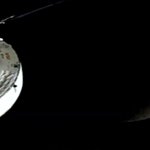
Φωτ. πριν από λίγο : πίσω από τη Σελήνη η μικρή μας Γη (δεξιά)...

"All of you, down to Earth, we love you !... See you on the other side !"
Victor Glover, pilot, Artemis II, a few minutes before a 40 min. loss of communication with Earth.
Photo : crescent Moon and little Earth (on the right) @NASA @NASAArtemis
#artemis2

Μοιράζομαι μαζί σας τη νέα μου σύνθεση για πιάνο, «the melody of things», εμπνευσμένη από το έργο του Ράινερ Μαρία Ρίλκε.
Ο Ρίλκε πίστευε ότι τα πάντα γύρω μας —η φύση, τα αντικείμενα, η σιωπή ανάμεσα στις αναπνοές— έχουν τη δική τους κρυμμένη μουσική. (συνεχίζεται)

Check out my new composition for solo piano "the melody of things" on Spotify, inspired by Rainer Maria Rilke who believed that everything around us—nature, objects, the silence between breaths— has its own hidden music. open.spotify.com/album/0qzki…
#piano #rilke #neoclassical #music

Έβλεπε τη μουσική ως μια δύναμη που μπορούσε να εκφράσει τον «εσωτερικό κόσμο» όταν η γλώσσα έφτανε στα όριά της. Αυτή είναι η δική μου ταπεινή προσπάθεια να αποτυπώσω αυτή τη μελωδία. Με νότες, σιωπές, ρυθμό.
Θα τη βρείτε επίσης:
youtu.be/Dzz46uxPenE?is=Xyvj…
open.spotify.com/intl-fr/alb…