

⛏️ ⛰️ 🌍
Asturias, Spain
Joined July 2018
- Tweets1.8K
- Following249
- Followers1K
- Likes3.6K






The typical funding model for exploration, with thousands of publicly traded juniors, most of which hardly spend money on actual exploration, or they just drill projects again that didn't work in previous cycles, we should not be surprised about the dismal discovery rates.

There’s been a quiet but large shift in exploration funding overnight and, honestly, most people will miss why it matters.
Fabian Baker, Dave Fincham & Andrew Tunningley have just launched FrontierX®. It’s a private exploration company funded entirely by major mining companies. Not one. Multiple. And they’re not passive shareholders sitting on the register. They’re involved from day one as real partners.
That alone changes the game of the early stage exploration model. FrontierX® isn’t dealing with quarterly reporting cycles, market noise, or the constant pressure to “do something” on Hotcopper for a headline.
No rushed capital raises because the broker told you so. No twinning holes just to keep the market warm. It’s proper exploration, run at the right pace, with money allocated in stages and decisions made around geology, not optics.
The ownership structure is what really makes it work. The company is privately held by management. The partners fund the work at cost and take majority ownership of any discoveries. FrontierX keeps a royalty and can move on assets that don’t meet partner thresholds. It’s basically the opposite of the typical junior model, where incentives can drift toward share price management instead of finding something real.
And having more than one major backing the same exploration vehicle? That almost never happens. If it does, it’s usually a sign something structurally different is going on.
I’ve known Fabian for a long time. He gave me my first real shot in this industry, and I’m proud to call him a mate. What he’s building is the sort of thing everyone agrees the industry needs, but very few people actually try, because it’s hard and it only works if you’ve genuinely made discoveries before and have the capabilities the majors will support.
Most exploration companies are set up to raise money. FrontierX is set up to make discoveries. That’s the difference.
We talk a lot about the industry’s discovery problem. This is what a real attempt at solving it looks like. Aligned capital, no public market noise, and teams that can just get on with the job.
Congrats on the launch, guys, I'm very proud. Definitely one to watch. Make sure to check out there website lnkd.in/g-wXd6v8
If you want more of my thoughts on the resource sector, you can sign up to my weekly newsletter here: kamoacap.com

Why? Simple: they don't need to participate in the endless 'beauty contest' against thousands of other publicly traded juniors. They don't need to spend money on conferences, give free shares to newsletter writers or pay a large part of money that is raised to brokers.
The REE market is tiny and dominated by China.
On top of that, the bottleneck in the supply chain is not mining, but processing.
If you want to invest in REEs, avoid junior exploration companies
Instead, follow @Sustainabledud1
and read his substack, before buying any stock.

Siebe Breed retweeted

This without a doubt is one of the best must watch mining podcast episodes in years

10 years ago, Steve Beresford & Ahmad Saleem launched Exploration Radio to interview the best in mining exploration.
We flipped the script.
What did they learn from 100+ of the world’s top explorers?
🎧 YT: youtu.be/ncDTH7JLi9s

Siebe Breed retweeted

Secular cycles in commodities and stocks tend to move in opposition. Commodities bottomed in 1999 just as stocks peaked in 2000. They peaked in 2011, just as equities entered a decade-long bull market.
Years of underinvestment in commodity production have left supply constrained. Capital discipline is still limiting the ability of producers to respond.
Meanwhile, the global energy transition is fuelling massive investment in infrastructure and driving demand for key raw materials. Geopolitical tensions and supply-chain realignment are reshaping global trade patterns, requiring more commodity-intensive capital spending.
Despite these tailwinds, sentiment remains bearish. Hedge funds were more pessimistic on commodities last summer than at any point in the last thirteen years.
Siebe Breed retweeted

Both are former mines, with plenty of metal left in the ground.
We are working hard to help build back the supply chains that Europe needs for green energy, semiconductors and defense applications.

Siebe Breed retweeted
The European Union has been taking numerous actions to build more independent supply chains. The article linked below clearly shows the reason why.
reuters.com/markets/commodit…

Siebe Breed retweeted
Historically, secular cycles in commodities and stocks tend to move in opposition. This is where things get interesting. Commodities bottomed in 1999, just as stocks peaked in 2000. They peaked in 2011, just as equities entered a decade-long bull market. Today, we may be witnessing another turning point.
Siebe Breed retweeted
Are you looking for a great antimony or tungsten brownfields project that can be drilled soon, in a safe jurisdiction? Hesperian Metals is open to partnerships on our projects, which have a clear, short pathway to production (if drill results confirm the potential).


Whatever you may think of the actual REE (or other critical raw materials) potential of Ukraine...
Metals and mining are certainly becoming part of the conversation again, after China restricted exports of some metals in recent months.

⚡️ EU offers Ukraine 'mutually beneficial' minerals deal, despite Trump saying US version close to signing.
The European Commissioner for industrial strategy, Stephane Sejourne, said he'd offered Kyiv an alternative to that proposed by the U.S.
kyivindependent.com/eu-offer…

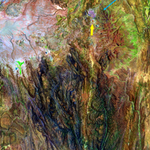
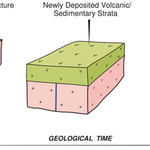
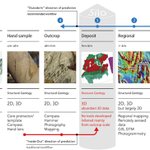
A big reason for low discovery rates is that a large part of exploration expenditures is spent in the wrong locations. Often on ‘advanced’ projects that did not work in previous cycles, or by looking at known mineral occurrences, and exploring around them, trying to find more.
Separate companies that apply an outside-in exploration approach in a new search space, from those that just rework ‘advanced projects’. With each cycle, the odds of a big discovery at a known project (and life-changing returns for investors) get lower.
teapawt.org/YellowLabLife/status/1…

This thread is a slightly edited version of an article that was posted on LinkedIN (where figure captions were included).
For references, see below, and on LinkedIn.
linkedin.com/pulse/outside-i…
