
PhD Student @MSKCancerCenter @cbm_student | @kanishkadey and @thenormanlab labs
Joined July 2020
- Tweets121
- Following107
- Followers127
- Likes1K



Pinned Tweet
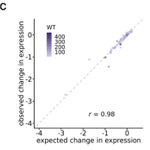
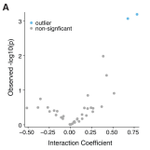
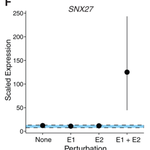
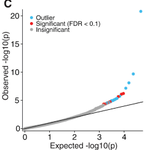
Happy to share that the paper on enhancer interactions led by @zrcjessica and I from my time in the @GrahamMcVicker lab is now published in Cell Genomics!
cell.com/cell-genomics/fullt…
A thread on some of the new analyses below: (1/n)

Karthik Guruvayurappan retweeted

Really happy to share our latest work in Nature Methods. Superb-seq is an assay that captures CRISPR on- and off- target edits with whole transcriptomes in single cells! Congrats to @mickeylorenzini @GrahamMcVicker and team!
paper: nature.com/articles/s41592-0…


Excited to announce our preprint describing SUPERB-SEQ 🦸, a new method to measure Cas9 edits and their effects on gene expression in single cells. Developed by @micklorenzini, myself, and @GrahamMcVicker biorxiv.org/content/10.1101/…

Karthik Guruvayurappan retweeted

About 90% of RNA molecules in our cells are tRNAs. To date, we have mostly been blind to their abundance and regulation in single-cell sequencing. Today, I’m excited to share a new manuscript from my MD/PhD work
biorxiv.org/content/10.64898…
Karthik Guruvayurappan retweeted

The code of life is written in nucleic acids, but proteins carry out the instructions. New work from @MSKCancerCenter led by the brilliant @LauraCKida introduces sctRNA-seq, a new single-cell assay that defines how cells translate between these languages
biorxiv.org/content/10.64898…
Karthik Guruvayurappan retweeted
Our bodies are colonized by trillions of viruses that we live with in homeostasis. The most diverse and abundant of these viral families are anelloviruses. A new paper from us at @MSKCancerCenter explores what happens after we *all* have been infected
biorxiv.org/content/10.64898… 1/n
Karthik Guruvayurappan retweeted

🧬 Can disease-relevant gene regulatory programs be hidden until we perturb cells?
Excited to share PerturbScape, our new preprint!
We show that perturbation-induced gene programs reveal disease-relevant biology missed by steady-state profiling, linking common, rare, and Mendelian disease genetics.
biorxiv.org/content/10.64898…
🤖 Made with AI

Karthik Guruvayurappan retweeted
#ASHG26 #ASHG2026 room 511/Level 5 at 8am to see @GrahamMcVicker present DNACipher, a model that combines DNA sequence & omic-signal imputation, to comprehensibly predict variant effects across cell types/assays, & interpret GWAS hits.
preprint: biorxiv.org/content/10.1101/…

Super excited to share what we have been working on at the intersection of human genetics and Perturb-seq!
Check out Tom's tweetorial below for more details!

1/ Most genes and variants matter somewhere but look silent in any one cell model. Can we build conditions that reveal phenotypes? With @kanishkadey, we engineer cell states to expose hidden disease biology and trace how genetic risk reaches disease genes. biorxiv.org/content/10.64898…

ALT Visual abstract: activating TFs singly and in pairs engineers new cell states, and the Mosaic model learns how TFs combine. Findings: hidden AMD risk variants, state-dependent convergence, and chromatin priming.
Karthik Guruvayurappan retweeted

Saturation mutagenesis of long-context seq2fun models requires millions of evaluations per gene. We introduce Multi-ISM to make this mapping routine:
biorxiv.org/content/10.64898…

Karthik Guruvayurappan retweeted

Delighted to share RNA fingerprinting, out today in @CellCellPress! Together with @david_a_knowles , we use Perturb-seq experiments—where the causal perturbation is known—to infer what drives cellular responses in new datasets: cell.com/cell/abstract/S0092…

Karthik Guruvayurappan retweeted

Exciting day for DNA Typewriter w/ 2 papers from the lab & SeaHub out today :)
1. Mouse lineage from E0 to E13.5
science.org/doi/10.1126/scie…
2. A fluctuation test for gastruloid heterogeneity
cell.com/cell/fulltext/S0092…
Paper #1 covered in quoted thread. More on paper #2 here. 1/n


Karthik Guruvayurappan retweeted

Comprehensive fate mapping of C. elegans transformed our understanding of development by revealing how coordinated fate decisions generate a complex organism.
In our paper out today in @CellCellPress , we take a major step toward extending this vision to mammalian development.
sciencedirect.com/science/ar…
Karthik Guruvayurappan retweeted

After a long wait, tangermeme is out @naturemethods!
tangermeme implements the primitives of genomic sequence-to-function modeling with efficient, tested, and composable functions.
I use it every day in my work, and I hope you find it useful too.
nature.com/articles/s41592-0…

Karthik Guruvayurappan retweeted

This week we're releasing a preprint exploring state space models for long-sequence genomic prediction, alongside Cerberus, a set of open PyTorch models built on this work. biorxiv.org/content/10.64898…
Karthik Guruvayurappan retweeted

Have you ever looked at a gene in IGV or a genome browser and wondered “What are all those (ATAC-seq/H3K27ac/CTCF ChIP-seq/…) peaks doing?” 🤔 I’m thrilled to share that we developed a new technology called Swap-seq to answer that exact question.
biorxiv.org/content/10.64898…
Karthik Guruvayurappan retweeted

Our single-nucleus immune multiome atlas is now out in @Nature! 🧬
10M PBMCs from 1,108 @FinnGen_FI donors recruited by @FRCBSresearch, profiled at @broadinstitute KCO with chromatin accessibility and gene expression in the same nuclei, to trace how disease variants act 🧵👇

Karthik Guruvayurappan retweeted

1/ I’m excited to share our new work, now out in @NatureNeuro! This was a wonderful collaboration with my long-term collaborator @jsteinlab, led by two fantastic trainees, @NanaMatoba and Jessica McAfee.
nature.com/articles/s41593-0…

Karthik Guruvayurappan retweeted

We often frame cancer treatment as an risk-benefit tradeoff. In reality, we characterize benefit far better than risk.
Why? because adverse event data, systematically collected across cancer types and treatments, did not exist until now.
The playbook:

Incredibly excited to report today on the determinants of toxicity to systemic therapy in cancer patients. Led by many including Alex Guo, Feiyang Huang, Saksham Mohan, River Walser, and the fearless @ZiadBakouny. Co-led by Wes Tansey and Jian Carrot-Zhang medrxiv.org/content/10.64898…

Karthik Guruvayurappan retweeted

Excited to share my first protein design story is now fully published at @natBME ! Very fortunate to have been able to work along the very talented @arthurwchow and Betty Li, who showed some the most jaw-dropping in vivo data I have ever seen! Come check out our paper!

Three years ago, my lab at @MSKCancerCenter set out to see if we could harness AI for new therapeutic proteins.
Today in @natBME, our first step in developing these AI-designed molecules as anti-tumor therapies is online.
Read more here: 1/n mskcc.org/news/using-ai-to-d…

Karthik Guruvayurappan retweeted

LDLR variants are the most common cause of inherited high cholesterol, but we don’t know which are harmful. We used prime editing to measure >5,000, out now in @CircAHA, led by @phillipzhou24, Minja Velimirovic & @TiannnYuu with @CassaLabBWH 🧵
ahajournals.org/doi/10.1161/… (1/15)

Karthik Guruvayurappan retweeted

Our paper is out today in Cell, "Trans-regulatory gene mapping prioritizes disease drivers in asthma", cell.com/cell/fulltext/S0092… 🎉 GWAS hands us thousands of disease-linked variants, but the genes that actually drive the disease often aren't the ones sitting at those variants.
