









Compute market is bound to be fragmented and lacking retail participation IMO
Largest traders of power, for instance, are those within the value chain. Mainly benefitting from DA/RT spreads and LMP effects
Power is predominantly traded OTC, as I imagine compute will be

Unsurprisingly H100 Perps on CEXs have been a major flop, launching 6 weeks ago. Even though Perps were unlikely to ever work (continuous vs. fixed term asset + nonfungible price anchors), it's clear that the legibility of risk and volatility market fit are the key barriers to clear for launching net new RWAs for retail traders.
sree retweeted

Trading firms are building desks to trade GPU compute like a commodity
Jump Trading has hired the founders of GPU trading platform Itô Markets to run a new compute desk, per Bloomberg. DRW and Vitus Commodities posted compute trading roles last month.
DRW's Don Wilson says compute could surpass crude as the world's largest commodity. CME has delayed its planned GPU rental futures.
The constraints look like power markets. Compute cannot be stored, forwards run three to five years, and the CFTC has flagged concentrated pricing power.
CoreWeave shows the credit side. It finances GPUs against offtake contracts, and Bloomberg currently says its debt prices a 60% chance of default within five years.
Compute curves will end up tied to power curves. The desks that price both will set the market.

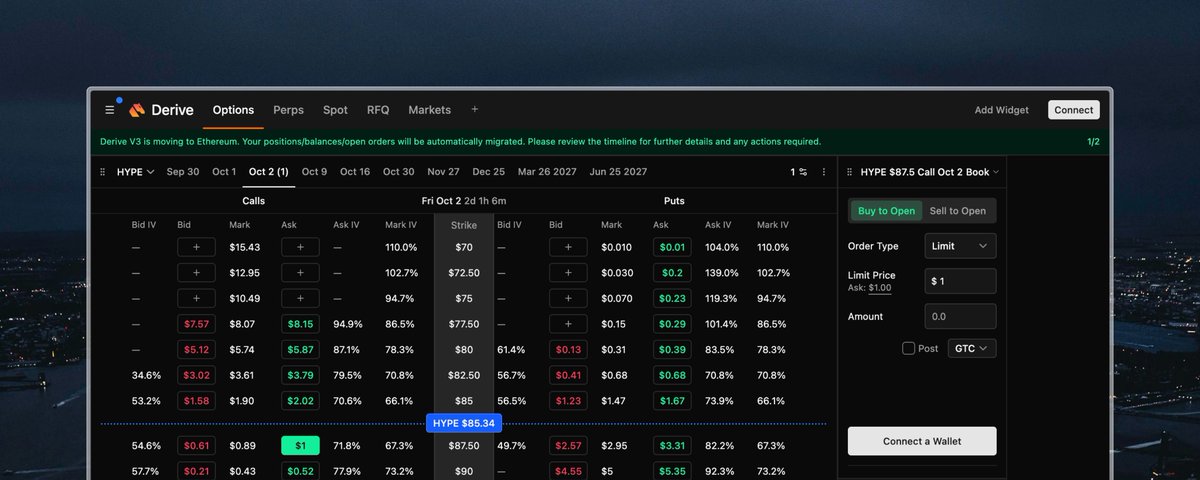
I was bullish crypto options before you liquid fund analysts maniacally bid ethereum:0xb1d1eae60eea9525032a6dcb4c1ce336a1de71be
Did I print? Of course not.

sree retweeted

Payward 🤝 @HyperliquidX
We're building permissioned Hyperliquid HIP-3* markets for US clients.
sree retweeted

Much has been said by racists, politicians, and racist politicians (like Bo French) about Indians and UT Austin admissions. I thought I should shed some light so their racism could be slightly more intelligent.
I'm a brown kid. I grew up in Frisco, went to a massive Texas high school, and went to UT.
I would wager that the kids in this picture and I have practically the same background. Like me, they probably went to a massive, pressure-cooker suburban Texas high school, and survived the gauntlet to earn their admissions.
These aren’t foreigners. State law requires 90% of UT's freshman class to be Texas residents. 75% of those in-state seats go to automatic admission on class rank. These are Texans.
Texas, for better or worse, is one of the few meritocratic college admissions schemes in the country for a school of its caliber. The rules are simple. Today, the top 5% of a public school's graduating class is automatically accepted. There is nothing to game. You can’t fake being a competitive rower or have some consultant write your essays for you. There isn’t anything to steal; it’s all there on the table to compete for.
And the competition starts the moment the bell rings for your first period of freshman year. You are ranked in your class every single year, for us, #1 to #450. You knew exactly where you were, exactly how hard you had to compete. My year was even less competitive than it is today. The top 6% made the cut, so that’s an all-out war for ~27 kids to get auto-accepted into UT.
So we worked our butts off. Here's what my life was like, starting in kindergarten.
Every summer, before the school year started, I had to finish the upcoming year's math textbook.
I sweated over getting As, even in elementary school. One funny memory is walking to my parents' room, crying, to report my first-ever 89 on a report card.
I did Kumon, my least favorite thing in the world. I still hate that weird half-smile that is their logo.
I went to math and science competitions, where I always lost, and came home crying again. (Quite the crybaby, wasn't I!)
And everyone else around me worked just as hard. Actually, a lot of the kids worked much harder. I know people who took extra classes (zero period) just to boost their GPA. Who routinely slept 5 hours a night to nail every assignment they had after band practice. Who were distraught when they got a 98 instead of a 100. People who stopped doing things they loved, like sports or arts, because those classes dragged down their GPA.
People put their entire life force into getting into this school.
I wasn't even in the top 10% of my class. The competition was too good. I wasn't disciplined enough to hang with them. I got in as one of the 22.5% of admits who are at-large Texans.
These are American kids who earned their way into this school in the most American way possible. Competition. They were told the rules, they competed, and they got the number. And on Saturday they were in that stadium in burnt orange, screaming their heads off, like every other Texan at DKR or around the country. I can’t feel anything but pride for them. That they get to live the dream that so many of us dreamt growing up!
Kids like this have helped improve UT’s standing on the national stage. They made it out of the pressure cooker and placed well in Finance, Big Tech, and more recently, startups. They meaningfully contribute to the economies of our state and country. You should be proud of them too.
Overall, this seems like a meritocratic (albeit flawed) way for Texans to be admitted to our state’s flagship school. It’s racially blind. But politicians like Bo French are asking for something different. They want the student body to rebalance racially.
Surely they aren’t advocating for affirmative action, are they?


sree retweeted

Have been seeing a bunch of posts today about Polymarket increasing its crypto taker latency. I don't think any of the people who are complaining are the ones who have any shot of benefitting from the increase.
Fundamentally, on Polymarket right now, your cancels can latency spike to 250+ms. This means that makers are at a DISADVANTAGE compared to takers. At least a 150ms taker delay levels the playing field a bit.
"But Kalshi has no taker delay?"
Sure. But Kalshi also has a functioning CLOB. Kalshi does not have 250ms+ cancel latency spikes. On Kalshi, there is a clear and well-documented path towards getting FIX and VPC.
Polymarket is behind. If and when Polymarket catches up in infra and releases their Rust rewrite and gets their P99 cancel down to 10ms and makes a VPC connection available to all serious participants, then perhaps a shorter taker hurdle makes sense.
Anyways, I wrote some stuff about this a long while ago, but I think it still holds up.
I assume that most of the people who are complaining are not the target audience of this sort of writing, but at least wanted to put this out there.

sree retweeted

In light of exploit news, we're releasing Brookwell access codes early.
You should never have to worry about your funds being safe.
Especially if an app calls themselves a "neobank"
This is why we offer FDIC-insured bank accounts that are fully managed by Erebor Bank - no passthrough conditions, no smart contracts to exploit.
If you were affected by today's exploits, reach out and I'll personally onboard you.
Cards coming soon.


sree retweeted

Why @HyperliquidX Should Acquire Gemini: The Regulated HIP-3/4 Deployer in the US
Hyperliquid is engaging with the CFTC/SEC to enable U.S.-regulated companies to offer perpetual futures that trade and settle on its public blockchain.
I think Hyperliquid should take that ambition one step further: Acquire a regulated U.S. platform like Gemini and turn it into the de facto regulated HIP-3 and HIP-4 venue in the U.S.
Gemini went public in September 2025 at a $3.3B valuation. Today, it trades at roughly $450M, down more than 85% from its IPO valuation.
The core business is clearly struggling. Gemini is too small to compete effectively with the major U.S. exchanges for spot or derivatives flow. It has no meaningful liquidity moat and limited crypto-native distribution. The company has already started diversifying toward its credit card and prediction markets businesses.
More telling is that Gemini is in outright shrinking mode. It has wound down its UK, EU, and Australia operations, cut headcount roughly 40% from peak to about 402 employees, and guided to lower compensation and technology spend for the year. Assets on platform fell from $18.2B to $8.4B year over year and spot volume dropped 66%. This is a company retreating to its core and cutting burn.
But what looks like a challenged standalone business could be a strategic asset at a fire-sale price.
For roughly $450M, Hyperliquid could acquire Gemini's entire U.S. regulatory stack, which I think could be worth ~$200M on its own:
- NYDFS Trust Charter: custody + New York exchange authority (2015)
- DCM: Gemini Titan, CFTC-regulated derivatives venue (Dec. 2025)
- DCO: Gemini Olympus, CFTC clearing license (Apr. 2026)
- FCM: in progress, completing the CFTC derivatives stack
- MTLs: money-transmitter licenses across nearly all U.S. states
- Broker-dealer: rails for regulated equities
For context, @krakenfx's parent paid up to $550M for Bitnomial, effectively acquiring a regulatory and derivatives infrastructure asset with little operating business attached. Gemini's entire market cap is now below that.
Yes, Hyperliquid would inherit a business currently losing roughly $30–40M per quarter operationally. But it would also acquire a meaningful operating footprint:
- 580K monthly transacting users (Q2'26)
- 1.72M lifetime transacting users
- $8.4B of assets on platform
- $3.8B quarterly spot volume
- $3.1B institutional / -= $0.7B retail
- $45.5M quarterly revenue, or ~$180M annualized
- 106K active card users
- ~$485M quarterly card spend and ~$220M of receivables
- A regulated prediction-markets business with 27K+ traders and 225M+ contracts since launch
At a $450M valuation, that's roughly $290 per funded customer.
For comparison, @Robinhoodapp paid roughly $400 per funded customer for Bitstamp, despite acquiring about half the revenue and no comparable U.S. federal license stack. Kraken paid roughly $790 per funded user for NinjaTrader.
And Gemini's users already hold an average of roughly $14.5K of assets on platform. In other words, you could argue that the regulatory stack alone goes a long way toward underwriting the purchase price, while the users, assets, revenue, card business, and prediction markets come on top.
The most interesting part is that Hyperliquid could potentially finance the acquisition without touching a single burned HYPE token and using a very small % of the FDV supply.
The community reserve holds roughly 389M HYPE. Spending ~7.9M HYPE at $70 would represent approximately $550M — just 2.0% of the reserve, under 1% of max supply, and roughly 3% of HYPE's ~$18.5B circulating market cap — enough to acquire Gemini outright at a ~20% premium to its current market cap. Hyperliquid could then redirect a portion of protocol buybacks toward rebuilding the reserve. At the current fee run rate, the reserve could potentially be replenished within 12–18 months.
The strategic logic is bigger than simply buying an exchange. Hyperliquid would be buying the regulatory bridge between HIP-3/4 and the U.S. market.
Gemini could become one of Hyperliquid's HIP-3 and HIP-4 markets, the regulated U.S. deployer, handling KYC, custody, fiat rails, brokerage, clearing, and compliance while the L1 provides the underlying market infrastructure, liquidity, and onchain settlement.
Mechanically, this transaction is far simpler than most public-company M&A. Gemini's dual-class structure gives Class B shares ten votes each, and the Winklevoss twins hold all of them, roughly 94.7% of total voting power. It is a Nasdaq-designated controlled company. There is no proxy fight, no activist interloper, no drawn-out process. Board approval and a majority of voting power both run through two people. The entire negotiation is whether Cameron and Tyler want to convert a controlling stake in a declining exchange into a meaningful HYPE position and the distinction of bringing Hyperliquid onshore.
On structure, the buyer wouldn't be the protocol or the foundation directly. NYDFS probabl wants a US entity with named officers, not an offshore foundation. The path is a Delaware HoldCo, funded by the Hyper Foundation but legally distinct, that acquires Gemini and keeps the regulated subsidiaries intact. The L1 stays a separate permissionless layer that never touches a US customer.
Polymarket already ran this playbook. Offshore, non-KYC, with a CFTC settlement on its record, it bought QCEX (a licensed DCM/DCO) for $112M in July 2025, ring-fenced it as a US entity, and relaunched onshore in December. Hyperliquid starts from a better position: no enforcement history, US users geofenced, and active dialogue with both agencies.
Hyperliquid generates substantial cash flow and sits on an enormous treasury. It should be much more aggressive about deploying both strategically. let's stop the buy back and burns and play offense.
@chameleon_jeff @Hypurr

sree retweeted

Big fan of @Uniswap, but AMMs are going to zero.
At XTX Markets, I traded 4% of all US Equities volume on any given day. None of it ever went through an AMM and none of it ever will.
1. Making markets via AMMs is like being a plastic bag drifting in the wind (to quote Katy Perry). If you're a market maker, you want to be able to actively place and cancel orders across thousands of assets at different depths in the book. Doing this via an AMM is nearly impossible. Instead, you put up liquidity in a range and then acquire impermanent loss while getting picked off by takers.
2. It's more expensive and imprecise to manage liquidity on AMMs than in a traditional exchange. You have to model network congestion and then pay gas and protocol fees. Meanwhile, in traditional exchanges you have a co-located FPGA where you can easily measure p90, p99 latencies. Fewer uncontrolled variables.
3. "AMMs lower the barrier to making markets, opening the space up to many new participants." First, not everyone should be making markets. Retail participants should not be making markets. The worst thing for retail to be doing is trading against other retail. You want to trade against people who have different time horizons. For example, market maker (seconds time horizon) vs. retail (years time horizon).
4. AMMs do not segregate order flow properly. Wintermute should not be getting the same pricing as Joe in Minnesota. Retail spreads should be tighter.
5. Retail has been sold a lie on high APRs they get by "making markets" via AMMs. "452% on CASHCAT" is a great headline, but in reality the typical retail investor has no understanding of how an AMMs works. Try explaining what an AMM is to a normal person. This complexity is why AMMs will never take off for general retail outside of crypto degens.
AMMs have their place: "where most assets couldn't get a professional market maker's attention." Or during weekends when traditional markets are close, yet this gap is closing.
All of the tokenized equity issuers are moving to a model similar to @Ondo whereby stocks are minted/redeemed through RFQ (no AMMs). Now, compared to traditional markets even RFQ looks antiquated. We will soon see more dark pools and SDPs which stream quotes direct.
That is the future I see.


RT @quant_xbt: The thing with AMMs is they really only made sense during DeFi summer 2020, because they let you trade shit no exchange was…
This quoted post is unavailable.
sree retweeted

If I had to obsess over one engineering project to improve my trading, it would be building a really good market replay engine.
Basically, take the actual market/order flow and replay it through your strategy as close to live as you can, including execution, latency, queue position, fees, etc.
The closer your backtest is to the environment you actually trade in, the more useful everything you learn from it becomes.

sree retweeted

1/ PropAMMs just blew through $1B in total volume swapped on Ethereum, with DeFi users enjoying price improvement on over 130K swaps.
This has been a collaborative effort to bring more liquidity to Ethereum, utilising guarantees of economic security, decentralization, liveness and censorship resistance 🧵

sree retweeted

If you want to understand why retail sentiment is at all-time lows, these two charts explain most of it.
There are fewer tokens worth >$250M today than at any point since early 2021. Every valuation tier above $250M peaked in Nov 2021 and never recovered. Meanwhile, the number of tokens >$1M did make new highs, peaking in Dec 2024. Pumpfun and the launchpad era created more tokens than ever, but the liquidity to sustain them never showed up. The pyramid got wider at the base and thinner at the top.
Tokens by threshold (cycle peak → Jun '26):
>$1M: 3,648 (Dec '24) → 2,442 (−33%)
>$50M: 728 (Nov '24) → 358 (−51%)
>$100M: 484 (Nov '24) → 217 (−55%)
>$250M: 288 (Nov '21) → 110 (−62%)
>$1B: 123 (Nov '21) → 45 (−63%)
For most retail participants this is brutal: the median token fights against thousands of newly created competitors each day for less liquidity, which is the PvP environment we've been living in. The flip side: there's never been a better time to be a fundamental investor in crypto. As consolidation plays out, you just need to pick a handful of winners that can eventually grow into multi-billion dollar valuations.
Methodology note: this covers all 54k assets CoinGecko has ever listed, including 36k dead or delisted ones, so survivorship bias doesn't flatter the counts. I took month-end market caps from Jan 2020 to Jun 2026 and excluded anything that isn't a unique crypto-native asset: stablecoins, wrapped assets, LSTs, lending receipts, and tokenized RWAs (e.g., ETH counts once; WETH and stETH don't count at all). ~10.7k unique assets finished at least one month >$1M between Jan 2020 and Jun 2026.


