
Trading coach, psychologist, author, blogger. Please do not respond to anyone soliciting business in my name.
Cinnaminson, NJ
Joined July 2007
- Tweets17.7K
- Following872
- Followers98.2K
- Likes4K




Here's a peak performance principle for productivity: How we approach our work determines the quality and quantity of our efforts: traderfeed.blogspot.com/2026… @ProfCalNewport

Very insightful presentation of the role of heuristics in deliberate practice and the development of expertise from @adamfiskebt: xitter.cf/adamfiskebt/status/211…

Using heuristics as an edge
1/6
Thinking something through is a conversation with yourself.
So whenever you enter a trade, manage it (add, take partial profits, re-enter), or exit, it's a conversation.
Inner conversations you have while trading, other traders have too.
But even though these conversations are on the same topics, their length, clarity, and confusion vary wildly.
Some of them are like the dreaded meeting we've all sat through. They go round in circles, waffle on and seem to go nowhere.
Others are like a frustrating conversation that's either full of irrelevant detail or so brief it skips important information. Hold that thought.
You're always competing against other traders. And in doing so, you want to see opportunities before they do, act before they act, and take profits before they can.
We're told the importance of deliberate practice, which requires deliberate thinking.
Deliberate thinking is how you work out and develop the best course of action.
But when it's time to take the stage, the field or the trading screens, deliberate thinking isn't an option if musicians, athletes and traders want to perform and/or compete well.
Turning all that thinking and planning into a performance skill, while the market moves in real time, calls for a shorthand version. A rule of thumb/heuristic is the shorthand version of that mental conversation.
In the trade examples that follow, you'll see how they lead to fast, clear trade decisions.
You only have to look back at everything you've consumed about trading to know this is an uncommon topic. That's why applying rules of thumb is an edge over other traders.
Heuristic one: Is fuel used up?
The beauty of this heuristic is that it gives traders who tend to chase the market entering a trade insight into what's happening beyond price changing quickly.
Being counterintuitive, it also gives you an edge over the competition.
Starting with the counterintuitive part, traders are drawn to fast-moving price like moths to a flame.
Mostly, this leads to buying tops and selling bottoms. I say mostly because there are times when 'chasing' is the correct trade, and I have a rule of thumb for that too. But the majority of the time, when it isn't, consider this.
Let's say, having trended up for three hours prior, the market has stalled for about half an hour. It's not going down, but it's no longer going up.
That stall has some traders assuming the market will reverse, and they're now looking to get short.
If price suddenly rolls over and drops quickly, the sudden drop is the trigger for traders to chase the market and enter a short trade. If you've traded for any length of time, you know what I'm referring to, because it's the intuitive thing to do, and we've all done it.
The problem, of course, is that by the time we're short, the market flips and starts heading back up again.
From a rule-of-thumb perspective, I think of price movement as using fuel. How fast the fuel gets used depends on the speed of the move.
Say you head out to an oval for a run, and you can either sprint at your top speed or jog at a relaxed pace.
If you run flat out, you're likely to be on your back gasping for breath within a hundred metres, because you've run out of 'gas'.
But if you jog, you can do complete lap after lap before you reach that same out-of-gas state.
It's the same for price movement, but people think about it in reverse. When price is moving slowly, grinding away, many traders doubt it can keep going.
Yet it's using up buying fuel at the pace of a relaxed jog, which in turn leads to 'refuelling'.
That refuelling comes from short sellers having to cover (who've entered because they anticipate price rolling over to the downside), and from buyers who sold prematurely, also anticipating price rolling over, now having to re-enter once they see their long trade is still working.
By contrast, fast movement uses up all the stops traders have placed close to the current price.
As usual market behaviour, experienced traders don't react.
But less experienced traders enter into short positions, unknowingly refuelling the market with more buying fuel to take prices higher when they cover their shorts.
So the rule of thumb is: is fuel used up?
Of course, this is contextual, because trading is chess, not checkers. But that's all the more reason to use heuristics, because you can tie them together, like in the example below.
Heuristic two: Aggressive or defensive?
Firstly, I have a bigger-picture view chart telling me the market is ideally suited to 'Premium Long' playbook trades showing up. An indicator tells me when this is the case - which is a heuristic in itself. Note the second line in the message box: 'Defensive profit-taking when fading'.

Thought I would share this unusually beautiful experience from an up and coming singer, Noemi Angel: youtu.be/CvPOd4Aq-Pc?list=RD…
Amidst the challenges of solitude, distance, and finding our own places in a world that never stops moving, we can "feel it coming".
Great observations, @BSgomez; we're stuck in the wrong habits--

Winter in trading doesn’t just empty the account. It also exposes the habits that keep you stuck.
Overtrading. Holding losers. Becoming a bag holder.
Most of the time, knowing you should stop doesn’t stop it. The routine feels familiar. The hope that “this time it comes back” or “I just need one good trade” feels safer than facing the loss.
What actually changes a trader is rarely another tip or another journal entry.
It’s a real challenge — something that makes the old way more painful than the work of changing.
As Dr. Brett Steenbarger writes in his new peak performance series: “If it doesn’t challenge you, it cannot change you.” All real change is born of strenuous effort. Every change starts by pushing past your current boundaries.
For many overtraders and bag holders, that challenge arrives as a painful enough loss or a long enough stretch of going nowhere that the emotional weight forces a shift. Not “I should change,” but “I have to change.”
The competitive part of you finally gets tired of losing and starts the hard work of reviewing what actually went wrong, cutting size, sitting out when nothing fits, and rebuilding with small, disciplined steps.
The Market Wizards Steenbarger studies put that kind of daily effort into scanning, studying, and reviewing. They treat the discomfort of the hard periods as the fuel, not the excuse to stay the same.
Winter is harsh, but it can also be the challenge that finally moves you. Protect what’s left, do the uncomfortable work, and let the pain of staying stuck push you past the habits that created the bag in the first place.
The next season rewards the ones who used the quiet time to change, not just wait.
Here's a new series of posts outlining peak performance principles and ways in which we can take our trading--and our lives--to the next level. No greatness was ever achieved in comfort: traderfeed.blogspot.com/2026… @gfc4 @jackschwager

When many traders struggle with performance, it's a good sign that markets have changed--and that we need to adapt! Here's a best practice for mastering shifting markets: traderfeed.blogspot.com/2026… @MikeBellafiore @smbcapital @sspencer_smb @TheOneLanceB @SMBrecruiting

When we embrace our failures and push ourselves to face them, we are most likely to recognize when they begin to occur in real time. Much more effective than positive thinking is reviewing our own "book of truths" each day: traderfeed.blogspot.com/2026… @TomHougaard @harrimanhouse

A best practice in trading is approaching each day with the mindset of a creator. Here's how we do that: traderfeed.blogspot.com/2026…

Our performance follows from our mindset; a best practice in trading is maintaining motivation and focused learning during periods of both success and setback: traderfeed.blogspot.com/2026… @Ahead_Coach @gfc4 @jackschwager

Very interesting software to log trading plans and track how well you followed them: files.instinct.com/dbabinsdf…

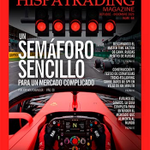
Great trading articles for Spanish speaking traders: hispatrading.es/pre-registro…

Great traders master change processes; they are explorers, not settlers. An effective way to improve your trading is to exercise your capacity for change: traderfeed.blogspot.com/2026… @briannawiest

Our strengths cannot exist in an environment of comfort; what we don't exercise inevitably atrophies. Here are two realities of trading success: traderfeed.blogspot.com/2026…

Here is an important element of the current market's big picture. Keeping an eye on the big picture while focusing on opportunity in the short-term allows us to trade tactically *and* benefit from larger strategies and trends: traderfeed.blogspot.com/2026… @Barchart @RayDalio

When we review not only our trades but the opportunities we failed to trade, we become better pattern recognizers: traderfeed.blogspot.com/2026…

Thanks, @Ahead_Coach, how we manage ourselves sets us up to manage our trading better--

There was so much more in this conversation, from managing fear and FOMO to increasing position size, building focus, finding your strengths, and keeping trading from becoming your whole life.
Watch The Mental Edge with Dr. Brett Steenbarger @steenbab on YouTube:
bit.ly/4rzSGwm

This post begins a new series on the best practices that distinguish successful traders from unsuccessful ones. Success results from the cumulative impact of daily, intensive learning: traderfeed.blogspot.com/2026…

Great compilation of trading blogs, and a great way to find new inputs and inspirations for your trading: bloggers.feedspot.com/tradin…

Love this, @jedimarkus77; it's all about how we program ourselves and the cumulative impact of such programming day after day--

I’ve posted this before.
This is something I used to read every morning before trading at the CME for inspiration.
@steenbab @AnneMarieTrades @MPX_Trader @TonyRobbins

One of the great trading challenges is to identify the themes that capture big money flows in markets and benefit from occasions when, like now, there are multiple, shifting themes: traderfeed.blogspot.com/2026…
