

Researcher and lecturer at @unican. Occasional curator of lists.
Spain
Joined February 2008
- Tweets925
- Following279
- Followers306
- Likes1.3K




He pedido a Claude que convirtiese el currículo de Matemáticas de Cantabria en dos exploradores interactivos: Primaria, y ESO + Bachillerato.
Compara cursos y materias palabra a palabra, sigue un concepto a lo largo de cada etapa y prepara situaciones de aprendizaje. 🧵👇


Primaria: los tres ciclos lado a lado.
Cuánto crece cada sentido, qué descriptores del Perfil de salida conecta cada competencia y qué palabras estrena cada ciclo (en 2.º: fracciones, probabilidad, simetrías...).
personales.unican.es/van-vae…


1
123
ESO y Bachillerato: un mapa de itinerarios de 1.º ESO a 2.º Bach.
Busca un concepto y se iluminan las materias donde aparece: las matrices, solo en 2.º de Bachillerato. Y los descriptores del Perfil, en sus dos niveles.
personales.unican.es/van-vae…


1
93
Steven Van Vaerenbergh retweeted

New blog post, folks.
"Time Till Open Source Alternative is now zero"
staltz.com/time-till-open-so…

A good reminder in the October Authors@IEEENewsletter on how AI should be used in academic writing.
🤖 Made with AI

105

Steven Van Vaerenbergh retweeted

It is hard to communicate how much programming has changed due to AI in the last 2 months: not gradually and over time in the "progress as usual" way, but specifically this last December. There are a number of asterisks but imo coding agents basically didn’t work before December and basically work since - the models have significantly higher quality, long-term coherence and tenacity and they can power through large and long tasks, well past enough that it is extremely disruptive to the default programming workflow.
Just to give an example, over the weekend I was building a local video analysis dashboard for the cameras of my home so I wrote: “Here is the local IP and username/password of my DGX Spark. Log in, set up ssh keys, set up vLLM, download and bench Qwen3-VL, set up a server endpoint to inference videos, a basic web ui dashboard, test everything, set it up with systemd, record memory notes for yourself and write up a markdown report for me”. The agent went off for ~30 minutes, ran into multiple issues, researched solutions online, resolved them one by one, wrote the code, tested it, debugged it, set up the services, and came back with the report and it was just done. I didn’t touch anything. All of this could easily have been a weekend project just 3 months ago but today it’s something you kick off and forget about for 30 minutes.
As a result, programming is becoming unrecognizable. You’re not typing computer code into an editor like the way things were since computers were invented, that era is over. You're spinning up AI agents, giving them tasks *in English* and managing and reviewing their work in parallel. The biggest prize is in figuring out how you can keep ascending the layers of abstraction to set up long-running orchestrator Claws with all of the right tools, memory and instructions that productively manage multiple parallel Code instances for you. The leverage achievable via top tier "agentic engineering" feels very high right now.
It’s not perfect, it needs high-level direction, judgement, taste, oversight, iteration and hints and ideas. It works a lot better in some scenarios than others (e.g. especially for tasks that are well-specified and where you can verify/test functionality). The key is to build intuition to decompose the task just right to hand off the parts that work and help out around the edges. But imo, this is nowhere near "business as usual" time in software.

“When unlimited power meets limited understanding.” A very decent read on how AI is detrimental to junior coders’ skills. The argument generalizes well to other fields: AI access should come *after* demonstrating mastery. finalroundai.com/blog/ai-vib…

Steven Van Vaerenbergh retweeted

Hoy en @elperiodico hablando de Educación Matemática con motivo del inminente @C2EM2025
elperiodico.com/es/sociedad/…

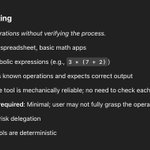
In maths, "vibe calculating" has been around for a while. You write the operations and get the result from the calculator, without worrying about their correctness. Compared to LLMs, the correctness is pretty much guaranteed here.

There's a new kind of coding I call "vibe coding", where you fully give in to the vibes, embrace exponentials, and forget that the code even exists. It's possible because the LLMs (e.g. Cursor Composer w Sonnet) are getting too good. Also I just talk to Composer with SuperWhisper so I barely even touch the keyboard. I ask for the dumbest things like "decrease the padding on the sidebar by half" because I'm too lazy to find it. I "Accept All" always, I don't read the diffs anymore. When I get error messages I just copy paste them in with no comment, usually that fixes it. The code grows beyond my usual comprehension, I'd have to really read through it for a while. Sometimes the LLMs can't fix a bug so I just work around it or ask for random changes until it goes away. It's not too bad for throwaway weekend projects, but still quite amusing. I'm building a project or webapp, but it's not really coding - I just see stuff, say stuff, run stuff, and copy paste stuff, and it mostly works.
1
1
144


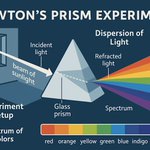
4o image generation is wild. But... that's not a prism, it's a pyramid. GenAI still doesn't get geometry. Is that on the roadmap, @OpenAI? openai.com/index/introducing…

1
134
Steven Van Vaerenbergh retweeted

When you make compute cheaper do people buy more?
Yes. It's called Jevons Paradox and it's a big part of our business thesis.
In the 1860s, an Englishman wrote a treatise on coal where he noted that every time steam engines got more efficient people bought more coal.
🧵(1/3)


An intriguing proposal for a Fourth Law of Robotics:
"A robot or AI must not deceive a human by impersonating a human being," as put forward by @JemielniakD at IEEE Spectrum. A thread 🧵
1
1
85
This law would require:
1️⃣ Mandatory AI disclosure
2️⃣ Clear labeling of AI-generated content
3️⃣ Robust technical standards for AI identification
4️⃣ Legal enforcement frameworks
5️⃣ Educational initiatives to boost AI literacy
(Is 3 even possible?)
1
55
End of thread. Just read the article -- it’s short and worth your time: spectrum.ieee.org/isaac-asim…

37