
Researcher @DFKI Generative Image Modeling | Intern @MetaAI '22 & @AdobeResearch '21
Kaiserslautern, Germany
Joined November 2012
- Tweets373
- Following856
- Followers212
- Likes1.2K




Stanislav Frolov retweeted

Register tokens were introduced to fix artifacts in Vision Transformers (ViTs) (arxiv.org/abs/2309.16588)
In Diffusion Transformers (DiTs), we don't observe such outliers, so registers shouldn't help.
But they do... And especially for pixel-space DiTs.
Simply adding a few empty tokens can improve FID from 3.52 to 2.69.

We will be presenting our CVPR paper When Pretty Isn’t Useful in the afternoon today.
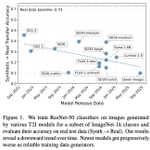
We benchmark modern t2i models and find that newer models make progressively worse synthetic training data and we investigate why!
Come visit us at poster #46.
bill2462.github.io/When-Pret…

I will be at CVPR 2026 in Denver. Lmk if you would like to meet. Looking forward to a week full of interesting talks and conversations!
4
103
Current image generation models produce stunning images, but do they perform well as synthetic training data generators? In our new CVPR paper, we observe a surprising performance regression and investigate why.
Link to paper: arxiv.org/abs/2602.19946
Congrats to all co-authors!


Happy to share our VXAI paper at TMLR, a review & framework for the evaluation of XAI. Check out the VXAI explorer here vxai.dfki.de/

Unifying VXAI: A Systematic Review and Framework for the Evaluation of Explainable AI
David Dembinsky, Adriano Lucieri, Stanislav Frolov, Hiba Najjar, Ko Watanabe, Andreas Dengel.
Action editor: Krikamol Muandet.
openreview.net/forum?id=wAvF…
#explanation
1
98
Stanislav Frolov retweeted

Unifying VXAI: A Systematic Review and Framework for the Evaluation of Explainable AI
David Dembinsky, Adriano Lucieri, Stanislav Frolov, Hiba Najjar, Ko Watanabe, Andreas Dengel.
Action editor: Krikamol Muandet.
openreview.net/forum?id=wAvF…
#explanation
Stanislav Frolov retweeted

Say hello to DINOv3 🦖🦖🦖
A major release that raises the bar of self-supervised vision foundation models.
With stunning high-resolution dense features, it’s a game-changer for vision tasks!
We scaled model size and training data, but here's what makes it special 👇


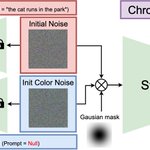
Happy to share that TKG-DM, a training-free chroma key content generation diffusion model was accepted to CVPR 25. Project led by @Oguryu417
Paper: arxiv.org/abs/2411.15580
Code: github.com/ryugo417/TKG-DM

Checkout PromptMap, presented at IUI'25, a new interaction style with text-to-image models/data that allows users to freely explore a vast collection of synthetic prompts through a map-like view with semantic zoom.
Paper: arxiv.org/abs/2503.09436
Code: github.com/Bill2462/prompt-m…

Stanislav Frolov retweeted

I received feedback that my post about reviews not being "random" caused stress for some students. I'm sorry for that. It was meant to be empowering.
Personally, I find the idea that I don't have some control over the destiny of my papers to be disheartening. If the process is random and I have no influence, why would I bother?
Taking personal responsibility for poor reviews is, for me, a way to take control. It gives me a chance to act. Even better, it gives me hugely valuable feedback that my work missed the mark. Mea culpa.
Saying the reviewers are bad or reviews are random may give temporary solace -- "it's someone else's fault" -- but it doesn't lead to long-term success and, ultimately, satisfaction.
If you found my post disheartening, then see my guide for how to write a good CVPR paper. It's an action plan for writing a paper that reviewers will understand.
It's not easy to do everything I describe and it takes practice. But a PhD is about practice. We practice the whole process of doing science and a big part of this is practicing writing about our science.
I will also share my tips for writing rebuttals once I find time to clean them up.
perceiving-systems.blog/post…

Stanislav Frolov retweeted

I am very happy to share that our open-access survey about diffusion models in the field of image super-resolution got accepted by #IEEE TNNLS: ieeexplore.ieee.org/document…
#images #diffusion #models #survey
@stfrolov @rave78 @spalaciob

Dynamic attention-guided diffusion accepted to #WACV2025 🎉
We challenge the common SR diffusion approach: must the entire image be updated at each step? Some regions, like faces, may need more focus than plain backgrounds. 🧵
1
277
We find that important image pixels, as measured by the attention values of DINO, are more challenging to learn (higher reconstruction error).

1
1
79
We propose a time-dependent, attention-guided masking approach that prioritizes high-attention regions first, gradually refining the entire image. This improves quality across various models.
Paper: arxiv.org/abs/2308.07977
Thanks to @LuckyOwl95 @rave78 @spalaciob @DFKI


I am happy to share that SpotDiffusion was accepted to WACV 2025.
Page: spotdiffusion.github.io/
Code: github.com/stanifrolov/spotd…
Paper: arxiv.org/abs/2407.15507
SpotDiffusion is an efficient method for seamless panorama generation from text. 🧵
We can produce seamless panoramas much faster by leveraging the iterative nature of diffusion models and shifting non-overlapping denoising windows over time.


1
1
58
Check out our project page and paper for more visual results.
Page: spotdiffusion.github.io/
Code: github.com/stanifrolov/spotd…
Paper: arxiv.org/abs/2407.15507
Thanks to my collaborators @bmoser95 and Andreas Dengel. @DFKI @rptu_kl_ld @wacv_official
1
147
Stanislav Frolov retweeted

✨🎨🏰Super excited to share our new paper Ensemble everything everywhere: Multi-scale aggregation for adversarial robustness
Inspired by biology we 1) get adversarial robustness + interpretability for free, 2) turn classifiers into generators & 3) design attacks on vLLMs 1/12

