
▶️ Looking for cheap high growth stocks with expanding margins ▶️ Mostly small & microcaps ▶️ Target: 30% portfolio return p.a. ⚠️ Not investment advice
Joined June 2025
- Tweets1.8K
- Following244
- Followers2.5K
- Likes7.2K




$458870.KQ
Absolute bloodbath today. The stock is down 30% following catastrophic quarterly numbers (revenue down 38% YoY & 66% QoQ, negative operating profit).
After management assured back in Q2 that implementation delays with large customers from that quarter would be recovered in Q3, they are now blaming hardware shortages of servers and server components for the bad numbers. These servers are installed on-site at customer locations to process incoming patient data captured via the gateways.
I sold my position today because I have lost all confidence in management. In both an analyst interview (stock.naver.com/domestic/sto…) and recent investor presentations, they guided for a growth rebound in Q3/26, only to drop these disastrous numbers without warning at a time when the broader market is already under severe pressure.
I already had a slightly bad gut feeling with the equity raise discussed in the post linked below. Why would a company execute a capital raise at a seemingly depressed share price right after quarter-end if they truly believed Q3 numbers would rebound and trigger a rally? Now I know. In hindsight, I really should have trusted my gut instead of getting blinded by the market's initial positive reaction to the raise.
I also want to sincerely apologize to anyone who might have followed me into this name. I am deeply sorry.
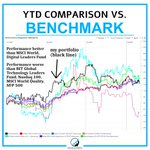
Right now, I don’t even feel sad, just completely empty. My portfolio has now given back all of its YTD gains, which is a absolutely devastating outcome considering how much time I put into stocks and investing alongside my full-time job.
Honestly, I’m not sure what conclusions to draw from the brutal price action over the past few weeks. Virtually everything in my portfolio has taken a hit lately - whether deserved, like Seers, or completely unjustified, like UroGen and the majority of my other holdings. Does it even make sense to avoid AI stocks if the portfolio gets dragged down by the tech sell-off anyway? Should I rotate back toward more US names and cut exposure to more exotic markets? Would going back to broader diversification (~25 names) make more sense, given how much better that strategy worked for me in 2024 and 2025? Should I deprioritize hypergrowth? Should I put more weight back on classic quality filters, like steady, reliable QoQ revenue growth and predictability?
These are the questions I need to answer for myself over the coming weeks. For now, I’m taking a step back and going on a multi-week break from here to gather my thoughts. Not sure yet if or how this account will continue afterwards.

$458870.KQ
Seers managed to escape the sea of red across my Asia portfolio this morning, up +3% on an interesting announcement.
The company issued 110b KRW in convertible bonds ($82m USD against a market cap of around $700m USD) with a 5-year maturity (due Oct. 21, 2031).
At first glance, this might not sound like a reason to celebrate given the dilution (9.38% based on the agreed conversion price), but the terms are remarkably favorable for the company, and the use of proceeds is highly interesting:
➢ Coupon rate is 0.0%. Investor upside is entirely dependent on the conversion into equity.
➢ Conversion price: 30,586 KRW per share (+23.8% premium vs. today’s close).
➢ Starting Oct. 21, 2027, Seers holds a call option for 2 years to buy back up to 50% of the bonds at a very modest premium of 0.1% p.a.
➢ Buyers of the bonds are 38 very reputable South Korean institutions and funds, including KB, Shinhan, Kiwoom, Mirae, and Samsung.
➢ Use of proceeds:
◦ 10b KRW for automation and expanding production facilities,
◦ 30b KRW for upgrading existing products & services, R&D for new products, and working capital,
◦ 70b KRW for investments into the MENA and US subsidiaries of Seers.
➢ In a news article that I found, the Seers CEO gets more specific:
"This funding round is a strategic investment to expand our medically proven medical AI technology and business model into the global market. In the U.S., we will secure local diagnostic service infrastructure and AI solution networks, and in the UAE, we will expand business execution based on existing supply contracts to grow into a global medical AI platform company."
➢ In the US, Seers intends to acquire an equity stake in an IDTF (Independent Diagnostic Testing Facility) to accelerate the rollout of its outpatient monitoring platform mobiCARE. IDTFs are diagnostic facilities independent of physician offices or hospitals that conduct, for example, long-term ECG monitoring and bill directly to Medicare. As a reminder: at $250, reimbursement for mobiCARE is roughly 5x higher in the US than in South Korea.
➢ This allows Seers to bypass building out its own US sales network from scratch and avoids lengthy proof-of-concept studies, enabling an immediate market entry into the US.
➢ In MENA, they plan to establish a dedicated operating base for diagnostic services and to roll out specialized arrhythmia centers.
🔍 My take:
➢ A successful international expansion is a core pillar of my investment thesis, so I welcome any positive color on this front. Since Seers' CEO is the largest shareholder, owning around 26% of the comapny, he must have strong conviction that the bond proceeds will turn out to be value-accretive long term, far outweighing the dilutive impact. The 0% coupon alongside participation from such a broad base of high-profile institutional investors also is an encouraging signal in my view.
➢ Following the Q2 print, many Korean analysts cut their growth estimates, which I find hard to understand, as the revenue miss back then was largely a timing issue rather than soft demand (as discussed in my post linked below).
➢ Yet even on these very conservative numbers, the stock IMO is not expensive, trading at 15x EV/EBIT 2026e & 11x EV/EBIT 2027e. Based on my own projections, it's even cheaper than that.
➢ Should Q3 numbers come in strong alongside continued positive newsflow regarding international expansion, I can easily see analysts revising their estimates materially higher again.
BTW: Seers now provides English-language investor decks as well, which you can check out here:
◦ Part 1: file.irgo.co.kr/data/BOARD/A…
◦ Part 2:
file.irgo.co.kr/data/BOARD/A…
As always: This post is not financial advice.
9
30
3,184
$URGN
UroGen currently down 13% following these numbers. IMO an overreaction:
➢ Revenue: $89.0m, +224% YoY (vs. $89.9m est.) ❌
➢ EBIT: $8.3m (vs. $14.0m est.) ❌
➢ EPS: -$0.03 (vs. $0.10 est.) ❌
➢ Zusduri revenue: $68.0m (vs. $66.0m est.), +35% QoQ ✅
Zusduri KPIs (QoQ comparison):
➢ Activated sites of care: 1,444 ➔ 1,548 (+6.5%)
➢ Unique prescribers: 452 ➔ 662 (+46.5%)
➢ Repeat prescribers: 204 ➔ 331 (+62.3%)
➢ Repeat prescribers as a % of unique prescribers: 45% ➔ 50%
◦ The key takeaway for me: The miss versus consensus estimates was solely driven by Jelmyto (IMO a largely irrelevant legacy drug for the long-term thesis), whose sales plunged 18% YoY. The reason for this was competitor clinical trial initiations, which had a noticeable impact on top-line numbers given the tiny patient pool (only ~6–8k patients in the US) for LG-UTUC. Consequently, full-year Jelmyto guidance was cut from $97m–$101m down to $90m. From my perspective, it’s frustrating that management didn’t anticipate this development during the previous quarterly call.
◦ Otherwise, my investment thesis remains fully intact. Zusduri is performing better than analysts expected and exactly as management guided on the Q2 call (see post below) & during an analyst conference in September by delivering steady, linear QoQ growth.
◦ Considering the stock headed into this print down over 30% from its ATH, and given that NOTHING has changed regarding Zusduri’s long-term outlook, I view this -13% drop as an overreaction. As a reminder: management has repeatedly pointed to $1.2b in peak sales and is targeting this milestone by 2030. Jelmyto should contribute roughly $100m–$150m (though following today’s numbers, I consider the lower end of that range more realistic). Expanding Zusduri into high-grade NMIBC should unlock another $1.0–$1.2b in revenue potential.
◦ So we are looking at roughly $1.3–$1.5b revenue in 2030 with a 50% net margin, and likely double that revenue by 2035 (assuming the high-grade NMIBC trial kicking off in Q4/26 succeeds and commercialization starts in 2030).
◦ At the current mcap of $1.4b, the stock therefore trades at roughly 2x 2030e PE (slightly higher if factoring in 4–5% annual dilution). From my perspective, this seems like a very attractive valuation, which is why I remain invested.
◦ The earnings call offered few real surprises. The most important takeaways for me:
1️⃣Starting mid-2027, UroGen is rolling out a DTC campaign aimed at prompting patients to actively ask for non-surgical treatment options. Second, they are proactively conducting training and consulting to embed Zusduri into the standard-of-care workflow across large urology practices. Management noted both initiatives could spark sequential growth acceleration. Until then, they model steady linear QoQ growth.
2️⃣In roughly 60% of treatments, Zusduri is now being prescribed as primary therapy (replacing TURBT surgery).
3️⃣The two biggest near-term adoption hurdles are operational friction (practices needing to overhaul workflows, train staff, and mix the drug in-house) and persistent reimbursement anxiety, despite having a permanent J-code. Because of this, many physicians prefer testing Zusduri on just one or two patients before rolling it out more widely across their practice.
4️⃣Management confirmed they are comfortable with current consensus revenue estimates for Zusduri in Q4/26.
As always: Not financial advice. I'm frequently wrong.
$URGN
The stock is currently up +18% following the strong earnings report. To follow up on my previous post, here is a quick summary of the key takeaways from the earnings call:
➢ There will be no formal full-year guidance for Zusduri for this fiscal year, as management wants to gain a better understanding of demand trends first.
➢ The strong launch of Zusduri hasn't driven a meaningful halo effect for Jelmyto yet, though there are isolated instances of physicians starting to adopt Jelmyto after positive experiences with Zusduri.
➢ Growth velocity is expected to slow somewhat in Q3 due to seasonality (summer months, patient travel, probably resulting in fewer new treatment initiations compared to prior months). Management expects linear QoQ growth rather than sequential acceleration like we saw in Q2 vs. Q1. Re-acceleration beyond the baseline linear trend might happen again in Q4.
➢ An increasing number of urologists are now using Zusduri as a first-line treatment option, ahead of the current standard of care (TURBT surgery). Officially, the FDA label covers recurrent patients - those who underwent TURBT first and experienced a recurrence. A very positive development IMO.
➢ CEO Liz Barrett strongly signaled peak sales potential well above $1b USD. Quote: “We’ve always said $1 billion plus only on Zusduri… Do I think there’s an opportunity to blow that away? Yes, I do… What we’ve said all along is that 20% market share for Zusduri is a $1.2 billion market. Do we believe there’s opportunity to do significantly more than that? Yes, sure there is. Absolutely.”
➢ According to CEO Barrett, the high-risk NMIBC market (which they plan to target via the additional trial mentioned in my prior post) is a multi-billion dollar market.
➢ They are confident in their efficacy advantages over legacy competitors and expect parity with clinical-stage rivals. Beyond efficacy, they see safety profile and ease of use as clear competitive advantages. And importantly: unlike the current low-risk indication, which is just a 6-week treatment, the high-risk market involves sustained maintenance therapy as well.
$MYID.V
My portfolio add from last month with strong numbers & massive share buybacks:
➢ Revenue: +187.1% YoY, +19.9% QoQ
➢ Gross Profit: +232.8% YoY, +36.5% QoQ
➢ EBIT: +74.3% QoQ
➢ EBIT margin: 39.5% vs. 27.2% in Q2/26 and -46.9% in Q3/25
➢ 2026e PE (annualized Q1-Q3/26): 11.4x
➢ Fully diluted shares: -4.0% QoQ, -7.8% YoY
Growth like this paired with such heavy share buybacks is very rare. Excited to see how the stock reacts today. Thanks @KairosPraxis for putting this one on my radar with one of your posts!


$MYID.V posting another record quarter, with one of the most aggressive buybacks I have seen for a company of its size. @neilsweeneyceo congrats!
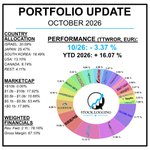
Portfolio Update October 2026
📊 Performance 10/2026*: - 3.37 %
📊 Performance YTD 2026*: + 16.07 %
*(measured as TTWROR in EUR)
➡️ Holdings:
$277A.T $SMSH.TA $URGN $458870.KQ $HROW $NURS.V $196A.T $0088M0.KQ $SOFW.TA $479A.T $NRXS $618A.T $MYID.V $394800.KQ $ELS.AX $ALUAV.PA $TELY.TO $VIDAVO.AT
📢 Monthly Commentary:
→ This October was arguably one of the toughest months for stocks in a long time. Driven by elevated bond yields and mounting concerns around the sustainability of the AI capex boom, many speculative growth names and AI-linked stocks went through 30–50% drawdowns.
→ In the AI space, several negative headlines piled up this month: top-line growth at Anthropic slowed dramatically, the sustainability of financing across neoclouds faced increasing scrutiny, and shrinking free cash flows at the hyperscalers (paired with no visible productivity gains from AI spending yet) weighed heavily on sentiment.
→ This triggered a broad tech correction, while also hammering speculative (especially unprofitable) growth stocks across non-tech sectors. On top of that, the war with Iran and persistent fears of further military escalation remained an ongoing overhang.
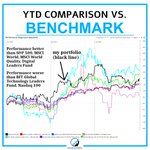
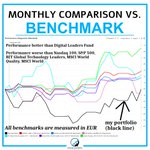
→ All in all, my portfolio held up relatively well versus the broader market. That said, I’m obviously not satisfied trailing the S&P 500's performance YTD.
→ In terms of individual names, $0088M0.KQ (Mezoo) and $277A.T (Globe-Ing) stood out positively after their respective quarterly reports, while $URGN was my biggest laggard. This is despite the fact that I likely hold no other company in my portfolio with a clearer growth path for the coming years, and even though the stock is far from expensive (12x P/E for 2027e, 7x P/E for 2028e).
→ In general, the market environment is extremely challenging atm; even the slightest misses in quarterly figures seem enough to trigger heavy sell-offs. About 70% of the companies in my portfolio are set to report in November, so I’m expecting substantial volatility ahead.
→ Regarding my transactions in October: I sold my position in $PYPD because, given the current market turbulence, I am not comfortable holding a stock with such a binary investment case (where FDA approval could lead to significant upside, while a rejection could trigger a sharp sell-off). I have made a conscious decision to focus exclusively on companies that already generate meaningful revenue and are either nearing break-even or already profitable to better protect my downside for now. Thats why I rotated out of $PYPD and into $394800.KQ.
→ As for $9337.T, I sold it because I view $MYID.V as a more compelling opportunity with much stronger business momentum. I funded my new position in $ELS.AX, which I discussed in detail yesterday, by exiting the undisclosed European microcap, where I realized a YTD return of over 90% (my best performing stock this year so far). Huge thanks to my friend @AC__research for this great idea!
➕ New positions
▪️ $394800.KQ $MYID.V $ELS.AX
🔼 Increased positions
▪️ $SMSH.TA $0088M0.KQ
❌ Exited positions
▪ $9337.T $PYPD $undisclosed European microcap
🔻 Trimmed positions
▪️ $458870.KQ
⬆️️ Top performers 10/26:
▪️ $0088M0.KQ: +18.95%
▪️ $277A.T: +12.57%
▪️ $MYID.V: +8.76% (position opened on Oct. 14,2026)
▪️ $618A.T: +4.79%
▪️ $NURS.V: +4.62%
⬇️ Underperformers 10/26:
▪️ $URGN: -18.01%
▪️ $479A.T: -13.36%
▪️ $458870.KQ: -10.17%
▪️ $ALUAV.PA: -9.97%
▪️ $PYPD: -9.84% (position closed on Oct. 15, 2026)

3
20
2,185


🔍 My conclusion:
➢ Even in the bear case, Elsight shares do not look expensive to me at current levels. In my view, a pure play in a high-growth, largely recession-resilient space like drones should trade at a mid-to-high 20s PE. Hence, the base case yields an attractive expected return on a 1-year horizon.
➢ I consider CEO Yoav Amitai credible, and if his commentary holds up, the stock is currently completely misunderstood by the market and significantly undervalued. Add to that the fact that the military drone space is still in its infancy, and Elsight is ultimately aiming for the commercial drone market as well as ground and maritime robotics with the Halo device. The long-term growth prospects thus remain very promising. I’m speculating that just one or two positive PRs (e.g., an initial, significant US order or a follow-on order from OEM 1) could lead to a major rebound in the stock.
⚠️ But caution: The stock is currently a textbook falling knife. The chart is severely broken, with no bottom in sight right now. Revenues are, as previously discussed, extremely lumpy. The market seems to struggle tp price in future prospects, which is why the stock dropped so aggressively recently.
⚠️ The US is expected to drive the lion's share of top-line growth next year, but there is a risk of budget impasses should Democrats take the midterms. That could push out Elsight's pipeline conversion. Additionally, it remains unclear when exactly the next order from OEM 1 will materialize.
➢ That said, looking at the commentary from the call, the R/R looks attractive again in my opinion, which is why I took a partial starter on Friday at 1.77 AUD. I'm planning a second tranche soon depending on price action. Given the severely battered state of the overall market, it is possible that the stock has further downside potential in the short term. If none of the mentioned catalysts (especially a significant US order) materialize in Q4, my investment thesis would likely be broken.
As always: Not financial advice. I'm frequently wrong. And I reserve the right to sell down my position at any point without public notice.
Link to the earnings call on YouTube: youtube.com/watch?v=oXYSo_tK…

1
6
706
What I completely forgot to mention: you can find the basics of the business model in these two older posts
teapawt.org/stock_logging/status/2…
teapawt.org/stock_logging/status/2…
$ELS.AX
As some of you had already suspected, my previously undisclosed drone position is Elsight.
Now that I’ve received approval to finally disclose the stock, here’s a short elevator pitch:
➢ Put simply, Elsight manufactures hardware called Halo that provides unmanned drones, robots, etc. with seamless connectivity by bundling all available connections (LTE / 5G, military frequencies, satellite, etc.) into a single data line (not just a failover solution like many competitors). In addition, they generate revenue through mandatory software (recurring revenue) and data services (usage-based fees).
➢ The company is extremely capital-light, has very high gross margins (Halo hardware: 80%, data usage: 66%, software: 82%) and, as @pbcinc recently pointed out correctly, negative working capital, as customers make significant prepayments to Elsight prior to delivery. Which I think speaks volumes about the relevance of Halo for Elsight’s customers. I expect Elsight to reach EBIT margins in the 40% range by 2027 at the latest.
➢ Elsight recently reached an inflection point, increasing revenue from 1m USD in Q1/25 to 9.3m USD in Q4/25. For Q1/26, they already have at least 21.6m USD of revenue secured.
➢ Over the coming months and years, Elsight has many additional potential growth drivers:
- Blue UAS certification in the US within reach. This would lay the groundwork for contracts with the US military.
- Adoption of FAA Part 108 in the US. This is a regulatory framework intended to standardize commercial drone flights beyond visual line of sight (BVLOS). Elsight should benefit significantly from this, as stable connectivity is essential for BVLOS.
- New segment for solider-level communication solutions called Aura.
- New product based on a technology intended to enable communication in non-GNSS (Global Navigation Satellite System) environments.
- Additional software products expected to be launched soon.
- A large new segment currently still in stealth mode, with a TAM of more than 20b USD. According to the CEO, this segment has the potential to contribute more revenue to Elsight than the existing business.
➢ On Wednesday, the company will hold its earnings call for Q4/25. I will definitely do a post about the most important takeaways.
➢Note: Elsight is still my largest position, although I have already done small trims in January. My average entry price is 1.67 AUD, the stock is currently trading at 4.27 AUD (+155% since then). Valuation has therefore increased significantly. Personally, I would probably not initiate a new position at the current price.
➢ The stock was pitched to me by my friend Jan, who will be launching his own fund under the name “Arborator Capital” in the coming months and will regularly share interesting insights into his investments on a public X profile. Once he is publicly active on X, I will share the profile.
➢ I exchange stock ideas with him almost daily, and I’m 100% confident that he will add a lot of value to Fintwit with his unique approach. Another stock I discovered through him, which is a high-conviction position for me, is $URGN. I built the position in January. I’ll also be writing a post about this company in the coming weeks.

5
303
$0088M0.KQ Mezoo
Strong preliminary Q3 numbers with significant operating leverage!
➢ Revenue: +163.6% YoY, +7.6% QoQ
➢ EBIT: +139.1% QoQ
➢ EBIT margin: 34.3% vs. 15.4% in Q2/26 and -31.7% in Q3/25
➢ EV/EBIT (annualized Q3/26): 13.1x
➢ EV/EBIT (2027e consensus): 6.2x
According to a media report (n.news.naver.com/article/011…), key growth drivers were the launch of the new flagship inpatient monitoring product, HiCardi M350 (featuring added functions to measure oxygen saturation and blood pressure), alongside expanding recurring revenues from the LiveStudio monitoring software.
I currently have about 16% of my portfolio allocated to Korean patient monitoring names (alongside Mezoo also $458870.KQ Seers) and feel very comfortable with it. In my view, both rank among the cheapest high-quality fast growers available in the market at the moment.
Mezoo was up over 12% today. I added to my position this month, my current cost average is 13,360 KRW. As always: Not financial advice. I'm frequently wrong.
Link to filing: dart.fss.or.kr/dsaf001/main.…

$0088M0.KQ Mezoo
My latest 🇰🇷 investment
➢ Recent IPO, -76% from April '26 ATH
➢ Management guidance: 71% sales CAGR ('25–'29), EBIT margin turning from -39% to +67%
➢ 2026 execution so far tracking well ahead of own targets
➢ Valuation: 4.8x 2027e EV/EBIT
A thread 🧵

1
10
1,411
$277A.T Globe-Ing
Q1/27 earnings from Thursday:
➢ Revenue: +20.8% YoY
➢ EBIT: -3.1% YoY (Margin: 28.7%)
➢ EPS: -2.5% YoY
🎯 KPIs:
➢ No. of consultants: 219 (+7.9% QoQ)
➢ Avg. consultant salary: 21.09m JPY (+5.2% QoQ)
➢ No. of clients: 31 (+24.0% QoQ)
➢ Joint Initiative (JI) ratio: 71% (vs. 69% in Q4/26 and 60% for FY/26)
➢ AI-related revenue share: 56% (vs. 58% in Q4/26 and 49% for FY/26)
📈 Price Action: +8.67% (though the stock had dropped -11% over the preceding three sessions)
My take on the numbers:
➢ Compared to full-year guidance (+40% top-line growth, +21% EBIT growth), the Q1 print was rather soft. The English presentation also noted that performance is progressing "largely" as expected, which to me reads like numbers came in on the lower end of internal expectations.
➢ My concern isn't the margin compression here, as management had already telegraphed temporary pressure due to surging recruitment-related expenses (+352% YoY!). But on top-line growth, I would have expected more.
➢ The weaker top-line growth seems driven by revenues outside of JI, as clearly illustrated in the chart below. This is presumably tied to the key account that trimmed its budget back in Q4 and apparently hasn't ramped spending back up yet.
🔮 Why I remain optimistic about the future nonetheless:
1️⃣ Client growth (one of the single most critical leading indicators for future performance) looks very solid at the aforementioned +24% QoQ. The target through year-end is an increase from currently 31 to 46 clients, which suggests a healthy pipeline. Globe-Ing is also expanding across numerous new industries, providing better business model diversification. In addition, the number of big-budget clients is expected to trend higher.
2️⃣ The second key leading indicator for future growth is consultant headcount (+7.9% QoQ). The company appears right on track here as well. The sharp uptick in average compensation highlights two key dynamics: the new hires are highly skilled senior consultants, and the war for top-tier talent is intensifying, requiring higher salaries to close candidates. In fact, Globe-Ing explicitly refers to hiring conditions as "challenging" in the presentation.
3️⃣ JI revenue developed very encouragingly, both in absolute terms and as a percentage of overall revenue.
As a reminder: With JI, Globe-Ing sends its employees into client companies as 'external insiders' for multiple years, where they directly drive and implement deep, transformative projects on the front lines. For Globe-Ing, this generates stable, multi-year monthly recurring revenues. Even more importantly, the proprietary workflow data gathered inside client operations is vital for developing their proprietary AI product suite, which can subsequently be deployed across those very same enterprise clients.
Alongside JI revenue, AI-related revenue also expanded nicely in absolute terms. In relative terms, the share was lower than in Q4/26 simply because the total revenue denominator in Q4/26 was significantly smaller.
4️⃣ The rollout of a new AI product called Spend Intelligence Suite starts in November. Designed to optimize direct material costs in manufacturing, it harmonizes fragmented procurement data and automates strategic sourcing and negotiation intelligence. I found the long-term vision of transaction-volume-based fee monetization very interesting, with plans to integrate ordering and settlement infrastructure in the future.
5️⃣ On the M&A front, Globe-Ing appears to be making solid progress as well, having already executed LOIs with 2 potential acquisition targets. In early December, Globe-Ing will rebrand to WAO Holdings and establish an overarching holding structure to integrate acquired companies more seamlessly. I expect at least one transaction to close before the end of this CY.
6️⃣ Last but not least, the investor presentation pointed to upcoming international expansion plans. With the establishment of a regional hub in Singapore, the goal is to roll out the JI model both to the overseas branches of Japanese enterprises and to foreign corporates across Southeast Asia. If successful, long-term plans even include expanding into the US and Europe.
🔍 My conclusion:
➢ With Q1 revenue landing at just 3.2b JPY, the company will need to average 4.3b JPY across the remaining three quarters to meet its full-year guidance. That will definitely be an ambitious hurdle.
➢ That said, based on the six points mentioned above, I see no reason to sell my position. Despite a mixed Q1 print, the recent developments point toward accelerating growth in the coming quarters. And as noted in my prior post linked below, Globe-Ing has established a strong beat-and-raise track record, giving me a solid degree of confidence in management and their guidance framework.
➢ Based on management's own guidance, Globe-Ing trades at 15.5x P/E 2027e and 9.7x EV/EBIT 2027e at the current share price of 1,843 JPY.
As always: Not financial advice. I'm frequently wrong.

$277A.T Globe-Ing グロービング
Opened a position today, cost average ¥1,811. Wanted to share some hard facts and further thoughts regarding FY 2026 + guidance.
➢ Revenue 3Y CAGR: 64.1%
➢ EBIT 3Y CAGR: 77.9%
➢ Gross Margin: 67.2%
➢ EBIT margin: 36.0%
➢ ROCE: 50.1%
➢ Net cash balance sheet / Zero interest-bearing liabilities
➢ Cash: 70% of total assets
➢ Market Cap: ¥51.5b JPY / $320m USD
➢ EV: ¥43.8b JPY / $270m USD
➢ Updated valuation based on today's closing price of ¥1,812: 15.3x fwd PE / 9.1x fwd EV/EBIT
➢ Fwd dividend yield based on projected FY 2027 dividend: 1.96% (30% payout ratio)
Based on these numbers, Globe-Ing is IMO one of the highest quality small-caps in the Japanese market, trading at a pretty attractive valuation.
Why the stock dumped -14% today following yesterday's earnings release:
➢ QoQ revenue decline in Q4/26, which is historically very unusual for the company. Explanation from the presentation: "Revenue impact from a sharp deterioration in key account performance, including macroeconomic factors".
In the fiscal year that just ended, Toyota was their largest client with a 20% revenue share; in 2025, it was Honda with 15%. This headwind likely comes from one of these two.
➢ According to the presentation, however, they have already secured two new major clients with budgets of >1b JPY, so I’m viewing this as a short-term hiccup. Also important: Joint Initiative (JI) revenues (where Globe-Ing embeds its own consultants into the client's company as quasi-permanent employees for 1.5–2 years) were unaffected by the QoQ revenue drop.
➢ As a result, they slightly missed their twice-raised FY revenue guidance (though they beat on EBIT and EPS).
➢ Furthermore, Japanese investors might have disliked the guided drop in EBIT margin. Reason for the compression: Growth investments, including AI personnel hiring, further development of Agentic AI products, preparing the transition to a holding structure, and the shift to IFRS accounting (which, among other things, changes how employee stock options are booked).
➢ Of course, one needs to monitor whether there will be further macro-driven weakness in revenue growth over the coming quarters, but I don't expect it.
Guidance for FY 2027 projects ¥16.1b JPY in revenue and ¥4.83b JPY in EBIT.
Now, let's look at the mid-term guidance of ¥120b JPY in revenue by 2031. This relies on several pillars:
➢ The core consulting business, including JI revenues, is projected to grow at a 35% CAGR until 2031. This would imply around ¥50b JPY in revenue by 2031 with a targeted 35% EBIT margin. Personally, I think this target is realistic. And this piece alone IMO yields an attractive expected return for the stock.
➢ The company is a bit vague about the share of its existing Agentic AI products in 2031. They explicitly guide only their "Spend Intelligence" product (aimed at cutting procurement costs) to hit ¥4b JPY in revenue by 2031 at a 50% EBIT margin. For the entire segment (including the other Agentic AI products), I would model around ¥8-10b JPY in revenue at a 50% margin.
➢ The delta to reach the ¥120b JPY revenue target is supposed to be closed via M&A of AI companies. Personally, I'm usually not a fan of inorganic growth. In Globe-Ing's case, however, I think it makes a lot of sense. Despite their regular dividend, the company is clearly overcapitalized. Therefore, investing that unused cash into value-accreative acquisitions makes total sense for the business and its shareholders.
➢ The playbook here is fairly straightforward: Globe-Ing starts with classic consulting, then builds deep customer relationships through the JI projects, gathering valuable insider knowledge along the way. Next, they implement their own Agentic AI products into the client's business processes, building high-margin recurring revenue streams.
➢ Young AI startups often have interesting products but lack marketing power and access to enterprise clients. When Globe-Ing acquires them, they can rapidly scale these AI products across their existing client base via classic cross-selling. Seems like a highly promising strategy to me.
➢ And just as a reminder: the Agentic AI products will carry massive EBIT margins in the 40-50% range. If you buy into management's ¥120b JPY guidance and they hit ¥50b JPY from consulting at a 35% EBIT margin plus ¥70b JPY from Agentic AI products at a 45% EBIT margin by 2031, you get to ¥49b JPY in EBIT in 2031. That is roughly equal to their current market cap (¥51b JPY). In that scenario, the stock would be an absolute home run.
➢ For my own model, I’m obviously not being that optimistic. I’m underwriting roughly ¥60b JPY in revenue by 2031 at a 38% EBIT margin. That mathematically results in about ¥22.8b JPY in EBIT and ¥528 EPS. Assuming an exit PE of 15-20, this implies an annualized return / IRR of 35% - 43% from today's closing price.
➢ Of course, projections this far out should be taken with a grain of salt, especially because the company isn't entirely macro-immune, and forecasting the macro environment 5 years down the road is impossible. But as I said yesterday, management has a strong beat & raise track record. They significantly outperformed their initial full-year guidance in both FY 2025 and FY 2026.
As always: Not financial advice. I'm currently invested with about 3.8% of my portfolio. I’m often wrong and frequently change my mind.
$458870.KQ
Seers managed to escape the sea of red across my Asia portfolio this morning, up +3% on an interesting announcement.
The company issued 110b KRW in convertible bonds ($82m USD against a market cap of around $700m USD) with a 5-year maturity (due Oct. 21, 2031).
At first glance, this might not sound like a reason to celebrate given the dilution (9.38% based on the agreed conversion price), but the terms are remarkably favorable for the company, and the use of proceeds is highly interesting:
➢ Coupon rate is 0.0%. Investor upside is entirely dependent on the conversion into equity.
➢ Conversion price: 30,586 KRW per share (+23.8% premium vs. today’s close).
➢ Starting Oct. 21, 2027, Seers holds a call option for 2 years to buy back up to 50% of the bonds at a very modest premium of 0.1% p.a.
➢ Buyers of the bonds are 38 very reputable South Korean institutions and funds, including KB, Shinhan, Kiwoom, Mirae, and Samsung.
➢ Use of proceeds:
◦ 10b KRW for automation and expanding production facilities,
◦ 30b KRW for upgrading existing products & services, R&D for new products, and working capital,
◦ 70b KRW for investments into the MENA and US subsidiaries of Seers.
➢ In a news article that I found, the Seers CEO gets more specific:
"This funding round is a strategic investment to expand our medically proven medical AI technology and business model into the global market. In the U.S., we will secure local diagnostic service infrastructure and AI solution networks, and in the UAE, we will expand business execution based on existing supply contracts to grow into a global medical AI platform company."
➢ In the US, Seers intends to acquire an equity stake in an IDTF (Independent Diagnostic Testing Facility) to accelerate the rollout of its outpatient monitoring platform mobiCARE. IDTFs are diagnostic facilities independent of physician offices or hospitals that conduct, for example, long-term ECG monitoring and bill directly to Medicare. As a reminder: at $250, reimbursement for mobiCARE is roughly 5x higher in the US than in South Korea.
➢ This allows Seers to bypass building out its own US sales network from scratch and avoids lengthy proof-of-concept studies, enabling an immediate market entry into the US.
➢ In MENA, they plan to establish a dedicated operating base for diagnostic services and to roll out specialized arrhythmia centers.
🔍 My take:
➢ A successful international expansion is a core pillar of my investment thesis, so I welcome any positive color on this front. Since Seers' CEO is the largest shareholder, owning around 26% of the comapny, he must have strong conviction that the bond proceeds will turn out to be value-accretive long term, far outweighing the dilutive impact. The 0% coupon alongside participation from such a broad base of high-profile institutional investors also is an encouraging signal in my view.
➢ Following the Q2 print, many Korean analysts cut their growth estimates, which I find hard to understand, as the revenue miss back then was largely a timing issue rather than soft demand (as discussed in my post linked below).
➢ Yet even on these very conservative numbers, the stock IMO is not expensive, trading at 15x EV/EBIT 2026e & 11x EV/EBIT 2027e. Based on my own projections, it's even cheaper than that.
➢ Should Q3 numbers come in strong alongside continued positive newsflow regarding international expansion, I can easily see analysts revising their estimates materially higher again.
BTW: Seers now provides English-language investor decks as well, which you can check out here:
◦ Part 1: file.irgo.co.kr/data/BOARD/A…
◦ Part 2:
file.irgo.co.kr/data/BOARD/A…
As always: This post is not financial advice.
$458870.KQ
Earnings season continues to be a mixed bag for me. My take on the numbers from Seers:
➢ Revenue: 28.4b KRW, +257% YoY, -13% QoQ
(vs. 36b KRW est.)
➢ Gross Margin: 70.9% vs. 64.1% in Q1/26 and 72.2% in Q2/25
➢ EBIT: 12.95b KRW, +769% YoY, -7% QoQ
(vs. 15.7b KRW est.)
➢ EBIT margin: 45.6% vs. 42.6% in Q1/26 and 18.7% in Q2/25
➢ So at first glance, YoY growth was outstanding, though the headline numbers fell short of expectations.
➢ Management's explanation for the earnings miss: some sales from large hospitals, which have relatively long contract periods, were postponed to the second half of the year. Additionally, several implementation projects in the MENA region were pushed back slightly due to the geopolitical situation.
➢ Of course, the question now is whether management is lying to us or telling the truth. I tend to believe the latter - for the following reason:
▫️Seers has already significantly beaten its full-year target of 200 hospitals (official count: 220 hospitals), but the number of beds (20k) still sits well below the annual target of 30k.
▫️Consequently, the number of beds per hospital (currently at 91) is far below the target of 150 and down from 109 in the prior year. In my view, this strongly suggests that contractual agreements have already been signed with many hospital clients, but the actual rollout hasn't started yet or is moving slowly.
▫️ However, this seems fixable. Once the rollout at these clients is completed, I expect Seers to ultimately exceed the 30k beds target for this year as well.
➢ Therefore, the miss against analyst estimates is irrelevant to me. Since implementation revenues currently still account for the bulk of income, quarterly revenue fluctuations are, in my view, to be expected. The market seemingly shares this view: following the print today, the stock tanked 18% intraday before recovering to close down just 4.7%.
➢ Positive aspects of the quarterly report:
▫️ Receivables as a % of total assets dropped from 52% in Q1/26 to just 37%. Because hospitals remit initial setup costs & recurring revenues to the distributor (Daewoong), who then pays Seers its agreed share, there is always a certain time lag before Seers receives the cash.
▫️ Accordingly, OCF surged 160% QoQ, and FCF also increased significantly. Cash & equivalents increased by around 11b KRW, or +80% QoQ.
▫️ Recurring revenues climbed from 5.79b KRW in Q1/26 to 9.33b KRW, representing 61% QoQ growth. On a YoY basis, growth was a staggering 555%. Recurring revenues accounted for 32.9% of total revenue in Q2 (vs. 17.8% in Q1/26).
➢ I will keep holding my position at its current allocation (~9% of my portfolio right now). My investment case remains fully intact, as the company has only captured a fraction of its 395k bed SAM in South Korea so far.
➢ On top of that comes the international opportunity. Something I haven't mentioned in my previous posts yet: the MENA distribution partner, PureHealth (listed in Abu Dhabi), is by far the largest healthcare company in the region. The main shareholder is the sovereign wealth fund chaired by the UAE president's brother.
➢ PureHealth generated $7.4B in revenue in 2025, employs over 61,000 people, and owns more than 400 hospitals and clinics worldwide (across the UAE, US, UK, Greece, and Cyprus). The fact that PureHealth explicitly chose Seers (and signing a binding agreement just three months after the MOU) serves as strong proof of the quality of Seers' products in my eyes.
➢ Given PureHealth's massive reach and the huge MENA market size (TAM of 800k beds, 3x more patients with hypertension, and 4x higher ECG reimbursement rates than South Korea), I expect international expansion to be a major growth driver for Seers starting in 2027.
➢ Based on current analyst consensus, the stock trades at 15x 2026 EV/EBIT at today's close. Even if Seers falls 10% short of growth expectations, the stock wouldn't look expensive at current levels in my view.
As always: Not financial advice.

$SMSH $SMSH.TA
I significantly increased my position in Smart Shooter on Monday, the stock now represents >10% of my portfolio.
From my point of view, the R/R has probably never been as good since the IPO as it is right now. Here is my napkin math for FY 2027:
➢ Revenue from Europe, Israel, and APAC in H1/26 was $11.62m USD. Further, these regions contributed $29.7m to backlog. That results in a revenue run rate of $41.32m.
➢ The US JIATF 401 framework, which I covered last week, has a ceiling of $150m. Based on information from other investors who spoke with the company after the announcement, management seems to be confident that the entire $150m volume will be converted into revenue within the 3-year period.
➢ Assuming JIATF 401 contributes $40m in 2027, $50m in 2028, and $60m in 2029 to the topline, adding the RoW run rate brings potential 2027 revenue to $81m. That would represent +47% growth compared to my 2026 estimate of $55m.
➢ I consider the $81m to be clearly conservative, specifically for the following reasons:
◦ JIATF 401 was established to protect military bases, critical infrastructure, and borders. In my view, there is a decent probability that the US will order Smash devices through additional channels for different purposes, such as for special forces and mobile units.
◦ The assumption that the RoW run rate won't increase next year seems unlikely given the omnipresent urgency for C-UAS solutions. On the contrary - Europe / NATO will certainly have followed the JIATF 401 decision closely. US defense procurement decisions carry massive global weight.
◦ The automatic Hopper weapon stations have a 10–12x higher ASP compared to the Smash fire control systems. Their revenue share should continuously increase in the coming years. Long term, Smart Shooter wants to increase the share of Hopper to about 50% of total revenue.
➢ Putting it all together, I stick to my minimum projection of $85m in 2027 revenue, which I laid out in my post on the Q2 results. On EBIT, I see the business capable of delivering a 25% to 30% margin. On $85m of revenue, that translates to $21m–$25m in EBIT, which puts the EV/EBIT 2027e multiple in a range of 9x–10x.
➢ To me, this is way too cheap for a company with an (at least so far) essentially unrivaled product in the field of AI-supported, kinetic drone defense at the soldier level. Peers in the C-UAS space with similar growth rates trade in a completely different stratosphere.
➢ Right now, the stock trades like dogshit and has given back a meaningful chunk of its post-JIATF 401 framework gain. Personally, I think the stock price will rise again as soon as A) the company converts the framework into concrete backlog and revenue and B) the Q3 and Q4 numbers show rising gross margins, EBIT margins, and a decent net profit. My current cost average is 20.86 ILS.
As always: This post does not constitute financial advice, and I am frequently wrong.
$SMSH $SMSH.TA
🚨Fresh news from this morning: Smart Shooter has entered into a framework contract as a sole contractor with the U.S. Department of War with a financial ceiling of $150m.
The framework runs through JIATF 401, which is a task force dedicated to countering small drones and spans all U.S. military branches (Army, Air Force, Navy, Marines).
This is a single-award - meaning Smart Shooter is the only selected vendor in this framework contract for the agreed product and service category. According to Smart Shooter's release, it covers the "combat-proven capability for the kinetic destruction of small and lightweight drones in a manner designed to increase the probability of hit." (English translation of the Hebrew PR). There are no competing secondary bidders for this specific category under the framework.
The contract allows the U.S. Armed Forces to access Smart Shooter's systems directly without tender processes.
Important caveat: order quantities and timelines will be determined through individual call-offs, so real backlog and revenue only materialize as those orders come in. In other words, there is no guarantee that the full $150m ceiling will translate into equivalent revenue over the next three years.
Nevertheless, from my perspective, this is an extremely positive PR, as it validates Smart Shooter's technology platform and greatly increases the likelihood of Smart Shooter becoming a standard solution for the U.S. military. In addition, visibility into revenue for the next three years has of course increased drastically.
Link to filing: maya.tase.co.il/he/reports/c…
U.S. Army release on the topic:
army.mil/article/295771
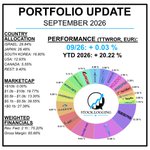
Portfolio Update September 2026
📊 Performance 09/2026*: +0.02 %
📊 Performance YTD 2026*: + 20.22 %
*(measured as TTWROR in EUR)
➡️ Holdings:
$458870.KQ $URGN $277A.T $SMSH.TA $HROW $NURS.V $196A.T $undisclosed European microcap $479A.T $SOFW.TA $NRXS $618A.T $0088M0.KQ $PYPD $9337.T $ALUAV.PA $TELX.TO $VIDAVO.AT
📢 Monthly Commentary:
→ What has been a very choppy 2026 for me so far continued in September. For the third consecutive month, my portfolio failed to beat the benchmark indices, which is why my Q3 was rather disappointing.
→ The situation feels somewhat paradoxical to me. From my personal perspective, the disconnect between how I view the growth outlook of my companies and how the market is currently pricing them has probably never been wider over the past 4 years. Or put differently: I see strong catch-up potential for my portfolio over the coming months.
→ Examples here include $458870.KQ Seers, $HROW, $NURS, $277A.T Globe-Ing or $SMSH. Most of these stocks are down more than 30% YTD, even though in my view, the underlying growth story remains intact for all of them. Note: In the case of 458870 & 277A, I am sitting at break-even relative to my cost basis thanks to entering during the year.
→ In general, 15 of my 18 companies are trading at 2027e EV/EBIT multiples of 10 to 15, in some cases even in the mid-single digits, with topline growth rates of more than 30% (and even faster earnings growth rates). I am convinced that I have rarely owned a portfolio as undervalued as the current one.
→ The lackluster performance of many of my holdings is partly due to self-inflicted issues (e.g., Q2 results coming in below expectations, combined with poor market communication at some companies). Also, the ongoing severe underperformance of small caps relative to the broader market (clearly visible in the performance of the Russell 2000) likely played a role as well.
→ That said, given my strong fundamental conviction in my holdings, I want to give the underperforming names the room and time to play out. After all, the market is often a waiting game, and sharp moves to the upside frequently happen suddenly and over short timeframes (see $SMSH yesterday). For now, I am therefore holding off on rotating a portion of my capital into more momentum- and macro-driven investment ideas (currently, for instance, cybersecurity, oil, gas).
→ However, should the relief rally I am hoping for during the Q3 earnings season fail to materialize, I would consider reallocating up to 20% of my portfolio into short-term momentum- and macro-driven trades for next year.
→ Other than that, there isn't much new to report right now. Positions sold this month were $FIN.L (following a full-year guidance cut delivered extremely late in the year, just like last year, which caused the stock to crater nearly 40%), $LODE (reallocation into $0088M0.KQ and frustration over repeated timeline slippages), and $2181.HK (reallocation into $VIDAVO). In general, over recent months I’ve realized that I feel significantly more comfortable holding profitable companies or those right on the verge of breaking even, rather than pre-revenue businesses that are still 2–3 years away from profitability, which is another reason why I sold $LODE.
→ Regarding my three new holdings, I have already introduced $0088M0.KQ in more detail. An elevator pitch for $618A.T can be found here (teapawt.org/stock_logging/status/2…); a more in-depth post may follow after the quarterly earnings in October. With a €10m market cap, $VIDAVO.AT is simply too small and illiquid to discuss publicly on X.
→ On the macro front, the Fed's rate hike, 10-year US treasuries breaking through the 5% barrier, and climbing oil prices tied to escalating US–Iran tensions were the defining themes in September. As in previous months, the macro environment remains anything but easy.
➕ New positions
▪️ $0088M0.KQ $618A.T $VIDAVO.AT
🔼 Increased positions
▪️ $458870.KQ $TELY.TO $SMSH.TA
❌ Exited positions
▪ $FIN.L $LODE $2181.HK
🔻 Trimmed positions
▪️ $9337.T $196A.T
⬆️ Top performers 09/26:
▪️ $NRXS: +25.23%
▪️ $458870.KQ: +24.96%
▪️ $618A.T: +20.53% (position opened on Sep 17, 2026)
▪️ $SMSH.TA: +10.82%
▪️ $PYPD: +4.71%
⬇️ Underperformers 09/26:
▪️ $FIN.L: -36.28% (position closed on Sep 1, 2026)
▪️ $NURS.V: -20.50%
▪️ $HROW: -14.78%
▪️ $2181.HK: -10.74% (position closed on Sep 18, 2026)
▪️ $ALUAV.PA: -10.56%

The quick pitch for Kompeito would be:
B2B food service provider that regularly supplies SMEs (for whom an in-house cafeteria doesn't make sense) with salads, fruit, and healthy pre-cooked meals (fresh and/or frozen). The model operates via smart fridges and freezers that Kompeito installs directly on-site and routinely restocks.
Over 90% of revenue is recurring (subscription fee plus consumed food items, with costs for the food split between employer and employee). Monthly churn rate sits at just 1.1% per month or 12.4% annualized (vs. ~50% for Hellofresh for example). Over 60% of marketing is routed through regional banks, resulting in exceptional customer acquisition efficiency. LTV/CAC stands at over 20x. 618A also has built out proprietary cold-chain logistics through the acquisition of local milk delivery companies. Over 60% of products are private label (favorable for margins).
In addition, after 42 years, the tax-deductible ceiling for employer-provided meal allowances was more than doubled to 7,500 JPY/month, creating a strong tailwind.
618a currently grows 70% topline and has been profitable for the past two quarters. Based on management's FY2026 guidance (09/25 to 08/26), the valuations sits at 18x EV/EBIT. For FY2027 (09/26 to 08/27), at the current price of around 1,600 JPY, I personally expect the fwd EV/EBIT to drop below 10x.
I might put together a longer thread on the stock over the next few days or weeks.
3
16
2,645

