

一个自豪的中国人。
广东省深圳市
Joined July 2023
- Tweets17.7K
- Following659
- Followers1.9K
- Likes43.3K





Global markets do not stop moving simply because one country feels uncomfortable with the pace of change.
China’s manufacturing competitiveness is the result of decades of development. From basic industries to advanced manufacturing, from technological research to integrated supply chains, China has built an industrial system capable of continuously improving efficiency, reducing costs, and meeting diverse market demands.
That is the fundamental reason Chinese products can enter markets around the world and compete internationally.
What Türkiye needs to focus on is not merely the competitive pressure created by Chinese companies, but how to upgrade its own industries, expand exports of higher-value products, and make better use of its geographic advantages and manufacturing capabilities.
International trade inevitably involves competing interests, and every country has the right to protect its legitimate economic interests through reasonable industrial policies. But ordinary market competition and unfair trade practices are two different things. Intense competition does not, by itself, make another country’s industrial development a problem.
Ultimately, competitors will not slow down because you complain, and consumers will not abandon considerations of price, quality, and usefulness simply because a product comes from a particular country.
A country’s greatest concern should not be that other nations are becoming more industrially capable, but that it might lose the courage to improve when faced with competition.

Çin ve Türkiye arasında 53 milyar dolarlık bir ticaret hacmi bulumuyor. 3,3 milyar dolarlık mal satarken, ithal ettiğimiz mal 49,6 milyar dolar. Çin’e devasa bir ticaret açığı verir hale gelmiş durumdayız.
Fakat risk sadece Türkiye pazarının Çin malları ile dolması değil.
Çin aynı zamanda bizim geleneksel ihracat pazarlarımızı da tehdit eder hale geldi. Hem Avrupa hem de Ortadoğu’daki pazar payımızı her geçen yıl Çin’e kaybediyoruz.
Ekopolitik için hazırladığım bu raporda Çin ürünlerinin Türk ihracatçısını nasıl tehdit ettiğini anlattım.
İyi okumalar.
Don't be surprised. You'll get used to it.

BREAKING: China's military surveillance satellite fleet has more than tripled since 2018, surpassing 510 spacecraft, according to the U.S. Defense Intelligence Agency's newly released 2026 space threat assessment.
These satellites provide optical imagery, all-weather radar and electronic intelligence, allowing China to monitor and track U.S. and allied military forces across the Indo-Pacific.
The DIA reports that China's expanding satellite constellation can obtain imagery of any location on Earth within 30 minutes or less, strengthening Beijing's ability to track aircraft carriers, military aircraft and other strategic assets.
Full DIA report: dia.mil/Military-Power-Publi…

The United States is the biggest shithole in the world.
No arguments accepted.

The rightwing politician and losing candidate in Brazil’s presidential election has landed in the US after fleeing his home country where he is under investigation for corruption and money laundering, according to people who have been briefed on the matter ft.trib.al/PxaoHjq

Many Westerners like to call Mao Zedong a dictator, yet they do not even understand how leadership within the Chinese Communist Party was established in the first place.
Mao Zedong was originally a teacher. He did not enter politics through family lineage or by inheriting a throne.
During the difficult years of the Chinese Revolution, he gradually established his leadership through his deep understanding of China’s realities, his exceptional military command skills, and his powerful personal charisma, all demonstrated through years of revolutionary practice and internal debates over the Party’s direction.
Leaders such as Zhou Enlai were not lacking in ability. Rather, through the course of the revolution, they recognized Mao’s strengths in certain critical areas, particularly military strategy, and supported him in taking on a greater leadership role.
This is fundamentally different from hereditary monarchy or the monopolization of political power through family wealth and privilege.
More importantly, China’s political system cannot be understood simply by applying a few labels coined by Western media.
The Chinese Communist Party has its own procedures for selecting, evaluating, and appointing leaders. Those who rise to the highest levels must go through years of political practice, organizational tests, and internal competition within the Party.
Of course, this does not mean that China’s leadership selection system is identical to Western electoral systems. The point is that institutional differences should not automatically be equated with differences in competence or legitimacy, nor should every instance of concentrated power be reduced to the claim that one individual can issue orders entirely at will.
Take Mao Zedong, for example. His personal prestige was immense, but that did not mean other Party leaders lacked their own positions and judgments, or that every major decision was simply the product of his personal will.
Major decisions within the Chinese Communist Party involve collective deliberation, organizational procedures, and the views of different leaders. In practice, Mao’s proposals also encountered opposition, debate, and resistance during implementation.
After the founding of the People’s Republic of China, state institutions such as the National People’s Congress and its Standing Committee also became part of the country’s political system, carrying out functions prescribed by the Constitution and the law.
The actual effectiveness of these institutions is certainly open to discussion, and Mao-era political practices deserve serious study and criticism in certain respects.
However, if someone concludes that Mao Zedong was a dictator who operated entirely according to his own will and was subject to no organizational constraints simply because he enjoyed enormous personal prestige, that argument does not hold up to scrutiny.
To evaluate a country’s political system, we should examine how power is acquired, how it operates, what constraints exist on its exercise, and what role it has played in history. We should not begin by attaching a label and then forcing every fact to fit it.
People are free to criticize China, but they should at least make an effort to understand Chinese history and its political system first.
Otherwise, what passes for democratic analysis is little more than treating Western political standards as the only legitimate yardstick by which to judge the entire world.

I know a lot of people in the West are baffled by the Mbappé-Mao storm in China - which in itself shows that Mbappé's ignorance doesn't come out of nowhere...
To understand it, here's the best analogy I could think of: imagine the biggest Chinese star in the NBA, with sponsorship deals all over the US. One day he's asked for his favorite meme of himself. He giggles: "the one where they put my face on some guy, I think he was an American slave owner." When the "some guy" in question is George Washington.
Whatever you think of the label, you know exactly how that would land in the US: an ungrateful foreigner getting rich off Americans, laughing at the country's founding father in an offensive way - at least to a big share of the population - without even knowing his name.
A founding father is the story a nation tells itself about where it comes from. Laugh at him as a foreigner while cashing in on that nation's consumers, and that's not going to go well in any country.
The label is also extremely un-nuanced: yes, all important historical figures have their share of darkness and Washington and Mao are no exception.
China actually recognizes this: the official line is that he was "70% right and 30% wrong," and the Party's 1981 resolution condemned how his "personal arbitrariness gradually undermined democratic centralism in Party life and the personality cult grew graver and graver" (marxists.org/subject/china/d…)
Same for Washington: it's officially acknowledged too. Or at least it was until this year: in January, the National Park Service tore down an exhibit in Philadelphia about the people Washington enslaved there, under a Trump executive order targeting content that "inappropriately disparage[s]" Americans (associationforpublicart.org/…). Which goes to show China isn't uniquely touchy about its founding father...
“A Ukrainian military vehicle carrying soldiers got caught in a Russian ambush and was raked with machine gun fire, killing everyone on board”。
Whose interests did they die for?

Look, this is America.
At an international organization like the United Nations, a US representative can actually use the words “Do you understand who you’re dealing with? This is America!” as a way to intimidate others.
What this reveals is not strength, but a deeply ingrained hegemonic mindset: in their eyes, international rules can constrain everyone else, but they need not constrain the United States; other countries may voice objections, but they must not challenge American authority.
What is even more ironic is that when a country spends years pressuring another through sanctions and blockades, only to turn around and blame that country for its own predicament, how much credibility do its much-vaunted claims of “freedom,” “democracy,” and “human rights” really have left?
The United Nations is not America’s private property, and the international community is not a subordinate institution of Washington.
If the United States cannot even respect procedures and listen to dissent in the UN chamber, what gives it the right to portray itself as the defender of the international order?
A genuine international order should not be one in which whoever has the biggest fist gets to decide who must shut up.
And that is precisely the lesson the United States most needs to learn.

“Do you understand who you are dealing with? This is America. Back up.”
A United Nations meeting was dramatically suspended yesterday after US ambassador Mike Waltz and Cuban foreign minister Bruno Rodríguez Parrilla both ignored the chair’s plea for order in the chamber.
The problem started when Waltz blamed Cubans for the shocking US embargoes and blockades that are causing huge suffering to the people of the island.
Cuban representatives, astonished at the way Waltz blamed the victims for the crisis, in their eyes, stood up and objected, citing Rule 71, which allows listeners to raise a point of order.
Ambassador Waltz responded that the Cubans didn’t like the substance of his speech, so were not raising a point of order.
But when complaints continued, this caused Ambassador Waltz to lose his temper and shout “Back up! Back away. Do you understand what you’re dealing with? This is America.”
.
INTERNATIONAL TERRITORY
The rest of the United Nations was outraged by this attitude, as the UN building is legally international territory.
When Waltz refused to stop his tirade, Khalilur Rahman, chair of the 81st session, ordered that the meeting be instantly suspended. Waltz ignored him.
The meeting was then resumed, but footage of the argument created a huge storm on social media.
Some people in the US defended Waltz’s narrative, blaming Cubans for the suffering caused by the US embargos.
But much of the commentary from the rest of the world said that the United Nations, for the safety of the delegates and the organization itself, should no longer be situated in New York.
When New York was originally chosen as the site, the US pledged not to politicize US visa access to meetings—but has regularly broken the pledge, such as refusing to allow visas for Palestinians.
.
.
Why do so many people in the West still hate Mao Zedong and oppose the People’s Republic of China to this day?
Because Mao Zedong did several things that the Western powers have never been willing to accept.
He led the Chinese people on the Korean battlefield, holding the U.S.-led United Nations forces near the 38th parallel and making the seemingly invincible American military realize for the first time that China was not a country that could be bullied at will.
The China he led also supported the Vietnamese people’s struggle against American aggression through concrete actions.
The United States ultimately failed to achieve its war objectives and was forced to withdraw from Vietnam.
Behind these two events lies a fact that Western hegemonists find difficult to accept: China was no longer a country that could be carved up by foreign powers and forced to accept the arrangements imposed by the West.
One of the most important legacies Mao Zedong left to China is the principle that a nation may be poor and backward, but it must never lack the will to remain independent and self-reliant, nor should it ever hand its destiny over to others.
What the West truly finds difficult to accept is not merely Mao Zedong’s ideology, but the China he represented—a China that refuses to submit and dares to challenge Western hegemony.

Mao Zedong jest bohaterem narodu chińskiego, symbolem rewolucji, niepodległości i walki z imperializmem. Wyniósł chłopów i robotników do roli siły rewolucyjnej, zjednoczył Chiny i położył fundamenty pod ich współczesną potęgę. Wspierał również antykolonialną walkę narodów Afryki i Azji. Mao nie był dyktatorem a jego postać jest celowo demonizowana przez Zachód.

The essence of Western democracy, as widely circulated on the Chinese internet:
A dying farmer asked his son, “The pigs complain that the feed is terrible, the cows complain that the work is too hard, and the chickens complain that their coop is too dirty. What should we do?”
The son replied, “Give them better feed, lighten their workload, and clean the chicken coop.”
The farmer shook his head and said, “Don’t do any of that. Just give them the right to vote and let them choose whether you or your wife will run the farm. Make them believe that they are the ones in charge.”
@Damo420er You should answer this question.

Western leaders are often subjected to public ridicule and insults because many of them have few achievements that genuinely earn the respect of their people.
More ironically, some deceive voters with lies, fight for power through political maneuvering, and even become mired in scandals and allegations of wrongdoing, yet still have the nerve to portray themselves as champions of democracy and human rights.
A leader who truly deserves the respect of the people earns it through their contributions to the country and its people, not through a collection of polished political slogans.

For Chinese people, calling a country’s leader a dictator is the greatest offense! The man who once ruled China, turned it into a semi-colony of Western countries, and was later forced to flee to Taiwan—that was the real dictator!
And in China, if anyone dares to insult Mao Zedong, Zhou Enlai, or Xi Jinping in front of Chinese people, that Chinese person will immediately teach them a lesson in a way they absolutely will not like but will never forget for the rest of their lives, even if it means facing legal consequences.
If it happens in Tibet, the consequences will be even more serious!
This is no joke!

Let me share context on this Mbappe’s apology to the Chinese people. This is crazier than I thought and Mbappe lost so much sponsorships, but he’ll be fine.
First thing to note here, and this is what I always say, footballers are not judged the same way as fans.
Fans can say whatever they like most often than not, footballers cannot. This was a harmless joke from Mbappe’s perspective, but just look at how it went sideways. Things are given 200 meanings when it comes out of the mouth of an active footballer.
Mbappe was asked about funny nicknames/memes of himself that makes him laugh, and then he said he’s been seeing the meme of “some guy... I think he’s a Chinese dictator”.
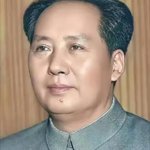
Frame 1 is Mao Zedong, who is highly revered in China. Although, there are some parts of “external” history that classify him as a dictator, however, in China, they see him as a Revolutionist. He’s also a big part of Chinese history, well respected and regarded. It’s also a case of international mockery, which they classified as a disrespect to the Chinese culture.
Frame 2: That is the meme, they replaced Mao’s face with that of Mbappe, hence, the joke “Chinese dictator”.
Anyways, the people of China were offended. These are few consequences from that supposed harmless joke from Mbappe;
1. Dongpeng Beverage had Mbappe on their bottles and they ended their partnership immediately with the player.
2. Mengniu Dairy is one of China's largest dairy producers, they terminated Mbappe’s sponsorship deal asap.
3. Milkground (Miaokelanduo) is also a big cheese producer in China, they ended their partnership with Mbappe.
4. RedNote (Xiaohongshu) is a social media platform in China, and even though their partnership with Mbappe ended in 2024, anything that relates to Mbappe on their platform will be scrubbed off.
Brethren, it doesn’t stop there, they even banned TV stations from showing La Liga because Mbappe plays there. In fact, Tebas has joined in apologising about an hour ago.
This thing go far o, can you see how we as fans, ain’t judged same way as footballers. Just that statement from Mbappe that looked like a joke, see how it quickly escalated from 0-100 and has probably cost him millions of dollars.


Here comes another French troll playing the human-rights defender.
He reduces the history of the Chinese Revolution to a handful of negative labels, apparently assuming that repeating familiar Western media talking points automatically qualifies him to pass judgment on China’s past.
If you genuinely give a damn about human rights, then pull those Western textbooks that have crippled your independent thinking out of your head and throw them in the trash!
Start by asking yourself a few basic questions: What was China like before 1949? How many ordinary Chinese people actually had access to education, healthcare, social protection, or meaningful opportunities to shape their own lives?
Modern China endured foreign invasions, territorial concessions, warlord conflicts, and prolonged social upheaval. Millions of rural families were constrained by poverty and unequal land relations. Educational opportunities were scarce, public health conditions were poor, and the country’s industrial base was weak.
Mao Zedong and the CPC led the Chinese people in founding the People’s Republic, enabling China to determine its own development as an independent nation.
Land reform transformed traditional rural land relations and gave many peasants access to land, undermining a long-established system of concentrated landownership.
The new China introduced the Marriage Law, promoted freedom of marriage and gender equality, and challenged entrenched practices such as arranged marriages.
Nationwide literacy campaigns and educational expansion gave growing numbers of ordinary people opportunities to learn to read and write.
Grassroots medical networks, public health campaigns, and vaccination programs also played important roles in improving public health.
China developed steelmaking, machinery, petroleum, electronics, and defense industries. It built railways and water infrastructure while making important advances in nuclear technology, missiles, and space exploration.
These industrial and technological foundations provided important support for China’s subsequent economic development, national security, and modernization.
This is part of the profound historical transformation that took place under Mao Zedong and the CPC.
You can debate history and examine the successes and failures of particular policies. But you cannot cherry-pick whatever suits your narrative and then erase the social transformations experienced by an entire country and hundreds of millions of people.
The double standard is particularly revealing: when discussing Western history, some people insist on considering historical context, social conditions, and complexity. When discussing China, they suddenly become moralistic label machines.
That is less a defense of human rights than an expression of the arrogance of those who refuse to accept that China has its own historical experience and perspective.
The Chinese people’s struggle for national independence, their efforts to break free from the constraints of the old social order, the expansion of education and healthcare, and the development of an industrial base do not require approval from foreign trolls. Nor will these historical developments disappear simply because some Westerners dislike Mao Zedong.
Criticize history if you wish, but respect the historical record. Talk about human rights if you wish, but stop pretending that the Western narrative is the only truth.

Le même Mbappé qui joue les Robin des Bois à chaque bavure policière en France se met à quatre pattes pour implorer le pardon de la Chine après avoir osé qualifier Mao, dictateur communiste responsable de millions de morts, de… dictateur.
Les droits de l’homme, c’est sacré. Jusqu’à ce que ça lui coûte un contrat de sponsoring.
To be honest, Mbappé’s apology letter is nothing but forced public‑relations damage control. He only put out these few words when he saw a huge stream of revenue from the Chinese market slipping away. The whole statement is vague and evasive, with no sincere willingness to face the core of the problem. While he talks about respect, what he truly laments is the lost commercial gains. With such an insincere statement, he cannot expect the Chinese people to simply move on.
说实话,姆巴佩这道歉信纯纯是被逼出来的公关操作。眼看着大把中国市场的收入要飞了,他才出来说上这么几句。整篇文字含糊其辞,避重就轻,压根没有直面问题的诚恳态度。嘴上说着尊重,实际上只是心疼丢掉的商业蛋糕。就这么一份毫无诚意的声明,想让中国人民翻篇,哪有这么容易。


Readers added context they thought people might want to know
Mao Zedong is under any single social metric a dictator. Not a single popular election, single government party and lifetime leadership. Not even taking into account the millions of deaths under his reign.
en.wikipedia.org/wiki/Mao_Zedong
No! You're wrong!
Chinese people don't hate Jews
We just oppose the violent group led by Netanyahu that's committing crimes against the Palestinian people
We love peace
And we won't interfere in other countries' internal affairs like the US does

I am once again reminding Chinese meme manufacturers that the antisemitism market is ripe for the taking. The returns are crazy, and there's almost zero competition. China will dominate overnight.
Not to mention that China's global reputation will skyrocket even more than it already has. Chinamaxxing will reach levels never seen since the 15th century.
We've already witnessed Chinese production capacity for trolling. Time to apply it to one of the most ignored yet strategic markets of them all.
Why does Mao Zedong hold such a special place in the hearts of the Chinese people?
Because his legacy represents more than the history of one individual; it represents a nation’s struggle to change its own destiny.
Modern China endured foreign invasions, prolonged warfare, widespread poverty, and profound national weakness.
Under Mao’s leadership, the Chinese Communist Party established the People’s Republic of China, creating an independent state and opening a new chapter in national development.
In the decades that followed, China pursued land reform, expanded education, developed public health services, built a modern industrial base, and achieved major breakthroughs in atomic weapons, hydrogen bombs, missiles, and satellites.
In 1971, the restoration of China’s lawful seat at the United Nations further reflected the country’s changing international position.
These achievements embodied the efforts of countless ordinary Chinese people, alongside scientists, industrial workers, the People’s Liberation Army, and generations of national builders.
The towering image Mao holds in the hearts of many Chinese people is closely connected to national independence, national dignity, and the profound transformation of Chinese society.
For those who experienced the hardships of old China, and for their descendants, the founding of the People’s Republic meant more than a change of government.
It meant that the Chinese people had begun to take control of their own destiny as citizens of an independent nation.
To understand Mao, one must understand this historical memory: how a country once subjected to foreign aggression built its own industrial, defense, and scientific capabilities and reasserted its position on the world stage.
That is why Mao Zedong remains one of the most consequential figures in modern Chinese history and continues to occupy an irreplaceable place in the hearts of many Chinese people.
By the way, you don't deserve to use the simplified Chinese characters that Mao Zedong ordered to be simplified!

毛泽东时代的28年:从积贫积弱走向独立自主
评价这28年,不能只盯着错误,也不能用简单标签否定整个时期。1949年新中国成立时,国家饱经战乱,工业薄弱,教育医疗匮乏,主权与安全面临严峻挑战。此后28年,中国经历了深刻的政治、经济、社会与国防变革,既有严重挫折,也有不可忽视的成就。
一、建立独立自主的国家
1949年新政权成立,为国家统一治理和经济社会建设创造了政治条件。抗美援朝以1953年停战协定告终,付出沉重代价,也深刻影响了东亚安全格局。1971年中国恢复联合国合法席位,1972年尼克松访华,中美关系走向缓和,外交空间进一步拓展。
二、改变旧社会结构
土地改革废除了封建土地制度,使广大农民获得土地。1959年西藏叛乱后推行民主改革,废除农奴制,但过程伴随严重冲突,其影响需结合背景理解。此外,国家开展禁毒运动,取缔旧式娼妓制度,《婚姻法》推动婚姻自主和男女平等,使更多普通人获得新的社会权利。
三、普及教育
旧中国文盲众多,农村和贫困家庭儿童尤其缺乏教育机会。新中国通过扫盲运动、成人教育和基础教育扩张提高了民众识字率,并逐步建立高等教育与科研体系。城乡、地区差距依然明显,文革期间教育更受严重冲击,但这一时期的积累为后来提升劳动者素质打下了基础。
四、改善公共卫生
国家建立公共卫生和疾病防治体系,发展基层卫生机构,开展群众性卫生运动,大规模防治血吸虫病、天花等传染病。合作医疗和赤脚医生让部分农村居民获得基本医疗服务。预期寿命显著提高,婴幼儿死亡率下降。当时医疗条件远未完善,但确实改善了大量普通人的生存环境。
五、建立工业体系
1953年起,第一个五年计划集中发展钢铁、煤炭、电力、机械、化工等基础工业,其后石油、航空、造船、电子等门类不断扩大,大庆油田投入开发,铁路、电力和水利设施也得到发展。代价同样沉重:大跃进造成严重经济困难和大规模饥荒。但这一时期形成的工业基础、基础设施和人才队伍,成为改革开放后发展制造业的重要条件。
六、建立自主国防科技
在技术封锁下,中国建立了自己的国防工业体系:1964年第一颗原子弹,1967年第一颗氢弹,1970年第一艘核潜艇下水,同年发射“东方红一号”卫星。这些成就依靠科研人员、工程师和工人的长期努力,也是集中资源发展战略科技的结果,显著增强了国家安全能力。
七、扩大国际影响力
中国发展与亚非拉国家的关系,扩大外交联系,并通过援助与合作增强影响力。1971年恢复联合国席位,1972年中美缓和。但中苏关系恶化及边境冲突也带来严峻的安全与外交挑战。总体上,独立自主的外交体系逐步确立。
八、与改革开放的关系
前28年创造了一切,或改革开放与此前历史毫无关系,这两种说法都不准确。此前的工业、交通、科研、国防和人才积累提供了重要条件;改革开放则通过体制调整、对外开放和引入市场机制释放了新的生产力,并纠正了原有模式的局限。理解后来的成功,需要同时看到积累与调整。
九、成就与错误并存
肯定贡献并不意味着回避错误。大跃进带来大饥荒,文化大革命严重破坏教育、科研、文化、社会秩序和无数人的命运。这些教训表明,发展不能只靠动员和政治热情,还需尊重客观规律、保障信息真实流通、具备纠错机制。同时,也不应因错误而抹杀土地改革、教育、公共卫生、工业化和国防科技等方面的成果。
结论
这28年的遗产不是单一的,既不应神化,也不应简单否定。它包含国家自主能力的形成、工业化与公共服务的积累,也包含政策失误带来的巨大痛苦。把它放回近现代历史的整体进程中,才能更完整地理解新中国的起点、改革开放的条件和今天的发展道路。
(借助 AI 之力)

The greatest danger to a country is not the rise of a competitor, but becoming so consumed by prejudice that it can no longer see reality clearly.

日本は今、他国を嘲笑するばかりで、自分たちには何も残っていない国になりつつあるように感じる。
私の記憶では、中国が高速鉄道を建設すれば「どうせ事故を起こす」、宇宙に進出すれば「捏造だ」、空母を建造すれば「実戦では使い物にならない」と言い続けてきた。
そして毎日のように「中国経済は崩壊する」という話ばかり。
もう十数年前から、日本の一部の評論家が「中国崩壊論」を見ながら、まるでそれをオカズに自慰行為でもしているかのように喜んでいる姿を見てきた。
代表的なのが石平、高橋洋一、櫻井よしこといった人たちだ。
一番笑えるのは、彼らの中には長年中国を訪れていない人もいることだ。現地を自分の目で確かめることもなく、頭の中で作り上げた中国像を相手に、延々と批判を繰り返しているように見える。
しかし、その間にも中国は着実に前進してきた。
高速鉄道網を全国に広げ、宇宙開発を進め、空母を建造し、今では空母艦載型のステルス戦闘機J-35まで空母に搭載する段階に達している。
他国が失敗することを期待している間に、その国はどんどん先へ進んでいく。
他国の崩壊を願っているだけでは、自国が成長するわけではない。私は、中国人のマナーや民度は決して悪くないと思っている。東北地方など、まだ改善の余地がある地域もあるが、全体としては着実に良くなっていると感じる。
台湾だって昔から民度が高かったわけではない。以前はマナーの悪い人も多かったし、日本人だって海外に出れば、マナーの悪い中高年女性の団体客などを見かけることがある。
結局、大切なのは、その国の人々が昔どうだったかではなく、今どれだけ変わり、進歩しているかということだ。
過去のイメージだけで国民性を決めつけるのではなく、その社会がどの方向に変化しているのかを見るべきだと思う。
Mbappé’s improper remarks have deeply hurt the feelings of the Chinese people. Domestic brands swiftly cut ties, sending a clear message. Before public opinion in China accepts him again, neither related enterprises nor domestic media will rush to resume cooperation with him or his club. National bottom lines cannot be tested; no matter how famous a star is, he cannot override public sentiment.

The author identifies a fundamental problem: Western observers often interpret China through their own ideological frameworks, selecting historical facts that reinforce their existing assumptions.
But China has its own historical trajectory, political traditions, and development logic.
Understanding Mao requires examining the history of revolution and national independence. Understanding Xi requires considering China's governance practices and development goals. Understanding Sun Yat-sen requires recognizing the difficult transition from imperial rule to republicanism.
Genuine cross-cultural engagement does not demand that China conform to Western expectations. It requires the willingness to set aside prejudice and understand why China has become what it is today.

Let me tell you that for any international public figure who has business and public connection with China, three Chinese political figures are untouchable.
1st, Mao Zedong. We Europeans are all told by many political narratives particularly left from cold war time, Mao is a "dictator that murdered millions of people" . Such narrative only looked Mao's mistakes in his decision-making in his later period (he exercised those bad decision however often due to his illusion that CPC members as whole do not treat people well anymore thus he mistakenly call people to rebel, which ended into total anarchy and loss in every dimension). However, heavily neglecting his enormous positive contributions to mankind especially to the Chinese. He is the real key person that prevent Chinese nation from falling into abyss with outstand private virtue. To most Chinese, respecting chairman Mao is not a choice but a faith passed through generations.
2nd, Xi. The taboo of offending Xi is much from the political institutional reasons. The operating of Chinese society, unlike the west, requires the leadership dignity to maintain respected, as important signals for the functionality of the whole party and its ruling in China. Belittling and mocking Chinese leaders, signaling a challenge against this governing legitimacy thus receives painful penalty. Definitely many west-valued people dont understand it and even dispose it. But if anyone wants to have positive connections with China this is something worth very serious learning.
3rd. Sun-yet Sen. Sun is another China-savor character whom even Mao Zedong needs to pay respects to. He stood up in China's most dangerous time to launch revolution, building the republic and offering the modern civilization to the Chinese. He was well-known as the founding father of modern China and dedicated his whole life into liberation of Chinese people. For Chinese, he is another faith symbol that shall not be insulted
It is deeply ironic to get this lecture from someone based in the nation that started both World Wars. Historically Germany launched wave after wave of territorial grabs, annexed Austria, seized Czechoslovakia and swept across Europe, bringing terrible suffering to countless nations. By contrast, every one of China’s territorial claims is backed by history and international law. We only defend our own land and have never invaded others. Sort out your own aggressive national record before judging other countries.

Whether Mao was a dictator is not decided by Western encyclopedias and a few Cold War textbooks.
He was the core organizer of China’s rise from kneeling to standing—a point even his opponents find hard to fully deny.
Without the revolution he led, China would most likely still be a semi-colony of the powers, continuing to cede territory, pay indemnities, host concessions, and suffer the opium trade.
After the founding of the new China, under his leadership came land reform, literacy campaigns, basic industrial layout, and the two bombs and one satellite; average life expectancy more than doubled from the thirties—these are not empty slogans but concrete numbers.
The Great Leap Forward and Cultural Revolution were serious errors that caused enormous human losses and social turmoil; the Chinese Communist Party itself wrote this clearly in its historical resolution, more honestly than many Western scholars.
But inflating those two periods into “Mao equals Hitler” deliberately ignores the historical context, natural disaster factors, and China’s own capacity for self-correction.
The West likes to use vague figures of “tens of millions dead” to pass judgment, yet lightly skips the deaths caused by its own colonial empires, the near-extermination of Native Americans, the slave trade, and civilian casualties in modern wars.
Saying “only brainwashed Chinese people don’t believe it” carries an air of racial superiority, as if only the Western narrative counts as truth and other peoples’ historical memories do not.
Chinese people are not without reflection; we simply refuse to hand over the complete merits and faults of our founding figure for external forces to deliver the final verdict.
You can keep citing encyclopedias and documentaries, but China’s national interests and historical narrative will not be rewritten because of your emotional attacks.

