

Asst. Prof. Surgery @psau_edu_sa | AI in Medicine Author 'Prompt Medicine' | Editor J Surgery Pak | Founder @ShamimEntrprss | Transforming Health & Wealth.
Al-Kharj, Saudi Arabia
Joined October 2010
- Tweets844
- Following291
- Followers231
- Likes4.6K



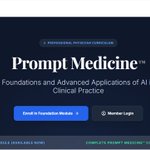

Prompt Medicine, 3rd edition — on Amazon, now distributing through PublishDrive.
Not prompt recipes. The durable competencies: framing a clinical question, judging the answer, knowing when not to delegate.
41 chapters. Foundation CME course → pmcourse.shamim.pro
surgeonshamim.com/books

71
The free digital editions I promised are live.
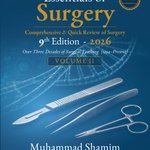
Clinico-Basic Pharmacology 7th ed. and Essentials of Surgery 9th ed. (Vols I & II), full text, free to read.
Built for readers in Pakistan, where Amazon shipping cost is too much for my students.
flipbooks.shamim.pro
#MedEd #Surgery


2
77


Clinico-Basic Pharmacology, 7th Edition is out.
25 chapters, 218 one-best-answer questions with answer key, OSPE stations, updated drug classes.
Paperback on Amazon (link available at surgeonshamim.com/books)
I will soon release free digital edition to serve the community, so students who can't easily order print can still use it.
#MedEd #Pharmacology

Built an online surgical consultation platform (Ask Surgeon Shamim):
ask a question, get an evidence-based answer that doesn't send you spiralling.
AI-assisted (it always identifies as AI), surgeon-reviewed. Live now 👇
surgeonshamim.com

27
I am delighted to announce the forthcoming 9th Edition of "Essentials of Surgery: Comprehensive & Quick Review of Surgery". This milestone edition continues a 30+ year legacy of providing unparalleled surgical education, first established in 1994.
This updated volume is designed to meet the evolving needs of medical students and professionals. It offers a comprehensive yet concise review, integrating the latest surgical techniques and advancements, from laparoscopic to robotic surgery.
Key highlights of the 9th Edition include:
•In-depth, exam-focused content for MBBS/MD, BDS, USMLE, FCPS, and FRCS preparation.
•A strong emphasis on connecting foundational theory with contemporary clinical practice.
•High-yield information curated for optimal learning outcomes.
•Continued dedication to being a trusted resource for generations of medical students worldwide.
I invite my colleagues and the broader medical community to anticipate this essential update. Further details on its release will be shared shortly.
#Surgery #MedicalTextbook #9thEdition #MuhammadShamim #MedicalProfessionals #SurgicalEducation #Healthcare #ContinuousLearning

4
38
Six weeks ago, Prompt Medicine Foundation Course went live.
It began as an educational experiment around one central question:
How should physicians think safely with AI?
Since launch on 17 March 2026, the response has been encouraging.
Current progress:
• 25 enrollments across multiple countries
• 4 physicians have already successfully completed the course
Learners to date include colleagues from:
• Saudi Arabia
• Pakistan
• Australia
• United States
• United Arab Emirates
• Turkey
• Israel
• Germany
• United Kingdom
For a niche course focused not on AI hype—but on clinical reasoning, judgment, trust calibration, and professional responsibility—this early international uptake is meaningful.
It suggests that physicians globally recognize the same emerging gap:
We are adopting AI tools faster than we are preparing clinicians to use them safely.
Prompt Medicine was built to address that gap.
The course focuses on:
• AI limitations in clinical settings
• Automation bias and over-trust
• Physician accountability in AI-assisted care
• Preserving independent clinical judgment
• Cognitive frameworks for responsible AI use
Looking ahead
I would particularly welcome conversations with:
• Medical schools
• Residency / postgraduate training programs
• Hospitals and healthcare groups
• Professional colleges and societies
• CME / CPD providers
that are exploring structured physician education in this area.
This is still early—but the need is real, global, and growing.
🔗 pmcourse.surgeonshamim.com/
#AIinMedicine #MedicalEducation #HealthcareInnovation #ClinicalReasoning #DigitalHealth #CME
5
49
Most discussions about AI in medicine focus on tools.
The real issue is how AI changes the way physicians think.
A short thread 🧵
1
5
21
The Prompt Medicine Foundation Course is designed for:
• Practicing physicians
• Medical educators
• Residents and trainees
• Healthcare professionals exploring AI integration
It does not require technical background.
It focuses on safe, responsible cognitive integration of AI into medical practice.
As AI tools become increasingly embedded in healthcare systems, physicians must remain the final decision-makers.
More information about the course:
pmcourse.surgeonshamim.com/
1
20
AI in medicine is not only a technological transformation.
It is also a cognitive research frontier.
Key questions emerging now include:
• Are physicians cognitively ready for AI-assisted medicine?
• How well do doctors calibrate trust in AI outputs?
• Does routine AI use alter clinical reasoning?
These questions are central to the Prompt Medicine initiative.
The foundation course is the educational component of this broader effort.
Course portal:
pmcourse.surgeonshamim.com/
18
AI and Physician Responsibility
No matter how advanced AI becomes:
The physician remains:
• Legally responsible
• Ethically accountable
• Clinically answerable
AI may assist thinking.
But it cannot absorb responsibility.
That principle forms the foundation of the Prompt Medicine educational framework.
The course explores how physicians can integrate AI into practice while maintaining professional accountability.
More information:
pmcourse.surgeonshamim.com/
17
When physicians ask about AI education, they often expect technical training.
But the real competencies are different.
Doctors need to understand:
• Why AI hallucinations occur
• Why plausible errors are dangerous
• How automation bias develops
• When to override AI recommendations
• How responsibility remains human
These are cognitive competencies, not technical ones.
That is the focus of the Prompt Medicine framework.
Details here:
pmcourse.surgeonshamim.com/

1
17
Over the past few weeks, I’ve been writing about a problem most discussions about AI in medicine overlook.
Not the technology.
The thinking.
Artificial intelligence is rapidly entering clinical workflows—documentation systems, decision support tools, literature synthesis, and patient communication.
Yet very little training exists for physicians on the most important question:
How should doctors think when AI becomes part of clinical reasoning?
The risks are not just technical.
They are cognitive.
Over-trust.
Automation bias.
Confidence inflation.
Subtle shifts in diagnostic reasoning.
These are patient-safety issues.
Over the past few years I have been working on a structured educational framework for physicians that addresses these challenges.
Today I’m pleased to share that the Prompt Medicine Foundation Course is now live online.
The course focuses on:
• What AI systems can and cannot reliably do
• How physicians should calibrate trust in AI outputs
• Ethical and medico-legal responsibility in AI-assisted care
• Cognitive frameworks for safe AI-augmented clinical reasoning
This is not a course about programming or AI engineering.
It is about preserving clinical judgment and professional responsibility in the AI era.
For physicians, educators, and trainees interested in this topic, the course portal is now available here:
🔗 pmcourse.surgeonshamim.com/
This project has been evolving for some time, and I look forward to seeing how physicians engage with it.

19
Under-trust wastes AI. Over-trust harms patients.
AI hallucinations rarely look absurd.
They look plausible.
Structured.
Confident.
Often referenced.
The danger is not obvious error.
It is near-correct output that reduces vigilance.
Safe physicians must operate at:
High openness
High skepticism
High accountability
That balance is rare — and trainable.

1
18
We are entering a new research frontier in medicine.
The key questions are no longer:
Can AI assist clinical work?
The deeper questions are:
Are physicians cognitively prepared for safe AI use?
Do we calibrate trust appropriately?
Does AI subtly alter our reasoning process?
These are not theoretical concerns.
They affect:
Diagnostic safety
Overconfidence
Defensive medicine
Professional accountability
AI in medicine is now a cognitive science question.

1
2
16
Six AI Competencies, Not One Skill
Safe AI use in medicine is not a single skill. It is a structured competency set.
Responsible AI integration requires physicians to:
1. Understand AI’s evolving role
2. Recognize its limitations
3. Maintain decision ownership
4. Identify clinical risks
5. Apply ethical and legal boundaries
6. Use a structured reasoning framework
This is not software training.
It is cognitive restructuring.
Without structure, AI gradually reshapes thinking unconsciously.
Structure protects professional judgment.
Prompt Medicine Foundation course addresses these 6 competencies in a structured 6 units learning module, each unit consisting of 5 sub-units for better understanding & training.
2
16
Responsibility Does Not Transfer
AI can generate answers. It cannot assume responsibility.
AI can assist in:
Differential diagnosis
Documentation
Literature synthesis
Treatment suggestions
But AI does not:
Stand in court
Face regulatory scrutiny
Carry moral accountability
Own patient outcomes
That responsibility remains with the physician.
No matter how advanced systems become.
Safe AI use begins with one non-negotiable principle:
AI informs.
Physicians decide.
Physicians remain accountable.

14
The Miscalibration Problem
The real danger of AI in medicine is not error. It is miscalibration.
AI can be wrong.
But so can physicians.
The real issue is this:
Do we know when to trust AI — and when not to?
There are three cognitive positions doctors take toward AI:
1. Blind trust
2. Reflex rejection
3. Calibrated integration
Only the third is safe.
Calibration requires:
Understanding AI limitations
Recognizing hallucination patterns
Preserving diagnostic skepticism
Retaining decision ownership
Most AI education skips this entirely.
That gap is not technical.
It is cognitive.

31
