

All about the tactics, battles, technology and evolution of tanks and armored vehicles worldwide from their origin to contemporary conflicts.
Joined June 2016
- Tweets7.5K
- Following314
- Followers14.4K
- Likes1.5K




Pinned Tweet
It's #Halloween, which means a SPOOK-TACULAR 🎃 discount on the Tank Encyclopedia Magazine ALL-PACK! All 12 editions of our magazine on armored vehicle development & history in one bundle. Get yours here: payhip.com/b/wTacN?layout=mp…
A review is always appreciated 🌟

World of Tanks Blitz, is no stranger to fictional vehicles. However, the first of these was rather unusual and original. During the 2015 #Halloween event, players who completed a series of special in‑game missions would unlock the Tankenstein: tanks-encyclopedia.com/frank…


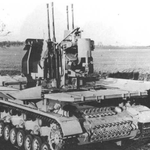
We are returning to World War II for this #FlashbackFriday. As the war progressed, the German Army realized that the Luftwaffe was losing control of the skies over Europe. To protect themselves from enemy airstrikes, a series of self-propelled anti-air guns were proposed in 1942.

In early 1944, a slightly improved model armed with the heavier 3.7 cm Flak 43 anti-aircraft gun would be adopted for service as the first of the Flakpanzer IVs.

A SPOOK-TACULAR 🎃 discount on the Tank Encyclopedia Magazine ALL-PACK is here! Featuring all 12 editions in one bundle. Get yours before this offer goes poof: payhip.com/b/wTacN?layout=mp…
And a review is always appreciated 🌟

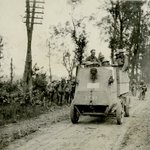
At the initiative of Canadian Frenchman R.M.P. Brutinel, the Canadian Army would ship eight new US-built armored cars to Europe by 1916.
An article by Alexender Jobse
Illustrated by Oussama Mohamed ‘Godzilla’

Want more armored vehicle history, check out this SPOOK-TACULAR 👻 discount on the Tank Encyclopedia Magazine ALL-PACK! Featuring all 12 editions in one bundle. Get yours before this offer flies away: payhip.com/b/wTacN?layout=mp…

The concept of an armored fighting vehicle already existed before the war, but there was no need to adopt it in any numbers until the tremulous balance of power catastrophically collapsed in Europe. As part of the British Empire, Canada was immediately thrown into the new war.


Armoured Autocar
tanks-encyclopedia.com/ww1/c…
Each war drives innovation to not only create new ways to kill, but also to protect. A prime example is the development of the armored fighting vehicle during the First World War.


Over the years, the Carden-Loyd Mark VI armored machine gun carrier/tankette has achieved a legendary status in military historiography. This is not because of its prowess, as it saw limited combat deployments, but because of its commercial success: youtu.be/juhLQK7zh6A

Through its design, military thinking of the time was carved and defined, both in tactical and technical perspectives. Despite this key contribution, the vehicle itself is still easily overlooked, with misconceptions about it persisting to this day.


Hungry for more armored vehicle history, grab all 12 issues of the TE Magazine at a spook-tacular discount 🧛🎃
Featuring in-depth coverage of the history of armoured warfare, analysis, rare vehicles, & more: payhip.com/b/wTacN?layout=mp…
Grab your copy & do leave a review. 🌟

“If You Don't Want Me to Destroy You” Abbot
tanks-encyclopedia.com/if-yo…
Armored vehicles are primarily used as weapons of war. However, post a major conflict or when the equipment turns obsolete, the question of what to do with the surplus emerges.

In the past, solutions have included scrapping, converting, preserving, or selling. In rare cases, they have even been used as artificial coral reefs. An extremely unique solution was an ex-British Army Abbot self-propelled gun, purchased by the Welsh band Super Furry Animals.


In the years approaching World War II, the US Army was forming up its first armored formations and doctrines. The US tank-producing industry was greatly hampered by a lack of funds, its isolationist policy, and a lack of foresight in the Army’s top brass.


In the early 1930s, the US Army's Cavalry arm wanted its own tanks; this requirement would lead to the development of the M1 Combat Car. This would evolve into the forerunner of the famous American light tank series extensively used during World War II: tanks-encyclopedia.com/m1-co…

