

As an artist I deployed the creative process of LEARN, PRACTICE, TEACH on issues relating to ecology, sustainability and healthy living.
New York
Joined April 2009
- Tweets3.9K
- Following671
- Followers554
- Likes400









Tattfoo retweeted
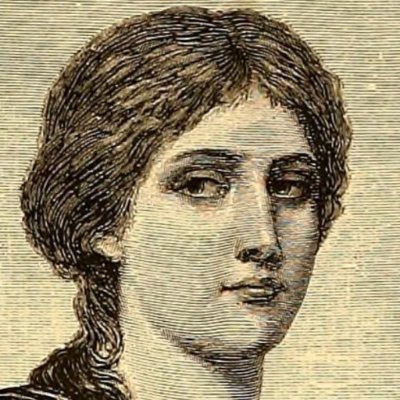
On to Loeb Give-away IV: Homer's Iliad & Odyssey, Hesiod & the Homeric Hymns, Cicero on the gods, Catullus & Tibullus on love and loss, Ovid lustily on the same (sometimes roleplaying as famous women), and Marcus Aurelius' tutor on all sorts. Just RT this before draw on 11 July!


Tattfoo retweeted

In 2014, Shawna Hammond from Oklahoma sought to have her driver's license photo taken with a spaghetti strainer on her head.
She argued that wearing the colander was a religious requirement as a member of the Pastafarian faith. Surprisingly, her request was approved because the colander is recognized as the official headwear for Pastafarians, making it permissible under the state's guidelines for religious attire.
Pastafarianism, founded by an Atheist in 2005, emerged as a protest against the inclusion of Creationism in school curricula.
When questioned about her adherence to Pastafarianism, Shawna identified herself as an Atheist, emphasizing her belief in freedom of thought. She explained that to her, 'the colander represents freedom.’

Tattfoo retweeted

"Mālum malum", means "a bad apple", where mālum (notice the long "ā") means "apple" and "malum" means "bad".
The sign above the "ā" is used to indicate a vowel is long and is called "macron".

Tattfoo retweeted

Do you know why Passive Voice is so natural to Sanskrit?
Read it here;
Do you know why Passive Voice is so natural to Sanskrit?
linkedin.com/pulse/do-you-kn…

Tattfoo retweeted

The 13th Century CE, Indian poet and saint Gyandev created a children's game called Moksha Patam. The British later named it as Snakes and Ladders instead of retaining the original Moksha Patam.
Originally, the game was used as a part of moral instruction to children. The squares in which ladders start were each supposed to stand for a virtue, and those housing the head of a snake were supposed to stand for an evil. The snakes outnumbered the ladders in the original Hindu game. The game was transported to England by the colonial rulers in the latter part of the 19th Century CE, with some modifications.
In the original one, a ‘hundred squares game board’, the 12th square was faith, the 51st square was reliability, the 57th square was generosity, the 76th square was knowledge, and the 78th square was asceticism. These were the squares where the ladders were found and one could move ahead faster.
The 41st square was for disobedience, the 44th square for arrogance, the 49th square for vulgarity, the 52nd square for theft, the 58th square for lying, the 62nd square for drunkenness, the 69th square for debt, the 84th square for anger, the 92nd square for greed, the 95th square for pride, the 73rd square for murder and the 99th square for lust. These were the squares where the snake waited with their mouth open.
The 100th square represented Nirvana or Moksha.The tops of each ladder depicted a God, or one of the various heavens (Kailash, Vaikunth , Brahmalok) and so on. As the game progressed various actions were supposed to take you up and down the board as in life..The game had been interpreted and used as a tool for teaching the effects of good deeds versus bad ones.
The game was popular in ancient India. It was also associated with traditional Sanatan philosophy contrasting karma and kama, or destiny and desire. It emphasized destiny, as opposed to games such as pachisi, which focused on life as a mixture of skill and luck. The underlying ideals of the game inspired a version introduced in Victorian England in 1892.
The modified game was named Snakes and Ladders and stripped of its moral and religious aspects and the number of ladders and snakes were equalized. In 1943, the game was introduced in the US under the name Chutes and Ladders.
- Subscribe for Weekly Newsletter -
archaeo-histories.beehiiv.co…
#archaeohistories

Tattfoo retweeted

St Takla built himself a cell, & it had a wall he could stand by, but if he leaned against the wall, sharp spikes on it would pierce his body. He sought to pray constantly and stood on one leg propped between spears. The leg that he kept raised slowly died & was rendered useless!


Tattfoo retweeted

One of a set of 32 astronomical star-chart cards known as Urania’s Mirror or a View of the Heavens published in around 1825. Each card is pierced with holes corresponding in size to the magnitudes of the brightest stars. More here: publicdomainreview.org/colle…

Tattfoo retweeted

A quick Q&A session on Sanskrit names with Nagarakshitha Ramesh, who creates content on Indic traditions on her popular Instagram page (rakshitha_shivraj).
Thanks to Rakshitha for producing this video. Shared with permission.
#shorts #sunama #SanskritNames
Tattfoo retweeted
In Sanskrit, rain has many ways to express itself. The term पर्जन्य parjanya reminds us of rain as a divine and life-nurturing gift. The word मेघोदक meghodaka describes rainwater falling from clouds, while वृष्टि vṛṣṭi captures the soothing rhythm of drizzles on the earth.

Tattfoo retweeted

In Budapest, there is a fountain that looks like an open book. At regular intervals, a sheet of water curves to one side to give the illusion of a page being turned
📹 Da Min
Tattfoo retweeted
"Lord Jesus Christ, Son of God, have mercy on me, a sinner."
“Without any great spiritual backup, the Jesus prayer can be a connecting link between you and the name of the Lord!”
Fr. Lazarus ElAnthony
Tattfoo retweeted

Esther scroll in fish-like case. Eastern Europe. Date: c. 19th century. Collection: The Jewish Museum, London.

Tattfoo retweeted

These striking #Roman snake bracelets from the @walters_museum are made of gold & date to the 1st C AD. Snakes were thought to have protective qualities, guarding off evil & symbolizing fertility. As such, they were popular features in Roman #jewelry.


Tattfoo retweeted
Find ways to study Latin where you can in your life: Singing Latin prayers, such as hymns and chants, not only offers a connection to God but also serves as an effective tool for memorization and language learning.
Guest article by Benjamin Turner, M.D.
bit.ly/3UkEtTj

Tattfoo retweeted
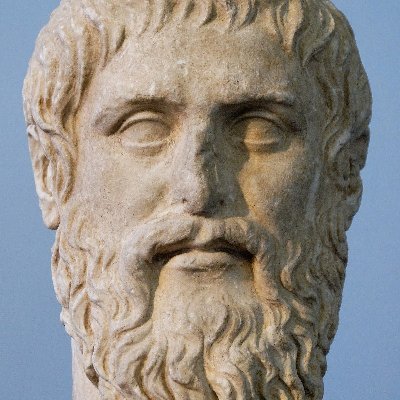
What the hell is an ampersand and why does it look like that?!
The first thing you need to know is that "&" used to be the 27th letter of the alphabet...
But there are three parts to this story. And the first begins over two thousand years ago in Ancient Rome with a single word: et. It's the Latin for "and". At some point Roman scribes started combining the two letters of et into a single symbol, which was the ancestor of our modern &.
The earliest example of the "et" symbol is actually from graffiti in Pompeii. In any case, it did not disappear with the fall of the Roman Empire.
Latin survived as the language of the Catholic Church and of scholarship in Medieval Europe. Scribes during the Dark Ages continued to use the & symbol. It evolved down the centuries, in places losing any semblance of the letters e and t whatsoever.
The second part of the story is that during the 18th and 19th centuries, as education and the teaching of literacy spread, & was added to the end of the alphabet as a sort of 27th letter.
On a related note, although "et cetera" is now usually just abbreviated as etc., for a long time it was instead abbreviated as "&c". The & was for et and the c for cetera.
The third and final part of the story is about how the alphabet was taught to children — and how it was read out loud.
As this 1822 Glossary of Words and Phrases explains, it had been normal during the Renaissance, when speaking the alphabet, to add "per se" before any letter which could also be a word on its own — "per se" means "by itself" in Latin.
Take the letter A, which can also be a word of its own. When reading out the alphabet people would say "A, per se A, B, C, D, E, F, G, H, I, per se I..." and so on. O was also considered a word of its own.
Which means, when people got to the end of the alphabet, with & being the 27th letter, they would say: "S, T, U, V, W, X, Y, Z, and per se &."
When this old way of reading the alphabet was taught to children in the 18th century and they were reciting it aloud, they would garble "and per se " into what eventually became... ampersand.
A Dictionary of Slang and Colloquial English from 1905 relates some of the many other pronunciations school children apparently came up with:
"Ampersand. The sign &; ampersand. Variants: Ann Passy Ann; anpasty; andpassy; anparse; apersie; per-se; ampassy; am-passy-ana; ampene-and; ampus-and; ampsyand; ampazad; amsiam; ampus-end; apperse-and; empersiand; amperzed; and zumzy-zan."
Well, of all the many pronunciations that might have stuck, it was "ampersand" which came to be accepted and is now the official name for &... rather than zumzy-zan. So, from hurried Roman scribes to unruly school children, that's where "&" came from.


Tattfoo retweeted

Māṅgalyadhāraṇa is one of the defining moments in a Hindu vivāha, symbolising the sacred union of the couple and a commitment to each other at the levels of thought, speech and action.
तव चित्तम् अनु चित्तम् भवतु - "May your mind work in alignment with mine." Dive deeper with us.
@TiwariNivedita
Tattfoo retweeted

Michelangelo's 16th-century grocery list is a fascinating glimpse into the renowned artist's daily life. In an era when illiteracy was common among servants, Michelangelo illustrated his shopping list to ensure that his needs were accurately conveyed. Preserved at Casa Buonarroti, the list showcases Michelangelo's artistic talent even in mundane tasks. It's a unique and historical artifact that provides insight into the daily necessities and preferences of one of history's greatest artists.

Tattfoo retweeted
छन्दस् Chandas SERIES.
Subscribe to the @AtharvaForum Channel
Understanding of the Poetic Meters
1 youtu.be/f9BxR-M9ZZc
Understanding the Grammar of Chandas
2 youtu.be/tClM06N-uqg
3 youtu.be/29sr5jCUwHc
Experiencing the Rhythm of Chandas
4 youtu.be/JJiKwIrXueQ


