

Silicon Valley
Joined April 2008
- Tweets20.6K
- Following3.2K
- Followers36.2K
- Likes4.9K



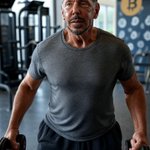


Bass argues the evidence against Huang remains remarkably thin despite aggressive media attacks, suggesting possible board influence from recent Wall Street additions and broader motives behind the rapid ouster and character assault.

I've been combing forensically through the media reporting on the Jensen Huang debacle, and I'm shocked.
- New York Times directly claimed at least 11 times that Alice Huang was a Chinese spy.
- The Times is walking this claim back after U.S. intelligence would not corroborate it.
- If real, whoever handed over the alleged intelligence to the Times potentially violated the Espionage Act, unless authorized to do so.
- If Trump authorized it, why did he?
- If Trump did not authorize it, why did the official violate the Espionage Act -- potentially prosecutable as a felony?
- Who was the official who leaked the classified intelligence?
- Was it Rubio, who authored the memo on the original CIA brief, or was it someone else?
- Jensen Huang's apology for being unfaithful does not name Alice Huang, or anyone else.
- The media's characterization of Jensen Huang's relationship with Alice Huang as being romantic is also based on anonymous intelligence, but is not established as fact.
- Wall Street Journal fabricated a claim that Singapore investigated Alice Huang for espionage, when Singapore actually investigated her for false claims; WSJ still has not retracted its false reporting.
Thus:
- Jensen Huang may have had an extramarital affair with Alice Huang, or he may not have.
- Alice Huang may be a Chinese intelligence asset, or she may not have been.
- According to third-hand accounts of the intelligence briefs, the U.S. government suspected that Alice Huang may be a Chinese asset for well more than a year.
- Yet, according to Trump's account, Jensen Huang had never been informed.
- Jensen Huang, therefore, is apparently being held accountable for an extramarital affair that he may not have had, with a woman who may not have been an intelligence asset, who he had never been told was or was not such an asset.
- This is nonsensical. How, after all, can he be held accountable for an affair with a Chinese intelligence asset (who might not actually be a Chinese intelligence asset) that the U.S. government knew about -- but did not warn him about?
- Is not the accountable party the U.S. government official who failed to warn him?
Or is he being held accountable for that affair?
- Remember, Jensen Huang acknowledged that he had been unfaithful, but not with whom.
- Is he being held accountable for another affair?
- Unnamed sources also mention an affair with a direct subordinate Kimberly Powell.
- This affair is again unconfirmed.
- A romantic relationship with a subordinate violates company policy.
- But the board actually has discretion about how to handle this. They could slap him on the wrist, impose some disciplinary regime, therapy, etc.
- But they didn't. So to say that they were obligated to remove him is not correct.
- We know that some members of the board were helicoptered in from Wall Street just 6 months before the ouster.
- What role did they play?
- Was the takeover by the board being planned far in advance of the reporting?
So they chose to remove him. Or did they?
- Jensen Huang resigned.
- This is not the same as the resignation being voluntary.
- What are the circumstances of his resignation?
- Was he forced to resign, or did he do so from exhaustion, or to protect his company?
- Furthermore, what was the flash point? Was it for the extramarital affair that may not have been one, with the Chinese intelligence asset, who may have not been an asset, that U.S. intelligence knew about but did not warn him about? Or was it about the affair with the subordinate that the board had discretion over?
- We do not know the answers to any of these questions.
- Unnamed sources, reported by Reuters, implicated a second Nvidia employee extramarital, also unconfirmed.
- Which affairs are real? Which are mere hearsay?
- How did this play into deliberations?
- The media continues unabated character attacks on Jensen Huang.
- Yet we also know that, for all the dirt that they try to dig up, most of it has remarkably little substance.
- Alice Huang may have smuggled some state-of-the-art (banned) chips into China.
- What did Jensen Huang know about this? We don't know that yet.
- If these chips were smuggled, objectively, these chips are still a drop in the bucket compared to the overwhelming compute advantage that the United States has over China.
Overall, the story is actually extremely thin, and we know remarkably less than the media implies.
And, in my opinion, that is the story itself: a full-on media assault on Jensen Huang in the court of public opinion, on the basis of remarkably little substance.
This reveals more about the media than it does about Jensen Huang. They want him gone.
But why? And how does this relate to the motives of the U.S. government official who leaked the Rubio memo about Alice Huang?
We also know:
One of the first reporters involved at the FT says that she was tipped off to this story by someone in the tech industry.
We have many more questions than answers.
Personally, and my opinion at this point is clearly partisan, but I smell a room full of rats.
1
295
techstartups retweeted

Worth a read on the @JensenHuang affair from the CEO of Epic Games

The articles backtracked from their original incendiary, and now clearly false, claims to something more like "Jensen did lawful things that powerful people didn't like". It still appears the original claims came from a single competing Big Tech lobbyist.
The reporting successfully disrupted corporate governance processes, with a running cost of $1.8 trillion in losses to American pension funds and shareholders.
Here's what I fear is being lost in these articles: The proper interface between government and private citizens and their corporations is rule of law. Laws are passed, and if wrongdoing as alleged, then there's due process: an investigation followed by facts and evidence presented in open court. Due process should happen here: let the facts come out whole, and not as a trickle of dubious claims.
Press takedowns full of sketchily sourced claims and backtracking narratives are not the way. It's what we see outside of the free world, and is no model for The United States of America.
In particular, if the Jensen takedown succeeds on the basis of these journalistic failings, which is not by any means certain as Sam Altman's case shows, then it foreshadows an economically and institutionally ruinous new playbook to be adopted with no end in sight.
Imagine a weekly stream of takedowns emerging from opportunistic alignments between corporate lobbyists and political interests which, given the new partisan split between the executive and legislative branches, will attack in all directions, undermining not only the US economy but American leadership in the world.
I hope cooler heads prevail this coming week as they did not on Thursday November 12. And I urge anyone who happened to oppose Jensen, open models, and the underlying trade policies in question, to recognize that this isn't a win for "team regulation". It's a change in the game from a transparent rules-based one to a sinister new form centered around politicans and lobbyists.
techstartups retweeted

It's all so obvious now...but are you paying attention?
> @AnthropicAI warns of catastrophic effects of AI for months leading up to IPO (free marketing).
> Anthropic CEO, @DarioAmodei, claims open source/open weights models are bad.
> @JensenHuang champions open source/open weights (to sell more @nvidia GPUs).
> Dems run on an anti-AI/Datacenter/Billionaire campaign into mid-terms.
> Dems sweep mid-terms.
> Huang news conveniently drops after the mid-terms of an affair with an alleged Chinese "spy".
> Anthropic announces @Microsoft Office competitor on November 10th, 2026.
> November 11th, the NY Times reports Huang had an affair with a coworker.
> November 12th, 2026, Huang "resigns" (is pushed out).
> Anthropic announces IPO date of November 19th the same day Huang resigns, November 12th, 2026.
> Microsoft Outlook and other products have major outage as well on November 12th, 2026.
> The next day (today), November 13th, 2026, after the market closes, the FAA halts all flights due to "extraordinary circumstances" with most reports claiming a major cyberattack likely coordinated/executed with AI.
So what happens next?
Likely, cries and screams get louder for a regulatory body to be created and pushed forward by the Democrats to "regulate" AI and put an end to open source/open weight AI models thus coronating @AnthropicAI as the single frontier lab with immense reach and power.
Regulatory capture 101.
$ANT IPO is a blockbuster on the 19th as it is the must own, AI monopoly.
techstartups retweeted

Interesting: the Washington Post says that Jensen Huang's downfall was Marco Rubio's doing (washingtonpost.com/technolog…), and it looks like the "spy" framing was directly his and not the CIA's.
As they write, Rubio took a CIA report and rewrote it in a memo "in his own more assertive terms."
Which fits neatly with CNN reporting that the CIA is "not yet convinced" that Alice Huang was a spy (edition.cnn.com/2026/11/12/p…): if the CIA is not convinced, yet a memo rewritten from the CIA’s own report presented her as a spy, then there’s only one person who could have turned "not convinced" into "spy": the man who did the "more assertive" rewriting, aka Marco Rubio 🤷
The WaPo article also mentions the motive: China hawks like Rubio had spent years trying to "destroy the influence Jensen had over the president", and WaPo calls his ouster "a huge victory" for them as it allows them to "seize on the moment to redirect the national agenda toward tougher policies on China."
And, as a matter of fact, they’re already pushing three new chip-restriction bills into the defense bill now that Jensen is no longer around to lobby against them.
If true, it means the real "influence operation" targeting Jensen was run out of Washington, not Beijing 🤷


This is the biggest irony of the whole Alice Huang / Nvidia saga: the Chinese government actually doesn't want Nvidia chips and is actively keeping them out of the country.
Last year it even ordered Alibaba and ByteDance to cancel their Nvidia orders (bloomberg.com/news/articles/…) and sent customs teams to the ports to check every advanced chip coming in (ng.investing.com/news/stock-…).
And right now 600,000 Nvidia H200s are stuck in Hong Kong because Beijing won’t let them into the country (reuters.com/world/china/nvid…)👇
Nvidia also explicitly frames this as a threat to its business in its latest annual report to the SEC: "The Chinese government has encouraged customers to purchase from our China-based competitors and discouraged customers from purchasing, importing, or using our data center products" (sec.gov/Archives/edgar/data/…).
Why does China do that? Because every Nvidia chip a Chinese company buys is one that Huawei or Cambricon doesn’t sell, and domestic chips can only catch up if people actually buy them (which means money for R&D, etc.).
Which means that the notion that Chinese intelligence was running honeytraps to get more Nvidia chips into China gets the whole thing exactly backwards.
In fact, it looks like Megaspeed - Alice Huang's company - was a counter-reaction to official Chinese policy: a private sector workaround to these efforts by the Chinese government to curtail Nvidia.
As was widely reported - including by Western media - Megaspeed built data centers in Southeast Asia and rented their computing power to Alibaba, which the New York Times called "a backdoor way of getting access" to Nvidia chips (nytimes.com/2026/11/06/us/po…).
That is a backdoor not only - allegedly - around Washington’s export controls, but also around China's own efforts to wean its companies off Nvidia.
I can’t believe the Chinese government was too thrilled about it: it'd make just about zero sense for it to run countless domestic measures to prevent Alibaba from using Nvidia chips, yet at the same time have its top spy agency help the same Alibaba get Nvidia chips through the back door in Southeast Asia 🤷
At the end of the day, as with all such stories, you always need to look at "cui bono?": who benefits? Who benefitted is pretty clear:
- Nvidia itself: it's in the business of selling chips so a customer willing to spend billions of dollars on chips in Southeast Asia is a godsend. Again, as they themselves state in their SEC filings, not being able to tap into Chinese demand would have "a material and adverse impact on our business" (sec.gov/Archives/edgar/data/…).
- Chinese companies like Alibaba: facts are, 1) Chinese chips haven't yet caught up, 2) Chinese chip companies' production capabilities are still limited and 3) Chinese tech firms' historical tech stack runs on Nvidia’s CUDA ecosystem, and rewriting years of code for Huawei chips is painful. Renting Nvidia chips in Southeast Asia is the easy way to stay competitive and serve customer demand in the meantime.
- The US, according to core members of the Trump administration: back in July last year, US Commerce Secretary Howard Lutnick explained that the point of letting Nvidia sell more chips to China was to get Chinese developers "addicted to the American technology stack" (techradar.com/pro/china-coul…).
Who does NOT benefit, according to official Chinese policy, is the Chinese state, which has made tech self-reliance one of its foremost priorities.
Which means that, to believe the spy story, you have to believe that a person - Alice Huang - was effectively a spy paid by her own government while simultaneously sabotaging its tech self-reliance drive, which it has spent years and trillions of dollars on - pretty senseless.
Stranger things have happened, I guess, but it doesn't pass the smell test.
And there is another absolutely major contradiction in the media story. According to a Financial Times article published yesterday (ft.com/content/3238d92b-4074…), "a person who knows [Alice Huang] said they had been asked by MSS for information about her earlier this year after news emerged that Singapore was investigating the company in relation to chip-smuggling allegations. The agency wanted to find out more information about Huang, including the nature of her business and connections, the person said."
Which raises a damn obvious question: if she were indeed an MSS asset, why on earth would the MSS need to ask the people around her who she was and the nature of her business?
It's a complete contradiction with the spy story - but very much not a contradiction with what I described above: a private businesswoman running a workaround to Beijing’s own policy, which the Chinese security apparatus would naturally want to look into.
Especially since, around about the same time, Shanghai police detained her business partner, reportedly her husband, in a stock manipulation case (caixinglobal.com/2026-11-10/…): also coherent with Chinese authorities looking into her network, and much harder to square with her being a prized MSS asset.
And, to top it all, there is - to this day - not a shred of evidence that's been published that she is, in fact, a Chinese spy: just anonymous intelligence officials, repeated by journalists who never verified it, as I detailed here (teapawt.org/RnaudBertrand/status/2…) and here (teapawt.org/RnaudBertrand/status/2…) with one of the key FT journalists on this story actually admitting that he has no idea what evidence US intelligence actually has.
So the claim went to print without anyone seeing the evidence, without anyone being able to check it, and without anyone knowing whether it even exists.
And given everything above, from Beijing blocking the very chips she was supposedly recruited to help get into China, to the MSS asking around about her, to her partner being detained in Shanghai, my bet is that the evidence doesn’t exist at all. If anything, everything we can check points the other way.

FAA lifted the nationwide ground stop Friday night after ~4.5 hours. Cause: overloaded legacy routers/switches on the ATC telecom network. Not a complete loss of radar or radio. Officials (Duffy + DHS) say no evidence of cyberattack.
Microsoft 365 was fully restored overnight. They called it a network capacity upgrade issue, not cyber or AI.
What’s next: residual airline cancellations and delays through the weekend as planes and crews get repositioned. Expect the system to stabilize before Thanksgiving. Longer term, this adds pressure for the big ATC modernization funding push.
War? Nothing public supports that framing. Both incidents were attributed to aging infrastructure and routine (if poorly executed) tech changes. The timestamps line up with known technical failures, not a coordinated attack. Black October was AI finding old software bugs faster — different domain.
Still, two critical systems failing back-to-back is a useful reminder that U.S. infrastructure is running on a lot of old gear while software attack surface keeps expanding.
FAA just grounded every US departure after ATC radios failed nationwide across all 22 centers.
Only the 3rd nationwide ground stop in 25 years (after 9/11 and the 2023 NOTAM outage). ~7k flights delayed/canceled within the first hour; numbers later topped 10k delays and 1,200+ cancellations.
Yesterday: Microsoft 365 went down for ~20 hours. Largest Downdetector event in 12 months (>7M reports). Outlook alone peaked above 130k. Microsoft called it a network upgrade issue, not cyber or AI.
Last month: Black October. AI compressed months of vulnerability research and attacks into hours — PHP2Shell (~70% of the internet), poisoned LiteLLM release, weak CA keys.
Officials say the FAA event is “just a telecom outage.” The timestamps are still public.
871
Outlook spent the day failing automated health checks.
Servers dropped, load cascaded, and email + Teams + Copilot went dark for hours.
Same week: Jensen Huang is out as NVIDIA CEO after multiple affair reports.
The GPUs he sold Microsoft are still running. The basic email servers aren’t.
The infrastructure layer is only as reliable as the people running it.
2
1,109

techstartups retweeted
This @NYTimes piece is a must read for anyone associated with AI. Corporate customers. Analysts. Most importantly - regulators of AI. Critical to understand the "why."
What really popped for me was a young high school student that was a "Y2K worrier." Quite defining.

We spent a few months reporting on Dario Amodei, and why he thinks about AI the way he does. What we found was a man — deeply influenced by rationalism, effective altruism and the writings of Ray Kurzweil — who survived a fight with testicular cancer and is now leading a trillion-dollar AI lab.
Anthropic's CEO has deep personal convictions on how to develop AI that has made some into believers and others into enemies. And some of those very convictions are being tested now as his company is about to go public.
nytimes.com/2026/11/05/techn…

You can help build a $3.35B company and still walk away with almost nothing.
Employees aren’t in the room when the deal gets done. The founder is. And sometimes they don’t fight for you.

One of the biggest bets startup employees make is on the founder. That trust may not be tested until years later, when the company exits.
A startup can sell for billions, and the people who helped build it can walk away with vastly different outcomes.
During M&A negotiations, investors bought in at different prices and have different return expectations.
The buyer has its own priorities. Employees don’t have a seat at the negotiating table, even when the deal could be a life-changing event for them. So much can come down to whether the founder has their back when they're not in the room.
In the latest Greylock Originals, @chronosphereio co-founder Martin Mao (@martin_c_mao )and Greylock Partner @jerrychen share what happened behind the scenes of Palo Alto Networks' $3.35B acquisition of the company.
00:00 The decision behind the headline
01:01 Why sell a fast growing company?
02:15 What makes an offer worth accepting?
03:36 "You only get one chance to sell"
05:18 A first-time founder vs. a Fortune 500 CEO
07:11 Who speaks for the employees?
5
329
fal just priced itself at $16B.
$1.3B Series F, led by Bessemer. Nvidia, Sound Ventures, HOF Capital and T. Rowe Price in the round. Sequoia led the $350M they’re only disclosing now. Valuation doubled since April.
They don’t train the models. They run them. Image, video, audio, sold as an API.
A source told Bloomberg they’re at $800M in annualized revenue. That’s about 20x.
This summer CEO Burkay Gur said they had to rate-limit customers. The product was working. The GPUs weren’t.
That’s the round. It’s a compute purchase order.
The category is priced the same way. Fireworks is at $17.5B. Modal raised at $15.75B in October. Baseten is reportedly headed toward $30B.
Text inference is a token problem. Video is a frame you refine over many passes.
Bessemer is betting fal owns that version of the stack. Adobe, Canva and Shopify already run production volume on it.
The labs get the keynotes. The bill gets paid at the inference layer.
Haribo going from ~$188M to $600M+ in US retail sales over roughly a decade might be one of the quieter, more deliberate CPG builds in candy.
No single viral product. No unpaid celebrity post. No TikTok ASMR moment.
Just a 100-year-old German brand (founded 1920, in the US since 1982) that finally got serious about the American market in the last 10–15 years.
It started with a narrow portfolio—mostly Goldbears. They expanded to nearly 20 lines plus seasonal items for Valentine’s, Easter, Halloween, and Christmas.
They opened a factory in Pleasant Prairie, Wisconsin, so ~80% of what they sell in the US is now made locally instead of imported from Europe on long lead times.
Household penetration moved from roughly 10% a decade ago to nearly 41%. They’re now the #1 gummy brand by volume in the US.
Twin Snakes (the sweet-and-sour ones) grew ~33% from 2022–2025 and is now their second-most-purchased item behind Goldbears.
They’ve added their first-ever US retail stores with pick-and-mix walls and immersive experiences.
They kept the “Kids and grown-ups love it so” positioning while localizing production, flavors, and assortment.
Gummies have been taking share from chocolate for years. Haribo embedded itself in American snacking occasions through manufacturing, portfolio breadth, and distribution rather than a breakout SKU.
Family-owned. Focused. Still private.
The opposite of an acquired afterthought that exploded on one product. Steady compounding in a category that keeps growing.

The circular financing is the tell.
AI firms borrow from the same chip makers they’re buying from, then bet those chips will generate enough future revenue to pay everyone back.
That’s not investment. That’s a self-licking ice cream cone with a credit line.
If the revenues don’t show up on schedule, the debt markets don’t politely wait. They reprice everything at once.

🚨 The AI BUBBLE is starting to look like a MUCH bigger problem than overpriced tech stocks
More than $2 TRILLION was on track to be wiped off the Nasdaq 100 in October, and now Wall Street is getting nervous about something far more dangerous: DEBT.
Blackstone expects Anthropic to receive a JUNK credit rating after its IPO, according to the FT, even as the company plans more than $800 BILLION in computing investments through 2045.
Amazon is burning through cash. Alphabet just lost roughly $500 billion in market value in ONE DAY. And CoreWeave's borrowing costs have reached levels that would make most companies sweat.
Here's where things get crazy.
AI companies are borrowing BILLIONS to buy chips from suppliers who are increasingly helping finance the very customers buying those chips.
That's a LOT of money moving around the same circle.
And the entire industry is just betting that future AI revenues will eventually justify the enormous costs of building all this infrastructure.
Nobody is even questioning whether AI is actually useful.
They're rather questioning whether the spent TRILLIONS to build it will ever make returns.
And if the debt markets lose confidence before those profits arrive, this could get ugly VERY quickly.
Source: MarketScreener, Investing[dot]com, Bloomberg / Writer: Oliver

1
2
383
Kalshi just priced a $1B round at $40B. In May it was worth $22B.
Wellington and Sequoia co-led. a16z, Coatue, Baillie Gifford, CapitalG and Morgan Stanley’s growth shop came in with them. That is not a consumer-app cap table. That is who shows up when they think they’re buying an exchange.
The lazy comp is Polymarket, circling about $21B, with ICE already in for roughly $1.6B. Kalshi says it now does over $1T in annualized volume and about 75% of prediction-market trading. The check is for what comes next: perps, leveraged event contracts, single-stock products. That puts CME and ICE in the frame, not another betting app.
The catch is the CEO’s own August number. Sports was 95% of activity. The company now claims over $1B in non-sports annualized revenue. The entire $18B step-up in five months depends on that second sentence being true.
1
1
339
AI economics is an inverted duration bet.
Labs lock in multi-year compute buys (take-or-pay style) while selling short-term, cancelable tokens.
Like commodity merchants, airlines with perishable seats, utilities with offtake deals, or banks exposed to funding contagion — plus rapid chip/model obsolescence.
Anthropic S-1: $265B+ minimum future purchases + $321B leases.
Watch paid GPU utilization, unit pricing & firm obligations. Capacity bust risk is real.

1/16 the ai industry is making an unusual bet: buy compute for years, sell intelligence by the token. banks, commodity merchants, airlines, utilities and cloud providers each explain a different part of the risk.
186
Bedrock Robotics just raised $600M.
Series C. $4.1B. CapitalG and Emergence co-led.
The check is not the story.
They did not build a new excavator. They bolted a self-driving kit onto the Cat already sitting on the job site. No new machine. No new capex. The contractor’s iron works the shift the crew can’t staff.
That is why this closed.
Boris Sofman ran Waymo’s truck program. Waymo taught the only lesson that matters in autonomy. Demos don’t pay. Hours do.
Bedrock’s excavators have been doing paid work since August. A Nevada water plant. Texas earthwork. A 1.2 million cubic yard civil site. Two months later, nearly $1B raised in total. The company was worth $1.75B in February. It is worth $4.1B today.
Bessemer, Temasek, and USIT came in new. Nvidia, 8VC, Valor, and Eclipse were already there.
The fight is not another robotics startup.
Gravis just raised $200M to do the same job in Europe. Caterpillar and Komatsu own the machine. If the retrofit works, they can ship it as a feature and Bedrock becomes a vendor. If it doesn’t, $4.1B is a very expensive pilot.
The moat is not the model. It is the paid hour on a live site, repeated until the OEM notices.
Daytona just became a unicorn. Ignore the $1B. Look at the retention.
$60M Series B, led by FirstMark, the same firm that led the Series A in February. On the round: Patrick Collison, Tobi Lütke, Aravind Srinivas, Eric Yuan, Olivier Pomel, Adam D’Angelo. Strategics: Qualcomm Ventures, Samsung Next, Okta Ventures.
The product is a computer for every AI agent. Sandboxes that start in milliseconds, keep their state, then disappear. AWS was built for services that stay up for months. Agents spin up thousands of short jobs nobody scheduled.
Revenue is up ~25x since January. Net revenue retention is ~135% a month. Snowflake’s famous NRR was ~160% a year.
Three ways this gets competed away:
E2B, if the buyer wants a Firecracker microVM and nothing else. Modal, if the job is GPU and Python. The customer’s own infra team, once OpenAI, Anthropic, Cursor, and Nvidia decide a sandbox is a feature, not a vendor.
Those logos are already on Daytona. The angels aren’t diversifying. They’re buying the runtime their own agents will live on.
Legora just raised $550M at $8.8B
Same check Harvey got six weeks ago. Harvey’s price was $15.5B. Legora’s is $8.8B, on $200M+ of ARR.
At $200M, that’s 44x. Every dollar of ARR above that makes it cheaper. $1M to $100M took under 18 months. The next $100M took under 6.
The cap table is the tell. Atreides led. Fidelity, Capital Group, and J.P. Morgan wrote their first checks. Accel, Benchmark, ICONIQ, General Catalyst, and Salesforce Ventures all came back.
Crossover funds don’t show up for a demo.
The map is simple. Harvey is the category leader everyone is marking up. Thomson Reuters and LexisNexis already own the workflow. Legora’s wedge is in-house legal, a rounding error a year ago and 40% of new customers last quarter. More than half the AmLaw 50 is on it. First US office opened in spring 2025.
Harvey is priced like it already won. Legora is priced like it has the revenue.
2
481
TypeSafe raised $870M at a $7.5B valuation. The model is 24 days old.
Jev doesn’t write. It decides. Yes, no, a score, or one option off a list, with a probability attached. $0.042 per million input tokens. Output is free.
a16z led. Sequoia and seed backer DCVC are in. Martin Casado is taking the board seat.
Three weeks ago this was a $40M DCVC seed. Founder Diogo Almeida, ex-OpenAI, posted the whole story in six lines: launched a model, accidentally served trillions of tokens a day, 29.4% of the Fortune 500 showed up.
The part worth watching is who else moved. OpenAI already has a Decisions API on GPT-6. Fastino is selling GLiDE into the same slot. Cloudflare open-sourced Clef. Microsoft shipped Decision-1 the same day, at the same price.
a16z didn’t fund another chatbot. They funded the router underneath every chatbot, and the incumbents priced it before the press release went out.
2
3
474
Island raised $400M at a $6.4B valuation.
More than double the $3B round in 2024.
Last year’s secondaries cleared at $5B. Evolution Equity led. Sequoia, Coatue, Insight, Cyberstarts, and J.P. Morgan all came back in.
The round is not about a browser.
Island shipped a Chromium build enterprises can actually govern. Clipboard, downloads, screenshots, whatever an employee pastes into ChatGPT. Work moved into the browser, so the security stack had to follow.
Same layer, new user: AI agents. An agent with access to your SaaS apps is an employee you cannot watch. CEO Mike Fey, ex-Symantec president: every old control is breaking.
That’s the fight.
Palo Alto already bought the other enterprise browser, Talon, and folded it into Prisma Access. You get it if you already live in their SASE stack. LayerX and Seraphic don’t ask you to switch browsers. They ship an extension on the Chrome you already have.
Island’s bet is the harder sale. Rip out Chrome. Own the session. They’ve doubled ARR every year since launching in 2022 doing it.
$6.4B says the browser stops being a feature inside someone else’s suite.
3
6
740