

Full-Stack Android & Edge-AI Engineer. Meridian Offline AI Suite with Co-Pilot, Debugger & Full Diagnostics. 👇 https://teapawt.org/t.co/L7GUON4zWR
Zagreb, Croatia
Joined September 2026
- Tweets689
- Following54
- Followers102
- Likes334


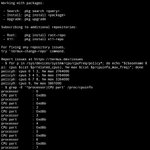


Core no longer needs Wi-Fi to get started: run adb tcpip 5555 once over USB, tap Connect over USB, done. No root, all on the phone.
Thanks @Queen_Of_Tribes for testing and reporting what blocked you. This fix is yours.
github.com/kukirin-ui/meridi…

1
1
87
1/ Meridian Family: Parallel's Diagnose now reasons over the real system. On a failure it can read how the program is built on this phone: dpkg -S, readelf -d NEEDED (objdump fallback), dpkg -s Depends, dpkg -V.
👇
github.com/kukirin-ui/meridi…
#Termux #Android

1
60
3/ When a repair is verified (the check failed before and passes after), Parallel writes a learned card. Cards sync between the apps through Core: one row per card, versions, write-if-unchanged, tombstones, per-app counters. Each app still works alone.
1
7
Meridian 2.5.4 (beta): the five apps now share what they learn. A fix that Parallel's Diagnose confirms on the phone (check failed → repair → check passed) becomes a card that Chat and NullCloud can see. Synced card by card through Core.
👇
github.com/kukirin-ui/meridi…

1
34
Small, medium or complex code errors? No problem 😬
Small: Missing colon (SyntaxError), flagged instantly.


1
2
68
Complex: 42 lines with 7 hidden bugs & anti-patterns (cache=[], bare except:, == None, undefined f-string vars), detected every single one with exact fix recipes.


1
13
Psychological Mechanisms of Suicide: An Overview of Scientific Findings
According to modern psychological and suicidological knowledge, suicide is neither an act of cowardice nor an act of courage, but rather the consequence of unbearable psychological pain and a narrowed state of consciousness in which a person sees no other way out.
Experts who study suicide (suicidologists) completely reject moral and character labels such as "cowardice" or "courage" because they misinterpret what happens in the mind of a person in crisis.
Key Psychological Mechanisms of Suicide
• Psychological pain (psychache). American psychologist Edwin Shneidman, one of the founders of modern suicidology, defined suicide as an act driven by unbearable mental pain. A person thinking about suicide generally does not want to die, but desperately wants to stop the pain and suffering that exceeds their current capacity to cope with stress.
• Cognitive constriction (tunnel vision). In a state of severe emotional crisis, a temporary impairment in decision-making and problem-solving occurs. The person loses the ability to see broader options and the future, and mistakenly perceives suicide as the only possible solution to the current problem.
• Overcoming the survival instinct. Evolutionarily speaking, the human brain has an exceptionally strong biological instinct for survival and a fear of death and pain. According to psychologist Thomas Joiner’s Interpersonal Theory of Suicide, for a person to even attempt suicide, they must overcome this deeply rooted instinct. This happens only when prolonged suffering, a sense of hopelessness, or exposure to pain weakens the natural fear of death.
• Perceived burdensomeness and thwarted belongingness. Research shows that individuals in a suicidal crisis often deeply believe that they are a burden to their loved ones and that others would be better off without them. Such a belief is distorted by the effects of depression or severe trauma, rather than being a reflection of reality or a lack of character.
Why Are Labels Like "Cowardice" or "Courage" Harmful in Research and Practice?
• Misinterpretation of motivation. Calling suicide cowardice implies that it is a conscious escape out of laziness or weakness, thereby ignoring real neurobiological and psychological suffering (such as severe depression, trauma, or chemical imbalance).
• Romanticization of the act. On the other hand, calling suicide courage is dangerous because it romanticizes a tragic act and can encourage vulnerable individuals toward similar behavior.
• Stigmatization and barriers to seeking help. Judgments and moralizing increase feelings of shame and guilt in people experiencing suicidal thoughts, which directly prevents them from confiding in loved ones or seeking professional help.
In a scientific sense, suicide is viewed as a tragic outcome of a complex interaction of psychological, biological, and social factors, rather than as a test of someone's courage or weakness.
1
86


FOLLOW-UP: LFM3-1.7B on Samsung Galaxy S26 — sustained inference and memory measurements.
Following up on my original benchmark:
Configuration:
- Samsung Xclipse 960
- llama.cpp 0.9.0
- Vulkan backend
- 40 GPU layers
- 3 inference threads
- CPU affinity: 0x1C0 (cores 6–8)
- F16 K/V cache
- Flash Attention OFF
PROMPT PROCESSING:
512 tokens: 560.21 ± 91.67 tok/s
4,096 tokens: 324.49 ± 20.65 tok/s
SUSTAINED GENERATION:
2,048 generated tokens: 33.87 ± 2.68 tok/s
MEMORY MONITORING:
Peak process RSS (VmHWM): 260,124 kB (~254 MiB).
Important: VmHWM measures the Termux process's peak resident memory. It does not represent the complete model memory footprint or all GPU/driver allocations.
The 4K prompt result showed variability across runs, so further controlled measurements are needed.
Richie, this is the follow-up you requested. I'll continue investigating sustained performance and total memory usage on the same device.
@liquidai @liquid_richie
#LiquidAI #LFM3 #OnDeviceAI #llamacpp #Vulkan #AndroidAI #Benchmarking


Liquid AI's LFM3-1.7B running locally on a Samsung Galaxy S26.
Meridian Chat: 604 tok/s prompt processing, 49.1 tok/s generation.
Termux llama-bench: 611.78 tok/s and 49.12 tok/s.
Two separate measurement paths, closely aligned results. Full configuration and further tests below.
With thermal protection disabled, the phone gets noticeably hot under heavy benchmarking. With my optimized Meridian Chat configuration, the same workload felt remarkably cool by comparison, a difference that stood out immediately in real-world use.
@liquidai @liquid_richie
#LiquidAI #LFM3 #OnDeviceAI #AndroidAI #llamacpp


2
146
Liquid AI's LFM3-1.7B running locally on a Samsung Galaxy S26.
Meridian Chat: 604 tok/s prompt processing, 49.1 tok/s generation.
Termux llama-bench: 611.78 tok/s and 49.12 tok/s.
Two separate measurement paths, closely aligned results. Full configuration and further tests below.
With thermal protection disabled, the phone gets noticeably hot under heavy benchmarking. With my optimized Meridian Chat configuration, the same workload felt remarkably cool by comparison, a difference that stood out immediately in real-world use.
@liquidai @liquid_richie
#LiquidAI #LFM3 #OnDeviceAI #AndroidAI #llamacpp
Prompt-length scaling with 40 GPU layers, 3 threads, F16 KV cache and Flash Attention OFF:
512 tokens: 616.31 ± 0.31 tok/s
4,096: 451.08 ± 91.83 tok/s
6,144: 338.37 ± 18.43 tok/s
8,192: 277.58 ± 9.06 tok/s
Separate tg128 result: 30.93 ± 0.23 tok/s.
Longer prompts reduce processing throughput.
#LFM3 #LongContext #llamacpp #OnDeviceAI

1
18
KV cache and Flash Attention comparison:
F16 KV cache, FA OFF:
611.78 / 49.12 tok/s
F16 KV cache, FA ON:
610.19 / 49.73 tok/s
Q4_0 KV cache, FA ON:
607.26 / 47.58 tok/s
All results use 40 GPU layers, 3 threads, CPU mask 0x1C0, a 512-token prompt and 128 generated tokens.
The Q4_0 V-cache attempt with FA OFF failed because this setup requires Flash Attention for quantized V cache.
More controlled testing is needed before drawing broad conclusions.
@liquidai @liquid_richie
#LFM3 #KVCache #FlashAttention #llamacpp #Vulkan


24