

founder @lexfinance | former @raincards @affirm @marshglobal
Joined August 2012
- Tweets2.9K
- Following1.7K
- Followers683
- Likes20K

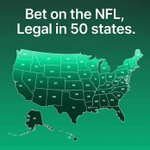
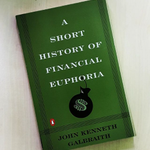







We at Prophit Exchange hold the view that it's not gambling if there's a chart, and unfortunately, Kalshi has plenty of charts!
prophitexchange.com/


“Prediction market” itself is a nonsensical propaganda term deliberately designed to hide reality and con people into believing they’re not gambling. It’s a betting contract. It predicts nothing. You are betting on an outcome.
Are point spreads predictive? Of course not. They’re nothing more than a number that gets you to where you have the same amount of money on either side so the bookmaker never takes a loss.
Tom H retweeted

Prediction markets offer sports betting. But they don’t follow state gambling laws.
No one is above the law.
We won’t rest until we stop them from violating our laws and taking advantage of our residents.
njoag.gov/wp-content/uploads…
Tom H retweeted

To my media partners,
I will respectfully ask you reconsider your relationship with @Kalshi, their actions are a great threat to our elections, democracy and, national security.
Please reconsider the check and put your pride in our nation first.
Kalshi is dangerous and we must cut their evil by the root.
Tom H retweeted
Prediction markets appeal, addict, & endanger young lives—just like sports betting. It’s gambling. Calling out from the casino in your pocket. Pitching kids, problem bettors, all of us. It cries out for regulation, just like gambling. nytimes.com/2026/10/28/opini…

True.

As someone who has personally spent $500k / mo+ on Google Ads for years, I can tell you with certainty:
This revenue growth in Search is artificial & extremely unhealthy for Google’s business long term
Search volumes are declining as legacy search is being increasingly cannibalized by non-monetized LLM queries
Google’s response?
Manufacture revenue growth via short-sighted, highly extractive, customer-hostile tactics. I.e. charge advertisers more for lower quality clicks, including clicks they do not want and explicitly did not approve Google to charge them for
A few examples to illustrate:
For all of its history until recently, Google operated on a 2nd price auction model
I.e. if you bid $5 CPC and the next highest bidder bids $1 CPC, Google charged you $1.01 for the click (one penny more than the 2nd highest bidder) rather than the $5 you bid
This was a genius move by Google early on as it incentivizes advertisers to input their true maximum willingness to pay rather than trying to play the game of bidding low and constantly adjusting to try to stay just ahead of the next highest bidder while still not paying too much
However recently, Google silently deprecated the 2nd price auction and began charging advertisers as much as their bid and budget caps allow, regardless of what anyone else is bidding
It’s a short-sighted cash grab at the expense of the long term health of the advertiser ecosystem
Making thing worse, Google also recently nerfed keyword targeting precision
Google previously had precise keyword targeting settings that allowed advertisers pick individual search phrases to bid on, defined down to the character w/ exact match or phrase match targeting
This was one of the core features that made search advertising magic, enabling advertisers to run extremely precise campaigns based on exactly what their target customer typed
But now, even if you bid on a specific term or phrase using the strictest exact
-match targeting settings, Google will show your ad across 1000’s of unrelated keywords, labeling them as as “exact match (close variant)”
The definition of “close variant” means whatever they want it to and changes constantly. The result is advertisers get billed for clicks that are totally irrelevant to their business and that their targeting settings explicitly forbid Google from targeting. Google does it anyway and there’s no ability to turn this off
So now exact match is broad match, and broad match is just meaningless spam
This is all very bad for advertisers, but for Google, it allows them to show your ad and bill you for clicks across 1000x more searches that were previously going unmonetized (mainly because they’re garbage queries no one wants)
This is how you grow revenue atop declining search volumes
Lastly, and perhaps most egregiously, Google quietly stopped respecting budget caps by a factor of 2x. For example campaigns we’ve been running for years with $1000 daily budget caps suddenly began spending $2000+ per day
And the extra spend is entirely on the garbage keywords Google arbitrarily throws in as “exact match (close variants)” which have no value to our business, but can’t be turned off
Google offers no refunds nor any recourse for overspend or spend on keywords you explicitly did not target
These are not the actions of a healthy business. These are the actions of company whose core business is in decline but desperately needs to pump quarterly earnings so Wall Street will continue to fund insane capex while hopefully looking through their rapidly deteriorating negative free cash flow
Google operated a benevolent monopoly for the better part of 25 yrs
Meaning the value Google captured from Search was but a small fraction of the value it created, and that spread produced a potential energy that justified expectations of high earnings growth far, far into the future
This is now no longer the case
At the alter of AI capex, Google is sacrificing the golden goose
Tom H retweeted

By leveraging Web 3.0, blockchain-secured data trading, and AI-driven analytics, Money Stuff aims to deliver secure, scalable newsletters addressing trust, data integrity, and monetization challenges. bloomberg.com/opinion/newsle…


It's so weird!

Absolute joy to read @matt_levine take on Kalshi @mansourtarek_ absurd WSJ column
bloomberg.com/opinion?cmpid=…

Furthermore: It’s not gambling if there’s a chart.
Prophit Exchange supports @mansourtarek_ in his commitment to open markets that operate more like poker games than blackjack tables.
prophitexchange.com

Yes, a bet and a trade often look similar.
But how they work is fundamentally different.
A sportsbook sets the odds and takes the other side of your bet. Prediction markets are markets, where buyers and sellers compete to discover and produce efficient prices and enable important public benefits.
What the market is about can change, but the structure doesn't.
My op-ed on prediction markets and regulation:


Tom H retweeted

If thus doesn’t hit you as one of the most dystopian things imaginable…
think about the consequences for future generations. For the sons and daughters of people who become helplessly addicted to gambling….
A world where everything is financialized….
Everything is commodified….
Nobody makes a move without figuring out how to profit from it…
Every corner of the economy becomes another prediction market, another bet on what might happen, another opportunity to make quick money…
What happens to long-term thinking? To developing a thesis, committing to an idea, and spending years doing the work to make it happen?
What Kalshi and Polymarket are doing goes far beyond the fight over state and tribal gaming laws. And the CFTC under @ChairmanSelig is actively fighting state efforts to regulate these markets and to further fuck over native Americans
My concern is that they are breaking down the incentives to work and create things in America.
Keep allowing these companies to grow this way, and think about what happens to the next generation of entrepreneurs, dreamers, and builders…
People who want to change the world and improve it, whose attention, money, and ambition get sucked into betting on outcomes.
Why spend years building something when you’re constantly being sold the idea that you can make the money you want by betting on whether someone else succeeds?
The harm reaches way way beyond the person placing the bet. It reaches their family, their children, and everything they might otherwise have created…think about the young men this fucks up…
And the advertising makes it worse. These platforms accept people as young as 18, including young adults who cannot legally use conventional sportsbooks in many states…
@schwartzbWSJ and The Wall Street Journal has already reported that Polymarket paid creators to stage fake bets and fake wins…
Think about what that teaches someone just entering adulthood about money, work, and what is worth pursuing…
I believe the cumulative harm will be far greater than people currently recognize…
The losses will include businesses never started, ideas never pursued, families damaged, and years spent chasing the next outcome instead of creating something that lasts…
That is how this can destroy the very things that make a society worth living in.
And that is the point. \rant
S&P Dow Jones Indices and Kalshi are joining forces to build the next generation of financial markets.
The Dow launched in 1896. The S&P 500 in 1957. The idea was simple: bring individual stocks together into a single benchmark, giving people a clearer view of the broader market.
Over time, products built around those benchmarks transformed investing. Index funds, ETFs, futures, and options gave investors ways to gain diversified market exposure and hedge broad market swings.
These indices became foundations of global finance. More than $20 trillion is indexed or benchmarked to the S&P 500 alone.
Today, this structure extends beyond stocks to bonds, commodities, currencies, and more.
The next step is to bring that structure to the events that shape everyone’s lives.
Through this partnership, S&P Dow Jones Indices and Kalshi will work together to create indices composed of Kalshi event contracts.
Think about what that opens up.
An index of political power. An index of supply chain risk. An index tracking AI’s impact on employment. An index of sports outcomes that affect broadcasters, advertisers, cities, and small businesses. An index of weather risks that shape harvests, energy demand, and business revenues.
Each would bundle event contracts into a single indicator, helping people understand how related risks are evolving.
Over time, products built around these indices could offer diversified exposure to those events and new ways to hedge their impact.
The events that shape our lives could become as easy to track and gain exposure to as the S&P 500.

Prediction markets are evil, both in their incentives (Kalshi wants to make money off of gamblers and avoid losing money) and their method (taking a vig from betting volume).
You simply can't run the poker game and claim neutrality.
Markets should not be "ridiculously fun to play"


Today we’re rolling out @dailyfun
We're making markets ridiculously fun to play, and we're just getting started.
Join our beta today.
If only Kalshi knew...
They know exactly what they're doing.

Tom H retweeted

Perps are not investment vehicles.
If anything they are short duration tactical trading products.
You should not “buy and hold” these. TLDR you’ll get liquidated.
This is clearly a platform not understanding their own product or not caring about their clients.
..or both.


