
Brooklyn, NY, USA
Joined April 2008
- Tweets169
- Following452
- Followers131
- Likes86


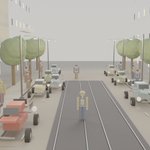


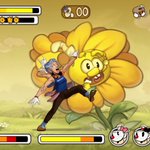
If you're getting bad animation out of Seedance from a rough Blender reference, try adding black frames between your key frames.
I was using rough Blender animation to block out the timing, but when I fed Seedance the full reference video it copied the animation exactly — jerky, robotic movement and all. So I kept only the key frames and blacked out everything between them. Keyframe, black, keyframe, black. That gave me smooth motion while holding the blocking I wanted.
1
179
Our team likes using posemy.art for generating references to feed into generative models. It's great because it's simple and easy to use; that's the whole appeal.
But it has limitations. We wanted to stage our own environments and pose our own characters, and posemy.art supports neither. Obviously we could do all of this in Blender or other tools, but those are more involved, and like I said, the team likes posemy.art.
So I used Claude Code to build some augmented tools that extend posemy.art's capabilities: loading a splat as the environment/set, and loading custom rigged characters.
For the set: we take our reference image of the environment into World Labs to generate a splat of the space. Then Claude renders the Gaussian splat live behind posemy.art's canvas, camera-synced, so orbiting moves through the scanned environment with true parallax.
For the characters: we take our character reference and generate an A-pose image, feed that into something like Hunyuan 3D to generate a 3D model, then rig it with Mixamo. From there, Claude brought the character into posemy.art. The app has no import for rigged models, so Claude went through the app's internal model loader and loaded him as one of its own figures: joints, IK, hand posing, undo, all working.
The takeaway: when a team likes a tool, hitting its ceiling no longer means abandoning it for a heavier one. An agent can raise the ceiling.
112
Last post I turned a single image into a 3D world with image-blaster, and the one thing it couldn't do was rig the characters. The meshes were frozen which is fine for blocking, but useless for animation. So that's what I went after next.
I started with one frame: a soldier inspecting papers in a 1940s bread line. I pulled him out of the scene with nano-banana (a clean front-facing character sheet), fed that to Hunyuan 3D to get a mesh, then ran the mesh through Meshy's rigging + multi-animation. Claude Code brought the rigged character into Blender, exported four of the animations, and stitched them into one grid.
So: a frame of a scene → a rigged, animated 3D character that walks, runs, and moves. End to end, run by an agent.
Now fold this back into the image-blaster pipeline and the picture changes. You don't just get a static 3D environment from a single image anymore, you get the environment and rigged characters who can actually perform inside it. From one picture of a scene.
126
Image-blaster turns a single image into a 3D world (splat environment, meshed objects, ambient sound) in a matter of minutes. I fed it a 1984 East Berlin scene I created with GPT Image-2.
I'm very impressed. What I actually want is to fold this into a ComfyUI workflow: use the meshed world for blocking and camera framing, then feed those angles back into image and video models. I wish the meshes were not static and unrigged, but as a blocking input it's already useful.
The bigger point: the whole pipeline is run by Claude Code pulling from Marble, Hunyuan 3D, nano-banana, and ElevenLabs. Agents are going to do more and more of this kind of plumbing, and we'll be left to make the directorial decisions.
image-blaster by @neilsonks: github.com/neilsonnn/image-b…
I've been comparing LTX to Seedance this week. Most agree that Seedance 2 is the leader right now. So I wasn't really trying to see which model is better.
The question I care about is how close is LTX to Seedance. From what I see, it's not that far behind.
Seedance 2 feels like the first model that has crossed the line into "you can actually make something real with this." If LTX is just a few months behind, then we're just a few months away from an open-source model crossing that same line.
Once that happens, won't the lion's share of production move there? With the closed, expensive models reserved only for the genuinely specialized or difficult work?
I'm not sure. It's possible we just keep chasing the best, the way we always have.
But it's also possible that cheaper and less restrictive is what actually lets us be more creative, and make better things.
1
1
55
I tested the Blender connector with Claude this week. I asked it to build a 1984 East Berlin street scene, full of people, period-appropriate cars, the works.
This image is what came back.
It's not exactly what I was hoping for. The geometry is loose: arms float off bodies, windows hover near walls, and car parts don't quite meet.
But my request was a little silly. Asking an AI to model an entire era-specific street from scratch is like asking an LLM to write you a full novel and being disappointed it isn't a masterpiece. That's not really how we should be using these tools.
A lot of the negative reactions to this connector come from expecting the wrong thing. Anthropic has been clear about its intended use: it’s supposed to help with repetitive modeling tasks and scene cleanup, not generating finished work end-to-end.
What's actually interesting is how much it did, and how fast.
-It populated the file with hundreds of objects.
-It set up cameras and lighting.
-It adjusted exposure and iterated on framing.
It moved like a confident assistant, even if the underlying geometry was rough.
The real fit for this tool is as a helper for an experienced modeler on a big project. It can handle the monotonous placement, cleanup, and setup work while the human focuses on real craft.
What I'd actually like out of a tool like this is the ability to generate basic mock-ups of a scene that I could feed into image and video models as a reference for blocking.
And honestly, this probably isn't even the right tool for that, given all the world models coming out right now (like World Labs, Genie 3, and Lyra 2) that approach the spatial problem from a different direction entirely.

100
I ran an experiment to test whether a previs/animatic could drive Seedance 2.0 to produce a cinematic, photoreal scene — while preserving the camera move, blocking, and action from the previs.
Three approaches:
1. Animatic + text prompt. Weak. I reworded the prompt several times and could never quite get there.
2. Animatic + a photoreal version of the first frame (made in nano banana pro) + text prompt. Much better. The look and feel locked in, and the camera move and blocking carried through beautifully. The catch: it carried them through too well — the stiff walking and posture from the animatic came with it. To fix that, you'd need to refine the animatic well beyond what we'd want to invest in for this sort of workflow.
3. First frame + text prompt only — no animatic. My favorite. The most natural-looking of the three. But it doesn't honor the camera move or action nearly as well as the animatic-referenced runs.
The pattern I keep seeing: when the model has more freedom, it often produces more natural results because it's free to realize its full potential. The trade-off is control.
That's the tension. I'd rather not bundle the whole creative process into iterations of a single prompt. There should be a way to segment the pipeline so different teammates can own different stages, instead of everything collapsing into one generation step.
Internally we don't agree on this. And I keep asking myself how much energy is worth putting into these process debates when each new model generation rewrites the rules.
91
Due to portrait protection considerations, Seedance 2.0 does not currently support uploading real human face materials as a reference. You can try a different reference image or use text-to-video instead.
193
I have been testing the new Kling AI Avatar V2 (both Standard and Pro) against Fabric, which has been my go-to.
Fabric is still my favorite. The performance feels more natural and the lip sync is better.
With Kling V2, there's still something off with the mouth—it has an animated quality that V1 had, though it's improved. Strangely, Standard actually looked better than Pro in my test. Pro had some weird eye behavior that was distracting. It could be a bad seed, but it's worth noting.
If you've had better results with another model, I'd be curious to hear about it.
1
80
I've been testing how different image models handle prompts with specific coordinates and dates from history.
The prompt: "Create a photograph at 39.9055° N, 116.3915° E, June 5, 1989, 11:00"
I expected results like this, but I didn't expect such a dramatic divide between the US and Chinese models. Some generated the scene directly. Others gave me generic Chinese landmarks, empty plazas, or random landscapes. I mean, look at Hunyuan, Z-Image, and Qwen, what is this?

54
Testing a workflow to turn a floor plan into a consistent 3D movie set. 🎬
The goal is to generate a consistent environment where I can grab specific camera angles (OTS, reverse shots) to use as backgrounds for placing actors.
The Workflow:
Input: Random floor plan.
Nano Banana Pro: Designed the interior and generated a spherical panorama.
Marble (WorldLabs): Converted the panorama into the walkable 3D world you see in the video.
Now I have a location where I can frame specific shots. I can use these backgrounds to composite characters for consistent storyboards and final video generation.


I wanted to see if I could bring a historical painting to life.
I started with the classic naval painting and used a chain of AI tools to create the final video. My process was Qwen Image Edit Plus with a LoRA that I trained for the photorealistic conversion, Nano Banana for tweaks, and Veo 3.1 for the animation.
108
It’s staggering how fast AI video is moving. Here’s a split-screen of two versions of the same scene I've been testing.
Bottom Video (From the beginning of the year): As excited as I was about this, it was a constant battle. I couldn't get the exact car I wanted, the hands kept morphing, and the background was all wrong. The workflow was a nightmare: I had to block the scene in iClone, then use Flux with Loras for the characters and car interior. Even after all that, there was no sound. I would've had to use another tool for lip-sync and cobble it all together.
Top Video (From today): Now, with tools like Nano Banana and Veo 3.1, the process is much easier and the result is worlds better. We get expressive, synced dialogue right out of the box.
What I had to fight for (and still failed at) just months ago is now almost effortless. It makes the old work look ridiculous.
Where will we be in 6 months?
29
I entered this: A stylish commercial selling a high end dreadnought acoustic guitar made by Fowler guitars. The head of the guitar features the name Fowler.
And I got this video. It's not perfect. The strings are wonky in one shot, the music needs to be improved, and I don't think the head of the guitar is consistent. But this is just one run. I'm sure if we run it a few times, we would get enough to cut something together. Sora 2 is nuts.
16
I fed a random Nano Banana-generated storyboard page into Sora 2 with just "Cinematic Hollywood action sequence" as the prompt. The results are amazing.
This is only 12 seconds. What happens when we get longer generations, seed control, and multiple runs? Is this what Veo 3.1 is bringing?
1
2
402
I took this interview shot and used a 3D pose reference to generate the lying position while maintaining the same character and environment. Used Nano Banana with the prompt: "Match this man exactly to the pose in the reference image. Maintain the original couch and room that the man already occupies. Hyper-realistic 3D, cinematic light, real face and outfit, simple background."
The consistency between frames turned out pretty well for a first test.
Thanks to AI Madame (youtube.com/@AI.madame.engli…) for the prompt inspiration.

168
Interesting workflow test: took a storyboard illustration and converted it to photorealistic previsualization using a multi-step process.
Process: Nano Banana converts illustration to photorealistic frame → Flux LoRA/Ideogram/Seedream fixes character identity in frame → VEED takes frame + audio to create talking video → Infinitalk takes VEED output + original audio to improve lip sync.
Still refining the process, but the potential for fast iteration from sketch to screen is clear.

2
301
