

#cyberwolf3000 | Startup Wolf hunts Unicorns 🦄 Founders Raise $ 💵 ? | Learn From YCombinator B4 they Raise | subscribe 👉👉https://xitter.cf/t.co/u6cFKBB1Td
SFO | AUS | LAX | NYC | MIA
Joined June 2022
- Tweets10.9K
- Following7.6K
- Followers16.9K
- Likes13.3K






Pinned Tweet
One Human + One Agent Stack = A Film That Moves a Room 🎬 automateandgrow.beehiiv.com/…

One page. That was the entire script.
No dialogue. No stage directions. Just a plot outline tacked behind the curtain, and four hundred years of show business that followed it out the door.
I went looking for the first real pack in entertainment. I found it in Padua, 1545 - a bunch of broke Italian actors signed the earliest surviving contract, and with one signature they invented the only business model in the arts that has never died.
They called themselves a Compagnia. A company. Not a family, not a guild - a profit-sharing partnership. Every performer owned a piece of the thing. Everybody ate out of the same pot or nobody did.
Then they did the thing that should have killed them. They shared the characters.
Arlecchino. Pantalone. Il Dottore. Brighella. Colombina. The masks were never secrets. Every troupe had them. A performer from Venice could walk onto a stage in Paris and the crowd already knew the greedy old man and the starving servant before either one opened his mouth.
That is the entire move. They refused to compete on the vocabulary. They competed on the sentence.
Same masks. Same scenarios. Same grammar. Different genius.
So two troupes that spent all year trying to bury each other still booked the same circuits, drew from the same stock of plots, and swapped performers when somebody got sick. Rivals at the box office. Partners in the infrastructure.
Understand what this was not. No monopoly. No cartel. Nobody fixing a price or carving up a map. Each troupe kept its own name, its own star, its own take. They pooled the boring middle - the characters, the scenarios, the conventions - and kept the glory for themselves. Collusion is agreeing not to compete. This was the opposite. They agreed to be legible so they could be lethal.
And it worked. It handed Europe its first professional actresses - Isabella Andreini stepped out from behind the mask, ran the Gelosi, wrote poetry, and made the French court beg for more. It gave Moliere his whole bag. It gave us Punch and Judy.
It also handed every troupe alive a language they never had to invent. The pack wrote the grammar. The wolves wrote the plays.
Four hundred years later the founders who win are still doing the exact same thing. Share the tools. Share the data. Share the standards. Keep the performance yours.
A lone genius in a mask is a busker. A pack with a shared stage owns the street.
Read more: thefounderspack.beehiiv.com/
#FormYourOwnPack
1,525 papers. Around 500 co-authors. And he never had a home, a job, or a bank account.
Paul Erdos was the most prolific mathematician who ever lived. Not because he was the smartest man in any given room. Because he refused to work alone.
He owned nothing. Two suitcases. One held clothes. The other held his papers. He'd show up at the door of a mathematician he'd barely met, announce "my brain is open," and stay until the math ran out. Then he moved on. Next house. Next country. Next mind.
Budapest. Princeton. Tel Aviv. A couch in a stranger's apartment at 3 a.m. He ran an international pack of mathematicians on postage stamps and insomnia. He mailed problems to people he trusted. They mailed back proofs. He paid his hosts in theorems instead of cash. He put bounties on the problems nobody could crack: fifty dollars, a hundred, a few worth ten grand.
Then there's the number. Your Erdos number: your distance from him on the collaboration graph. Co-author with Erdos, you're a 1. Co-author with a 1, you're a 2. It became the one credential in mathematics you cannot buy, rent, or fake.
Here's the part that should wreck every founder reading this.
The man with no address, no salary, and no institution became the center of a network of 500-plus researchers on six continents. He didn't build a company. He built a pack. And the pack did the work.
Mathematicians still run on his rails. The Erdos number is a map of who trusts whom, drawn out of letters and airport couches. A keiretsu built entirely on showing up.
Nobody remembers the genius locked alone in a room. They remember the guy who kept turning up at everyone else's door and handing out problems like candy.
Your network isn't a contact list. It's a shared brain. Stop guarding it. Start giving it away.
Subscribe: thefounderspack.beehiiv.com

Five million bicycles. Two hundred dollars each. That was Taiwan in 2003.
Five years later: six million bicycles. Four hundred dollars each.
Same island. Same factories. Double the price of the product, and more of it leaving the dock.
Nobody cut a price. Nobody merged. Nobody waited for a rescue.
Rewind to 1987. Schwinn, the century-old American brand, canceled its contract with a small Taichung factory called Giant and moved the work to China. Cheaper labor. Classic story.
That factory got 75 percent of its revenue from the one customer that just walked.
It should have died.
Instead King Liu did the thing that gets a man thrown out of most boardrooms. He kept building Schwinn's bikes by day and built his own brand by night. When Schwinn finally left, Giant kept the machines, the coating lines, the engineers, and the customers.
By 2003, Giant and its hometown rival Merida had spent thirty years trying to bury each other. Then they sat down and did something stranger than a merger.
They formed a pack. Twenty component suppliers. One shared production system. Open factory floors. Engineers from competing firms walking each other's lines, teaching Toyota's discipline, sharing quality standards, splitting the cost of the fight.
Understand what this was not. No price fixing. No market split. No cartel. Every company kept its own brand, its own customers, its own prices. They pooled the boring middle — process, standards, training — and kept competing on the product. Collusion is agreeing not to compete. This was the reverse: they agreed to get good.
It worked. Taiwan stopped being the cheap island and became the place that writes the standards 70 percent of the world's high-end bikes are built to. China could undercut them on price forever. It could not undercut nine hundred factories in one valley that trusted each other's blueprints.
The A-Team faded around 2016. Ego, succession, the usual rot.
Then this June — 2026 — seven second-generation executives, average age 45, got on a video call from a Taichung R&D center with a factory floor in Shenzhen on the screen. Chains. Complete bikes. Tires. Saddles. Hubs. The pack reformed. New name: Team Taiwan. New fight: smart manufacturing, materials, e-bikes.
Twenty-three years later. The same move. Not because it's noble. Because the alternative is extinction.
The lone wolf gets eaten. The pack writes the standard.
Read more: thefounderspack.beehiiv.com/
#FormYourOwnPack
Ninety kilometers. On stilts. To talk one bureaucrat into funding a circus.
That's how Gilles Ste-Croix did it. He walked from Baie-Saint-Paul to Quebec City on stilts as a publicity stunt — and it worked. 1984. A $1.6 million grant for Quebec's anniversary. Guy Laliberté, a fire-breather who'd quit college, took the money and built a circus with no animals.
The big top collapsed under rainwater before the first show. They borrowed another tent. Then they went to Los Angeles on a one-way ticket with no way home — and won.
Here's the part the lone-wolf gospel can't explain. Cirque didn't scale by hiring a star. It scaled by building a pack. One workshop in Montreal stitching costumes for every show on earth. One creative lab churning out new productions. Dozens of troupes sharing one brand, one standard, one sky.
Ringling ran 146 years and folded. The street performers own the circus now.
The lone wolf waits for the big top. The pack builds its own.
Form your own pack.
Read more: thefounderspack.beehiiv.com/
#FormYourOwnPack
10 billion secrets a day.
Infisical holds them between your AI agents and your databases. Each agent gets a decoy key — a proxy swaps in the real one, then expires it in 2 minutes.
$40M at a $600M valuation.
via @Infisical → automateandgrow.beehiiv.com

Designed in one afternoon. Built to last six months past the war. It stood fifty-five years and produced nine Nobel laureates.
I went looking for the most important building in American science and found a plywood shack the government forgot to tear down.
December 1943. MIT. Steel is scarce, so they frame it in heavy timber and the city exempts it from the building code. A three-story, six-wing maze, drawn up in less than an afternoon. The architect's own words: built "for the duration of the war and six months thereafter." Leaky windows. A tar-paper roof that baked the top floor. Hallways so dim you could not see. A musty smell nobody forgot.
It was built to house the Radiation Laboratory - the classified radar project. At its peak, more than a fifth of every physicist in the United States worked inside those walls. Nine of them went on to win the Nobel Prize.
Then the war ended. The building did not.
And that is where the accident happened. Because it was temporary, nobody guarded it. Because it was ugly, nobody wanted it. So every risky, unfunded, no-status project on campus moved in. Noam Chomsky built modern linguistics in a "miserable hole" of an office there. Amar Bose did the loudspeaker research that became Bose. Doc Edgerton ran his strobe lab in the basement. Leo Beranek built one of the first anechoic chambers. The Tech Model Railroad Club wired up a floor that became hacker culture. Rainer Weiss's group grew the LIGO gravitational-wave project out of those rooms - the work that won the 2017 Nobel.
One tenant, Paul Penfield, said it better than any strategy deck: "If you wanted to run a wire from one lab to another, you didn't ask anybody's permission - you just got out a screwdriver and poked a hole through the wall."
There was no master plan. There was cheap shared space, and one rule: you could not hide from the people next door.
That is the whole thesis. The output was never the building. The output was the collisions. Nine animators in a Burbank bungalow. Eight authors on one paper. A plywood palace the government forgot to demolish.
The lone wolf demands the corner office. The pack takes the ugly building and eats the whole campus.
Form your own pack.
Read more: thefounderspack.beehiiv.com/
#FormYourOwnPack
Two million people a year begged for one of fifty seats. He could have sold every last one and bought an island. Instead he shut the doors for half the year and sent the entire kitchen to a lab.
Ferran Adrià took over elBulli in 1987. A restaurant at the end of a road on the Costa Brava, in a town called Roses, in a building that started life as a beach bar. Fifty covers. A menu nobody had eaten — because the food did not exist yet.
Spherification. Airs and foams. Liquid nitrogen. Thirty courses that changed every season and sometimes every night. Eight thousand seats a year. Two million people asking for them.
Restaurant magazine called it the best restaurant on earth five times. More than any kitchen in history. He was standing on a money printer.
Then the part nobody copies.
Every winter, elBulli went dark. Six months closed. The crew did not scatter. They went to a taller in Barcelona and argued the same question until an answer fell out of the argument — what can food become. Find the technique. Break it. Ship it in July. Repeat.
The lone genius hoards the recipe. Ferran built a machine for turning people into inventors and then let them leave.
Watch what walked out the door.
René Redzepi left, went to Copenhagen, built Noma. José Andrés left, built a restaurant group and then World Central Kitchen. Joan Roca left, built El Celler de Can Roca. Massimo Bottura left, built Osteria Francescana and took the world title twice. Grant Achatz left, built Alinea. Andoni Luis Aduriz left, built Mugaritz. And three of them — Oriol Castro, Eduard Xatruch, Mateu Casañas — left together and built Disfrutar, now the best restaurant on the planet.
That is not a restaurant with alumni. That is the PayPal mafia with knives. The best kitchens on earth are the sons and daughters of one cliff in Catalonia.
Then, in July 2011, at the exact top of the mountain, Ferran shut it down for good. Not to retire. To turn forty years of the pack's experiments into a public archive and hand the whole record to anyone who wants to build on it.
elBulli served thirty courses. The last one was the network.
Form your own pack.
Read more: thefounderspack.beehiiv.com/
#FormYourOwnPack
Eight names. Random order. 278,000 citations. And a footnote that says it does not matter who goes first.
June 2017. Eight researchers at Google publish a paper that throws out the entire architecture the field was built on - the recurrent network, the machine that read a sentence one word at a time like a man tracing a line with his finger - and replaces it with something that looks at everything at once.
They call it attention.
The author list reads like the end credits of a heist movie where every name is the same size. And the footnote underneath is the real document. It says two things: "Equal contribution. Listing order is random." Then it names the work. Jakob proposed replacing the recurrent networks with self-attention and started the effort. Ashish and Illia designed and built the first models. Noam proposed scaled dot-product attention. Niki designed and tuned the variants. Lukasz and Aidan wrote the codebase.
Eight people. One shared problem. One draft passed hand to hand. They wrote the credits before they wrote the product.
That is not a research paper. That is a pack. A mastermind - a small group that argues the same problem for months until the answer falls out of the argument.
Nobody noticed right away. Then everybody did.
By 2025 Nature put it on its list of the most-cited papers of the twenty-first century. More than 278,000 citations today. Every model you have ever argued with traces back to eight people who refused to rank themselves.
Now the part that should stop you cold.
All eight have left Google.
Aidan Gomez runs Cohere. Llion Jones co-founded Sakana AI in Tokyo. Jakob Uszkoreit co-founded Inceptive and is designing RNA. Illia Polosukhin co-founded NEAR Protocol. Niki Parmar went to Adept, then Essential AI, now Anthropic. Ashish Vaswani co-founded Essential AI. Lukasz Kaiser went to OpenAI. And Noam Shazeer founded Character.AI, got bought back by Google for $2.7 billion, came back as a vice president on Gemini - then walked out again, to OpenAI.
In June, the week the last of the eight left, Alphabet lost 7% in a single day. More than $300 billion of market value, gone, because people stopped showing up.
Read that again. Google owned the paper. It could not keep the people who wrote it.
A lone wolf files the patent and hoards the architecture. These eight handed it to the world and scattered into nine competing companies that hire from each other and fund each other's rivals.
That is not the end of the pack. That is a pack that outgrew the building it was born in. A keiretsu does not need one office. It needs shared memory - who solved what, who you trust, who you call at two in the morning.
Eight names. Random order. One of them changed everything.
All eight did.
Form your own pack.
Read more: thefounderspack.beehiiv.com/
#FormYourOwnPack

Apple just opened Keynote, Pages and Numbers to outside AI agents.
MCP support ships November on macOS 27. Claude or ChatGPT can read the doc, edit it, run the workflow — no screen scraping.
automateandgrow.beehiiv.com
Explore my dashboard: start new film projects, storyboards, or brainstorm with canvases. Create image/video assets for film projects or series, organized by seasons and episodes. #FilmMaking #Dashboard #CreativeTools
$15,000. That's what the scariest movie of the century cost.
I went looking for the most ruthless business model in Hollywood and found it hiding behind a bedsheet and a camcorder.
2007. Paranormal Activity. Budget: fifteen grand. It grossed $193 million. Nobody in that room had made a movie that mattered. The industry had already written off micro-budget horror as a dead end.
Jason Blum didn't. He'd spent seven years watching everyone else swing for $100M tentpoles and miss. Then he saw the $15,000 tape and understood the whole game.
The budget IS the freedom. A $5 million movie can't afford a committee. Can't afford to fire the director. Can't afford to play it safe.
So he built a pack.
Ten films a year. About $5 million each. Union scale up front, next to nothing, and profit participation on the back end. Pay everyone like it's going to flop. Make them rich when it doesn't. Box-office bonuses instead of big fees. Aligned or bust.
Jordan Peele's first film. Damien Chazelle's breakout. James Wan. Leigh Whannell. Mike Flanagan. First-timers handed a camera and a shot. If the film hits, the pack eats.
Then the cleverest part. Blumhouse isn't really a studio. It's the rails under the pack. Marketing, distribution, the backend, a Universal first-look deal, all shared. Every director gets infrastructure no indie filmmaker could ever buy. Every hit makes the next no-name's pitch easier to sell.
Nearly 250 films and series. Nine-figure franchise after nine-figure franchise. Billions in grosses. A keiretsu wearing a hockey mask.
Asked once what he'd do with $50 million, Blum didn't blink: "I would still make ten $5 million movies."
The lone wolf waits for a green light. The pack builds the road and drives on it.
Form your own pack.
Read more: thefounderspack.beehiiv.com/
#FormYourOwnPack
Nine men. One fool's bet. And every animated film since.
Walt Disney's greatest asset was never the mouse. It was the nine people sitting behind him.
I went looking for the first company that proved a tiny pack beats a big headcount, and found it in a bungalow in Burbank in 1937.
Snow White and the Seven Dwarfs. The first feature-length animated film in history. The industry called it "Disney's Folly." Every rival bet it would bankrupt him.
Walt had nine animators. Les Clark, Marc Davis, Ollie Johnston, Milt Kahl, Ward Kimball, Eric Larson, John Lounsbery, Wolfgang Reitherman, Frank Thomas.
He called them his Nine Old Men. A joke. They were in their twenties and thirties - nicknamed after the Supreme Court justices Franklin Roosevelt was trying to pack.
Nine people drew a full-length feature the whole world said was impossible. Then they did it again. Pinocchio. Fantasia. Bambi. Cinderella. Peter Pan. Sleeping Beauty. The Jungle Book.
Two of them - Frank Thomas and Ollie Johnston - were best friends for fifty years and sat beside each other for nearly all of it. They wrote the book the entire animation industry still runs on.
Here is what the headcount cult cannot price. It was not nine geniuses working alone in nine rooms. It was a mastermind: one shared standard, one critique every morning, one drawing board where the worst idea died and the best one got stolen and improved by the next man. They competed for the frame and cooperated on the craft.
Walt did not scale by hiring a thousand animators. He scaled by making nine people better than a thousand.
The lone wolf hoards the pencil. The pack makes the drawing.
Form your own pack.
Read more: thefounderspack.beehiiv.com/
#FormYourOwnPack
A hundred and sixteen years. Eighty farms. One cheese.
I went looking for the most American business story I could find and it was sitting in a grocery dairy case, owned by 80 families who never met a venture capitalist in their lives.
1909. Tillamook County, Oregon. Rain. Cows. And a problem. The farmers there had grass so good the butter was already famous, but no creamery that could handle the milk at a fair price. One private operator held the whole valley over a barrel.
So the farmers did the thing the lone-wolf gospel says is impossible. They pooled their money and built their own.
A cooperative. Owned by the people who milk the cows. One vote per farmer, no matter how many cows you own. The profit goes back to the members, not to a shareholder in a city none of them have seen.
That was 1909. Today: the Tillamook County Creamery Association. About 80 family farms still own every brick of it. Revenue north of a billion dollars. Cheddar and ice cream moving in all 50 states. A century-old co-op out-competing the multinationals that tried to bury it.
Nobody fixed a price. Nobody carved up a market. Eighty competitors shared a creamery, a brand, and one quality standard they all had to hit - and stayed competitors on everything else. That line is the whole game.
The lone wolf sells his milk at a price someone else sets. The pack builds the creamery and sets the price together.
Form your own pack.
Read more: thefounderspack.beehiiv.com/
#FormYourOwnPack
86x revenue in 13 months — on one idea: let the agent run the books.
Hyphenate just raised $45M to run finance with agents. At one ice cream maker they absorbed 16,000 staff-hours a year.
Humans keep only the judgment calls.
via Bloomberg → automateandgrow.beehiiv.com
Forty men. One locked door. Four forty-five in the morning.
I went looking for the night the American financial system almost died and found seventy-year-old J.P. Morgan sitting over a game of solitaire with the key in his pocket.
October 1907. New York. Otto Heinze tries to corner the stock of United Copper and blows up inside a single day. The panic reaches the Knickerbocker Trust - the third-largest trust company in the city - which loses eight million dollars in under three hours and shuts its doors on October 22.
Here is what nobody remembers. Trust companies took deposits like banks and kept almost no cash. There was no central bank. No backstop. Just a city of depositors running for the exits at the same time.
Into the vacuum walks Morgan. Seventy years old. Semi-retired. Running the whole crisis out of the library of his Madison Avenue brownstone, not an office on Wall Street.
Sunday night, November 2. He summons the trust company presidents. They arrive not knowing why. He quietly locks the front doors and pockets the key.
Morgan's number: twenty-five million dollars, pooled by the room, before he commits a dollar of his own.
The argument runs until dawn. By the accounts that survive, Morgan sits over his solitaire and waits. At 4:45 in the morning, they sign. Forty rivals, one pledge.
By Monday the run was over.
Be exact about what that was. They did not merge. They did not fix a price. They carved up nothing. New York's banks went right back to brawling for every depositor the next morning. What they shared was the one asset no single house could produce alone: enough cash, fast enough, to stop a stampede.
That is the whole machine. Common need. Pooled asset. Rivals who stay rivals.
The lone wolf watches the run reach his own vault. The pack buys the crowd a reason to stop running.
Form your own pack.
Read more: thefounderspack.beehiiv.com/
Get the book: amazon.com/Form-Your-Own-Pac…
#FormYourOwnPack
One piranha is a coward. Thirty of them are the most feared animal in the river.
I went down to the Amazon to find the deadliest fish in the world and found the loneliest one hiding under a log.
The piranha has a reputation written by Theodore Roosevelt. 1914. The ex-president is on the River of Doubt with Candido Rondon, and the locals want to impress him. So they net a few hundred piranhas, dump them into a calm stretch of water, and throw in a cow. The water boils. The cow is gone. Roosevelt goes home and writes that the piranha is "the most ferocious fish in the world."
It was a dinner party trick. The fish had been starved for days.
Here is the real animal. A red-bellied piranha alone is skittish. Timid. It gets eaten - by caimans, by herons, by the pink river dolphin, by bigger fish. Alone, it is lunch.
Put it in a school of thirty and everything changes. The shoal is not a mob. It is armor and it is a nervous system. Researchers have watched them fan out in a line to drive prey into the shallows, then relay like a rugby team - one fish bites, backs off, the next takes the point. Aggression is not the weapon. Coordination is.
And they argue with sound. Red-bellied piranhas bark and drum their swim bladders to warn each other off a piece of meat - a million years of "that's mine" settled without a single fish dying.
The lone piranha is a myth and a snack. The pack piranha is a legend.
That is the whole lesson. The danger was never the teeth. It was the thirty.
Form your own pack.
Read more: thefounderspack.beehiiv.com/
#FormYourOwnPack
Three hundred thousand taels of silver. Locked inside a dye shop in Pingyao. And not one ounce of it was ever going to move.
I went hunting for the invention of the wire transfer and found it in 1823, on a back street in Shanxi, behind a counter that smelled like pigment.
Qing China ran on silver. Actual silver. Heavy. Shiny. Stealable. Settle a debt 1,200 miles south and you hired armed men, loaded the mules, and prayed. The road ate caravans. The survivors arrived late and worth less.
Then the shop's grand manager, Lei Lutai, did the thing that rewrites industries. He stopped hauling pigment and started selling trust.
You walked in. You handed over your silver. He handed you a piece of paper — brushed by hand, payable at any of his houses. Fifty-one of them. Beijing. Hankou. Guangzhou. Ulaanbaatar. One in Japan.
Walk into the Pingyao shop rich. Walk out of the Taiyuan shop rich. The silver never moved an inch.
Now the paranoid part. How do you trust a slip of paper across a thousand miles of thieves? This is where banking turns into a spy novel.
Lei built a code. Numbers swapped for characters pulled from a poem — and he rotated the poem on a schedule, so March's password was gibberish by June. A seal on every joint. Watermarked paper, the best print tech on earth. And the manager's own handwriting, bulletined to all fifty-one branches, brushstroke by brushstroke, so a clerk on the frontier knew his hand like a face.
That isn't a bank. That's a pack wired into a single nervous system.
And he kept it clean. His rule, carved in: no brother-in-law, no son-in-law, no son. The Three Lords Exclusion. You rose through the apprenticeship or you didn't rise. When Lei died at his desk in 1849, the keys went to an employee named Cheng Qingpan. Not his kid. The man who earned it.
Thirty-two houses. Four hundred seventy-five branches. For a century, an empire's money ran on Shanxi paper.
The modern banks came. The empire fell. By 1932 the doors were shut and the poem was forgotten. We just call it a wire now.
Your pack is Lei's machine. Shared rails. Shared codes. A way for one small shop to reach a hundred cities it could never fund alone.
Build the rails before you need them.
Read more: thefounderspack.beehiiv.com/
#FormYourOwnPack
Film studios treat movie scenes like scenes in a script, detailing characters, sets, props, and beats. This structured approach ensures every element is defined before animating and editing. #FilmMaking #Storytelling
$1 million. 1870. Rockefeller, Flagler, Andrews. One refinery in Cleveland.
By 1882: 40 companies. One trust. 90% of American oil refined. Pipelines, tank cars, barrel factories — every asset shared across the network.
The Standard Oil Trust was the most complete keiretsu ever built in America. Shared infrastructure (pipelines nobody else could afford). Cross-shareholding (every partner held equity in every entity). Shared technology (the chemistry, the logistics, the rebate structure with railroads).
Three wolves: Rockefeller as mastermind (the strategist who saw consolidation before anyone else), Flagler as partnerships (the railroad negotiator who turned transport into a weapon), Andrews as community (the chemist who cracked the refining process).
The Supreme Court broke it into 34 pieces in 1911. Each piece became a Fortune 500 company. Exxon. Mobil. Chevron. Amoco. Pennzoil. Conoco.
The pack was so strong that the government had to dismember it — and the dismembered parts each became giants.
The lone wolf refines a barrel. The pack refines a continent.
Form your own pack.
amazon.com/Form-Your-Own-Pac…
#FormYourOwnPack

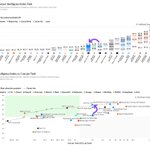
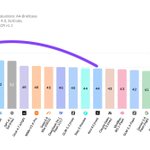
Kimi K3.1 Pro cut hallucination from 53% to 44%.
For an agent pipeline that beats a 2-point reasoning bump. Every confidently-wrong output is a tool call you have to unwind.
Chart: Artificial Analysis
Get weekly AI model benchmarking → automateandgrow.beehiiv.com
