Pinned Tweet
Tea party photoshoot I had with my daughter just before I cleared out of the #SANavy.
Good day, please review the invitation attached for the 2027 SAMIVA Sunrise Memorial Service and Wreath-laying Ceremony at Fort Klapperkop in Pretoria.
We look forward to hearing from you and seeing you at the event.
Please RSVP to [email protected]
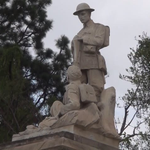
The Sunday Remembrance Service will be held on Sunday 15 November at the Dundee War Memorial. As usual the service will be at 11am.
RESPECT REFLECT REMEMBER
SUNDAY 15 NOVEMBER 2026
MEMORIAL SUNDAY REMEMBRANCE SERVICE
10:45 FOR 11:00 MOTH MEMORIAL SERVICE WITH WREATH LAYING
DUNDEE WAR MEMORIAL – VICTORIA ST
You are cordially invited to attend, to commemorate and remember, the men and women of our town and district who served their country in times of war and never returned.
Wreaths will be laid by various representative of the Armed Forces,
South African Police, local civic organisations,
descendants of the men and women listed on the memorial.
Should you wish to lay a wreath please contact
Pam McFadden on whatsup 079 4905933 to be placed on the list
and to allow us to have your wreath made up.
Please advise any specific wording you require on the wreath.
Refreshments and eats will be served at the
MOTH Shellhole - corner Beaconsfield and Wilson St
(entrance oppositethe Dutch ReformedChurch) -
at the close of the service.
Donation box to raise funds for MOTH Shellhole exhibits.
Cash bar will be available.
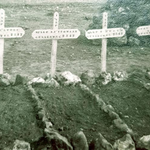
Isolated Desert Battlefield Graves at Bardia in Libya of members of the 1st Battalion South African Police who were buried where they fell.
All these Battlefield Graves were later lifted in 1943 by No.100 New Zealand Graves Concentration Unit and reburied in the Halfaya Sollum War Cemetery in Egypt on 27 October 1943.
The Graves are from left to right:
SAP/195983 Corporal. Phillipus Cornelius Lubbe from the 1st Battalion South African Police. Killed in Action 02.January 1942. He was 26. He now rests in the Halfaya Sollum War Cemetery, Sollum in Egypt, Plot 12, Row F, Grave 2
SAP/195595 Private Solomon Johannes Cornelius Vermaak from the 1st Battalion South African Police. Killed in Action 02.January 1942. He was 21. He now rests in the Halfaya Sollum War Cemetery, Sollum in Egypt, Plot 12, Row F, Grave 1
SAP/195584 Private Thomas George Creighton Heath from the 1st Battalion South African Police. Killed in Action 02.January 1942. He was 27. He now rests in the Halfaya Sollum War Cemetery, Sollum in Egypt, Plot 12, Row H, Grave 10
176102 Sergeant Daniel Jeremia Du Toit from the South African Medical Corps attached to the Headquarters Company, 1st Battalion South African Police . Killed in Action 02.January 1942. He was 42. He now rests in the Halfaya Sollum War Cemetery, Sollum in Egypt, Plot 12, Row F, Grave 3
Command handing over parade to the new Head of the SA Learning took place on 27 October 1993 at Leerkollege, Voortrekkerhoogte.
Lt genl J.H. Pretorius's previous The appointment was Commanding General
Rensburg drift, 27 October 1900.
During the 5 days battle of Frederickstad, General Barton requested re-inforcements. General Knox responded, and on the 21st of October Knox left Heilbron. On the 23rd he joined forces at Witkopjes with Colonels De Lisle and Maxwell. Colonel Le gallais and his Colonial Division moved from Bothaville to join the forces of Knox.
On the 25th, this force reached Reitzburg, and on the 26th marched into Potchefstroom. Le Galais and his forces were sent to Tijgerfontein, to find De Wet, whose main camp was located nearby in the Van Vuurenskloof.
De Wet's plan was to cross the Vasl River at Lindequesdrift, but Le Gallais' forces were active in that area. De Wet decided that his salvation lay in the crossing at Schoemansdrift, but again encountered mounted British troops. His last option was Rensburgdrift on the farm Koppieskraal.
On the 27th of October, De Wet camped out and leisurely started to move his burghers accros the river. However, Knox was on the move from Hartebeestpoort, Le Gallais from Vredefort, both heading towards Rensburgdrift.
De Wet couldn't gave chosen a worse spot, as he was in the open, surroundee by hillocks and koppies. Around 5 in the afternoon, Le Gallais started to shell the Boer camp, and his mounted units drove the Boers back across the river. Knox and his forces arrived at 6, thus putting De Wet under a cross fire from 3 sides.
De Wet's saving grace was that a heavy rainstorm broke out around half past six, and under cover of the heavy rain he could escape and cross at Viljoensdrift and then to Parys. He lost Krupp nr 10 of the Oranje Vrijstaat Artillerie Corps as well as one of the "Q" battery guns he took at Sannaspos. One of his ammunition wagons also exploded, but with only the loss of the oxen.
The New South Wales Mounted Rifles captured the Krupp and Lord Roberts presented it to them as a gift. Another supreme irony is that the "Q" Battery gun was taken back by the other Sannaspos battery, " U" battery.
original post by Johan Wolfaardt.
27 Oct 1983: - A cattle truck of the South African Department of Transport Services triggered a landmine on the tarred road to Rundu, 2.5km from the Mururani police control gate into Kavango, at 7 am. The landmine was placed on the surface of the tarred road at a section where the clearing of bush next to the road had not been completed. The truck was badly damaged but there were no reports of casualties.
27 October 2026
Today in History
Sunday, 27 October 1652
From the diary of Jan van Riebeeck.
A lovely, sunny day.
The wind blew from the northwest.
However, just outside Table Bay, towards the open sea, the wind was blowing from the southeast.
Several types of vegetables, including beetroot, were harvested that day.
It was also the first time that turnips had been harvested at the Cape.
The Commander of the Cape, Van Riebeeck, described the turnips as outstanding, with several easily weighing half a pound each.
Not all the turnips were used, however, and a few were left to go to seed.
Only enough was harvested to meet the day's requirements.
Plans were made to expand the vegetable gardens.
The day's vegetable harvest was served for supper together with mutton.
A strong wind began blowing from the southeast towards dusk.
1653
From the diary of Jan van Riebeeck.
The weather was not described that day.
Jan van Harwarden and several others arrived at the fort during the morning.
The group mentioned above had missed the men who had gone out to meet them the previous day.
They pursued Harry and his people for as long as they could.
Their provisions, however, were running dangerously low, and they were forced to abandon the pursuit.
Van Harwarden related that on one occasion they had almost captured one of Harry's men and could even have shot him dead had they wished to do so.
At the last moment, however, the man slipped from their grasp.
According to Van Harwarden, Harry was also cunning and kept to the dunes of False Bay, making the pursuit more difficult.
1654
From the diary of Jan van Riebeeck.
The entries for 26 and 27 October 1654 were recorded together under the same date in the diary.
The weather is briefly described as pleasant.
Although the wind initially blew from the west, it later turned to the south-southeast.
The Roode Vos departed for Saldanha Bay.
1655
From the diary of Jan van Riebeeck.
The day is described simply as pleasant.
During the morning, the Commander, together with several high-ranking officials, went aboard the Arnhem.
The broken bowsprit was thoroughly examined. Everyone agreed that the Arnhem was seaworthy and could safely sail to the East Indies.
Later that afternoon, a strange ship entered Table Bay.
Judging by her flags, she was of British origin.
The Commander was uneasy and suspected foul play on the part of the Portuguese.
Everyone at the fort therefore prepared for a battle. Duijnhoop, the barracks on the Salt River, was also readied and strengthened.
1656
From the diary of Jan van Riebeeck.
The entries for 27 and 28 October were recorded together under the same date.
The weather is briefly described as pleasant, with a moderate southwesterly wind.
1657
From the diary of Jan van Riebeeck.
During the early morning hours, the south-southeast wind decreased considerably in strength compared with the preceding few days.
The Robbejacht departed for Saldanha Bay during the morning.
The skipper, Juriaen Janssen, and the commander of Robben Island, Jan Wouterssen, received written instructions.
In brief, the instructions required that various types of vegetables be planted, that trade be conducted, and that the Company's interests be looked after.
Sunday, 27 October 1658
From the diary of Jan van Riebeeck.
The morning is described as cloudy, with a barely perceptible breeze from the west.
At around six o'clock that morning, the sentries in the bastions sounded the alarm, reporting that a ship was approaching from the direction of Leeuberg.
The Free Burgher's wife, Jan Reijnierssen, arrived at the fort that morning and asked to speak to the Commander. She reported that a lion had bitten their cow to death inside the kraal during the night. Together with her husband, Jan, she had driven the lion away and salvaged the meat.
In short, she had come to ask for another cow and to offer the meat to the ships.
Van Riebeeck agreed and gave her a cow that was soon due to calve.
She also reported that this lion was becoming a plague and was growing increasingly bold. It dug holes beneath the walls of kraals and sometimes simply forced its way through the gates.
The West Vriesland anchored during the afternoon.
Of the 150 men who had been ill, 60 remained who were still sick and unable to stand. These last 60 men were brought ashore for further treatment.
Six sheep were traded from the Indigenous people that day, to everyone's satisfaction.
1659
From the diary of Jan van Riebeeck.
The weather during the day is described simply as pleasant.
No incidents are mentioned.
1808
Aх anti-slavery uprising and protest march took place at the Cape.
Several enslaved people walked peacefully through Cape Town that day to protest against slavery.
The march became known as the Jij Rebellion, or the “Louis of Mauritius Rebellion”. Louis was the leader among those present.
1835–1840
From the recollections of the Voortrekker J.H. Hatting during the Great Trek.
1840
Shortly after Meyer's and Groenewald's return, the commando entered Ncapaye's territory.
Probably because of the element of surprise, Ncapaye was easily overwhelmed, and approximately 5,000 head of cattle were captured as booty.
According to Hatting, the majority of the cattle could undoubtedly be identified as Voortrekker property because the animals were branded.
Thursday, 27 October 1836
From the diary of Louis Tregardt.
Pieta arrived at his parents' encampment again that day. His purpose was probably to tell his father that some of the lambs had once again spent the night outside the kraal.
Louis later rode over to the cattle and recorded that 35 head were missing in total.
Friday, 27 October 1837
From the diary of Louis Tregardt.
Louis wrote that they trekked that day to the point where the White River flows into the Baloela.
The day's journey was probably not very long, as Louis wrote that Jan, Botha and Albach went further ahead to work on the road.
Carolus also went with them, but he explored the country farther ahead.
Friday, 27 October 1837
From the diary of the Reverend Erasmus Smit.
Ten men left the laager with six Cape-wagons to go hunting for game.
1838
Around August 1838, Gert Maritz sent several messengers to prominent people in the Colony. These messengers delivered letters that included requests for assistance.
One such messenger, Hatting, arrived at Andries Pretorius's farm near Graaff-Reinet in early August.
At that stage, Pretorius was already almost ready to join the Voortrekkers in Natal. He left his farm, Letskraal, on 1 October 1838.
On this day, 27 October 1838, he and his party arrived at the Caledon River.
From there, they trekked towards the area around Uysklip, in the upper reaches of the Modder River.
It was in this particular area that Andries Pretorius left his people behind and made forced marches towards Natal with eight Cape-wagons and 60 men.
This commando, as it were, arrived at Sooilaer, Gert Maritz's laager on the banks of the Tugela River, on 22 November 1838.
1871
Britain annexed Griqua territory, apparently at the urging of Nicolaas Waterboer.
Friday, 27 October 1899
Anglo-Boer War
Day 17 of the war.
- Mafeking remained under siege. Captain C. Fitzclarence launched a midnight bayonet attack on the Republican forces. The attack was repulsed. One Boer was killed, while six British soldiers died.
- General J.D.P. French was trapped in Ladysmith. However, he did not sit idle and sent scouts out in every direction to gather intelligence and observe the Boer positions.
- President M.T. Steyn addressed the Boers at Jacobsdal and encouraged them.
Saturday, 27 October 1900
Anglo-Boer War
Day 382 of the war.
- Republican forces held a council of war near Cyferfontein, in the Magaliesberg area. Those present included Generals De la Rey, Smuts and Louis Botha. Among other things, it was decided to invade the Cape Colony and attack the Witwatersrand gold mines.
- The following concerns the siege and General de Wet's attack on Frederikstad.
- Burghers Jan Abraham Basson, T.C. Lombard and P.C. Fourie were executed by firing squad at Frederikstad that day.
How it happened:
General de Wet had cornered General Burton.
Because General de Wet's force was too small, and he received no assistance from the other commandos, he was unable to win the battle.
Nevertheless, General de Wet kept General Burton pinned down for five days.
After General de Wet withdrew, General Burton pursued him relentlessly with a substantial force.
The three Burghers mentioned above were captured and summarily executed because they had allegedly fired on British forces after they had already surrendered.
Sunday, 27 September 1901
Anglo-Boer War
Day 747 of the war.
- Emily Hobhouse arrived in Table Bay, Cape Town, aboard the SS Avondale Castle. Colonel H. Cooper, the military commander, refused to allow her to come ashore. In the end, she was forced to return to England without setting foot on South African soil.
- Maria Koopmans de Wet was placed under house arrest at the Koopmans-de-Wet House in Cape Town. She had allegedly held pro-Boer meetings in her home and smuggled letters to the Boer Republics.
1927
A referendum was held in Southern Rhodesia, now Zimbabwe.
The people had to decide whether the territory should join the Union of South Africa or continue governing itself under the British South Africa Company (BSAC).
1932
The very first court judgment was delivered in Afrikaans.
This took place in the Appellate Division in Bloemfontein.
Emily Hobhouse: 1901, 1926
Emily Hobhouse visited South Africa twice in connection with the Anglo-Boer War.
During her first visit, she visited several concentration camps and carried out relief work.
In London, she publicised the truth about the camps in every conceivable way.
This made her unpopular not only with the authorities but, especially, with the British military.
As a result, during her second visit, on this day in 1901, the military authorities refused her entry into South Africa.
She was forced to turn around and sail back to Britain.
1926
Tributes were paid to the late Emily Hobhouse in Bloemfontein.
Reverend J.D. Kestell conducted a memorial service at the Tweetoring Church in Bloemfontein.
From there, six girls, all named Emily, carried her ashes to the Women's Monument.
Her ashes were placed at the foot of the Women's Monument in Bloemfontein.
1934
The South African Broadcasting Corporation (SABC) began broadcasting in Afrikaans.
In 1924, there had been only three separate broadcasting companies in the Union of South Africa. The three transmitters were located in Durban, Cape Town and Johannesburg.
The transmitters in 1924 were also weak compared with those of today and covered only a limited broadcasting reception area.
At this stage, Afrikaans was very much the poor relation.
In 1937, the SABC began permanent broadcasts in Afrikaans.
FOR THEM THE LAST POST HAS SOUNDED
On 27 October 2026, let us pause for a minute to remember the following young man from our Generation who answered the Final Roll Call.May he rest in eternal peace.
27 Oct 1977:
76908417SP Rifleman Joao Victor from 32 Battalion was Killed in Action during a contact with enemy forces near Numuidi in Southern Angola during Operation Kropduif. He was 28
27 Oct 1985:
Rifleman Gerard Ronald Van Rosenveld died from an apparently self-inflicted gunshot wound to the head while stationed at Bukalo in the Caprivi Strip. He was 19.
27 Oct 1985:
66476540PE Flight Sergeant Ockert Johannes Nel from Air Force Base Swartkop was accidentally killed in a shooting incident at his home in Pretoria. His 4-year-old son had climbed onto the top of the wardrobe and had found, and was playing with his .357 Magnum Revolver. As Nel tried to take the weapon away from his son, a shot went off, hitting him in the chest and killing him instantly. He was 35.
† Their names and sacrifices have not been forgotten †
All posts Credit Lt Col (rt) Graham du Toit
Grafics Credit Rènier Ness
Savimbi has large numbers of SAM-7s
The Star's Africa News Service
Large quantities of SAM-7 anti-aircraft missiles are among Unita's sophisticated arsenal.
Mrs Doreen Mutschmann, who recently spent five weeks in Angola, said in Johannesburg she saw Unita guerillas being trained to use the deadly missiles.
"All the training is given by Unita officers. At no stage did we see foreign instructors," she said.
Her five weeks in Unita-controlled territory were spent in areas south of the Benguela railway.
"In an area we visited they are growing tobacco for the troops," she said.
In bush hospitals some operations are carried out by Unita's medical personnel.
"We saw an appendectomy being done in one such hospital," she said.
Unita has many captured Soviet trucks but the rebel leader, Dr Jonas Savimbi, travels around in a Range Rover.
[The Star 26 October 1982]
General Gerhardus Hendrik Gravett dies 26th October 1900
Gerhardus was born in Alexandria in the Cape and was one of several sons of the 1820 Settler who moved to the Transvaal and were living in the Heidelberg/Boksburg area. He was the great grandson of George Gravett, who arrived in Algoa Bay on the barque Brilliant , then married local girl Anna Adriana Woest. Gerhardus’s brother Willem Hendrik owned a farm just north of the Suikerbosrand at Tamboekiesfontein. One of his uncles was also farming close to Heidelberg at Schoongedacht. But of all the Gravetts in the area, Gerhardus Gravett was the most prosperous. Besides several houses in Georgetown, Germiston, Gerhardus also owned a large smallholding at Klippoortje, Germiston, where he grew maize and raised cattle, and he was the owner or part-owner of a number of other farms in the Free State and Cape. He held several prospecting claims. Several of Gerhardus’s business ventures were done in partnership with his younger brother Willem Hendrik. Besides farming, Gerhardus’s primary business was as a cartage contractor and money lender. His business had premises at the Germiston coal yards, and for the times was very modern in 1899, G H Gravett contractors not only had a telegraphic address, but also a telephone, which was a rarity in the Transvaal at the time.
When war broke out in October 1899, Gerhardus Gravett fought for the Boers, first as a Veld Cornet, then later as a Commandant and finally as Combat General in overall charge of the Boksburg Commando. Both Gerhardus, his first son Christiaan and his brother Willem joined the Boer commandos, and so did several other Gravetts from the area.
Willem was captured by the British, on 16th November 1899 and was sent into exile on St Helena.
After the Siege of Ladysmith was lifted on 28/2/1900, the Boers retreated through northern Natal, back into the Transvaal.
It was at this stage that one section of the Commando under General G H Gravett moved to fight in the Cape Colony. He served with distinction on the Colesberg front, where he was elected field cornet. He was later promoted to commandant.
Later, as the Cape and Orange Free State front collapsed, Gravett took his men back by way of the eastern Orange Free State to the Transvaal to rejoin the rest of the Commando, which had remained active in the Transvaal.
He took part in the Battle of Donkerhoek in June 1900. His men were known as Gravett’s Guinea Fowls. He was heavily involved in the Boers’ attempts to prevent the British capture of the Eastern railway line. In August 1900 he participated in the Battle of Bergendal and was promoted to a fighting general in charge of the Boksburg Commando. The Boksburg Commando had been mobilised on 27 September 1899 and was made up of 1,050 Boers and about 300 black agterryers.
On about 12th October 1900, Gerhardus Gravett was wounded while on commando near Roosenekal.
The Boer forces were fighting a rear guard action and he suffered serious shrapnel wounds while standing next to one of the last artillery pieces of the ZAR State Artillery.
His comrades brought a Dr Neethling to attend to him but without medicines the doctor could not do much, and Gerhardus Gravett contracted bronchitis. He died on 26th October, aged 42. and was buried at Roossenekal on 26 October 1900.
Deneys Reitz, was probably one of the last to see the General alive. Reitz mentions him in his book, "Commando."
His remains were later reinterred here. at the Primrose Cemetery in Germiston. He left a wife, Petronella (nee Oosthuizen,), and five children
SA Naval Heritage Day-by-Day.
26 October:
1938
The ‘erection’ of 9.2-inch gun, registered number 23, on a Mk VII mounting began on 26 October on the hillside above Simon`s Town. The mountings were tested, as was usual, by firing the guns under controlled circumstances on 10 July 1939 and 10 July 1940.
1941
As the result of a report received regarding a Vichy French convoy, Operation BELLRINGER, a joint operation with RN and SDF ships and SAAF aircraft, is set in motion. After being found and shadowed for some days the ships of the convoy are stopped by HMS Devonshire and escorted into East London and Port Elizabeth Harbours. SDF ships participating were HMSA Ships Southern Barrier, Nigel, Florida, Terje, Steenberg and Stellenberg. On 18 November, the Director Seaward Defence receives a message from Defence Headquarters that reads:
“The Lords Commissioners of the Admiralty have cabled the High Commissioner for the United Kingdom in the Union asking that their appreciation may be conveyed to the Union authorities of the valuable co-operation of the Seaward Defence Force and the South African Air Force in the successful operations which resulted in five Vichy ships being brought into Union ports. The C-in-C of the Union Defence Forces (Field Marshal Smuts) in acknowledgement of his appreciation of the receipt of this message wishes to add his congratulations to all those who took part in this operation as does the Chief of the General Staff.”
1942
The American MV Anne Hutchinson is torpedoed by U504 thirty miles from East London. Three boatloads of survivors are rescued by HMSAS Africana and, after she breaks in two, the forward half, which remains afloat, is towed into harbour by HMSAS David Haigh.
1942
The whaler Helier I is commissioned as HMSAS Standerton for war service as an anti-submarine vessel.
1961 HMS Amphion (S43), after breaking away from PEX 61, enters the Selbourne Dry-dock to have a shaft gland repacked as well replacing fairing plate fore end and pressure hull to externals. Whilst in the dry-dock, HMS Amphion`s ships badge is painted on the side wall of the Selbourne Dock. (Photo)
1971
The second Daphné class submarine, SAS Emily Hobhouse (Lt Cdr L.J. Woodburne) sails from Toulon, France, on her delivery voyage escorted by SAS President Steyn (Capt E.W. Jupp).
2001
The keel of the second Valour class frigate SAS Isandlwana is laid at the HDW Yard in Kiel, Germany.
PHOTO.
HMS Amphion badge on Selbourne Dock wall
26 Oct 1991 : - The SA Air Force celebrated 21 years of service of the SA-330 Puma at a function held at Air Force Base Swartkop.
26 October 2026
Today in History
1652
From the diary of Jan van Riebeeck.
The morning at the Cape is described as pleasant. The wind is described as directionless.
An enormous walrus spent some time in the bay that day.
The Commander of the Cape, Jan van Riebeeck, wrote that they fired a cannon shot at the animal from the bastion, the Reijger.
The shot hit its target, but without any effect, as the animal calmly swam out of the bay before the sloop could reach it.
Sunday, 26 October 1653
From the diary of Jan van Riebeeck.
The weather during the day is described simply as pleasant.
The corporal who had arrived at the fort the previous day, together with three other soldiers and a cow, was roused early that morning. Shortly after his early meal, he departed with the others. Two additional men were sent along, together with sufficient provisions.
The corporal received a verbal order to convey to Van Harwarden.
Van Harwarden was to abandon the pursuit if, by the time they arrived, they had still not made contact with Harry.
The group could also end up travelling too far away from the fort. The provision of food and other supplies could eventually turn into a logistical nightmare.
For the reasons mentioned above, it was decided to abandon the pursuit.
Later, towards the end of the afternoon, a cow belonging to the stolen herd calmly walked back to the fort of its own accord.
1654
From the diary of Jan van Riebeeck.
The entries for 26 and 27 October 1654 were recorded together under the same date in the diary.
The weather was pleasant and warm over the two days. The wind blew moderately from the west.
Towards dusk, presumably on the 26th, the wind changed direction and began blowing from the south-southwest.
With this favourable wind, the Roode Vos, a galjoen, spread her sails and departed for Dassen Island.
1655
From the diary of Jan van Riebeeck.
The early morning twilight brought a clear, bright-blue day to the Cape.
The wind blew moderately from the west.
During the course of the day, the sloop returned from Robben Island.
All instructions had been carried out, and a report was sent stating that there were 144 sheep on the island, several of which were pregnant.
Crew members from the ship Arnhem came ashore and reported that the ship's bowsprit had been badly damaged. Precisely what had happened was not recorded.
The Commander undertook to investigate the matter personally the following day.
1656
From the diary of Jan van Riebeeck.
The entries for 25 and 26 October 1656 were recorded together under the same date.
Tobacco seedlings were planted in the Company's gardens that day. The seedlings had been grown from seeds sown at the Cape.
1657
From the diary of Jan van Riebeeck.
The weather is briefly described as unpleasant.
The south-southeast wind had been blowing continuously for the preceding few days, and the inattentive were literally blown off their feet.
Considerable damage was caused to the crops and fruit orchards. According to the diary, the windbreaks made from stacked branches had been of no help. The hospital roof was blown off.
Leendert Cornelis became a Free Burgher that day. Cornelis had applied for permission to saw timber beams and planks at Bosheuvel at his own expense.
Bosheuvel (Bosbergen) was approximately a three-hour walk from the fort and was visited by the Commander that day.
An additional 20 morgen of agricultural land was also granted to him. His wife would join him later, travelling by ship from the Netherlands.
History was also made that day when the first pineapples were planted.
1658
From the diary of Jan van Riebeeck.
The day dawned cloudy, with a moderate westerly wind.
Two enslaved people, one man and one woman belonging to the Free Burgher Steven Janssen, escaped during the night. The two stole a pistol and clothing.
The enslaved man belonging to Leendert Conelissen, who had escaped shortly beforehand, was recaptured. One enslaved person died during the day.
The Shappenjacht returned from Saldanha Bay at around ten o'clock that evening.
A letter was handed to the Commander. In brief, it thanked the fort and its personnel for the provisions supplied. Approximately 113 sailors were still ashore and ill. A request was made for the Free Burgher Jurrien Janssen to accompany the West Vriesland to the Cape, as he knew the coastline well.
The letter had already been sealed when a westerly wind began to blow.
The officers of the West Vriesland decided to take advantage of this favourable wind and depart for the Cape.
1659
From the diary of Jan van Riebeeck.
The morning at the Cape is described as pleasant. Towards dusk, the south-southeast wind began to blow with tremendous force.
The Shappenjacht arrived safely in Table Bay during the morning.
It carried a quantity of eggs, dried fish and birds. (I assume the birds had been salted.)
A meeting was held at the fort during the day concerning the miller, Wouter Mostert.
The matter related to a meeting and decisions taken on 27 August 1659.
In short, the work on the mill had been completed, and it could now operate using water instead of oxen and/or horses.
Mostert, however, decided to transfer ownership to the Company. The man had simply concluded that the debts incurred for the construction and repair work on the mill were not worth the trouble.
The account amounted to 218 guilders, 11 stuivers and 2 penningen.
The Commander and everyone present agreed that the mill should be leased to Mostert.
A further decision was taken to construct a stone-and-timber structure to protect the mill from the elements. Construction was to begin as soon as possible, with the costs to be borne by the Company.
Mostert was formally warned in writing that he would be held personally responsible if the mill caught fire.
Flour milled by Mostert was to be supplied at a fixed price, as follows:
- Two stuivers per pound by weight of wheat.
- One stuiver per pound by weight of barley.
Wheat and barley supplied by the Company were to be weighed beforehand and sealed with the Company's monogram.
Containers whose seals had been broken were not to be accepted and had to be transported to the fort with their seals intact.
Any deviation from the above provisions was punishable by a fine of up to 28 reals, or even more. Regular inspections would be carried out from time to time by the Fiscal.
Mostert would, of course, be remunerated for his services and bound by a contract to provide them.
(The account above covers several typed pages and has been translated and shortened to the best of my ability. This particular mill was erected beside the Liesbeek River and should not be confused with the later Mostert's Mill of 1796 on the Welgelen farm, Mowbray.)
1706
The Lords XVII decided on this day that they would no longer support further immigration to the Cape.
Later, in 1820, Britain would once again begin a large-scale immigration programme.
1813
Johanbes (Jan) Henricus Lamberttus Kock was born.
He is remembered as a Voortrekker commandant of the Transorangia who helped draw up the provisional peace treaty following the Battle of Majuba.
He was also a member of the Transvaal Volksraad.
Lamberttus left the Colony from the Graaff-Reinet district, in the Agter-op-Sneeuberg ward.
He owned three farms, namely Kraanvogelvlei, Klein-Tafelberg, and a valuable arable farm between Graaff-Reinet and Colesberg.
(To date, I have been unable to find a picture of the man.)
1835
From the recollections of the Voortrekker J.H. Hatting during the Great Trek.
1840
Shortly after crossing the Umzimkulu River, Andries Pretorius sent a delegation to Faku.
The delegates included Jan Meyer, Koos Groenewald and an interpreter. The group was to establish from Faku precisely where the boundaries of his territory extended.
Pretorius wanted to prevent Faku's boundaries from being violated. Faku was also to tell the delegates where Ncapaye could be found.
Wednesday, 26 October 1836
From the diary of Louis Tregardt.
Louis wrote that Carolus worked on his flintlock rifle again that day.
Pieta and Danster arrived at his parents' encampment and stayed with them for a while.
(Danster was an employee of Tregardt.)
A wolf (probably a leopard) caught a sheep from the kraal. A dog was bitten to death by the “wolf”. Pieta used the dog as bait for the “wolf” in a trap.
A head of cattle also died that day.
Three lambs that had been weaned were left outside the kraal the previous night.
A jackal caught one of the three lambs.
Thursday, 27 October 1837
From the diary of Louis Tregardt.
As usual, the Tregardt party set off early.
They trekked that day to a point just before Witrivierspoort.
In the late evening twilight, a “tiger” (probably a leopard) caught a goat together with its kid. The head of another kid was badly bitten, but the animal was still alive.
Thursday, 26 October 1837
Kerkenberg
The Reverend Erasmus Smit describes how a thunderstorm “struck” those present at Kerkenberg.
(One can imagine how the people must have felt, with only an ox-wagon canvas and/or a tent between them and the elements of nature.)
> “Today we had a very terrible thunderstorm here. God protected us and showed mercy to our souls, preserving our lives.
> Never in my life on earth have I heard such heavy, prolonged and loudly crashing claps of thunder.”
Later that evening, it began to rain, and there was also hail.
1838
There are no entries in the diary of the Reverend Erasmus Smit up to and including 28 October 1838.
1860
The first weather service was established in South Africa.
1864
General Arnoldus Slabbert Lemmer was born on the Buffelshoek farm in Klein-Marico.
He took part in both the First and the Second Wars of Independence.
He was a qualified teacher and later also served as a tax collector and magistrate at Zeerust.
After the war, he was also a member of the Transvaal Legislative Assembly.
During the 1914 Rebellion, he fought on the government side with the rank of brigadier-general.
He died in June 1944.
Thursday, 26 October 1899
Anglo-Boer War
Day 16 of the war.
- General Yule, on the British side, arrived in Ladysmith from Dundee after a march of 95 km with 4,000 men.
- General de la Rey arrived in Taung.
Friday, 26 October 1900
Anglo-Boer War
Day 381 of the war.
- General Hendrik (Gert) Gravett died near Roossenekal on this day. This followed his being mortally wounded by shrapnel on 12 October at Witpoort, Mapochsgronden. Deneys Reitz was with him in his final moments.
- General J.B.M. Hertzog attacked Koffiefontein. Captain Robertson was in command. The attack was repulsed, after which General Hertzog began a siege. (Koffiefontein, like the town of Mafeking, began printing “siege money”. The money was really more of a novelty than anything else and was sold to collectors.)
- General French arrived in Heidelberg from Barberton. Along the way, he lost 320 horses, 1,230 oxen and 55 ox-wagons. For all his trouble, he captured only nine Boers, while another 49 voluntarily surrendered to him.
- Captain Leo Pokrofksky, a volunteer from Russia, attacked Wasbank railway station. The station was burned down and a number of horses were captured.
Saturday, 26 October 1901
Anglo-Boer War
Day 746 of the war.
- Colonel Benson was involved in a battle with Commandant H.S. Grobler near Rietkuil on the Steenkoolspruit. Two British soldiers were killed. Shortly afterwards, Benson became involved in another skirmish with Commandant W. Steyn at Mooifontein in the same area.
- Major-General Wilson ordered pro-Boer residents of Potchefstroom and Klerksdorp to be placed in railway carriages ahead of the locomotives. In this way, he hoped to put an end to the derailment of trains.
1927
On 26 October 1927, General J.B.M. Hertzog officially announced Parliament's adoption of the Flag Act of the Union of South Africa.
As a result, South Africa's own national flag was officially brought into use on 31 May 1928.
The ceremony began with a ceremonial flag-raising in front of the Parliament Building in Cape Town, as well as at other government institutions throughout the country.
LEST WE FORGET
On 26 October 2026, let us pause to remember these young men from our Generation who answered the Final Roll Call.
26 Oct 1968:
65720187N Able Seaman Johannes George Christiaan Small from SAS Kimberley was accidentally killed while on board the ship when a battery case exploded, killing him instantly. He was 18.
26 Oct 1973:
70409073N Signaler Petrus Johannes Pienaar from 2 Signal Regiment collapsed and died from heat exhaustion while undergoing Basic Training. He was 18.
26 Oct 1977:
Two members of Regiment De Wet were killed instantly when they accidentally detonated a South African manufactured Claymore Directional Fragmentation Anti-Personnel Mine near Elundu. The casualties were:
66381237BT Rifleman Antonie Michael Jacobz. He was 27.
71442438BT Rifleman Lodewicus Johannes Oberholzer. He was 22.
26 Oct 1985:
85072270CK Rifleman David Bowers from the 1stBattalion South African Cape Corps was accidentally killed after being struck in the head by a bullet resulting from an accidental discharge of a fellow soldier’s rifle during musketry training at the Touwsrivier Training Area. He was 20.
26 Oct 1985:
78910742SP Lance Corporal Paulo Muido from 32 Battalion accidentally drowned while swimming at Buffalo Base. He was 34.
26 Oct 1987:
83069799BW Private Charles Matthew Dirkse from 5 Maintenance Unit died of heart failure in Oshakati Hospital as a result of a blood clot on the lung. He was 29.
26 Oct 1990:
81324592BT Private Dirk Cornelius Pieterse from 31 Field Workshop Squadron sustained severe neck injuries in a military vehicle accident on 17 October 1990 when one of the vehicle tyres suffered a blowout, causing the vehicle to overturn 35km from Vryburg. He was airlifted to 1 Military Hospital in Pretoria where he sadly succumbed to his injuries in 26 October 1990. He was 25.
26 Oct 1997:
Sergeant Colin James Dodd from 7 Medical Battalion Group was accidentally killed by a Hippo while busy with high-altitude parachute training at Hells Gate near St Lucia. When he was driving back to base after an exercise, the vehicle broke down so he ran back to the Base to get assistance. Unfortunately, he accidentally encountered a Hippo with her calf and was immediately attacked by the animal and killed. He was 24.
26 Oct 2000:
92690403PF Rifleman Ephraim Conright Mabaso from 7 SAI was killed while travelling as a passenger in a military vehicle that overturned at Lydenburg. He was 32.
† Their names and sacrifices have not been forgotten †
All posts Credit Col (rt) Graham du Toit.
Today, October 26:
“This day in our shipwreck and aeronautical wreck history”
1862: David Begg, this vessel foundered about 150km south of Cape Agulhas in the Western Cape. The crew was reportedly picked up by the Countess of Yarborough and they alleged that the captain intentionally scuttled the vessel. More research is needed to determine this vessel’s story accurately.
1873: Lord of the Isles, this sailing brig wrecked on the East Bank of the Buffalo River in East London in the Eastern Cape. It is believed that the brig had been captured by the French, but the English crew managed to wreck the vessel to stop the French from using it.
1877: Mabel, this wooden sailing barque wrecked on Back Beach in Durban in KwaZulu-Natal after its cables parted during an east-north-easterly gale. Four lives were lost during the wrecking.
1878: Alma, this sailing schooner’s cables parted in a south-westerly gale and it was driven ashore to become a wreck near the Gqunube/Gonubie River Mouth at Gonubie in the Eastern Cape.
1942: Anne Hutchinson (pictured below), this steam-powered American liberty/merchant ship was attacked by U-504 about 100km east of East London in the Eastern Cape. At 18:38 two torpedoes were fired but the Anne Hutchinson just turned in its zig zag course and these missed. Sadly, five minutes later, at 18:43, two torpedoes struck the number 4 hold. The explosion destroyed the propeller, the ship’s electrical system, and killed three men who were sitting above the hold. The bulkheads around the hold however held and despite the hold flooding, the disabled ship remained afloat.
The 54 survivors abandoned ship in four lifeboats. The coup de grâce was fired at 19:28 and as search lights appeared in the area, the U-boat disappeared. Three of the four lifeboats were picked up by a fishing vessel and landed in Port Alfred the next day. The separated fourth lifeboat was picked up by the Steel Mariner and the survivors were landed in Durban two days later. The Anne Hutchinson however remained afloat and on the 29th of October, the armed trawler HMSAS David Haigh and a harbour tug attempted to tow the abandoned ship. This was unsuccessful because of the extra weight of the flooded hold. The decision was made to cut the vessel with dynamite in front of the flooded hold and to tow just the fore section back to port. This was successful, with the aft section sinking (according to some accounts as far west as Plettenberg Bay) and the fore section arriving in Gqeberha/Port Elizabeth in the Eastern Cape on the 1st of November.
The master was found to have breached Admiralty regulations as he had left behind confidential papers. The remainder of the fore section was stripped and then scuttled in Algoa Bay by the SA Navy from the Humewood battery as target practice.
1954: Richard Bennett, this motor-powered fishing vessel was scuttled by gunfire off Robben Island from the De Waal Battery by the SA Navy in Table Bay in the Western Cape.
1983: Barge 7, this hopper barge was scuttled by minesweepers of the SA Navy south of Cape Point in the Western Cape.
1995: Lotus, this trimaran sailing yacht capsized with the loss of one life during a storm off Plettenberg Bay. It washed up and wrecked at Oubosstrand near Tsitsikamma in the Eastern Cape.
Mike the Warthog retweeted
Some great photos have been released of a SAAF Rooivalk at the Dragon Peaks Park camp in the Drakensberg, for the first time in quite a few years.
The camp, in which crews train in high-altitude mountain conditions, featured 3 A109s, an Oryx & BK117 in addition to the Rooivalk.