
building https://xitter.cf/t.co/hZDW2jzW4z
Joined March 2014
- Tweets196
- Following850
- Followers81.5K
- Likes15.9K


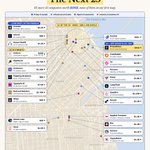




Our San Francisco map stopped at 25 AI companies. It missed one worth $41B.
Jeff Bezos co-runs it. It leased its Mission St office under a cover name.
Here's the AI map of San Francisco, the next 25, worth $106B:

You only pay when a qualified meeting actually lands on your calendar.
See if you qualify:
cal.com/team/revenueflow/rev…

We drew our New York AI map in July. It's already out of date.
@nvidia has agreed to buy @huggingface in a $12.9B deal. @clay_gtm went from $3.1B to $7.1B. And we missed 6 companies worth $40B.
Here's the AI map of New York, redrawn. 20 companies, $157B:
1. @VAST_Data, $30B. AI data platform, Garment District.
2. @reflection_ai, $25B. Open frontier models, Chelsea.
3. Fluidstack, $18B. AI compute cloud, Midtown East. Added.
4. Modal, $15.75B, up from $4.65B. Serverless AI compute, Hudson Square.
5. Hugging Face, $12.9B in the Nvidia deal. Open-model hub, Dumbo.
6. Cyera, $12B. AI data security, Garment District. Added.
7. AlphaSense, $7.5B. Market research AI, Hudson Yards.
8. Clay, $7.1B, up from $3.1B. AI for GTM teams, Chelsea.
9. General Intuition, $6.2B. Gameplay world models, Flatiron. Added.
10. @runwayhq, $5.3B. AI video models, Flatiron.
11. EliseAI, $4B, up from $2.2B. Housing and health AI, Midtown.
12. Dataiku, $3.7B in 2022. Enterprise AI platform, Chelsea.
13. @RogoAI, $2B. AI for bankers, Park Avenue South.
14. Profound, $1.8B. AI search visibility, Union Square. Added.
15. Norm Ai, $1.2B. AI compliance and law, World Trade Center.
16. Basis, $1.15B. AI accountants, Flatiron.
17. Avoca, $1B. AI for home services, Union Square. Added.
18. Rillet, $1B. AI-native ERP for finance teams, Financial District. Added.
19. @pinecone, $750M in 2023. Vector database, Chelsea.
20. Hebbia, $700M in 2024. AI for investors, Hudson Square.
3 things the map says.
1. 11 of the 20 sit inside one 2 km circle.
From Hudson Yards to Flatiron. Together they are worth $101B, nearly two thirds of the map.
2. The top 2 tripled.
VAST Data was valued at $9.1B in 2023 and $30B in April. Reflection AI went from $8B to $25B in about 6 months.
3. Two of them share a building.
Hebbia and Modal both give 233 Spring Street as their address.
New rules this time: private AI companies only, pinned at the address on their own legal pages or SEC filings. That takes Ramp (a fintech) and ElevenLabs (no New York office address we could verify) off the map.
Save this. New York reprices fast.
--
We build and run AI-native outbound systems on a pay-per-qualified-meeting model.
You only pay when a qualified meeting actually lands on your calendar.
See if you qualify:
cal.com/team/revenueflow/rev…

We threw out 8,310 of the 9,567 companies on one list build. That was the plan.
On a flat fee, rows cost nothing. So the expensive part of a list moves from buying the data to deciding who gets in.
Here's the full funnel from one build on @GetLeads_ai, and the sizing rules it gave us:
The funnel.
- 40 searches, up to 3 contacts per company: 23,510 rows.
- 11,378 distinct companies in those rows.
- 9,567 net-new companies with a named contact, after suppressing everyone we'd already contacted or queued.
- 1,253 approved by our ICP screen (13.1%).
- 784 emails found. 757 cleared every upload check.
GetLeads usage: 23,510 export credits and 165 counts. Cost beyond the flat fee: $0.
The approval rate moved a lot by vertical.
- MEP and HVAC contractors: 493 of 2,504 (19.7%)
- Environmental and waste: 339 of 2,273 (14.9%)
- Fire and life safety: 102 of 1,642 (6.2%)
- Water: 42 of 900 (4.7%)
The rules we size with now.
1. At a cap of 3 per company, expect about 2.1 contacts per company on an owner-titled audience. N contacts exported is roughly N/2 companies.
2. Size each vertical by its approval rate, never by its contact count. Water had about a third of the HVAC pool and about a twelfth of the approvals.
3. Count the whole market first. Counts are free, so the ceiling is always known before a row is exported.
4. Export to need. Pull the rows the campaign's net-new quota calls for and record the rest of the count as headroom.
The principle: when data stops costing money, the screen is where the money goes. Be strict there.
(We're on their partner plan, which is why I write about them and why I can be this specific.)

We've spent $50K+ on GTM tools.
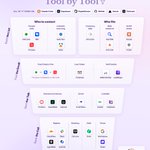
This is what survived: every tool in our outbound funnel, stage by stage.
1/ Build the list
Who to contact: GetLeads, Blitz and Prospeo on every build. Sales Navigator for InMail. Apify for LinkedIn keyword sweeps and a profile check before any InMail goes out.
Who fits: DiscoLike for company data. SearXNG and Firecrawl to read the web. Claude and Codex check every company against the ICP before we look for a single email.
2/ Find the email
The same three databases go first, in order: GetLeads, then Blitz, then Prospeo. Findymail comes last.
MillionVerifier checks every address. LeadMagic takes a second look at the catch-alls.
3/ Start the conversation
Domains from Porkbun, Google inboxes from ScaledMail, one older pool on Zapmail. Email Bison sends every email.
On LinkedIn, Unipile runs the tool we built ourselves, and HeyReach finishes the older campaigns.
4/ Book the call
Replies hit a Cloudflare Worker, an AI agent answers, and Slack holds the few a person needs to see. AgentMail covers LinkedIn prospects who ask for email. JustCall covers the phone.
Cal.com books. Grain records. Google Workspace and Stripe close.
Under all of it: Claude Code, Supabase, DigitalOcean, GitHub, Vercel and Tailscale.
What I'd take from this:
Free first, paid last. Three of our databases cost nothing per extra lead, so the paid tools only touch what they miss.
Check before you spend. AI judges the company before any email search, and a test batch runs before the full list.
Which stage of your funnel has the most tools?
--
We build and run AI-native outbound systems on a pay-per-qualified-meeting model.
You only pay when a qualified meeting actually lands on your calendar.
See if you qualify:
cal.com/team/revenueflow/rev…

You could have 50 sending inboxes and still have no idea which ones are killing your deliverability.
Your campaign-level numbers won't always tell you which mailboxes are bouncing, losing replies, or having connection issues.
And checking every inbox manually gets old pretty quickly.
@smartlead_ai's Insights gives you mailbox-level visibility across your sending setup.
You can see:
- Which mailboxes are healthy, throttled or blocked
- Bounce and reply trends over the last 7 or 14 days
- Bounce rate tracked against a healthy line (under 3%) and an action line (5%+)
- IMAP, OAuth, and other issues affecting reply tracking
The connection checks are especially useful.
If a mailbox stops tracking replies because its authentication has expired, you can investigate the connection instead of assuming your campaign has stopped working.
Insights also explains what needs attention in plain English, lets you reconnect up to 50 affected mailboxes in bulk, and checks whether the fixes worked.
When you're managing a large sending operation, being able to identify and troubleshoot the specific inbox causing trouble is far more useful than another campaign-wide average.
I cracked Claude Code for outbound. It starts with one file: CLAUDE.md.
Ours is 6,470 characters. It sits on top of 64 rules, 127 skills and 28 scheduled routines that run our agency.
Here's the whole setup, counted:
1 CLAUDE.md
Policy only. Eight short sections: how we work, where lessons go, how context gets rebuilt, git, and the rule layout. A test fails if it grows past 8,000 characters.
64 rules
8 load into every session. They cover the things that must never slip: launches, spend, notifications, worktrees.
56 load only when Claude opens a matching file. Campaign rules wake up in campaign code. Reply rules wake up in the reply agent.
One index file tells a session which rule to read before which job, so nothing hides.
127 skills
Step-by-step workflows: source leads, build a campaign, check sender health, draft a client update. Claude reads the short description up front and the full file only when the task matches.
28 routines
Claude Code jobs on a timer. Client health every morning. Lead runway twice a day. A review of every negative reply each night.
3 things that made it work:
Every correction goes to the narrowest home. A skill, a rule, a doc, or memory. Never the top file.
If a job will come back, make it run itself before you call it done: a skill, a script, or a routine on a timer.
Keep the long story out of the rule. Dated incidents live in an archive Claude never loads, so the rule stays a few sentences.
Comment CLAUDE and I'll send you the template: our CLAUDE.md structure plus the rule layout, cleaned of anything client-specific.
--
We build and run AI-native outbound systems on a pay-per-qualified-meeting model.
You only pay when a qualified meeting actually lands on your calendar.
See if you qualify:
cal.com/team/revenueflow/rev…

In January we paid OpenRouter $10,550 for AI calls.
Since mid-September our bill from Cursor, OpenRouter and Zapier has been $0.
Here's what replaced each one, and what we pay Anthropic now:
1. Cursor
$2,640.85 in August 2025. $0 since July.
We write our code in Claude Code now. In September, 5,667 commits in our repo carried a Claude co-author line.
2. OpenRouter
$10,550 in January. $0 since September 6.
We paid per token for every AI call our systems made. In July we moved those calls onto flat seats. Reply drafts run through claude -p, Claude Code's command line. Enrichment calls run on Codex.
3. Zapier
$178.50 a month. $0 since December.
It had one job: post Stripe payments into Slack. In January, Claude Code wrote the replacement into our own webhook code in a single commit. It still runs today.
What we pay now:
11 Claude seats. $2,251.83 in September.
Plus about $1,100 a month in ChatGPT seats for the Codex half.
So it was never one $200 subscription. It's 11 seats doing the work of 3 tools and a lot more:
28 scheduled Claude Code routines on our server.
A reply agent that answers and books meetings on every client by default.
An audit that reads every campaign's send queue before the first email goes out.
What I'd tell anyone trying this:
Start with the bill nobody likes. Zapier was $178.50 a month for one job. Claude rewrote it in a commit.
Move per-token AI spend onto flat seats first. That was our biggest line by far.
Count the after-bill honestly. Ours went up in seats while three tools went to zero, and the seats run far more than those three tools ever did.
--
We build and run AI-native outbound systems on a pay-per-qualified-meeting model.
You only pay when a qualified meeting actually lands on your calendar.
See if you qualify:
cal.com/team/revenueflow/rev…

Everyone thinks modern outbound runs on Clay + Claude Code.
Ours runs on 32 tools.
Clay isn't one of them.
Claude Code is on the list. It's what replaced Clay for us.
But one tool doesn't send a single email. Here's every tool a campaign touches, from the first list to the booked call:
1. Finding the people
GetLeads, Blitz, Prospeo: the 3 lead databases on every build
DiscoLike: company discovery and revenue checks
Apify: LinkedIn keyword sweeps and a profile check before InMail
Sales Navigator: InMail when the market is too small for email
2. Research
SearXNG: our own self-hosted web search
Firecrawl: reads prospect websites
3. Emails
Findymail: the last step in our email waterfall
LeadMagic: a second check on catch-all addresses
MillionVerifier: verifies every address
4. Infrastructure
Porkbun: where we register sender domains
ScaledMail: the Google inboxes on them
Zapmail: one older inbox pool
5. Sending
Email Bison: every cold email
Unipile: powers the LinkedIn tool we built
HeyReach: LinkedIn campaigns already running
6. Replies and meetings
Cloudflare: catches every reply and routes it
Slack: where held replies land for the team
AgentMail: for LinkedIn prospects who ask for email
JustCall: phone follow-up
Cal.com: booking
Grain: call recordings
Google Workspace: mail, calendar, the sales tracker, signatures
Stripe: checkout and invoices at close
7. What it all runs on
Supabase: the database
DigitalOcean: the servers our routines run on
Claude Code and Codex: the AI seats behind our agents
GitHub, Vercel, Tailscale: code, hosting, the private network
Not on the list: Clay, Apollo, Instantly. We used all three, then replaced them.
What I'd take from this:
Our rule of thumb: pay for hosting, inboxes and domains, AI seats and the sending platforms. Build the rest.
Add a tool when a job needs it, not when a demo looks good.
Claude Code doesn't shrink the stack. It's how a small team runs a big one.
Which of these do you run too?
--
We build and run AI-native outbound systems on a pay-per-qualified-meeting model.
You only pay when a qualified meeting actually lands on your calendar.
See if you qualify:
cal.com/team/revenueflow/rev…

Some founders go on podcasts.
Some write thought leadership posts.
@smartlead_ai put theirs on a Times Square billboard and made them dance.
I think we've officially reached peak founder-led marketing.