
Serial entrepreneur, retired software architect, father, & husband
El Dorado Hills, CA
Joined February 2008
- Tweets68.5K
- Following717
- Followers1.9K
- Likes49.1K

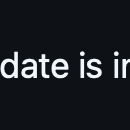



A progress bar to close 25 PRs on @Github?
And it took long enough that I managed a screenshot of it? 👀
Is this Microenshitification or AI traffic overload?

32


tmornini.hodl retweeted

Hey @garyblack00 please get on your knees and apologize to me immediately.

$NVDA: This is an absurd take. When a board pushes out a CEO for having an affair with a subordinate, there is near zero chance the board will suddenly have a change of heart and say they’ve reconsidered, the executive can come back just because the stock has dropped. The board would look like clowns and lose all credibility with investors. There is too much practical and legal risk to the firm, even if the relationship was consensual.
Here is a summary of risks per Grok.
- Sexual harassment and retaliation claims (Title VII and state equivalents): This is the core exposure. A subordinate can later claim the relationship was not truly welcome because of the power differential (the CEO controls compensation, promotions, assignments, and continued employment). Even if it starts consensually, adverse actions after a breakup (denied promotion, poor review, termination, reassignment) support retaliation claims. Other employees can also claim a hostile work environment based on perceived favoritism. In some states (notably California under FEHA), employers face strict liability for supervisor harassment.
- Favoritism and discrimination claims: Co-workers who believe the subordinate receives preferential treatment can sue. Courts have recognized claims where a supervisor’s relationships create a toxic environment of perceived quid pro quo for advancement.
- Policy violations and fiduciary/breach-of-duty issues: Most large companies prohibit or tightly restrict relationships between managers and direct (or indirect) reports, or require disclosure. Non-disclosure or concealment can support claims that the CEO breached duties of loyalty or care to the company. For public companies, boards that fail to address the known risk may face derivative claims from shareholders.
- Reputational, operational, and financial fallout: These situations routinely produce media coverage, internal morale problems, difficulty managing the subordinate’s performance, and board distraction. Settlements are common even in weak cases because of embarrassment. High-profile precedents include the ousters of CEOs at McDonald’s (Steve Easterbrook, later sued for clawback of ~$105 million severance after concealment of other relationships), Intel, Nestlé, Norfolk Southern, and others. Recent reporting has tied similar issues to Nvidia leadership transitions.
Practical Implications
The firm’s exposure is often larger than pure legal damages (which under Title VII are capped by company size for compensatory and punitive awards). Defense costs, settlements driven by optics, loss of leadership continuity, stock-price reaction, and cultural damage frequently dominate. Individual managers are rarely personally liable under Title VII, but the company is, and the CEO almost always loses his job.
Bottom line: A truly mutual, disclosed, and carefully managed relationship can sometimes avoid catastrophe, but the combination of power imbalance and direct reporting line makes it high-risk for the firm. Most sophisticated boards treat it as a governance and risk issue that should not occur, and many CEOs have lost their positions over it even when the relationship was described as consensual. Outcomes depend heavily on jurisdiction, the company’s policies, whether it was disclosed, and subsequent conduct.
tmornini.hodl retweeted

Is there any chance that Jensen Huang is reinstated as CEO of Nvidia?
Scott Galloway: "I think the odds are almost zero. But if you're on the board, you've gotta assume at some point you might not only be testifying in front of Congress, but you might be testifying in a court of law...This is an issue of national security."


tmornini.hodl retweeted

In case anyone is curious:
We’ve had a ~pixel-perfect world model since last year, which is critical for synthetic data generation.
The (much) smaller version of that in the car is a conditional mean-flow model, based on the recent sequence of Tesla Universal Vision Encoder features, which are the same ones that are plugged into the 3B encoder model that produces the driving actions.
We fork off from these UVE features, then run a separate ~1B diffusion model. This takes in the previous reality-view generation with added noise and then denoises it to the current visualization.
It then produces a small video chunk (8 images at 36 fps, at the resolution of the UI screen). This work is done by 1/2 of a TRIP engine every UVE frame at 18 hz and is spread over 4 cycles.
Currently, the latency is a bit high due to compute constraints, but we have ways to interleave newer UVE features along the diffusion transformer layers to cut roughly 35% of the latency.

tmornini.hodl retweeted
Tesla FSD V15 is a banger release!
Completely new architecture that deserves being called “super” intelligence, as it drives better than human intelligence.

Full release notes below
– – –
v15 upgrades every part of the end-to-end driving network. Includes:
Upgraded vision encoder shared between FSD, Robotaxi, and Optimus, which is trained on millions of internet videos for improved generalization and data efficiency, improving the critical intervention rate by 25x.
Introduced Tesla Reality View, replacing all of the explicit model signals into a single end-to-end visualization using less total compute.
Improved navigation by using an end-to-end learned model based on route preference data from the fleet.
Improved parking location selection by using personalized parking history, and the map will now display multiple parking options at your destination.
Improved driver monitoring by increasing vision-based attention monitoring availability with hats and sunglasses and decreasing strictness in higher speed driver profiles.
Improved detection of road signs, small animals, road debris, and chains.
Improved detection of potholes, road details, and avoidance of deep standing water.
Improved speed handling for each driver profile, school zones and speed limits, and inclement weather.
Improved Autoshift functionality by unifying with FSD-based gear predictions.
tmornini.hodl retweeted

This is absolutely INSANE
Tesla FSD V15 Reality View in a busy downtown setting


tmornini.hodl retweeted

v15 is 25x safer than v14 across the fleet.
That’s hard to notice on any individual drive because most drives are already very safe. The difference only becomes clear when you aggregate millions of miles.
All credit goes to the incredibly talented and dedicated @TeslaSI engineers who made this possible. It’s an honor to work alongside them.

FSD v15 now starting to roll out – upgrading every part of the end-to-end driving network
Safety
25x better handling of safety critical cases
Tesla Reality View
Adds a live visualization of the drive that lets you see & control what FSD is planning to do
Navigation for start & end of the trip now learns end-to-end from fleet route preferences. Later v15 releases will expand this to the entire route.
You also should notice better detection of signs, animals, debris, potholes and standing water, plus more natural speed handling in school zones and inclement weather.
Lastly, FSD can now slow for speed cameras & Bike Rack Mode lets you enable FSD w/ bike racks or similar hitch accessories
tmornini.hodl retweeted

V15 debuts the Tesla Reality View.
The same end-to-end driving model also renders a realistic view of the world around the vehicle.
It’s not there just because it looks cool, but it also communicates the intent of the car. The arrows show the turns FSD intents to take, the pins show its intent to park in a spot and so on.


tmornini.hodl retweeted
The crazier thing is that the right side uses less compute than what the left used to take.
Extreme compute efficiency optimization.


How’s that LiDAR worship holding up today? 🙄
FSD v15 now starting to roll out – upgrading every part of the end-to-end driving network
Safety
25x better handling of safety critical cases
Tesla Reality View
Adds a live visualization of the drive that lets you see & control what FSD is planning to do
Navigation for start & end of the trip now learns end-to-end from fleet route preferences. Later v15 releases will expand this to the entire route.
You also should notice better detection of signs, animals, debris, potholes and standing water, plus more natural speed handling in school zones and inclement weather.
Lastly, FSD can now slow for speed cameras & Bike Rack Mode lets you enable FSD w/ bike racks or similar hitch accessories
“Improved detection of … chains”
Hey @ChuckCook 👋👍🏻
Full release notes below
– – –
v15 upgrades every part of the end-to-end driving network. Includes:
Upgraded vision encoder shared between FSD, Robotaxi, and Optimus, which is trained on millions of internet videos for improved generalization and data efficiency, improving the critical intervention rate by 25x.
Introduced Tesla Reality View, replacing all of the explicit model signals into a single end-to-end visualization using less total compute.
Improved navigation by using an end-to-end learned model based on route preference data from the fleet.
Improved parking location selection by using personalized parking history, and the map will now display multiple parking options at your destination.
Improved driver monitoring by increasing vision-based attention monitoring availability with hats and sunglasses and decreasing strictness in higher speed driver profiles.
Improved detection of road signs, small animals, road debris, and chains.
Improved detection of potholes, road details, and avoidance of deep standing water.
Improved speed handling for each driver profile, school zones and speed limits, and inclement weather.
Improved Autoshift functionality by unifying with FSD-based gear predictions.
WTF?!? 😮
The visualization is INSANE!
FSD v15 now starting to roll out – upgrading every part of the end-to-end driving network
Safety
25x better handling of safety critical cases
Tesla Reality View
Adds a live visualization of the drive that lets you see & control what FSD is planning to do
Navigation for start & end of the trip now learns end-to-end from fleet route preferences. Later v15 releases will expand this to the entire route.
You also should notice better detection of signs, animals, debris, potholes and standing water, plus more natural speed handling in school zones and inclement weather.
Lastly, FSD can now slow for speed cameras & Bike Rack Mode lets you enable FSD w/ bike racks or similar hitch accessories