




토짱 retweeted

SAVE THIS: Anthropic, OpenAI, Cloudflare and Google have all released AI tools that hunt security bugs in your code. Here's each one and how to run it.
1. Claude Security by Anthropic
A team of agents maps your app, builds a threat model, hunts through every component and checks each finding independently. It can turn confirmed bugs into patch files.
/plugin install claude-security@claude-plugins-official
Then type /claude-security
2. Codex Security by OpenAI (11.1K stars)
Scans a whole repo, one folder or just your latest changes, validates what it finds, writes patches and drafts a SECURITY.md.
npm install --global @openai/codex-security
cs login
cs scan .
3. Security Audit Skill by Cloudflare (31K stars)
Six phases, and every finding is rechecked by a fresh agent that didn't find it. Works in most coding agents.
npx skills add github.com/cloudflare/securi… --skill security-audit
Then ask: "security audit this codebase"
4. Mantis by Google (2.5K stars)
Builds a threat model, tries to reproduce each bug, then patches it and attacks the fix to prove it holds. Google says to run it only in an isolated environment.
github.com/google/mantis
Run at least one before you ship anything that handles user data.

토짱 retweeted

I have been fine-tuning LLMs for over 3 years now.
Here are 5 LLM fine-tuning techniques, explained with visuals:
Traditional fine‑tuning is impractical for LLMs (billions of params; 100s of GB).
Since this kind of compute isn't accessible to everyone, parameter-efficient fine-tuning techniques (PEFT) were built.
Before we go into details of each technique, here's some background that will help you better understand these techniques:
LLM weights are matrices of numbers adjusted during fine-tuning.
Most PEFT techniques involve finding a lower-rank adaptation of these matrices, a smaller-dimensional matrix that can still represent the information stored in the original.
Now with a basic understanding of the rank of a matrix, we're in a good position to understand the different fine-tuning techniques.
(refer to the image below for a visual explanation of each technique)
1) LoRA
- Add two low-rank trainable matrices, A and B, alongside the weight matrices.
- Instead of fine-tuning W, adjust the updates in these low-rank matrices.
Even for the largest LLMs, LoRA matrices take up a few MBs of memory.
2) LoRA-FA
While LoRA significantly decreases the total trainable parameters, it requires substantial activation memory to update the low-rank weights.
LoRA-FA (FA stands for Frozen-A) freezes matrix A and only updates matrix B.
3) VeRA
- In LoRA, low-rank matrices A and B are unique for each layer.
- In VeRA, A and B are frozen, random, and shared across all layers.
- Instead, it learns layer-specific scaling VECTORS (b and d) instead.
4) Delta-LoRA
- It tunes the matrix W as well, but not in the traditional way.
- Here, the difference (or delta) between the product of matrices A and B in two consecutive training steps is added to W.
5) LoRA+
- In LoRA, both matrices A and B are updated with the same learning rate.
- Authors of LoRA+ found that setting a higher learning rate for matrix B results in better convergence.
____
Find me → @_avichawla
Every day, I share tutorials and insights on DS, ML, LLMs, and RAGs.


토짱 retweeted

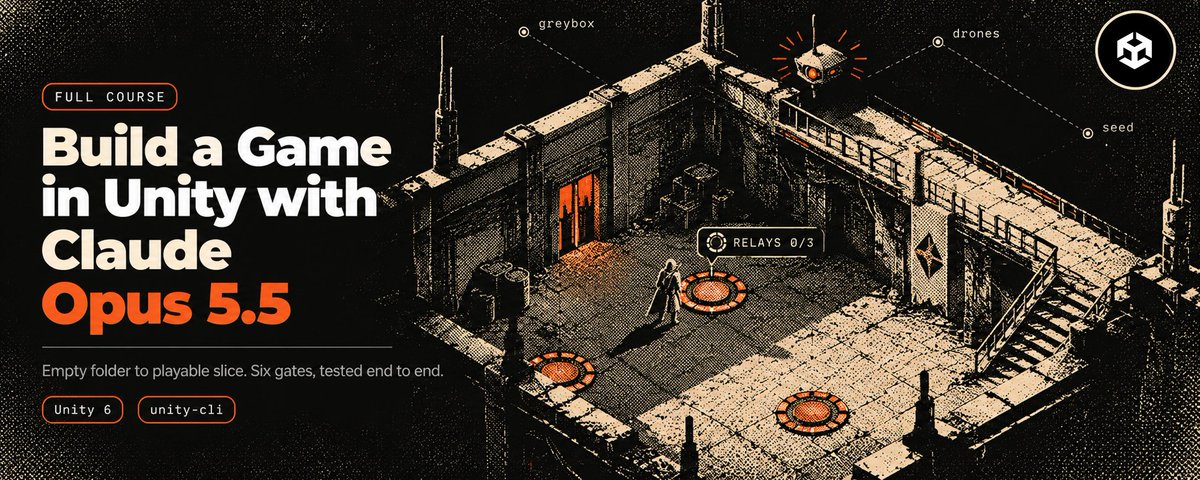
how to create a local game using Claude Opus 5.5 and Unity 6...
a beach, a pier, a day/night cycle, real fishing controls
the trick is never asking for “a fishing game” in one prompt:
- step 1: create a unity 6 project (urp template) and install unity’s plugin in claude code
- step 2: greybox the level with simple shapes and a camera, no art yet
- step 3: add the core mechanic in one prompt, then play it until it feels right
- step 4: generate models in tripo, clean them up with opus in blender, import as fbx
- step 5: add light, water, effects and sound last
- step 6: have opus playtest it with an autopilot and list the bugs before fixing anything
who does what:
> unity 6: the world, physics, ui
> tripo + blender: every model
> opus 5.5: scripts, scene setup, cleanup, tests
> you: play it and decide what stays
commit after every step that works. one bad prompt then costs you seconds, not an evening



토짱 retweeted

絵からLive2D風のアバターを誰でも作れるようにするためのツール『Mesh Avatar Studio』を公開しました!
手元のClaude CodeやCodexから使えます
絵を渡すとAIエージェントが下地を作って、ずれたところはエディタでドラッグして直せます
使い方についてはREADMEに記載しているので、そちらをご覧いただき、試してみてもらえたらと思います😊
github.com/shinshin86/mesh-a…


토짱 retweeted

I can't believe this is f*cking free
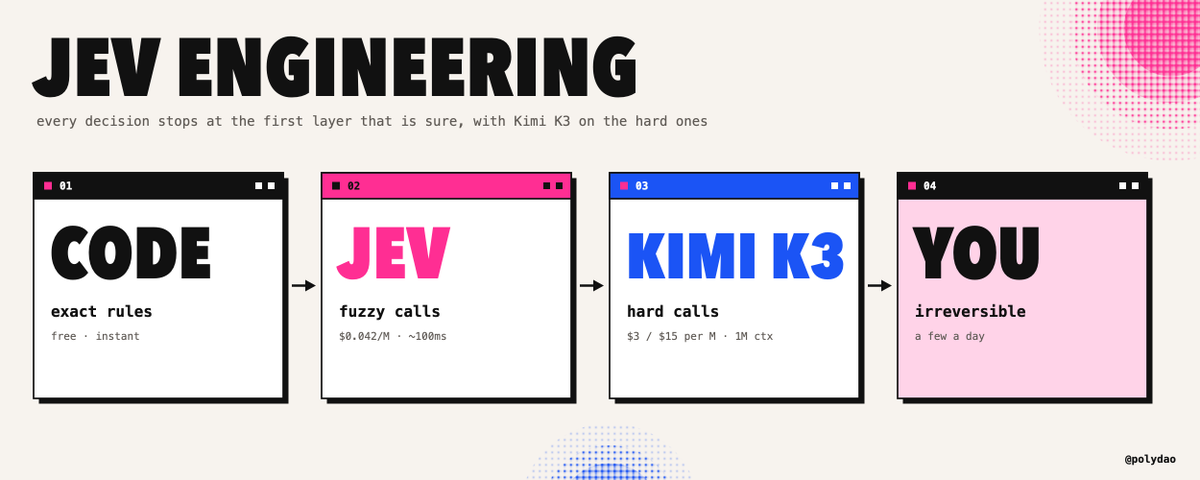
how to build your first AI agent (full guide, with a Jev decision layer)
a year ago I burned two weeks on my first agent. this guide gets you there in an afternoon
in the right hands it makes one builder ship like a small team:

토짱 retweeted

GSC Figure Update!
Good Smile Company
CLANNAD
Nendoroid Kyo Fujibayashi
Nendoroid Tomoyo Sakagami
Stay tuned for more information coming soon!
#CLANNAD #nendoroid #goodsmile