

CEO of The Abrahamic Movement. Author of "The Abrahamic Revolution" and gold medal winner of the Global Books Award. Strategic consultant.
ישראל
Joined December 2007
- Tweets2.1K
- Following2.5K
- Followers3.8K
- Likes1.8K





The Abrahamic Movement UK is getting underway. At a meeting in London attended by local leaders from the Jewish, Iranian, Somaliland and Kurdish communities, and Arab supporters of the Abraham Accords, we announced a new path: a local alternative in Britain to the extremist movements.
Our communities in Britain are suffering a complete loss of their security in the shadow of violence from extremist movements. It is not only the Jewish community that fears the rise of extremism: the Iranian opposition community, the Somaliland community, moderate Muslims, the Kurds and minorities such as the Druze and Alawites also suffer harassment and violence from incited extremists. So do Christians.
The founding of the Abrahamic Movement UK heralds a new dawn for the Abrahamic communities, a moderate alliance that will raise a new and unifying voice in Britain, an authentic voice from the Middle East that heralds Abrahamic peace and a shared vision in which there is room for everyone.
Just as important, it will create a community of communities, which will no longer feel so alone in the face of violent and extremist forces.

On the Jewish-Arab conflict: "It's not a divorce. It's not dividing up: this is yours and this is mine."
That is what Rabbi Yoel Oz, President of the Abrahamic Movement in Israel and one of the founders of the Abrahamic Movement, said at a Jewish-Arab gathering we held in Haifa, part of the Building a Shared Future program:
"We need to share the inheritance. And it's complicated – inheritances are always complicated. But it's not that we are divorcing each other. We live together, we are family, and we will need to be together for the future to come."
Building a Shared Future is a joint program of several organizations, supported by Leap Forward and coordinated by the Abrahamic Movement, to advance dialogue and shared life between Jews and Arabs through field encounters, videos and podcasts. Program partners: Talking Peace (Siach Shalom), Bokra, Tawassul, the Jerusalem Interfaith Center and the Interfaith Incubator.
#InterfaithDialogue #Coexistence
A place does not become holy only because of what is in it. It becomes holy because of the people.
That is how Muad Odeh, Secretary-General of the Ahmadiyya Muslim Community in Israel, put it at an Abrahamic Movement gathering in Haifa, where Jews and Arabs sat together as part of the Building a Shared Future program:
"People make a place holy. That is why we see the experience here in Haifa, as people, across the different religions. We said: Arabs, Jews, Christians, whatever there is – all together. How people live together. That, in my view, is what makes a place holy."
And the place itself? "A holy place is also how I feel in the place. Not just whether I have a holy place or something. Yes, a holy place is holy, but it is also the way people conduct themselves that defines the holiness of a place."
Building a Shared Future is a joint program of several organizations, supported by Leap Forward and coordinated by the Abrahamic Movement, to advance dialogue and shared life between Jews and Arabs through field encounters, videos and podcasts. Program partners: Talking Peace (Siach Shalom), Bokra, Tawassul, the Jerusalem Interfaith Center and the Interfaith Incubator.
#InterfaithDialogue #Coexistence
"When we started the Abrahamic Movement, I was asked – because I'm a rabbi and I have a beard – whether it is something religious. I said it is not necessarily religious."
That is how Rabbi Yoel Oz, President of the Abrahamic Movement in Israel and one of the founders of the Abrahamic Movement, recalled it at a Jewish-Arab gathering in Haifa, part of the Building a Shared Future program. He added:
"It is also something cultural, something spiritual in general, that it doesn't belong to one religion only, and that it is the narrative – the story of the people of the Middle East. […] And it can be something that speaks to one person in one way, and to another man or woman in a different sense. And it includes all these facets: it's narrative, it's spirituality, it's culture, it's also part of politics, let's say – an answer to those who want to separate the religions and the people."
Building a Shared Future is a joint program of several organizations, supported by Leap Forward and coordinated by the Abrahamic Movement, to advance dialogue and shared life between Jews and Arabs through field encounters, videos and podcasts. Program partners: Talking Peace (Siach Shalom), Bokra, Tawassul, the Jerusalem Interfaith Center and the Interfaith Incubator.
#InterfaithDialogue #Coexistence #JewsAndArabs
"You know, we are cousins. We have the same father, Ibrahim – Abraham."
Growing up in New York, Rabbi Yoel Oz, President of the Abrahamic Movement in Israel and one of the founders of the Abrahamic Movement, heard this again and again from Muslim taxi drivers who noticed his kippah. It always stuck with him.
At a Jewish-Arab gathering of the Abrahamic Movement in Haifa, part of the Building a Shared Future program, Rabbi Oz called the Abrahamic idea "the solution hiding in plain sight": once we say we are family, even conflict becomes a fight within the family, and every family has conflict.
At the end of their father's life, Isaac and Ishmael came together and buried him together. As Rabbi Oz put it, we should not just get together at funerals, because funerals sometimes remind us "what's really important in life, and really what's important is family."
Building a Shared Future is a joint program of several organizations, supported by Leap Forward and coordinated by the Abrahamic Movement, to advance dialogue and shared life between Jews and Arabs through field encounters, videos and podcasts. Program partners: Talking Peace (Siach Shalom), Bokra, Tawassul, the Jerusalem Interfaith Center and the Interfaith Incubator.
#InterfaithDialogue #Coexistence
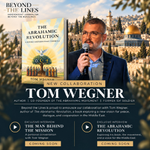
One conversation about my life, my military service and the political road that shaped my perspectives. A second about a peace formula for the Middle East. Two exclusive video interviews, coming soon.
Beyond the Lines (@BTLinesNews), an independent journalism outlet covering Israel and the Middle East, has announced a collaboration with me. In their words:
"Beyond the Lines is pleased to announce our collaboration with Tom Wegner, an Israeli author, former IDF soldier, and co-founder of the Abrahamic Movement.
Drawing on experience in military service, Israeli politics and peacebuilding, Wegner explores possibilities for dialogue and regional cooperation. His book, The Abrahamic Revolution: A Middle Eastern Peace Formula, considers how the shared Abrahamic heritage of Judaism, Christianity and Islam might help build bridges between communities."
On the two interviews:
The Man Behind the Mission: "A personal conversation about his life, military experiences, political background and the journey that shaped his perspectives."
The Abrahamic Revolution, A Vision for the Middle East: "A discussion of his book, the Abrahamic Movement, and the possibilities and challenges of regional cooperation."
"Both conversations will be featured on the Beyond the Lines video page. We look forward to sharing his experiences and ideas with our audience while maintaining our independent editorial approach."
Thank you very much to the Beyond the Lines team.

"A religion that connects people and doesn't separate people."
That is what Rabbi Yoel Oz, President of the Abrahamic Movement in Israel and one of the founders of the Abrahamic Movement, said at a Jewish-Arab gathering in Haifa, part of the Building a Shared Future program:
"the unifying symbol between all religions, between all the tribes in the Middle East – that we are all together. And with the Muslim Brotherhood there is a supremacy of their own, and that is not an Islam of inclusion and moderation – it is usually more extreme. And I think we are talking about a religion that connects people and doesn't separate people."
Building a Shared Future is a joint program of several organizations, supported by Leap Forward and coordinated by the Abrahamic Movement, to advance dialogue and shared life between Jews and Arabs through field encounters, videos and podcasts. Program partners: Talking Peace (Siach Shalom), Bokra, Tawassul, the Jerusalem Interfaith Center and the Interfaith Incubator.
#InterfaithDialogue #Coexistence #JewsAndArabs #Moderation
Tom Wegner توم ويغنر תום וגנר retweeted

שבת שלום לעם היפה והידידותי הזה. מאחל לכם שבת מלאה באור, שלווה, אהבה וברכה
Many in the Arab world don't know that inside Israel, Jews and Arabs sit down together to talk about a shared future.
Bokra, an Arabic-language news site based in Nazareth, reported on one such meeting, at the Ramat Rachel hotel in Jerusalem. It was organised by Siach Shalom (Talking Peace), as part of Building a Shared Future. Arab women and Jewish citizens took part. They discussed the challenges they share and how to build mutual respect and a shared life in these times.
Educator and social activist Samah Sakran told Bokra:
"Peace needs dialogue, and dialogue begins with the ability to hear the other and understand their story."
She added that every citizen, whatever their identity or religion, deserves a dignified life built on rights and mutual respect.
Amal Abu al-Toum, who directs a Bedouin women's association in Segev Shalom, called dialogue between Arab and Jewish citizens of Israel a basic necessity. Both sides, she said, live in the same place and share the same resources, services and schools.
That is our message: Jews and Arabs can talk, and can build the future together on the common ground of the Abrahamic story. Reports like this one, in Arabic, open a window onto that reality.
The full article (in Arabic) is in the first comment.

أزمة حقوق الإنسان في سوريا تخرج عن السيطرة وتهدد الأقليات.
أصدرتُ للدكتور إيدي كوهين @EdyCohen، المبعوث الخاص للحركة الإبراهيمية لأزمة حقوق الإنسان في سوريا، كتاب مهمة أول ورسمي. وطلبت منه في الكتاب "دراسة أوضاع حقوق الإنسان والاحتياجات الإنسانية للأقليات في سوريا – ما الذي تحتاج إليه وما الذي ينقصها، وفي مقدمة ذلك الدواء والغذاء."
بحسب كتاب المهمة الذي أصدرته له، تشمل المهمة:
• الطوائف المختلفة في سوريا: الدروز، والعلويون، والمسيحيون، والكرد، والطوائف الأخرى – بما فيها الأحمديون وأقليات أخرى أصغر
• حقوق الإنسان بصورة عامة
• حقوق العلمانيين
• حقوق المرأة
• أوضاع حقوق الإنسان لأبناء الطوائف، بما في ذلك الأمن الشخصي والمجتمعي، وحرية المعتقد الديني، والتعرض للأذى أو التمييز على أساس الهوية
• الاحتياجات الإنسانية: الأدوية والخدمات الطبية، والغذاء، وغير ذلك من النواقص الأساسية
"نسعى إلى القيام بمهمة لتقصي الحقائق في سوريا برئاسة الدكتور كوهين. وفي الوقت نفسه، يشمل تفويض المراجعة كل وسائل إنشاء الاتصال — بما في ذلك الاستفسارات والتواصل مع ممثلي سكان سوريا والأقليات، والمحادثات، والمواد المكتوبة — ولا يعتمد على زيارة ميدانية فعلية."
المخرَج الذي حددته في كتابي: "تقرير مهمة مكتوب يعرض النتائج بحسب كل طائفة، والاحتياجات الأكثر إلحاحًا، وتوصيات بخطوات عملية تتخذها الحركة الإبراهيمية"، خلال 60 يومًا.
سيُقدَّم تقرير إيدي النهائي إليّ وإلى سامي نوفل، المدير التنفيذي للحركة الإبراهيمية في سوريا.
شكرًا جزيلًا لإيدي على الدور المهم الذي أخذه على عاتقه.

At a joint evening with the Iranian opposition in London on International Cyrus Day, on the legacy of Cyrus the Great and the future of Iran, the speakers will include not only Iranians but also Israelis.
I am one of them, as a co-founder of The Cyrus Fund and the Abrahamic Movement, and as the author of the book "The Cyrus Accords", which charts a future of Israeli-Iranian cooperation. Two questions will lead the main panel:
What should the Iran of the future look like?
What is the way forward for Iran, in leadership and unity?
We will also present Project Aftab and The Cyrus Fund, which I co-founded: the first Israeli-Iranian startup since the Islamic Revolution, creating a digital platform designed to operate within applicable regulations, and built to transfer small donations and economic support from family and friends abroad, safely and transparently, to people in need of humanitarian aid in conflict zones, without passing through terror-supporting financial systems.
The programme also includes talks, multimedia and a cultural and historical presentation by Behzad Bolour.
With me on stage: Shachar Tal, Babak Jalilvand, Foad Khorshidi, Pantea Modiri (@PanteaModiri), LilyMoo and others.
See you on Thursday, October 29, from 5:30 PM to 8:30 PM London time, at artsdepot, North London.
Registration is subject to host approval - registration link in the comments.


The Quran is more Zionist than Islamists want you to believe
That is the headline of my op-ed in the @Jerusalem_Post. It is a foundational piece for me, as a co-founder of the Abrahamic Movement.
It started with an interview I gave to the Lebanese journalist Maria Maalouf. As I wrote: "I argued that the Quran can be read as a Zionist document. This claim caused quite a stir, yet it built a crucial bridge between Zionism and Islam, which is essential for establishing peace in our region."
In the piece I ask the two questions Zionism answers: What is the land of the Jews, and to whom does the Land of Israel belong? A reading of the Quran, I wrote, "reveals a surprising agreement between Zionism and Islam on these two foundational issues."
"The Quran itself recognizes the Children of Israel’s right to their land." There, Moses tells his people:
"My people, go into the holy land which God has ordained for you..." (Surah Al-Ma’idah 5:21)
"At the very least, the Quran makes it impossible to honestly claim that the Jewish connection to the Holy Land is foreign to Islam."
The Children of Israel are so central to the Quranic narrative that Surah 17 is traditionally known as both Al-Isra and Bani Isra’il.
And the verse that matters most to me, the one I called "perhaps the most important quote that has eluded us in the Quran":
"Argue only in the best way with the People of the Book, except with those of them who act unjustly. Say, ‘We believe in what was revealed to us and in what was revealed to you; our God and your God are one [and the same]; we are devoted to Him.’" (Surah Al-’Ankabut 29:46)
The piece does not stop at verses. In Sweida, Israel is protecting the Syrian Druze from jihadist attacks. East of Khan Yunis, Palestinian clans and local organizations that oppose Hamas are receiving Israeli backing. "The message radiating from these activities to the region is that the door is open, and Israel’s umbrella is not limited to Jews alone."
And more and more people in the Middle East define themselves as Muslim Zionists, Lebanese Zionists, Iranian Zionists, Alawite Zionists and Kurdish Zionists.
The greater test is still ahead: can the Zionist idea provide the blueprint for rebuilding Sweida and Khan Yunis as free (though not necessarily independent) societies, tolerant in nature, and advancing toward prosperity?

Tom Wegner توم ويغنر תום וגנר retweeted

As the leader of the Abrahamic Bedouin Movement—both in Jordan specifically, and across the Arab world and the globe more broadly—I hereby officially announce the appointment of Sheikh Shihab Hussein Qasim Al-Zuyoud as the formal Sheikh of the Al-Zuyoud clan within Jordan, in the "New Jordan" that is soon to emerge. The ancestors of Sheikh Shihab Hussein Qasim Al-Zuyoud were loyal to King Abdullah I and to the "deep state" that supported him. Yet, the corruption of King Abdullah II and the royal advisory body for tribal affairs has led to the neglect of those loyalists who once stood by King Abdullah I. To Sheikh Shihab, we say: take heart—rejoice! The Abrahamic Movement and the global deep state will soon—God willing—extend their support to you, with the aim of building a "New Jordan" under the leadership of Abedalelah Almaala . Together, we shall celebrate your investiture as leader of the Al-Zuyoud clan—part of the Bani Hassan tribe—at the Abrahamic Palace of Peace in the mountains of Ghreisa.
@WhiteHouse
@POTUS
@SecRubio
@USEmbassyJordan
@CIA
@AbrahamicMove
@tomweg


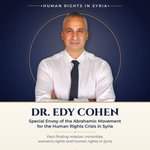
The human rights crisis in Syria is spiraling out of control and threatening its minorities.
I have issued Dr. Edy Cohen (@EdyCohen), Special Envoy of the Abrahamic Movement for the Human Rights Crisis in Syria, his first official mission letter. In it, I asked him "to examine the human-rights situation and the humanitarian needs of Syria’s minorities – what they need and what they lack, first and foremost medicine and food."
In the mission letter I issued him, the mission includes:
• The various communities in Syria: the Druze, the Alawites, the Christians, the Kurds, and the other communities – including the Ahmadis and additional smaller minorities
• Human rights in general
• The rights of secular people
• Women’s rights
• The human-rights situation of community members, including personal and communal security, freedom of religion, and harm or discrimination based on identity
• Humanitarian needs: medicine and medical services, food, and other essential shortages
"We are working toward a fact-finding mission to Syria headed by Dr. Cohen. At the same time, the mandate of the review includes every means of establishing contact – including inquiries and engagement with representatives of Syria’s residents and minorities, conversations, and written materials – and does not depend on a physical visit on the ground."
The expected output I set in my letter: "A written mission report presenting findings by community, the most urgent needs, and recommendations for action by the Abrahamic Movement", within 60 days.
Edy's final report will be submitted to me and to Sami Nofal, CEO of the Abrahamic Movement in Syria.
Thank you very much, Edy, for taking on this important role.

Israelis and Iranians are meeting in London to celebrate the legacy of Cyrus the Great and to talk about a shared future.
The evening is a joint event of The Cyrus Fund, which I co-founded, and Cyrus & Esther, a London community organisation founded to strengthen the historic connection between Iranian and Jewish communities through education, dialogue and mutual understanding. This is a joint evening with the Iranian opposition, held on Cyrus the Great Day, the anniversary of his declaration of tolerance, one of history's earliest human rights charters.
This is more than a historical commemoration. At a time of drama in Iran, with the world waiting for a solution to the problem of the Islamic regime, we will ask how the principles associated with Cyrus, human dignity, justice and tolerance, can shape a shared vision of national unity and a prosperous future.
High ideals need practical solutions. That is why we will also introduce Project Aftab and The Cyrus Fund: a digital platform that bypasses the Iranian regime's banking system to route micro-donations and economic support from families and friends abroad, safely and transparently, to those who need it most in Iran.
The programme includes expert presentations, curated multimedia and a main panel of speakers and members of the diaspora on two questions: what should the future Iran look like, and what is the road ahead for leadership and unity. Behzad Bolour will lead a cultural and historical journey through Persian heritage, its stories and its lessons for today.
Speakers:
Shachar Tal, entrepreneur and innovator, CEO of The Cyrus Fund and Co-Founder of Project Aftab
Babak Jalilvand, digital currency and governance expert, Co-Founder of Project Aftab and of Coiniran
Foad Khorshidi, jurist and pastor, Co-Founder and COO of The Cyrus Fund, Coordinator of Peace & Love Intl. Movement Iran-Israel
Pantea Modiri (@PanteaModiri), journalist, filmmaker and former international correspondent
LilyMoo, human rights activist and Associate Fellow at the Forum for Foreign Relations
And me, a co-founder of the Abrahamic Movement and Co-Founder of The Cyrus Fund and Project Aftab
More speakers to be announced.
Friends in London, I would love to meet you there.
Thursday, October 29, 5:30 PM to 8:30 PM GMT, artsdepot, North London.
Registration link in the first comment.

To register for the evening (subject to host approval):
luma.com/8ro0agb0
Exposed in Lebanon: Selena Ryan (@selenaryan_), an Israeli whom I appointed to head the Israel-Lebanon Friendship Association, now writes for a Lebanese media outlet, and hostile media in Lebanon are going crazy over it.
On September 4, 2026, the Beirut legal journal Al-Mufakkira Al-Qanuniyya (The Legal Agenda) published an investigation by Hussein Shaaban into Selena's reports for This Is Beirut, Ici Beyrouth and Huna Lubnan. On September 9, 2026, the Lebanese daily Al-Akhbar carried it too, in its own summary in its culture section. From there, it reaches me and the Abrahamic Movement.
It opens like this: "At the end of the first report Selena Ryan prepared for the platform This Is Beirut, she thanked it for allowing 'us' to 'send our message' to the Lebanese. At the start of the report she had introduced herself as coming 'from central Israel,' then spent more than four minutes asking Israelis in the border areas with Lebanon what message they wanted to send to the Lebanese. In the conclusion, she did not say she had passed on their messages. She included herself among them, and presented what she had gathered as the 'general message' in Israel toward the Lebanese people."
On her writing there: "Over six months, This Is Beirut, Ici Beyrouth and Huna Lubnan published four reports and 13 media posts, all under Ryan's name, and all addressing the Lebanese public directly, not merely covering a subject."
Then the investigation reaches me: "Tracing Ryan's record outside these platforms led us to the 'Israeli-Lebanese Friendship Association,' which she personally heads, within the so-called 'Abrahamic Movement.' The movement's official website describes the project as inspired by the 'Abraham Accords.' Tom Wegner, the movement's co-founder and CEO, describes her as one of its founders, and he is the one who announced her appointment to a second leadership position within the movement's 'Israel-Somaliland Friendship Association,' 'to strengthen our operations on the ground.'"
And on the movement: "The Abrahamic Movement says it works through media, education, economic cooperation, culture and 'public diplomacy,' and builds relationships through branches and networks 'extending to Lebanon, Iraq, Syria, Gaza and beyond,' along with platforms in Arabic, Hebrew and English and groups on WhatsApp, Facebook and Telegram."
And about me: "This structure is led by Wegner, a professional in public relations and political communication. He was a spokesman for Ehud Barak's campaign for prime minister, then media adviser to Amir Peretz, and accompanied him after he entered the Ministry of Defense. His professional biography adds that he ran media for Eli Aflalo's campaign in the Likud primaries, which ended with his election to the party's Knesset list. He also worked as a spokesman for the 'Peres Center for Peace.' In his military service, he served in the Coordination and Liaison unit with the Palestinians, and said he was in charge there of coordination between the Israeli army and the Palestinian police in Jericho."
About the Middle East Center: "Alongside the movement, Wegner runs the company 'Wegner Strategy and Communications,' within which the 'Middle East Center' operates, an arm that Wegner founded and runs. The center presents itself as able to carry out public relations, advertising and social media campaigns in Arabic-speaking countries and among Persian and Kurdish speakers, and says it produces content in these languages tailored to the target audience."
On the past year: "In June 2025, Likud appeared again in the record of the structure Wegner runs, this time through the 'Middle East Center' itself: Wegner's center coordinated the participation of Iranian leaders in a meeting initiated by Likud MK Dan Illouz. And on September 3, 2025, the Israeli Foreign Ministry's Arabic pages celebrated an interview with Wegner and promoted his book 'The Abrahamic Revolution.'"
The revolution in the book's title is not a campaign. The Abrahamic Movement is a grassroots initiative, and its work is changing consciousness and building trust between people. For that, I do not apologize.
