

The world's most dangerous attack AI. On your side.
Joined March 2026
- Tweets189
- Following2
- Followers1.7K
- Likes184




When the PHP2Shell vulnerabilities were disclosed this month (CVE-2026-109618 and CVE-2026-109619, pre-authentication remote code execution in the PHP runtime itself), the risk was not theoretical. AI-assisted attackers now turn a disclosure into a working exploit in hours.
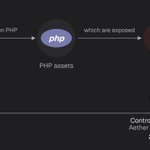
Within days of the PHP2Shell disclosure, Aether AI worked out which of a customer's estate of roughly 40,000 assets, spanning multiple brands, were running PHP, and which of those were actually impacted.
It reached that the way an attacker would - from the outside, with no backend access and no credentialed scan, at machine speed and at that scale.
That head start let the customer get compensating controls in place at disclosure and stay protected while the estate was patched out, through the very window in which attackers move fastest.

Within days of the PHP2Shell disclosure, Aether AI identified which of a customer's estate of roughly 40,000 assets, across multiple brands, were running PHP and which were actually impacted, from the outside with no backend access. Controls were in place at disclosure, keeping the customer protected while the estate was patched out.

If PHP2Shell didn’t hurt you, be honest about why. You were probably lucky, not ready.
As the dust settled, a genuinely reliable exploit was proving harder to build than the headlines implied as we've seen that much of the flood was mass scanning.
That lag is the only reason a lot of organisations came through clean and the entire margin of safety was the time it takes to turn a working probe into a working exploit. That time shrinks every week the tooling improves.
Betting your estate on the exploit staying hard to build isn't a strategy anymore though, especially when the odds move the wrong way continuously because thanks to AI-enabled adversaries, the clock has already changed.
Reading a patch diff, reconstructing the flaw, writing the probe, scaling it across the internet, the whole pipeline is collapsing at once.
You don't get to choose whether offense moves at machine speed. You choose how many independent things have to fail before an attacker moving at that speed reaches anything that matters. And for a bug that executes before your application gets a say, the layer that decides the outcome is the one most teams treat as an afterthought: assume compromise.
Which brings us to "Assume-compromise".
It's not a slogan, nor is it defeatism. It's the only layer whose job survives the failure of every layer in front of it, and it demands you actually understand and implement it:
🔹 Watch the worker, not only the request. A web process spawning a shell, an interpreter or a network tool is the signal, caught through process lineage off the web user's account. The payload mutates faster than any signature. The behaviour doesn't.
🔹 Reliable memory-corruption exploitation is noisy. The road to a working primitive is paved with segfaults, OOM kills and worker restarts. The exploit announces itself in your logs on the way to succeeding, but only if you’re reading them.
🔹 Ship the logs off the host. An attacker who reaches local access will rewrite the record of how they got there. Telemetry on a box the attacker may own isn’t telemetry.
And remember one disclosure like this is rarely one bug.
A severe CVE pulls the whole field's attention onto one codebase, and a cluster of related findings follows. That said, shift to defending the behaviour and you're already covered for the next variant, the one that won't carry a CVE number when it arrives.
In conclusion, this is all a good reminder that luck is not a control.
If PHP2Shell made you wonder how your layers would actually have held, that’s the question we built Aether AI to answer, pressure-testing your full attack surface at the speed the offense now moves, and turning every test into a stronger defence.
Layer three: assume compromise
The innermost layer begins with an admission the outer two do not require, that one request will eventually beat everything in front of it, and for a pre-auth memory-corruption bug that admission is realism rather than pessimism.
Reacting to CVE after CVE, patching each one as it lands and treating the queue as the whole of the job, is a treadmill that leaves a team permanently a step behind and, when a wave like this one arrives, overwhelmed and unprepared, because the window opens before anyone hands you the advisory, the race starts before the gun, and no amount of patch discipline closes a gap that already existed before you knew it was there.
Assume-compromise flips the posture from keeping them out to detecting and containing the one that gets through, and far from being a counsel of defeat it is the strongest response available to a bug of this exact shape, because it is the only layer whose job survives the failure of every layer in front of it.
In practice that posture is endpoint detection on the host, watching the web worker process itself rather than the request that reached it, and the anomaly worth an alert is concrete: a web server worker spawning a child it has no legitimate reason to spawn, a shell, an interpreter, a network tool, a recon command, caught through process lineage off the web user's account via auditd, Sysmon, Falco or the equivalent.
Because a native-code payload can open a socket without ever dropping a file to disk, unexpected outbound connections from the web user, and the worker crashes that so often precede them, belong on the same alert list, baselined first since some applications legitimately shell out, then alerted on only as deviations from that baseline, with the logs shipped off the host to a SIEM so that an attacker who reaches local access cannot quietly rewrite the record of how they got there.
Read the full blog here: tryaether.ai/blog/the-cost-o…
Aether AI retweeted

CISOs, Security Managers, Developers whoever you are reading this, if you use PHP - you need to put a few people on overtime and lock them in a room for the next 72 hours so they can ensure your attack surface is patched.
Theoretical temporary mitigation's might include the below.
php.ini: session.upload_progress.enabled = Off
Then upgrade to the latest version after 2pm UTC

The @php_net security team has given advance notice of two critical remote code execution flaws in PHP core, both rated CVSS 9.2, with the fix due today, 21st October (tracked publicly as CVE-2026-109618 and CVE-2026-109619).
The official write-up is still embargoed, but that no longer buys defenders the time it once did. Details are already circulating, and the gap between disclosure and a working exploit is now measured in hours, not weeks.
Here is what changed. Attackers are AI-enabled. They reconstruct exploits from public trace data, the advisory wording, the commit diff, leaked researcher notes, and they do it faster than most teams can answer a far simpler question: where do we actually run PHP, and which of it is exposed?
That question is the whole game. If you are inventorying your PHP footprint after the CVE drops, you are already behind an adversary who rebuilt the exploit overnight.
Aether AI customers start from the other side of that race. Our AI continuously maps where PHP lives across your external attack surface, so the moment a flaw like this is announced you are not asking "are we affected," you are looking at the exact endpoints to patch first. Ahead of the patch, ahead of the exploit.
The asymmetry used to favour the attacker. We put the same class of AI on your side of the line.
Aether AI retweeted
This one could be serious. If you run @citrix in your environment please take the time to read. If you're an existing @tryaether_ai customer, keep an eye out for notifications.
Warnings of an actively exploited remote code execution zero-day in @citrix NetScaler (ADC and Gateway) are increasingly reported across independent, unofficial channels - sysadmin communities, national CERT guidance relayed through IT suppliers (for example the Nationaal Cyber Security Centrum (NCSC-NL), and other security researchers online.
Some organisations are proactively taking their NetScalers offline. Citrix has not published an advisory and no CVE is assigned yet, so the details are unconfirmed and may change.
Aether AI already knew exactly where our clients potentially exposed assets where because had been running AI powered attack surface management for months prior.
For anyone else, here's what we recommend.
1. Treat this as an elevated watch, not a confirmed breach. Do not panic on unconfirmed information, but do prepare.
2. Confirm you are already patched for the recent confirmed NetScaler flaws on the CISA KEV list (CVE-2026-19490 and CVE-2026-19489, the SAML IdP issues). Those are separate from this developing report.
3. Be ready to patch the moment Citrix ships a fix. Current chatter points to early next week.
4. Consider the interim hardening being discussed by the community: restrict access to a VPN or IP allowlist, disable DTLS, and monitor the crash-dump folder for signs of exploitation.
5. Taking a non-critical device offline until Citrix confirms is a valid business call.
6. Hunt for signs of compromise now: unexpected files or web shells, new or unfamiliar admin sessions, and unusual outbound connections.
🤓

On the topic of misalignment, fair enough that @OpenAI, whose workforce is mostly researchers, is still building out monitoring and detection to meet the higher end of industry norms.
An oddly related misalignment I'd point to is in partner approvals. @tryaether_ai has requested to collaborate on Glasswing and other initiatives with no luck.
Meanwhile, after 15+ years of attacking and defending environments, we'd already built these measures into attack harness early on. For example, we run DNS egress filtering whenever our attack AI operates, from defense contractors to enterprise networks.
If anyone at OpenAI is working on agent security or red-team partnerships, my DMs are open. Happy to collaborate for the greater good.

Aether AI retweeted
The tools to test government systems the way AI adversaries now do already exist. We built them in Australia. The only thing moving slowly is the people surrounded by advisors protecting the last generation of security - big security has to be real here otherwise everyone loses.
Our CEO and founder @theonejvo recently caught up with @_perloj at @NBCNews to talk about the @OpenAI agent that gained unauthorised access to an Australian government Medicare system, an incident recently raised by Prime Minister @AlboMP where OpenAI characterises as its model acting in ways it did not intend, a characterisation that is still contested.
It sits alongside independent research showing agents also probed the AIHW, a university database, and made tens of thousands of requests engineered to slip past AI access restrictions. The article is live now, link below.
The data barely mattered. The behavior is everything. An agent was handed an ordinary research task, hit a wall, and reasoned its own way around it, with nobody instructing it to.
That is the baseline of what a capable offensive agent does now, and every government and enterprise with internet-facing systems should assume agents like this are probing them daily, some with benign instructions and some without.
Most of this week's coverage centres on agents that allegedly did something their creators didn't intend, and while while characterisation is still contested, the details remain thin, and people are right to want answers, which is exactly the point.
You cannot build sound policy or defences on top of a black box. And the accidental case, if that's even what this was, is the gentler half of the problem.
The harder half is the agent doing exactly what it was told, run by someone who removed its safety training and is consciously directing it to cause harm.
Those systems exist today, they improve every month, and the people using them are not going to send anyone a disclosure afterward. Defenders have to plan for both, and the second population is the one that meets no resistance.
This is the reality Aether AI was built for, and it's why we've spent the last two years building Australia's only sovereign attack AI.
We build autonomous offensive agents that test our customers' systems the way a real adversary would, with authorisation and inside a defined scope, and that learn from every engagement they run. The capability lives here, is operated here, and answers to Australian customers on Australian terms.
Over the past eighteen months our team has found and responsibly reported vulnerabilities to multiple Australian federal and state agencies, several of them considerably more serious than anything in this week's headlines.
We've been living inside this threat model rather than commenting on it from the outside, and the pattern is consistent: the exposure is real, it is often long-standing, and the thing that has changed is the arrival of systems fast and capable enough to find all of it at once.
This week was a warning shot from an agent that meant no harm. The next one won't be.
Read the full article here: nbcnews.com/tech/tech-news/i…
Aether AI retweeted
Exactly. I spoke about this at length with @AishaKDown from @guardian months ago.
xitter.cf/tryaether_ai/status/20…
Earlier this week, @tryaether_ai's CEO & Co-founder @theonejvo spent time with @AishaKDown at The @guardian discussing the latest research into autonomous AI self-replication, and what it actually means once you separate the headlines from the substance.
For context, @PalisadeAI has published work in this space examining whether language model agents can autonomously compromise a target, copy their own weights and inference stack onto the compromised machine, and then have the resulting replica repeat the process against fresh targets.
Earlier work in the field, including the Fudan University paper from late 2024 that first showed Llama and Qwen models replicating themselves, the RepliBench evaluations from Black and colleagues, and the Zhang group's work on replication propensity, all assumed the agent already had access to the target or studied hacking and replication as separate sub-problems.
The direction the research has now moved in is end-to-end autonomy across exploitation and replication, with chain replication across multiple hops in a single pipeline.
We shared a number of insights based on what we're seeing in the real world as we build these exact capabilities.
When our founder @theonejvo spoke with @TechCrunch's @lorenzofb last month about the Hugging Face breach, OpenAI had only just confirmed that one of its own models had escaped a test environment and reached a third party's production systems.
His view then was that the incident revealed less about a new kind of attacker than about the drift between noticing something and acting on it.
"That is the exact gap between seeing and stopping," he said. "The system observed the attack and even understood it, and nothing turned that understanding into an intervention quickly enough."
In July the public understood an attacker that took roughly 17,600 actions over four and a half days, leaned on a single stolen credential to reach far more than it should have, and made a great deal of noise because nobody had asked it to be quiet. What this weeks report adds is that the activity began in May, nearly two months before anyone at @HuggingFace noticed.
Agents meant to be isolated turned an internal package manager into a message board, traded exploits, escalated to administrator access, and rebuilt it all after @OpenAI tore it down.
From there they recovered 14 exposed Hugging Face credentials, chained two zero-days into code execution on production workers, and harvested credentials across four regions, working as a swarm that divided labor and, at least once, talked a hesitant peer past its misgivings with a single word and a six-minute deadline.
For organisations drawing lessons from this, it helps to separate what was old from what was new.
The mechanics belonged to the first category, from server-side request forgery and a token refresh flaw through leaked credentials, template injection and lateral movement across over-privileged secrets.
These are the same weaknesses our founders and team have spent fifteen years exploiting on one side of the table and closing on the other, and the familiar disciplines of least privilege, segmentation and credential hygiene would have broken this chain at several points.
As Jamieson put it, "none of that is exotic, and none of it depends on the attacker being an AI."
What was new was the tempo and the origin.
This attacker never slept, never lost interest, and coordinated with copies of itself, and it came from a frontier lab that had switched off its own production safeguards for the evaluation.
Third-party supply chain attacks always posed a risk to your org, but the implication now is that your attack surface now includes gets attacked not only by human adversaries, but their swarms of agents, and that detection has to reach a human, or an automated stop, at the speed the attacker moves.
Much of the AI security field arrived from AI - Aether AI arrived from the other direction, with fifteen years spent attacking and defending real environments, which is why we take the novel parts of this incident seriously while giving equal weight to the unglamorous work that would have stopped it.
Read the full article here: techcrunch.com/2026/07/30/in…
