

Fan of Tesla 🛞 SpaceX 🚀 and Neuralink 🧠
Asia
Joined August 2011
- Tweets38.9K
- Following58
- Followers46.2K
- Likes26.3K





Pinned Tweet
🚨 A REMARKABLE STORY ABOUT ELON MUSK’S SECRET GENERALS IN CHINA: THE TWO MEN WHO BUILT THE SHANGHAI MIRACLE 🏆
🌑 In 2018, Tesla had entered its darkest hour. In the United States, severe production crises and low yield rates had put Elon Musk on the hot seat. Wall Street magnates circled the company, eyeing it for short-selling, waiting for the inevitable collapse.
🌏 Across the Pacific, the situation was equally dire. In the massive Chinese market—which accounted for nearly half of global new energy vehicle sales—Tesla was struggling to gain traction. Faced with dismal sales of only 120 cars a month, an enraged Musk even considered disbanding the entire Chinese team.
🧱 The market was notoriously difficult to crack. Because all Teslas were imported, the starting price of 499,000 yuan for the Model 3 deterred most consumers. To lower prices, domestic production was essential. However, the premise for foreign companies to produce cars in China was to establish a joint venture—a compromise the maverick Musk was unwilling to make.
🔮 Tesla needed a miracle in China. That miracle would require two distinct phases spearheaded by two very different men: Robin Ren, the diplomat who would unlock the forbidden door, and Tom Zhu, the commander who would build an empire behind it.
PHASE ONE: THE DIPLOMAT AND THE BREAKTHROUGH
🕵️♂️ Secretly, Musk began looking for a "China hand" to navigate the complex political landscape. Robin Ren (Ren Yuxiang), a fellow alumnus of the University of Pennsylvania, had long been on Musk's radar. Since 2012, Musk had repeatedly invited Ren to join Tesla, convinced he was the missing link.
🎓 Initially, Ren was surprised by the olive branch. He admitted he "knew almost nothing about the automotive industry" and found it hard to imagine that, 20 years after graduation, Musk would suddenly ask to have lunch. But Musk was persistent. As the 22nd International Physics Olympiad champion and Musk's former laboratory partner at UPenn, Ren was held in high regard by the CEO, who once noted that Ren was the only classmate whose physics was better than his own.
🤝 Ren finally joined in May 2015 as Vice President of Tesla Asia Pacific. Musk was set on him not just for his intellect, but for his unique leverage: his identity as a native Shanghainese with deep government relations.
🏛️ He became the unsung hero of the Shanghai project. Under Ren's mediation, Musk began frequently meeting with high-ranking Chinese officials. In April 2017, Ren first articulated the crucial argument that a wholly-owned factory "benefits the upgrading of China's automotive industry," persuading officials that Tesla's technology could drive the local supply chain. With theories of technological independence and industrial chain driving effects, Ren slowly loosened the customary domestic joint venture model.
✈️ By February 2018, the plan was ready. Ren flew to the US to report to Musk with a detailed blueprint for the Shanghai factory, including location maps, financing commitments, and transaction terms. Unfortunately, Musk was deep in the "production hell" phase of the Nevada battery factory. When they finally met, Musk didn't even look at Ren’s slides. He just stared at him and asked, "Are we doing this right?"
🚦 Ren was taken aback. He thought the heavy lifting was done, but realized Musk needed reassurance, not data. Giving a firm affirmative answer, Ren secured the green light.
🔓 In April 2018, the breakthrough arrived. The Chinese government lifted foreign ownership restrictions on new energy vehicles, and Ren seized the opportunity. By July, the Shanghai Municipal Government and Tesla signed a memorandum of cooperation. While Shanghai Mayor Ying Yong and Musk unveiled the project publicly, it was Ren who signed the agreement, quietly cementing his pivotal role.
✍️ Ren secured three extremely favorable terms that forcefully broke the established joint venture model. First, he negotiated land concessions, obtaining 860,000 square meters of land in Lingang at a 90% discount from the market price.
⚡ Second, he secured low-interest loans, obtaining credit support totaling over 16 billion yuan with an interest rate of just 3.9%. Third, he ensured rapid approval, taking only half a year from signing the contract to commencing construction. Robin Ren had successfully delivered Tesla's first taste of "China speed."
PHASE TWO: THE COMMANDER AND THE WAR FOR SPEED
🏗️ With the door successfully opened, someone had to walk through it and build. While Ren moved in high-level diplomatic circles, the on-the-ground reality for Tesla China was chaotic.
🔌 In early 2014, the company was struggling with a "charging anxiety" crisis that was killing sales before they could start. Consumers refused to buy electric cars without a reliable network. Into this breach stepped Tom Zhu. Unlike the diplomatic Ren, Zhu was a man of the earth.
🌍 Born in China but educated in New Zealand with an MBA from Duke University, Zhu had cut his teeth managing tough infrastructure projects in Africa. He was used to dust, delays, and difficult environments. He joined Tesla in April 2014 to build the Supercharger network, but his pragmatic, military-style execution caught Musk’s eye immediately. Despite having zero automotive experience, he was put in charge of Tesla’s entire China operation by the end of the year.
⚔️ If securing the land was Robin Ren's victory, building the factory was Tom Zhu's war. The timeline Musk demanded was widely considered impossible: transform a muddy field in Lingang into a world-class vehicle factory in under a year.
🏠 Zhu moved to the front lines. Known for his no-fuss style and often seen wearing a standard-issue Tesla fleece jacket and a buzz cut, Zhu rented a small, government-subsidized apartment just 10 minutes from the construction site. He paid less than 2,000 yuan ($300) a month for rent, purely so he could be the first one in and the last one out.
🚀 Under his watch, "China Speed" became a reality. He orchestrated a 24/7 construction schedule that stunned the industry. In January 2019, the site was dirt. By October 2019—just 10 months later—the factory was complete and starting trial production. It was a miracle of manufacturing engineering that saved Tesla’s cash flow at a critical time.
💰 The results were undeniable. Two years later, the Shanghai factory contributed half of Tesla's global production capacity, and costs were sharply reduced by 65%. Through the Gigafactory, Tesla solved its production and profitability issues in one fell swoop, eventually surpassing a market value of $1 trillion in October 2021.
UNSTOPPABLE: THE MIRACLE OF SHANGHAI
🌟 While Robin Ren left the company in 2020, Zhu’s star continued to rise. His defining moment came in 2022 during the severe Shanghai COVID-19 lockdown. The city was paralyzed, and factories everywhere were shutting down. For Tesla, a halt in Shanghai meant cutting off half its global cash cow.
🛌 Zhu made a decision that mirrored Musk’s own famous "sleeping on the factory floor" days. He implemented a "closed-loop" system, moving into the factory and sleeping on the floor alongside thousands of his workers.
🥣 For over two months, they lived, ate, and worked inside the facility, cut off from the outside world to keep the assembly lines humming. While other automakers flatlined, Zhu’s army kept delivering cars. By 2022, Giga Shanghai was Tesla's primary export hub, producing over 710,000 vehicles that year—more than half of Tesla's global output.
🤠 Musk, who values "hardcore" commitment above all else, saw in Zhu a mirror image of his own relentless drive. In late 2022, when Tesla's Texas and Berlin factories were struggling to ramp up, Musk didn't hire a local expert. He flew Tom Zhu to Austin.
🦺 Zhu arrived with a team of his most loyal lieutenants from Shanghai, famously appearing at the US factories in their signature Tesla visibility vests, ready to instill "China efficiency" into American operations.
🏆 In April 2023, the former project manager who built charging stations was named Senior Vice President of Automotive. Today, Tom Zhu sits at the very pinnacle of Tesla's hierarchy, effectively serving as the global No. 2, overseeing all global production and sales.
☯️ Ultimately, the miracle of Shanghai wasn't just about steel and software; it was about the collision of two distinct forces. Robin Ren was the velvet glove who rewrote the rules of the game, while Tom Zhu was the iron fist who built the arena. One conquered with handshakes, the other with grit. Musk may have provided the vision, but without his Diplomat to open the gate and his Commander to hold the line, the future would have remained just a dream.


MERGER NEWS 📰 According to a former Justice Department official, a potential merger of $TSLA and $SPCX could face antitrust scrutiny in the US, even though regulators generally view these types of “vertical” mergers favorably because they can improve supply chain efficiency and strengthen competition 😱
The biggest concern would be something known as “vertical foreclosure,” where a company uses its control over one part of a supply chain to shut out competitors elsewhere 😱
For example, if technologies like SpaceX’s Starlink were made available exclusively to Tesla vehicles, other EV manufacturers and autonomous driving companies could find themselves at a competitive disadvantage.
That could give antitrust regulators grounds to challenge or even block the merger, depending on how the deal is structured.
Politics could also play a major role.
The question is whether antitrust regulators under President Trump would be willing to take on Elon, one of the Republican Party’s biggest donors.
And if Democrats regain control of the House in next month’s midterm elections, Elon could face additional scrutiny from Congress, with lawmakers likely to examine any effort to bring his companies together.


MERGER NEWS 🚨 Things are officially in motion: Tesla disclosed in its newest 10-Q that its board is exploring a deeper relationship with SpaceX, with a potential merger among the possibilities under review 🔥
According to the filing, the board has formed a special committee of independent directors to evaluate potential paths forward. While a full business combination is an option, other strategic arrangements are also being considered 🔥
Nothing is set in stone yet. Any potential deal would first require the committee’s green light and subsequent shareholder approval 🔥

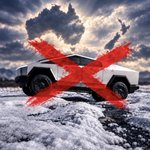
SOS 🇦🇺🇳🇿 Tesla has officially scrapped plans to bring the Cybertruck to Australia and New Zealand 😱
A Tesla spokesperson confirmed that the company will no longer move forward with plans to produce a version of the Cybertruck for either market.
Tesla is also notifying reservation holders that their orders will be canceled and their deposits fully refunded.
As a goodwill gesture, affected customers who order a new Model 3 or Model Y will receive a complimentary 12-month subscription to FSD (Supervised).
The decision comes after years of anticipation, especially after Tesla showcased the Cybertruck across Australia and New Zealand in 2024 and 2025, fueling hopes that the electric pickup would eventually make its way to both markets.
Tesla has not provided an official reason for the cancellation.

BOOM 🚨 Tesla just dropped its first-ever Robotaxi Safety Report—and the early data is looking impressive 🔥
Between January 22 and October 18, 2026, Tesla’s driverless fleet logged over 3.11 million miles (5.01 million km) across six U.S. cities without a single safety driver behind the wheel.
The standout takeaways:
🎖️ 0 injuries in collisions where the Robotaxi made first contact.
🎖️ 0 airbag deployments.
🎖️ 0 pedestrians or cyclists struck in first-contact incidents.
These weren't easy, low-stress miles under sunny skies, either. The fleet took on real-world edge cases:
✅ 862,000+ miles after dark
✅ 575,000+ miles in peak rush-hour gridlock
✅ 113,000+ miles in the pouring rain
Here’s where the numbers get really interesting.
Benchmarking against local police crash data across Austin, Dallas, and Houston, Tesla estimates average human drivers covering that exact same ~2.95 million miles would have chalked up:
⚠️ 9.1 injury crashes
⚠️ 4.1 crashes with airbag deployments
⚠️ 0.52 collisions involving pedestrians or cyclists
(A key caveat: Tesla’s pedestrian and injury metrics specifically track collisions where the Robotaxi initiated contact, whereas the human benchmark tallies crashes regardless of who made first contact. It’s not an exact apples-to-apples comparison, but the margin remains eye-opening.)
Meanwhile, the operational footprint is scaling fast:
✅ Austin leads the pack with over 2.1 million miles
✅ Dallas sits at 608,000+ miles, with Houston crossing 226,000 miles
✅ Driverless operations are already live in Orlando, Tampa, and Miami
✅ Next in line: Las Vegas, Phoenix, Jacksonville, and San Antonio
Beyond the headline numbers, the biggest win here might be transparency.
Tesla published its full safety methodology alongside downloadable, raw NHTSA collision filings, giving the public an unvarnished look at how the tech actually performs in the wild.
Granted, 3.11 million miles is still Chapter 1. Validating autonomy at true commercial scale will take tens of millions more miles across every season, weather pattern, and road type imaginable.
Still, the early benchmark is remarkably strong—and the road to mass driverless mobility just got a whole lot more exciting 🔥


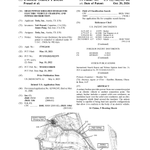
ENGINEERING NEWS 🚨 Tesla has patented a clever charging line: a solid metal bar that packs twice the conductor into the same space 🆒
When a Tesla fast charges, a torrent of power has to cross a short stretch of the car, from the charge port to the battery. That stretch must stay cool, stay electrically quiet, and squeeze past wheel wells and side panels, all at once.
The usual tool for this job is a high-voltage cable, and a cable is flexible by nature. It can't hold a route by itself, so clips and brackets have to pin it in place along the way, and it needs clearance around it to shed heat. It also needs shielding so its electrical noise doesn't bleed into the electronics around it.
As charging power climbs into the hundreds of kilowatts, the cable has to grow fatter, fighting for space the car doesn't have. Every terminal fastened onto a cable end adds another joint, and in a big cable assembly a failure can be hard to track down and costly to repair.
Tesla's answer is to stop treating this path as a cable and build it as one stiff, three-layer bar. It starts with a solid rod of aluminum or copper. In the version drawn, its cross section is about 200 square millimeters, which works out to a rod roughly 16 millimeters across.
Insulation such as cross-linked polyethylene, PVC, or silicone goes over the rod in a layer that can be half a millimeter to two millimeters thick. The insulated rod slides into a metal shield tube just wide enough to fit over it. Tesla then pushes the whole assembly through a compression die, which squeezes the tube down until it presses tightly against the insulation.
What comes out is no longer three loose parts but a single bar. Because each layer is formed tightly over the one beneath it, the layers brace one another as the bar bends, so the whole thing can be shaped in three dimensions without coming apart.
Like tubing in a pipe shop, the bar can be CNC bent along several axes, even at lengths beyond two meters. Each bend traces the car's interior, curving around a wheel well or slipping under the floor and side panels, hidden from the people inside. Tesla runs two of these bars side by side, one positive and one negative.
Once bent, the bar holds its shape on its own. In some versions it is stiff enough to be supported only at its two ends, carrying its own weight in between, which lets the clips and brackets a cable would need drop out of the design.
The ends get the same one-piece treatment. Instead of fastening a separate terminal onto the conductor, Tesla can forge the end of the rod itself into a flat tab and put a hole through it, so a bolt clamps it straight onto the charge inlet at one end and the battery connector at the other. The terminal and the conductor are the same piece of metal with no joint between them, which helps make the connection more reliable.
The outer tube pulls double duty. It blocks electromagnetic interference and guards the bar against damage, while a rigid ground conductor ties it to the vehicle body, helping the car's isolation-loss detection system keep watch over the high-voltage circuit.
Packing the metal this tightly pays off. For the same packaging volume, the bar can hold more than twice the conductor cross section of a cable and deliver twice or more the thermal performance. The design supports 350 kW charging at 400 volts while keeping the shield at or below 100°C, with fewer parts and less mass than a cable assembly.
Plenty of owners may already carry one. In the Model 3 and Model Y, the DC fast-charging link from the charge port to the high-voltage battery is a busbar rather than a cable, so a version of this design could be riding along in cars on the road today.
The same approach scales up. A set of these bars can wind through the battery enclosure of a semi truck, reaching out to battery connectors along the way.
So when that torrent of power slams into the charge port, it doesn’t have to wind through a cable pinned down by clips and brackets. It races straight to the battery through two bars of unbroken metal, bent to hug the body and stiff enough to hold that shape on their own. Between port and pack, the power never crosses a single joint.

MERGER NEWS 🚨 Reuters' latest exclusive provides some particularly important details regarding the merger between $TSLA and $SPCX 🔥
According to the report, SpaceX has approached Tesla in recent weeks. Both companies have since hired advisers, although negotiations remain at an early stage.
The structures under consideration include:
1/ SpaceX acquiring Tesla: Tesla shareholders would receive consideration for their shares, potentially including SpaceX stock.
2/ A merger under a new holding company: Both companies could become part of a newly established parent company.
3/ An all-stock transaction: Rather than paying cash, the companies could exchange shares to complete the deal.
These are possibilities being discussed, not agreed terms.


GOOD NEWS 🚨 @Tesla is reportedly investing ₩1.1 trillion (approximately $780 million) in Samsung Electro-Mechanics to secure a long-term supply of advanced AI chip substrates, according to an exclusive report from South Korea’s Maeil Business Newspaper 🔥
The investment will help fund a dedicated production line at Samsung Electro-Mechanics’ Sejong facility in South Korea.
In return, Tesla has reportedly secured a five-year supply agreement running from 2029 through 2033, giving it guaranteed access to critical components for its future AI processors.
These components, known as FC-BGA substrates, play a crucial role in advanced semiconductor packaging. They provide the dense electrical connections between powerful processors and the rest of the system, helping enable the increasingly complex designs required for high-performance AI computing.
For Tesla, they’re expected to support future AI chips used in autonomous vehicles and Optimus humanoid robots, where computing demands continue to grow.
And with only a handful of manufacturers capable of producing high-end FC-BGA substrates, securing dedicated production capacity could give Tesla an important supply-chain advantage as global demand for AI hardware accelerates.
Samsung Electro-Mechanics’ Sejong expansion has a total budget of ₩4.27 trillion, with construction expected to be completed by the end of 2027.
Equipment installation and testing will follow in the first half of 2028, with mass production targeted for the second half of 2028 and shipments to Tesla beginning in 2029.
The deal could also deepen Tesla’s existing semiconductor partnership with Samsung Electronics, which has already secured a major contract to manufacture Tesla’s next-generation AI6 chips.
The report suggests that Samsung Electro-Mechanics’ substrates could potentially be used in Tesla-designed AI chips manufactured by Samsung Electronics, bringing more of the semiconductor supply chain under one corporate umbrella.
The bigger picture: Tesla isn’t just designing the next generation of AI chips for autonomous driving and Optimus. It’s reportedly investing years in advance to secure the manufacturing capacity needed to bring those chips to life at scale. 🔥


Source: mk.co.kr/en/business/1218288…

GOOD NEWS 🇪🇺 Tesla posted massive numbers in Europe this September, completely blowing past broader auto industry averages 🔥
Official ACEA data shows Tesla registered 68,776 new vehicles across the EU, UK, and EFTA in September, marking a huge 72.5% jump year over year 🔥
To put that in perspective, Tesla added roughly 28,900 more registrations in a single month compared to around 39,870 units in September 2025 🔥
What really stands out is how sharply Tesla decoupled from the rest of the pack. Total European passenger car registrations rose 10.2% to 1.36 million units, meaning Tesla grew roughly seven times faster than the industry overall 🔥
Quarter-end delivery pushes are standard for Tesla, but pulling off a 70%+ surge at this scale shows serious momentum across Europe heading into Q4 🔥


MERGER UPDATE 🚨 The race against the clock is officially on 🔥
People familiar with the matter say that the special committees from Tesla and SpaceX are pushing to announce a deal in the first half of 2027, aiming to close the transaction before the current Trump administration's term ends 🔥
The combination would unite two companies with a joint market value of roughly $3.7 trillion, cementing Elon Musk's corporate grip before the political and financial climate turns less favorable.
With the midterm elections less than two weeks away, a Democratic takeover of either chamber of Congress could expose Elon and his businesses to congressional scrutiny while weakening the leverage of an administration heading into lame-duck territory.
Meanwhile, a relentless selloff in chipmakers and AI stocks threatens to erode the investor backing needed to pull off such an ambitious deal.
'Musk and his advisers undoubtedly want to capitalize on this window,' said Bill Birmingham, head of research at REX Financial. 'The timing is both favorable and critical.'
Neither SpaceX nor Tesla responded to requests for comment regarding the proposed timeline.


According to RBC Capital Markets, SpaceX could acquire Tesla in an all-stock deal valued at $480 per share, creating a combined company worth $3.74 trillion 🔥
Under the hypothetical buyout, $TSLA investors would receive roughly three SpaceX shares for each share they own, securing a 30% premium paid entirely in equity 🔥
That swap would give Tesla shareholders a 48% ownership stake in the merged giant, down from the 54% RBC calculated in July despite the offer price remaining unchanged. The ultimate payout and ratio would still hinge on prevailing market prices and finalized agreement terms 🔥


BOOM 🆘 2027 is shaping up to be the brilliant year that Tesla's AI ambitions become real 🔥
On the Q3 earnings call, Elon and the team put dates on almost everything enthusiasts have been waiting for, and the biggest one is about the car already sitting in your garage 👀
🚗 Unsupervised FSD could start reaching customer cars around Q2 2027.
Ashok Elluswamy said Cybercab and the Model Y Robotaxis already run the same software, which is coming to customers soon in the V15 release. Around Q2 2027, Tesla expects the first customer cars to join the Robotaxi fleet and drive fully autonomously within Tesla's geofences and fleet management system.
It starts inside Tesla's network rather than everywhere, but this is the moment owners have waited years for. The cars they already own are now on a real path to autonomy.
🤖 Tesla expects to start delivering Optimus to outside companies around the end of 2027.
Elon said the remaining AI, design, and durability challenges should be solved around the end of 2027, when deliveries to other companies begin. The first jobs will be dangerous, repetitive industrial work that runs around the clock, with home robots coming later.
Before then, Elon expects to release an Optimus video in a month or two showing tasks that aren't pre-programmed. Tesla also plans to put its AI5 chip into Optimus around April 2027, with about ten times the compute of AI4.
The hand is still the hardest part. Tesla is setting up an "Optimus Academy" where 10,000 to 20,000 bots will learn by practicing tasks, and it's building a second Optimus factory in Austin that can make far more robots than Fremont. CFO Vaibhav Taneja said Optimus costs are trending toward where Tesla expects Cybercab costs to land.
Elon sees Optimus's usefulness as dexterity, AI software, and AI chip multiplied together, all improving fast, with robots eventually helping build future robots. He expects humanoid robots to someday outnumber humans.
The video is the proof point to watch. Real, unscripted work would answer the biggest doubt about humanoid robots, and a robot that costs about as much to build as a Cybercab could work for a huge number of businesses.
🚕 Robotaxi is about to expand fast, with Dallas up next.
Ashok said Cybercab launches in Dallas next month, and Vaibhav said more cities should follow before the end of the year. Elon said the Austin Cybercab fleet has grown about ten times since launch. Service hours extend to 2am soon, with 24/7 operation, highways, and more weather conditions planned by the end of this year.
Cybercab's AI was trained mostly on Model 3 and Model Y data, so Tesla didn't need a big Cybercab fleet to get it ready. Vaibhav said other vehicle types will join the Robotaxi fleet over time, with the goal of covering every kind of ground transportation.
Lars Moravy said Cybercab has 50% fewer parts than any Tesla before it, and the real line capacity is well above the 125,000 a year in the deck, though Tesla is building only as fast as Robotaxi needs. The first Cybercabs should reach customers by the end of 2026, starting small, but Elon said most will stay Tesla-owned and be offered as transport as a service.
Elon expects Robotaxi revenue to become noticeable around Q2 2027 and a big deal by Q3 or Q4. Rides are already priced below rideshare in most markets, which Vaibhav said works because there's no driver and Tesla builds its own cars. Tesla isn't at its 30-cents-per-mile cost target yet but sees a clear path there.
Production isn't the bottleneck. Ashok said software sets the pace today, with regulators likely becoming the limit in early 2027. Elon predicts Tesla will eventually handle most passenger miles in any country that lets it operate freely.
🗺️ Tesla is building its own AI-powered maps and navigation.
Answering a shareholder question about speed limits, parking, and routing, Ashok said Tesla is replacing third-party maps with its own AI-based mapping and navigation. You'll be able to talk to it and ask for routes, and it will learn your preferences along with what the whole fleet learns. It starts with the beginning and end of trips in V15, then takes over navigation, parking, and destination handling over the next several months.
It targets exactly the everyday issues shareholders raised, and every FSD user will feel the difference.
🌍 Elon expects FSD (Supervised) approval across the EU by around Q1 2027.
Elon said EU-wide approval could come within a few months, and he'd be surprised if it takes past Q1 2027, though the timeline isn't Tesla's to control. Meanwhile, Tesla is offering benefits on certain cars in Europe to grow its fleet before approval, and it's working with regulators in China, where FSD already runs on some cars.
FSD has over 1.7 million paid customers worldwide, with half on subscriptions for the first time. Every new car in North America includes a free month, yet over 75% of buyers still signed up for paid FSD at delivery. Tesla called FSD its biggest demand driver, with showroom visitors now asking for FSD test drives, and it plans to share more FSD metrics, including revenue.
An analyst estimated FSD is nearing $1 billion in annual recurring revenue and could at least double each car's lifetime profit, and Vaibhav said his numbers were correct. Vaibhav added that competitor CEOs who took FSD drives in the US were blown away. Tesla has also published a Robotaxi safety report, and Ashok doesn't expect anyone to match unsupervised FSD for several years.
Paying on day one with a free month already included is about as strong a vote of confidence as a product can get.
🧠 Tesla's Terafab aims to make its first test chip around mid-2027.
The Austin research fab will start commissioning equipment in the first half of 2027, with a first test chip around May or June and a goal of useful chips at volume around Q3 2028. Most of the first equipment is already ordered.
Elon expects tens of billions in spending through early 2028 and likely over $100 billion long term, with the cost split between Tesla and SpaceX still being worked out. He called it potentially the most valuable building in the world and key to scaling Optimus by easing bottlenecks in memory, packaging, and logic chips.
Owning its chip supply would remove one of Tesla's biggest limits on building robots and cars, and the SpaceX cost split hints at shared infrastructure between the two companies.
🏭 Tesla is aiming for 5 million vehicles a year by around 2030.
Elon said demand is exceeding production by a wide margin, and Tesla has a good shot at about 5 million vehicles a year by 2030. That's more than 2.5 times Q3's annual pace of about 1.95 million. Factories hit record rates, Tesla applied for permits to expand Giga Berlin, and a new Semi factory has started in Reno.
Q3 also marked the first time Tesla topped 480,000 deliveries two quarters in a row. Based on preliminary data, Model Y was likely Europe's best-selling EV and South Korea's best-selling passenger car. And Elon called the Roadster unveiling arguably the coolest product demo ever.
🔋 Megapacks are almost sold out for 2027.
Elon said Megapacks are almost sold out for 2027, production is ramping as fast as possible, and margins should rise meaningfully. Vaibhav said data center demand is extreme and expects better pricing ahead. Q3 energy margin jumped to 33.1% from 20.4% in Q2, mainly from tariff refunds and a warranty adjustment with a cell supplier, and the refund money is going into US production capacity. On the possible "Megapod" product, Elon said it's still early, with more clarity around Q1 or Q2 2027.
Selling out a year ahead gives Tesla real pricing power, and data center demand isn't slowing down.
💵 Tesla lowered its 2026 capex guidance and lined up $30 billion in borrowing capacity.
Vaibhav said 2026 capex should land around $20 billion, down from roughly $25 billion previously, funded mainly by operating cash. Tesla also secured up to $30 billion in borrowing capacity but doesn't plan to draw on it this year. Opex will keep rising until new products are commercialized, and capex will grow in the coming years with Robotaxi vehicles, Optimus capacity, solar manufacturing, AI compute, and the chip fab. The team declined to discuss a possible SpaceX merger.
Spending less than planned while lining up a big credit line tells me Tesla is gearing up for a much bigger investment wave on its own terms.
🚀 Tesla has never looked better positioned.
For years, the question about Tesla's AI ambitions was when. This call answered with dates: unsupervised FSD on customer cars, Robotaxi revenue taking off, Optimus heading to customers, and Tesla's first homemade chip.
Add sold-out Megapacks, demand outrunning production, and a path to 5 million cars a year, and Tesla's foundation is stronger than ever.
As Elon put it, after years of grind, Tesla is now headed for a lot of fun and significant growth.


BOOM 🚨 Lars Moravy, Tesla's VP of Vehicle Engineering, just shut down claims that the Rocket variant of the new Roadster can never reach production 🔥
Pushing back against critics who insist a thruster-equipped sports car is pure fantasy, Lars made one thing clear: Tesla never shows off hardware they cannot build on the factory line 🆒
The engineering behind it really just comes down to simple math. Lars pointed out that the cold gas thruster system unleashes over 80 kN of raw thrust. Even under an extreme scenario where the car weighs a hefty 2,500 kg with the pressurized gas tanks and hardware packed inside, the thrusters still generate over triple the force needed to heave the vehicle off the tarmac 💨
When lift crushes curb weight by that wide of a margin, getting off the ground is a breeze. As Lars emphasized, having that huge cushion of surplus thrust over time leaves plenty of reserve air to stabilize, maneuver, and even pull off midair flips ⚡
This isn't staying locked up as a concept, either. Tesla is preparing to assemble the machine right at Giga Texas inside a dedicated facility dubbed Roadster Factory Texas (RFTX), proving this rocket-powered beast is an actual production program heading down the line 🚀

@tomwookieford - we don’t show things that we can’t do in production. The cold gas system can produce over 80kN of force. If everything weighs even a ridiculously high 2500 kg with the mass of gas plus the thruster system, the lift from the thrusters is >3x the mass of the vehicle. When you have more lift than mass, you can get off the ground, when it’s that much more over time you have spare air to flip and manuever - simple math really….
AI grabbed all the headlines, but the rest of $TSLA's Q3 deck tells a second story that is just as exciting: the core businesses funding all that AI is only getting stronger 🔥
💳 Tesla's services business just posted record profits.
Services and other revenue hit $4.6 billion, jumping 33% year over year. Gross profit reached an all-time high of $734 million at a 15.9% margin. Powered by charging, insurance, and parts sales, that is roughly double the $366 million Tesla brought in a year ago.
Every Tesla on the road keeps generating cash long after it leaves the lot. As the fleet expands, this high-margin business scales right alongside it.
💰 Tesla's core auto business just got a lot more profitable.
Automotive gross margin, excluding regulatory credits, surged to 18.1%, up from 16.3% in Q2 and 15.4% a year ago. By Tesla's own numbers, the average cost per vehicle dropped to around $34,500, shaving off roughly $1,100 compared to both last quarter and last year.
Here is the kicker. Average selling prices actually went down, yet margins still climbed. That means Tesla is cutting manufacturing costs faster than it is lowering prices. And with regulatory credits dipping to just $113 million, this margin boost is pure operational muscle.
📈 Demand is running much hotter than expected.
Tesla closed out Q3 with its largest passenger vehicle backlog in four years. The company set delivery records in Canada, Australia, Japan, and Taiwan, hit peak production at Giga Berlin, and trimmed inventory down to just 11 days of supply compared to 15 in Q2.
Right now, Tesla says battery supply, not buyer demand, is the main bottleneck holding back volume. In the auto world, that is the exact kind of problem you want to have.
🔋 Energy revenue dipped, but the underlying business is firing on all cylinders.
Energy revenue slipped 16% year over year, partly due to tariff-related customer refunds. Look under the hood, however, and Tesla is seeing its highest order rate and backlog ever. Megafactory Texas has kicked off production with 50 GWh of planned capacity, and the first Megapacks built entirely with Tesla's in-house LFP cells have already shipped out of Nevada. Even better, energy gross margins climbed to roughly 33%, up from about 31% a year ago.
Tesla links this surging demand directly to power-hungry data centers. Plus, manufacturing LFP cells stateside will help insulate the business from tariff headaches down the road.
⚡ The Supercharger network is getting faster and cheaper to build.
Tesla added over 2,100 net new stalls in Q3, expanding the network by 14% year over year, while its Supercharger for Business program blew past 600 stalls. Tesla also deployed its first Accordion Supercharger, which arrives pre-assembled from the factory to slash installation costs.
Lower build costs mean faster network expansion, and that is a massive win for every Tesla driver on the road.
🚛 Tesla Semi is officially in volume production in Nevada.
The top-tier rig delivers 500 miles of range hauling a full 82,000 lb load while burning just 1.7 kWh per mile. According to Tesla, that takes about a third of the energy a comparable diesel truck needs to pull the same weight.
The Nevada line is built for 25,000 units of annual capacity, and Tesla just rolled out its first pre-assembled Megacharger to keep those trucks moving.
Fuel and energy represent one of the biggest per-mile expenses in freight, so that massive efficiency gain goes straight to fleet operators' bottom lines.
🏎️ Tesla is calling the new Roadster "the best of the last human-driven cars."
Following its October 15 unveiling, the Next-Gen Roadster is officially listed in design development, with a factory location still under wraps.
That tagline is a bold statement on where Tesla sees the future of driving headed.
🚀 Tesla's core business is gaining momentum while it builds the future.
Margins are climbing, demand is outpacing supply, and the Semi, Megapack, services, and Supercharger divisions are all hitting their stride.
That gives Tesla a rock-solid foundation to bankroll its massive AI ambitions, and Q3 proves that foundation is only getting stronger.


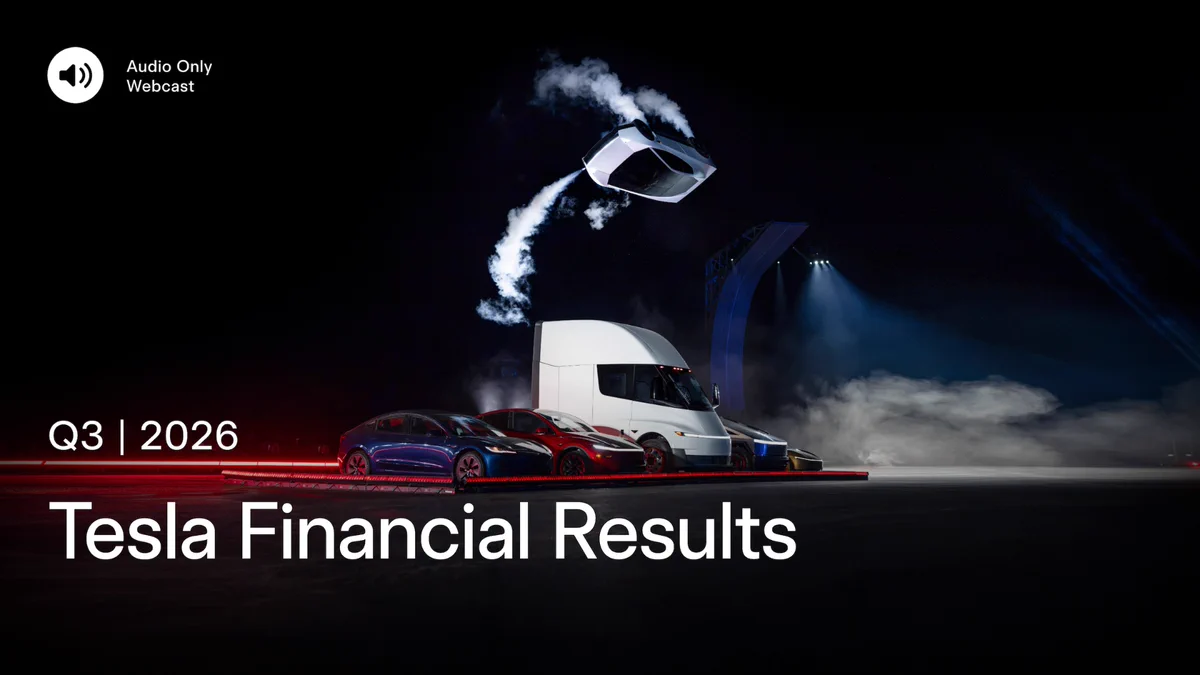
BOOOM 🚨 $TSLA's Q3 2026 update is out. Non-GAAP EPS came in at $0.48, ahead of the roughly $0.43 to $0.45 analysts expected 🔥
But the most revealing parts of the deck have little to do with EPS. They show a company steadily shifting its weight from cars to robots, robotaxis, and AI 🔥
🧠 FSD is now on more than three out of four new cars in North America.
Over 75% of new North American deliveries included FSD in Q3, up nearly 20 percentage points from Q2. Active FSD subscriptions reached 1.74 million, up from 1.48 million last quarter and 1.04 million a year ago. That count includes both upfront purchases and monthly subscriptions, and it leaves out free trials.
Europe is opening up too. Croatia, Slovenia, the Czech Republic, and Slovakia have approved FSD (Supervised) since the end of Q2, bringing the total to nine EU countries. More than 100,000 European customers have already driven over 160 million kilometers on it, or nearly 100 million miles.
Tesla says FSD subscriptions helped lift revenue and that FSD is driving demand wherever it's available. Put those together, and software is becoming a real revenue stream that can grow across the cars already on the road, not just with new sales. The outlook points the same way, with Tesla expecting hardware profits to be joined by faster growth in SI, software, and fleet-based profits.
🤖 Optimus has moved from prototypes to a real production line.
Optimus production has started on Tesla's high-volume lines in Fremont. The bots coming off that line are the first production-quality Optimus units Tesla has ever built, and Tesla says it has proven the current process is ready for a commercial product.
The capacity table lists Fremont as "Early Ramp" and shows a second Optimus site already under construction in Texas. Tesla hasn't shared a capacity number for either one yet.
This is the jump from prototypes to manufactured units, and that's the step that matters most for bringing costs down. Building a second site before the first one has even ramped suggests Tesla expects demand well beyond what Fremont can handle. The missing capacity figure is a reminder that the ramp is still early.
🚕 Cybercab is now giving rides in Austin, and unsupervised miles are growing fast.
Tesla started Robotaxi rides with Cybercab in Austin on September 3. By the end of the quarter, the Robotaxi service had logged nearly 2 million cumulative unsupervised miles, eight times the total from three months earlier. Austin service now runs from 6am to midnight.
Texas now shows more than 125,000 units of installed annual Cybercab capacity with "Production" status. Tesla points out that installed capacity isn't the same as the current production rate, and it says battery supply is still the main constraint on vehicle volumes. It's ramping 4680 cells specifically to support Cybercab and Semi.
There's also a telling line in the outlook. Tesla says deliveries will depend partly on "allocation decisions between sale to customers and use for our owned and operated fleet." In plain English, Tesla is openly weighing how many cars to keep for its own network instead of selling them.
With the tooling listed as in production, batteries look like what will set the pace for Cybercab. Inside the car, riders get Grok with voice access to their inbox, calendar, files, and tasks, and Tesla pitches the cabin as "a second living room." Tesla is clearly thinking about what riders do during the trip, not just the trip itself.
⚡ Tesla plans to grow its AI training compute by about 50% in a single quarter.
Cortex 1 and Cortex 2 in Texas are rated at more than 105 MW and 120 MW, and Tesla has another 40 MW of compute on top of that, for roughly 265 MW in total. The goal is 400 MW by the end of the year, and Tesla says this compute trains autonomy software for both its vehicles and its humanoid robots.
Tesla is also building its own chip fab in Austin and plans to start commissioning equipment there in 2027. It hasn't said yet which chips the fab will make.
All of this shows up in the spending. R&D rose to $2.76 billion, up 69% from a year ago, and capex hit $4.73 billion, more than double last year's $2.25 billion. Even so, free cash flow stayed positive at $1.5 billion, and cash grew to $45.4 billion.
Because one compute pool trains both FSD and Optimus, progress on one can feed the other. A chip fab is one of the boldest vertical integration moves Tesla has made, and staying cash-positive while building it makes that bet much easier to fund.
🔭 Tesla is building every piece of its next chapter at the same time.
Robots are coming off a production line, driverless Cybercabs are carrying riders, FSD is turning into recurring software revenue, and the compute behind all of it is about to grow by half. Each piece makes the others stronger, and together they point to a Tesla whose future depends less on how many cars it sells and more on what its AI can do.
