

The USDA Forest Service Rocky Mountain Research Station maintains 15 research labs and 14 experimental forests & ranges in 12 states of the U.S. Interior West.
Fort Collins, Colorado, USA
Joined April 2011
- Tweets3.9K
- Following464
- Followers4.9K
- Likes1.1K
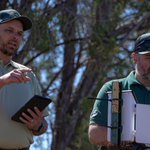




“Water travels over 150 miles from northern & eastern Arizona, down the Salt & Verde rivers into a system of seven reservoirs that SRP operates. These reservoirs hold the long-term water supplies that we use in the Phoenix metro area,” ~ Colette Pansini, Salt River Project.(1/5)

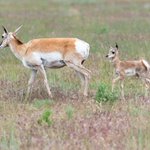
One active project to restore grassland corridors used by pronghorn is expected to have the added benefits of reducing the risk of catastrophic fire and protecting the state’s important surface water supplies. (4/5)

Visit our multimedia story here on these projects to protect water, land, and wildlife in the Southwest: fs.usda.gov/about-agency/fea… (5/5)

Rocky Mountain Research Station retweeted

Pronghorn—also called speed goats or antelope—migrate through open grasslands each year. In northern Arizona, juniper is blocking their paths, so @azgfd, a thinning contractor, and the Forest Service are working together to restore those grasslands. fs.usda.gov/about-agency/fea…
“You don’t think about it until you turn the faucet and [water] doesn’t show up. And at some point, with the growth that we’re seeing, sooner or later we’re going to run out if we don’t start learning how to manage this as a renewable resource.” youtube.com/watch?v=3jSO4PlU…
Rocky Mountain Research Station retweeted
Research from Forest Service scientists can help land managers make decisions that support more resilient and healthy forests that are more likely to withstand wildfires. (Forest Service video by Karina Branson)
There’s a lot of science behind that Smokey sign! Click our video below to learn more. Have a safe weekend, friends.
youtube.com/watch?v=tycK_bto…
“No matter the month or the year, we have to be preparing these forests for the next fire. We do it step by step by step. And the latest science helps guide us.”
fs.usda.gov/about-agency/fea…

Our scientists assist land managers all across the nation to sustain the health, diversity, and productivity of our National Forests & Grasslands. See below to learn about our collaboration to support post-fire restoration at the @HumboldtToiyabe.

While fire provides many benefits to the landscape, the resulting smoke can pose a serious challenge to public health. (1/2)

Be smoke ready – when the air quality is poor, stay indoors, keep doors & windows closed. Avoid smoking, burning candles and wood, using gas stoves or running a vacuum, which all contribute to indoor air pollution. Learn more at: airnow.gov/wildfires/be-smok….

ALT Smoke Alert U.S. Forest Service.
Read our Smoke 101 to discover the key differences between smoke from wildfire vs. prescribed fire, and learn how land managers address the challenges from smoke (2/2): research.fs.usda.gov/downloa…
Rocky Mountain Research Station retweeted
The Forest Service joins family members, friends, colleagues and the entire wildland fire community in mourning the loss of three wildland firefighters who died Saturday, June 27, as part of an interagency response to the Knowles and Gore fires along the Colorado-Utah border.

This is true. It's science😉 Enjoy your weekend, and go ahead and pet that dog.
Exploring the great outdoors is even better with a 4-legged friend. Keep your adventures fun & safe with these tips:
• Keep dogs leashed in developed areas like trailheads & campgrounds.
• Get pets ready with conditioning before long hikes.
• Bring plenty of water & snacks.

ALT Dog in front of lake and mountain. (Photo by Michaela Dunnam/Share the Experience.)
Across the western US, severe wildfires are leaving treeless landscapes. Without natural seed sources, reforestation through tree planting is vital for forest recovery. Our researchers have been studying how best to make sure the new trees can survive and thrive. (1/2)

Scientists studied the conditions that improve seedling survival after fire, then analyzed planting, timing, species, & seed sources. These findings help ensure seedlings planted after fire survive and contribute to healthy future forests for our nation. research.fs.usda.gov/treesea…
Wildfire management is constantly evolving. For 2 decades, the Wildfire Risk Management Science Team has developed decision-support tools that help fire managers make informed decisions to protect communities, bridging science and firefighting. (1/3)

Their tools cover all aspects of wildfire management—from pre-fire planning to real-time response, helping firefighters strategize effectively & reduce risks. Used by complex incident management teams nationwide, their tools are incorporated into federal wildfire strategies.(2/3)
The team collaborates directly with wildfire managers, ensuring their tools are tested and refined in real-world conditions. Their partnerships with top incident management teams drive innovation. Learn more about this groundbreaking work: research.fs.usda.gov/treesea…