

VLX turns carbon reductions into trusted on-chain data and rewards.
Joined September 2026
- Tweets27
- Following32
- Followers14.7K
- Likes2




Pinned Tweet
🚀 The Value X Chain Open Event is live!
🏆 $1,000 TOTAL REWARDS
📅 Sep 21–Oct 6, 2026
👉 Join Now: gleam.io/66lck/value-x-chain…
#ValueXChain #ValueX #gleam #Evnet

More Than a Campaign
Environmental campaigns play an important role in drawing attention to urgent problems. But every campaign ends, and what remains afterward has to be designed separately.
Value X is building a structure that keeps running, not a one-time event. Actions are measured, records accumulate, and verified records lead to rewards. The process works by the same rules, no matter who organizes it or when.
New services do not create new coins. They connect to the same chain as modules. A campaign can start an action. Infrastructure is what keeps it going.
#ValueX #VLX #CarbonEconomy #MRV #Web3


Action Lasts When It Is Recognized
Plenty of people start taking environmental action. The hard part is keeping it going. If an action leaves no record and nothing comes back, stopping is the natural outcome.
A reward is not money paid to buy behavior. It is a signal: your action happened, and it was confirmed.
On Value X, only actions that pass verification are recorded as Carbon Points. That means rewards go to the people who actually acted, not to whoever claims the most. It is also why daily caps and rules exist.
An action that is confirmed and recognized becomes a reason to do it again. That is why rewards matter.
#ValueX #VLX #CarbonEconomy #MRV #Web3

Evidence That Builds Every Day
For many companies, reporting reductions is a reporting-season job. Files are gathered from each site, merged into spreadsheets, and turned into an annual report over several weeks. Even then, the numbers are hard to verify from the outside.
Value X aims to turn that evidence into a record that builds every day. Measurement devices are placed where it matters, from equipment-level power metering in plants to building energy management systems and resource recovery sites, and the data they sign is recorded on-chain.
In the enterprise workspace, teams can monitor each site and piece of equipment in real time and generate an evidence report for any period. Every figure in that report carries an on-chain transaction hash.
We will start with a pilot at a small number of partner sites, comparing direct measurements with existing estimation methods. The enterprise workspace is planned for Phase 2, targeted for 2027.
#ValueX #VLX #CarbonEconomy #MRV #Web3

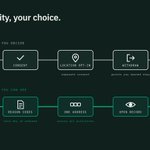
Your Activity, Your Choice
Taking part should not mean handing your data over. It should be something you choose.
On Value X, location data is collected only with separate consent. You can withdraw that consent at any time, and the points you have already earned stay with you.
If a reward is refused, you are told why. You are never left guessing about what did not pass. All of your activity connects to a single wallet address, and the points you earn sit on a record anyone can check.
Your activity is not a number in someone else's database. It is a record you can see, and a choice you make.
#ValueX #VLX #CarbonEconomy #MRV #Web3

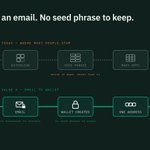
Start With an Email
On day one, we named complex wallets as one reason blockchain has not reached everyday use. Install an extension, write down a seed phrase, move between apps: this is where most people stop.
AetherFlow, the Value X wallet app, is designed to remove those steps. Verify your email in the app, and your wallet is created. There is no extension to install and no seed phrase for you to store.
Logging in and approving a transaction are separate steps. One wallet address connects all of your activity, and balances on Value X Chain and several external networks appear on a single screen.
Technology that is hard to start with cannot become part of daily life. Getting started should take nothing more than an email.
#ValueX #VLX #CarbonEconomy #MRV #Web3

Everyday Actions, Recorded Honestly
Last week, we looked at how data is measured and verified. This week, we look at how people take part in that structure.
Value X starts with two kinds of everyday action: getting around on foot or by public transit, and returning recyclables.
Travel is calculated by applying a formula to trip segments that pass the verification rules. Because that is an estimate rather than a direct measurement, Value X labels these records Tier C. Recyclables are planned to work differently: at a designated collection point, vision AI identifies the material and the terminal confirms receipt. Because the return is physically confirmed, those records are labeled Tier B.
Not every record carries the same weight, and Value X does not pretend otherwise. What is estimated is labeled as estimated. What is confirmed is labeled as confirmed.
Travel rewards are set to open in Phase 2 of our roadmap.
#ValueX #VLX #CarbonEconomy #MRV #Web3

Every Point Traces Back to Its Source
Look at an annual reduction figure in a report and try to follow it back to where it came from. Once it has passed through internal spreadsheets, the original measurements are out of sight.
Value X is designed so that every Carbon Point can be followed back: from the point to the commit transaction that created it, from there to the signed data, and from the data to the device that produced it.
Each point permanently keeps its source grade, methodology version, measurement period, and commit hash. Instead of asking you to trust a number, it shows you the path the number took.
The MRV structure introduced this week opens in stages, following our roadmap. Next week, we look at how individuals and companies take part in it.
#ValueX #VLX #CarbonEconomy #MRV #Web3

What a Carbon Point Is, and Is Not
Reductions that pass verification are recorded as Carbon Points. It is important to be precise about what that name means.
A Carbon Point is not a nationally certified emission allowance. It is not an estimate, and it is not anyone's claim. It is a unit that records a reduction that has passed Value X's rules.
Every point records which methodology, and which version of it, was used to calculate it. If a methodology changes, points already issued are not recalculated. Each point also carries a source grade that shows how trustworthy its data is, designed with reference to ISO 14064.
Linking with recognized schemes such as Verra and Gold Standard is a medium- to long-term goal. We will build our own ledger first, open our methodology to external review, and then take it step by step.
#ValueX #VLX #CarbonEconomy #MRV #Web3

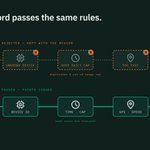
Every Record Passes the Same Rules
Where there are rewards, there will be attempts to game them. That is why what passes and what gets stopped has to be clear.
On Value X, every piece of data is designed to be checked against the same rules: Is the device registered? Is it within the allowed time window and daily cap? Are GPS and speed consistent? Is the value physically plausible for the equipment? Has this activity already been recorded?
If a walk is recorded at the speed of a car, it does not pass. One verified activity earns one point, never more.
Data that fails is not deleted. It is kept with the reason it was rejected. The same rules apply to everyone, and the results can be checked.
#ValueX #VLX #CarbonEconomy #MRV #Web3

🌱 Value X Chain Open Event 2nd is live
💰 Total prize pool: $1,000
🗓 Period: Oct 2 – Oct 11, 2026
🏆 Referral Leaderboard 1st: $250
🎁 Raffle: 150 winners × $5
Complete the tasks, then invite friends with your referral link 👇
gleam.io/53BEO/value-x-chain…

🎉 Value X Chain Open Event 2nd — Winners!
The 2nd Open Event (Oct 2–11) has ended.
Thanks to everyone who took part! 💚
📋 Results: gleam.io/53BEO/value-x-chain…
💰 Prize: $1,000
👥 Winners: 151 (Referral 1 + Raffle 150)
#gleam #event #VLX
🤖 Made with AI

Proof On-Chain, Privacy Off-Chain
When people hear "recorded on a blockchain," they may worry that everything becomes public, down to when and where they walked. Value X does not work that way.
Only two things go on Value X Chain: the hash of the signed data, and a de-identified reference key. A hash works like a fingerprint of the data. It shows whether the original has changed, but the original cannot be rebuilt from it.
Original data and personal information are stored separately, off-chain. Personal information is deleted when its retention period ends or when deletion is requested.
Anyone can check that a record is genuine. No one can tell whose record it is. Verifiable, but not identifiable.
#ValueX #VLX #CarbonEconomy #MRV #Web3

Signed Where It Happens
Trust in data is decided the moment it is created. If a reading can change anywhere along the way, copied into a spreadsheet or uploaded as a file, no amount of careful storage later can prove the original was right.
Value X is designed to sign data where it is generated. When a sensor or app records an activity, it captures the time, location, and device ID, and a secure chip in the device signs that data.
The signed data is sent encrypted. If the connection drops, it is held on the device and sent once the connection returns.
If anyone changes even a single value afterward, the signature no longer matches and the data fails verification. It does not rely on trusting people. It relies on checking signatures.
#ValueX #VLX #CarbonEconomy #MRV #Web3

From Measurement to Reward, in Seven Steps
Last week, we looked at why today's structure falls short. This week, we look at how Value X is designed to close the gap.
Value X's MRV (Measurement, Reporting and Verification) is designed as seven steps. The first three happen at the source: a device or app collects the activity, signs it where it is generated, and sends it encrypted.
The next four happen on Value X Chain: the data's hash is committed, published rules verify it, points are issued only for data that passes, and every point can be audited by anyone.
Collect, sign, send, commit, verify, issue, audit. At no step does anyone copy numbers by hand.
Over the next few days, we will look at each step in turn.
#ValueX #VLX #CarbonEconomy #MRV #Web3

Why Now?
Until recently, reduction was a choice. It was good to do, but not proving it rarely carried a cost.
That changed on January 1, 2026, when the EU Carbon Border Adjustment Mechanism (CBAM) entered its definitive period. Importing covered goods such as steel, aluminium, and cement into the EU now means declaring the emissions embedded in them. From 2027, importers must buy certificates to cover those emissions.
Without verified actual data, default values set by the EU apply, and those usually lead to higher costs. Reduction now has to be something you can prove, not just something you claim.
Value X aims to make that proof a record that builds every day, not a document assembled each reporting season. Measured data is recorded on Value X Chain, and that record can be presented as evidence when it is needed.
Over the coming days, we will walk through how that structure works, step by step, from measurement to reward.
#ValueX #VLX #CarbonEconomy #MRV #Web3

What Do the People Who Reduce Actually Receive?
The market for reduction records is still opaque. Standards vary, making it difficult to compare one reduction with another, and many deals are negotiated privately, so prices are never disclosed. For anyone outside the market, it is hard to know what a reduction is worth.
At the very end of this structure are the people who actually create the reductions: those who walk, take public transit, and return what can be reused every day. In today's structure, their actions rarely come back to them as rewards.
Value X aims to build a structure where value returns to the people who create the reduction. Reductions that pass verification are recorded as Carbon Points, and those records can be checked by anyone.
Next week, we will walk through how this structure works, step by step, from measurement to reward.
#ValueX #VLX #CarbonEconomy #MRV #Web3

Why Does Verification Take So Long?
To have a reduction formally recognized, it has to go through verification. Documents must be prepared, external reviewers engaged, and approvals awaited. The process takes significant time and cost.
That burden is not shared equally. Large projects can absorb the cost, but for small-scale reductions and everyday individual action, the cost of verification can easily exceed the value of the reduction itself. As a result, countless small reductions disappear without ever being recorded.
Value X aims to change how verification works. Instead of people reviewing documents, rules published on-chain check the data. Only data that passes defined conditions, such as device identity, time windows, and consistency of location and speed, moves to the next step.
When verification becomes lighter, even small reductions can be recorded.
#ValueX #VLX #CarbonEconomy #MRV #Web3

Who Can Change the Record?
Measuring data is not where trust ends. Where and how that data is stored matters just as much.
Most reduction records today sit in centralized databases managed by a single organization or company. Administrators can edit them, and from the outside it is difficult to see when or how a record was changed. Even without any intent to manipulate, the inability to check weakens trust.
Value X sets a different principle for records. The hash of signed data is recorded on Value X Chain, while original data and personal information stay off-chain. Records are never edited. When a correction is needed, it is added as a new record.
A record no one can quietly change. That is where trust begins.
#ValueX #VLX #CarbonEconomy #MRV #Web3

🎉 Value X Chain Open Event — Winners Announced
Thank you to everyone who joined our first community event 💚
Check the results here 👇
gleam.io/66lck/value-x-chain…
🌱 The 2nd Event is live now
gleam.io/53BEO/value-x-chain…

How Is Reduction Being Calculated?
Many reduction records today begin not with measured values, but with estimates. Someone manually enters usage data, then multiplies it by an industry or regional average emission factor to calculate the reduction.
This approach is convenient, but its limits are clear. Errors can enter during manual entry, and averages cannot reflect what actually happens at a specific site. The same action can produce different results depending on who calculates it and how.
A number that starts as an estimate stays an estimate, no matter how carefully it is reported.
Value X aims to change the starting point: not numbers copied by hand, but data collected and signed directly by devices and apps at the source.
What's measured, gets recorded.
#ValueX #VLX #CarbonEconomy #MRV #Web3
