

Researcher
India
Joined February 2023
- Tweets376
- Following443
- Followers80
- Likes10K



If you deploy medical VLMs, most of your latency budget goes to text no clinician will read.
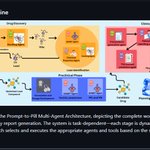
MedJev drops generation entirely. It takes Qwen3.5-4B, deletes language layers 24–31 of 32, and scores every candidate diagnosis in a single forward pass, keeping all visual tokens so small lesions don't get pruned.
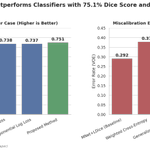
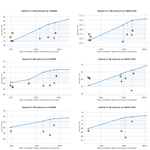
Dermoscopy, chest X-rays, multi-image cases, biomedical figures: average accuracy 61.1% → 69.1%, latency 685 → 113 ms per request on one H20.
Checkpoint on Hugging Face, MIT-licensed repo:
github.com/zfkarl/MedJev
arxiv.org/abs/2611.20992
#MedicalAI #VisionLanguage #MedicalImaging

1
42
Insect-sized robots have flown since 2013. Most of them needed a ring of motion-capture cameras to know where they were.
MIT and Cornell engineers packed the senses into the robot itself: an IMU, a time-of-flight altitude sensor, an optical-flow sensor and a microcontroller, 244 mg in total on a 1.29 g flyer.
It hovered and traced paths with centimeter-scale accuracy. Then a joystick operator steered it out of the camera arena, around obstacles, and onto a sunflower.
Power still arrives by wire.
Science Robotics.
arxiv.org/abs/2602.08328
#Robotics #MicroRobots #EmbeddedSystems

600 CPU-years of searching missed this pulsar. A new method found it in 10 CPU-hours.
PSR J1622−7204 spins 261 times a second, buried in 15 years of Fermi gamma-ray data. Fermi catches so few of its photons that you have to guess spin rate, spin-down and sky position all at once.
Weizmann and Max Planck researchers recast that 4D search as a shortest-vector problem on a lattice, then reused solvers built to attack post-quantum encryption.
Physical Review Letters, Nov 19.
#Astrophysics #Pulsars #Algorithms
2
210

A learned lossless codec, one Kodak photo: 5.4 seconds to decode.
FMT, same RTX 4090, same photo: 53.5 ms, and a file about 9% smaller.
Learned codecs have produced smaller files than classical ones for years. Archives and training sets still use classical formats anyway, because nobody waits seconds to open an image.
A new paper from ITMO University argues that time was mostly spent waiting, not computing. Redesign the decode order and small networks reach learned-codec file sizes at near-classical speed.
arxiv.org/abs/2611.23108
#ImageCompression #DeepLearning #GPU

2
117
I’m looking to dive deep into RLHF, World Models, JEPA, and Robotics.
I’m excited to explore these areas, understand the fundamentals, and eventually work on interesting research problems.
If you have any recommendations for where to start, papers to read, courses to follow, or people to learn from, I’d love to hear them!
1
2
396
Vansh Bhavsar retweeted

Just 34 minutes before its cameras were turned off in 1990, Voyager 1 captured this iconic view of Earth – a pale blue dot in the vastness of space.
Today, Voyager 1 is one light-day away from Earth. A little piece of our planet journeying through interstellar space. 🌎💙

ALT Earth is seen in the vastness of space as a single, bright blue dot in the middle of a fuzzy, white sun ray. Other rays of light are scattered across the image. Credit: NASA
Google researchers open-sourced a pipeline that turns an idea note and an experiment log into a full LaTeX paper.
PaperOrchestra splits the job across 5 agents: outline, plots, literature review, section writing, and a refiner that revises against simulated peer review.
In blind side-by-side tests by 11 AI researchers, it beat AI Scientist-v2 and a single-agent baseline on literature review by 50–68 points of win-rate margin.
The original human-written papers still came out ahead.
~4k stars on github.
github.com/google-research/p…
#AIAgents #OpenSource #AcademicWriting

Robot learning has been starved of model size, not just data.
ScaleVLA bolts a frozen 552B DeepSeek-V4.1-Flash onto a trainable action diffusion transformer, then runs the same recipe across six backbones.
Give the giant 10 demos per task and it beats a 2B backbone trained on 50 (87.8% vs 85.6%, LIBERO-Goal).
Under LIBERO-PRO perturbations it holds 45.1%. No smaller backbone tops 31.3%.
Tsinghua, PKU, SJTU and Galbot.
arxiv.org/abs/2611.21607
#Robotics #VLA #EmbodiedAI

2
177

A team trained AI to spot disease in a person's breath. Then they asked their data a stranger question: what day was this sample taken?
A model got it right to within 2–3 days, from raw sensor readings alone.
That's sensor drift. The eNose's metal-oxide sensors slowly change with use, and a classifier can learn the calendar instead of the patient. Test on unseen weeks instead of random splits and all 10 methods get worse, losing 0.05–0.12 AUC on average.
Breath-Dx: 1,234 patients, 9 diagnostic groups, data and code public.
arxiv.org/abs/2611.15348
#Breathomics #MedicalAI #TimeSeries

3
184
Here's how you find a star that died without exploding: you don't look for its light. You weigh what it left behind.
Every merger LIGO-Virgo-KAGRA hears encodes the masses of both black holes. Stack the catalog and a pattern pops out: a big pile-up near 10 suns, then the merger rate falls about 100x by 15 suns.
A Caltech-led team says that pile-up fits a separate population: stars whose cores collapsed straight into black holes, with no supernova at all.
Physical Review D, Nov 10.
arxiv.org/abs/2604.01420
#Astrophysics #GravitationalWaves #BlackHoles
1
78

Can a frontier model get smarter and cheaper in the same release?
OpenAI says GPT-6.2 Astra does. On Terminal-Bench-Science, which tests real research workflows run in a terminal, it beats GPT-6 Astra by 9 points at under a third of the cost.
API prices fall 20%: $8 in, $40 out per million tokens, and cached input drops to $0.40.
OpenAI calls it the best model in the world for scientists. That claim rests mostly on benchmarks OpenAI picked, so independent evals should decide whether it earns a spot in your research pipeline.
#OpenAI #LLMs #AIforScience
1
102
Procedural generation is the most underrated compression scheme in computing, and a 96 KB HTML file just made the case.
Abyssal Garden is an underwater world you swim through in the browser: sunbeams, manta rays, a purple grotto. There are no images, 3D models or sound files in it, and no game engine either. It talks to WebGPU directly.
On an RTX 5070 Ti it runs at ~180 fps at 2560×1440. A budget Galaxy A16 phone still gets ~20 fps on Low.
~1.9k stars , MIT licensed.
github.com/Noniv/abyssal-gar…
#WebGPU #ProceduralGeneration #GraphicsProgramming

Until now, every near-quantum-limited amplifier working at millikelvin temperatures was superconducting. That just changed.
OIST built a maser around a pink diamond: microwave-pumped nitrogen spins boost faint qubit signals more than 1,000x, adding only ~2.55 quanta of noise above the quantum limit.
It also works inside strong magnetic fields, which spin-qubit chips need and which trouble superconducting amplifiers.
#QuantumComputing #Physics #Diamond
1
117
Human reviewers pull 8.4% of their criticisms from a paper's appendix.
Frontier LLM reviewers: 62%.
A new study had GPT-6 and Claude 5.5 models review ICLR 2027 submissions, then mapped each weakness to the section it came from. The AI critiques keep going past page 30 of the appendix.
They skew toward detail audits: more seeds, significance tests, confidence intervals. Rarely the core idea.
Same pattern via API, web chat or coding agent, which points at the models, not the interface.
arxiv.org/abs/2611.17811
#PeerReview #LLMs #AcademicTwitter

If you build agents on frontier APIs, the number to watch is shifting from price per token to cost per finished task.
Alibaba's new Qwen4-Max claims ~60% lower average cost per task than Qwen3.8-Max on Work360, its in-house benchmark spanning 721 professional fields, while using 35% fewer tokens at High effort.
Under the hood: a 2.4T-parameter MoE that activates ~71B per token, with a 1M-token context and native vision.
Caveat: these are self-reported, and this flagship ships closed-weight. Smaller open Qwen4 models are promised "soon".
#Qwen #LLM #AIAgents
1
36
Last SOTA: 128 GPUs for 7 days.
SuperMimic: 1 GPU for 3 hours.
Same job: one humanoid policy that tracks 129,514 human motions. SuperMimic (UC Berkeley) beats the SONIC baseline's return with >1000x fewer GPU-hours.
The trick: learn one differentiable world model, then train the policy by backpropagating through short imagined rollouts.
Failed motions (SONIC → SuperMimic): 179 → 25. With 2 GPUs for 9.8h: 0.
The same policy runs on a real Unitree G1. Apache-2.0, ~1.6k stars in 6 days.
github.com/HybridRobotics/su…
#Robotics #ReinforcementLearning #OpenSource #GitHub

