

https://xitter.cf/t.co/abkb8IjPSH - the AI search platform. Vectors/tensors, full-text, structured data; Ranking and ML model inference at scale.
Joined September 2017
- Tweets599
- Following3
- Followers3.6K
- Likes889


How Etsy replaced Solr and several other retrieval engines with one Vespa.ai-based system
Gregg Donovan shared the lessons at Vespa.ai Live London:
🔹 One platform, so teams focus on better search
🔹 Partial updates keep product data fresh, no full reindex
🔹 Lightweight models + deeper reranking on content nodes
🔹 Reproducible evaluation as the base for automated research
Watch the full talk 👇
youtu.be/INbNwOqoZFk

Building the foundations for AI search
At Vespa.ai Live London, Cem Ünsal of Walmart drew on roles at Yahoo, Optum, and Walmart to discuss the data, relevance, and organizational challenges behind effective enterprise search.
His lessons go well beyond choosing technology:
▪️ Build trust with rapid prototypes and blind, side-by-side relevance evaluations.
▪️ Bring engineers, data scientists, and product teams together.
▪️ Measure relevance, latency, and cost.
▪️ Invest in the skills and support needed for adoption.
These lessons matter more as companies work to become AI-native. As Walmart's CEO John Furner stated on the company's 21 May earnings call:
"We're also becoming AI native. Using AI, we can now serve customer needs that previous technologies could not meet, from making shopping easier and more personalized to expanding the range of shopping occasions and interactions we have with our customers and members."
Watch the talk 👇
youtu.be/ic4tOydC8y0

Quepid now works with Vespa!
Eric Pugh from OpenSource Connections recorded a short demo of Vespa integrated into Quepid, the open-source tool for measuring and tuning search relevance.
Thank you for putting this together, Eric! 👏
Watch the 4-min demo:👇
youtube.com/watch?v=-Sy5MG8R…

vespa.ai retweeted

No reranker can recover a relevant passage that retrieval failed to surface. Bonnie Chase and Jenny Morris of @vespaengine join TNS Host Dr. Kim Fessel to examine the retrieval challenges behind scalable AI search.
Don't miss it: bit.ly/3UMqBG4

Thomson Reuters chose Vespa.ai
Read the blog post explaining their reasoning and experience here: medium.com/tr-labs-ml-engine…
vespa.ai retweeted
What happens when the right answer never makes it into the candidate set? Join Bonnie Chase and Jenny Morris of @vespaengine with TNS Host Dr. Kim Fessel to explore why retrieval quality is fundamental to effective AI search.
Register here: bit.ly/3UMqBG4

vespa.ai retweeted
Human-scale retrieval and agent-scale retrieval are two very different infrastructure problems. Whit Walters from @GigaOm, Bonnie Chase from @vespaengine, and Alex Wilhelm from The New Stack will explore where conventional retrieval architectures start to break and what teams should rethink.
Join us live: bit.ly/45Ihf03

vespa.ai retweeted

Your agent wants to search like a 2010 quant.
Retrieval for AI has passed through several stages of enlightenment. After the vector database craze, and the absorption of learnings from human information retrieval over the last half century, we might be officially entering the third stage with Perplexity's announcement of Search as Code.
Search for humans has over the years been dumbed down to accommodate the average user's capacity for formulating advanced queries, to the point where the words typed into query boxes are merely treated as vague indicators of what the user might want.
I see many replicating this way of thinking with AI agents, which leaves a lot of quality improvement on the table, as can be seen in Perplexity's benchmarks (ignore the "code" aspect as code execution is generally useful and where it runs doesn't matter for quality).
Models are quite capable and there's no reason to limit their options to those of a casual human user! They should be able to search for the names of those involved near each other in text when researching a legal case, choose a pure semantic search prioritizing high-quality sources when seeking a broad overview of a topic, or select a year range and group by month when constructing a timeline of some events, and so on.
An agent will typically string together many of these queries to reach its goal. First gaining an overview, then researching more specific topics, forming hypotheses, verifying important details in them. In short, search like an expert who knows what they are doing and really cares about the results— like a quant doing financial analysis.
Doing this in practice, with your own data, is actually quite easy. The models already know how to write complex queries in the languages of well-known AI search engines; they just need to be told that they can, what fields are available, and what they mean, and what choices they have in ranking the results.
How you tell them doesn’t actually matter that much; any simple textual description of what fields and ranking options are available will do. Models today are smart enough to use this effectively to connect their intents to specific YQL queries.
When creating search for humans, developers need to implement solutions that work well across a broad set of use cases, which involves making trade-offs where some types of queries cannot be improved because doing so would impact other types. When implementing for agents, the focus shifts to providing a wide toolbox for the agent to use to address their varied informational needs: broad and highly specific lexical recall, metadata attributes for filtering, grouping, and aggregation, as well as different ranking methods suited to different needs.
Developers working on agentic search should shift their focus from replicating search for average humans the much richer capabilities traditionally provided by solutions for competent professionals.
It’s time to let your agents search like a 2010 quant.
Who’s Vespa.ai Live for? If you’re building search, RAG, personalization, or recommendation systems at scale, this one’s for you.
Engineers, architects, researchers, and practitioners are heading to London this September to swap notes on what’s actually working (and what isn’t) in production AI search, ranking, recommendations, and retrieval. Real talks. Real production lessons. No fluff.
Hear real production stories from teams at Walmart, Etsy, RavenPack, Sease, and Kleinanzeigen.
📍 London, Lumiere London
📅 9–10 September 2026

A nice overview of the features that makes Vespa the AI search platform sease.io/2026/06/the-ai-side…

Image search usually means stitching together a vector database, a keyword engine, and an inference service: three systems and a pile of glue.
We built a demo that does it in one Vespa application instead. Type a phrase, get the right photos! 💥
It's deliberately simple, and that's the point. Vespa does the whole pipeline in one place:
🔤 BM25 matches the literal terms in captions: "Nikon", "red", "Berlin"
🧠 SigLIP embeddings match meaning: "cozy reading nook" finds the vibe, no keywords needed
⚖️ Blended in a single query: semantic for intent, lexical for precision, fused into one ranking
🧩 Embeddings generated inside Vespa: text in, vectors out, no separate inference service
⚡ ~25k photos, sub-second, end to end
Stop tuning your vector search. Start budgeting it ⏱️ Vespa's HNSW search can now terminate early - and it changes how you think about latency vs. recall!
HNSW keeps a queue of the best results found so far. So instead of waiting for it to finish, you can just take the queue early. Vespa now exposes this in two independent ways:
🎯 ANN time budget: stop hand-tuning targetHits and exploration params. Set them generously, cap search time with ranking.matching.anntimebudget, and get the best recall your latency budget allows.
🚨 ANN timeout: a safety net that cuts ANN short before the soft timeout, leaving time for matching. You return degraded results instead of no results. And when it fires, you know; it's flagged in the query response and counted in a new metric. (Heads up: this will soon be on by default.)
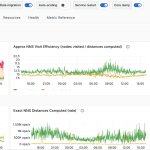
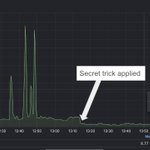
📊 Bonus: the new query_approximate_nns_time metric tracks time spent in ANN, and its count dimension tells you exactly how many queries actually ran ANN vs. falling back to exact search. One is for tweaking. One is for rescue. Both mean no more parameter whack-a-mole.
⚡️ Start budgeting your ANN searches.

vespa.ai retweeted
Perplexity taking this to its logical conclusion and then some, but the core idea here is important and not yet widely understood: Agents are able to tailor queries in detail to what they are trying to do.
This is makes a huge difference in cost and quality. For example:
- When researching case law, search for the names of those involved near each other in text.
- When seeking an overview of a broader topic, do a pure vector search prioritizing authoritative sources.
- When making timeline of some historic development, limit by year range and group by month.
And so on. Models already know YQL, all you need is to tell them what they have to work with.

We’re moving away from search as a web fetch tool call to search as codegen to be future proof in a world where code execution inside agent harnesses is the way to do almost all of our knowledge work.
Doing this lets you compose multi-step primitives far more naturally and be much more adaptable to changes made to the agent harness, as well as benefit from improvements in coding capabilities that are guaranteed to come from the next generation of frontier models.
vespa.ai retweeted
Vespa skills for coding agents: Claude Code and competitors are very useful for working on Vespa applications. Everything is always completely specified in application packages, which are in their favorite form factor.
Still, they do better with a good collection of skills. Skills are a dime a dozen though, what you want are skills that are proven by evals to carry more than their own weight.
We're maintaining a collection of optimized and evaluated skills you can grab here: github.com/vespaai-playgroun…

vespa.ai retweeted

Vespa is now available as a Document Store in Haystack. Use VespaDocumentStore for hybrid and semantic search with a powerful, production-ready engine, and pair it with VespaEmbeddingRetriever to index and retrieve documents directly in your pipelines. Metadata filtering included.
@vespaengine excels at large-scale information retrieval with advanced features like real-time indexing, multi-modal search, and distributed document management - ideal for applications that demand both speed and sophistication.
🐍 pip install vespa-haystack
🔗 haystack.deepset.ai/integrat…


Vespa isn't only powering American AI, now it's also @MistralAI's retrieval solution
