





vibes yo retweeted
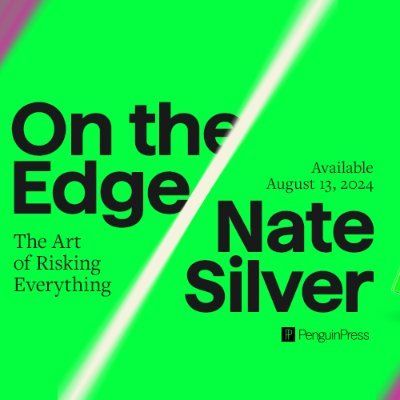
There's a certain type of journalist with an increasingly utilitarian outlook, i.e. it's so important the Good Guys win that the ends justify the means and fairness and accurately are subservient to that. This was subtext for a long time but is now being said explicitly.
vibes yo retweeted
Congrats to this very bipartisan group of Congress members who continue to exhibit their incredible skill at buying and selling stocks to enrich themselves above the market!
They're all like Nancy Pelosi: a magician's touch.
Kudos to @unusual_whales for this great reporting:


vibes yo retweeted

The scary moment caltured of a river while 7.6 magnitude hit Japan
teapawt.org/Dr_SadiaAz/status/1741…

vibes yo retweeted

LAWSUIT: A Vermont man was interrogated, arrested, and cited by a state trooper.
The alleged crime?
Cursing at a cop and giving him the middle finger.
Now FIRE is asking the Superior Court of VT to recognize Greg Bombard’s First Amendment rights were violated.
vibes yo retweeted

for a long time i said that antisemitism, particularly on the american left, was not as bad as people claimed.
i'd like to just state that i was totally wrong.
i still don't understand it, really. or know what to do about it.
but it is so fucked.
vibes yo retweeted

“I am not a legislator but I AM running one of the coolest companies in the world, and I’m telling young people: you are breathing the vapors of a dangerous, fake, and self destructive religion when you are sitting at your elite school pretending because you watched Tik Tok twice and got an A+ on some crazy paper because your professor couldn’t get a job anywhere else that you actually understand the world. Your not welcome at my company…”
THIS.
vibes yo retweeted

Columbia University charges students $27,822 (plus various fees) per semester for a two-year program leading to a master’s of social work degree.

vibes yo retweeted

Florida State is the first Undefeated Power 5 Conference Champion to not get into the College Football Playoff. Despite the ACC having a 6-4 record against the SEC this year. Despite their defense not giving up 30 points in a single game all year. Despite their offense having more yards in the ACC Championship than Michigan had in the Big 10 Championship. Despite holding Louisville’s Top 20 Offense to 6 points. Despite beating 4 Top 25 teams. Despite finding a way to win with their Back up QB in a bitter rivalry game. Despite finding a way to win with their 3rd string QB in the ACC Championship Game. Florida State EARNED their spot in the CFP on the field. With and Without Jordan Travis. You don’t punish or diminish the work of 100+ players and coaches because 1 player is not there on the field calling the shots. FSU always answered the bell this year and their response to losing their QB was to play POSSESSED ON DEFENSE. It’s an absolute travesty that they were excluded from the CFP.


vibes yo retweeted

Love that today has allowed us to resurrect Mike Leach’s thoughts on the CFP committee.
vibes yo retweeted

Every economist: just change the zoning laws and developers will build more housing
NYC government:

vibes yo retweeted

Very glad that @elonmusk is suing Media Matters (@mmfa) for their false and slanderous accusations. Most of us don't have the resources to push back against their damaging lies.
They have been trying to destroy my reputation and ability to make a living for years by publishing articles accusing me of being an "anti-trans bigot" and "maligning and demeaning trans people," distorting my valid criticisms of the Trevor Project for secretly helping minors transition, and attempting to implicate me in data fraud via guilt by association.
They're not journalists; they're unscrupulous political attack dogs.
Thanks Elon. Give them hell.
mediamatters.org/elon-musk/e…
mediamatters.org/gays-agains…


vibes yo retweeted
Denmark will likely pass a law that will punish engaging in the “improper treatment" of religious scriptures. No Dane has been convicted for blasphemy since 1946.
FIRE Senior Fellow @JMchangama explains for @thedailybeast why this is bad for free speech.
thedailybeast.com/anti-blasp…


vibes yo retweeted
“That is NOT Free Speech!”
FIRE Lawyer @Zach2Greenberg reacts to student protestor heckling @HillaryClinton at @Columbia ⬇️
vibes yo retweeted

The first law of international relations: don’t livestream a mass murder, rape, and kidnapping spree against a much better armed neighbor


vibes yo retweeted
As campuses reel, a reminder of the First Amendment’s boundaries | @WillatFIRE
The First Amendment protects a vast range of speech and expressive conduct.
But it doesn’t protect all speech and expressive conduct.
The categorical exceptions to the First Amendment are few, narrow, and carefully defined.
To protect freedom of expression, they must remain that way.
But they do exist, each for good reason.
And as campuses grapple with students and faculty expressing raw anger, fear, and shock over events in Israel and Gaza, it’s useful to revisit the boundaries between protected expression and actionable misconduct.
Violence:
Let’s start with the basics: Violence is never protected by the First Amendment.
Sadly, FIRE has seen footage of campus protests turning violent, with some participants physically assaulting others.
Physically confining students within a given space is likewise unlawful.
Anyone who engages in violence should be arrested and face criminal prosecution.
True threats and intimidation:
Just as violence is unprotected, so too are true threats and intimidation.
A true threat is a “serious expression of an intent to commit an act of unlawful violence to a particular individual or group of individuals.”
Intimidation “is a type of true threat, where a speaker directs a threat to a person or group of persons with the intent of placing the victim in fear of bodily harm or death.”
Importantly, the speaker does not need to actually intend to engage in violence for the government to punish threats or intimidation.
As the Supreme Court clarified earlier this year in Counterman v. Colorado, the speaker crosses beyond the First Amendment’s protection when he knows of or “consciously disregard[s] a substantial risk that his communications would be viewed as threatening violence.”
Sadly, we’ve seen true threats these past few weeks, too.
A Cornell student was arrested Tuesday for allegedly authoring online posts threatening Jewish students on campus.
Among other statements, the student said he would “bring an assault rifle to campus and shoot all you pig jews.”
This constitutes a true threat: Both on its face and taken in context, it is a serious expression of an intent to commit unlawful violence against a group of individuals.
By posting it, the author disregarded the obvious risk that it would be viewed as a threat of violence.
If proven to be the author, the student will properly face criminal sanctions.
Other statements are less clear-cut and require contextual analysis.
For example, if students at a peaceful protest chant anti-Israel slogans like “From the river to the sea, Palestine will be free,” that speech, taken alone, is protected political expression.
Even if some understand the phrase to call for the destruction of Israel, it is still — absent more — protected as political speech, advocating in general terms for violence elsewhere at an unspecified time against a broadly defined target.
(For more on why such speech is protected, see the discussion of incitement below.)
But context is determinative: Were the same statement to be directed at a specific Jewish student by a student or group moving threateningly towards him, during a protest that has turned violent and unstable, it may arguably constitute a true threat.
Incitement:
Incitement — speech that is both “directed to inciting or producing imminent lawless action and is likely to incite or produce such action” — is unprotected by the First Amendment.
The standard comes from the Supreme Court’s 1969 decision in Brandenburg v. Ohio, a First Amendment challenge to the arrest of Ku Klux Klan members under an Ohio criminal syndicalism law prohibiting “advocat[ing] . . . the duty, necessity, or propriety of crime, sabotage, violence, or unlawful methods of terrorism as a means of accomplishing industrial or political reform” and “voluntarily assembl[ing] with any society, group, or assemblage of persons formed to teach or advocate the doctrines of criminal syndicalism.”
Journalists captured footage of the armed Klansmen using slurs against black and Jewish people.
The Klansmen stated there “might have to be some revengeance taken” against government officials and announced a march on Congress on the Fourth of July.
Quoting its earlier decision in Noto v. United States for the proposition that “the mere abstract teaching . . . of the moral propriety or even moral necessity for a resort to force and violence, is not the same as preparing a group for violent action and steeling it to such action,” the Brandenburg Court struck down the Ohio law.
Because the statute “purports to punish mere advocacy and to forbid, on pain of criminal punishment, assembly with others merely to advocate the described type of action,” the Court held it violated the First Amendment.
It’s important to emphasize that to lose protection as incitement, the speech at issue needs to be (1) directed to producing (2) imminent lawless action and (3) likely to result in such action.
In other words, the speaker must intend for his audience to break the law all but immediately, and the audience must be primed to do so.
That’s a necessarily high bar, designed to protect a great deal of charged political expression by capturing only that speech that is all but inseparable from the unlawful action that directly follows it.
As with true threats and intimidation, determining whether speech constitutes incitement requires careful consideration of contextual circumstances.
With regard to campus protests, a campus speaker’s exhortations to a willing audience to attack a passerby might lawfully face punishment as incitement.
Discriminatory harassment:
Colleges and universities that accept federal funding — the vast majority of campuses, both public and private — must maintain and enforce policies prohibiting discriminatory harassment on the basis of certain protected class statuses.
Title IX, for example, prohibits discrimination on the basis of sex, and Title VI prohibits discrimination on the basis of race, color, and national origin.
Notably, federal anti-discrimination law does not prohibit discrimination on the basis of religion.
FIRE has called on Congress to remedy that omission.
In the absence of a statutory protection against discrimination on the basis of faith, the federal Department of Education’s Office for Civil Rights has maintained for nearly 20 years a policy of addressing discrimination based on a student’s actual or perceived “(i) shared ancestry or ethnic characteristics; or (ii) citizenship or residency in a country with a dominant religion or distinct religious identity.”
FIRE supports this policy and has called for its codification into federal law.
What do these federal laws mean in practice?
Federal courts have interpreted both Title IX and Title VI to require colleges and universities that accept federal funding to prohibit and address discriminatory harassment — that is, targeted conduct that is so severe, pervasive, and objectively offensive that it denies its target access to an educational opportunity or benefit.
Again, this is an exacting standard by design.
In Davis v. Monroe County Board of Education, the Supreme Court case setting forth the definition of discriminatory harassment in the educational context, Justice Sandra Day O’Connor (writing for the majority) and Justice Anthony Kennedy (dissenting) grappled over whether it was sufficiently protective of student speech rights.
But while the Davis standard is necessarily high, it is by no means insurmountable.
And in this charged moment, it is unfortunately easy to imagine students being targeted for harassment on the basis of their perceived or actual national origin, shared ancestry, or ties to a country with a dominant religion or distinct religious identity.
When that happens, and when the harassment is so severe, pervasive, and objectively offensive that it denies the targeted students access to educational opportunities or benefits — say, being able to attend class or visit the library — it requires an institutional response.
When colleges and universities fail to act to address such discriminatory harassment, properly defined, they violate federal law.
The heckler’s veto:
The First Amendment protects both a speaker’s right to express themself and the right of others to receive that expression.
As Justice Thurgood Marshall put it, “The freedom to speak and the freedom to hear are inseparable; they are two sides of the same coin.”
To that end, taking action to silence the lawful speech of others is illiberal and, in some cases, unlawful.
When a speaker is silenced by those who disagree with their speech, the heckler’s veto is at work, and the First Amendment is under threat.
As the Court has observed, “Speech cannot be financially burdened, any more than it can be punished or banned, simply because it might offend a hostile mob.”
So, for example, when posters or flyers are lawfully affixed in a given space — like on a campus bulletin board — their unauthorized removal to silence their message effectuates a heckler’s veto.
Such removal is vandalism and properly subject to punishment.
Defacing or destroying someone else’s property is not protected by the First Amendment.
Or if a campus student group hosts a speaker in a reserved space on campus, only to be shouted down and forced to cancel by those with an opposing viewpoint, the heckler’s veto is again in play.
Campus administrators have an obligation to facilitate the ability of both groups to speak their minds peacefully, without one effectively overriding the expressive rights of the other.
Only as a last resort may campus administrators or law enforcement prevent a speaker from exercising their expressive rights in the face of an angry or opposing crowd.
As the U.S. Court of Appeals for the Sixth Circuit has observed: “Punishing, removing, or by other means silencing a speaker due to crowd hostility will seldom, if ever, constitute the least restrictive means available to serve a legitimate government purpose.”
In this challenging moment, consistency counts:
Our campuses are roiling in reaction to armed conflict.
The subtext of horror and violence weighs heavily on both those speaking and those listening.
This is a fraught time.
For nearly 25 years, FIRE has worked tirelessly to protect and preserve freedom of expression on campus.
In our experience, extremely challenging and emotionally charged moments like the one in which we now find ourselves are when expressive rights most need delineating and defending.
Times like this may seem to present the most righteous justifications for bending the rules in one direction or the other, to either permit the censorship of protected speech or to allow unprotected speech or violence to go unpunished.
But we cannot let either happen.
Now as ever, it is vital for all of us — students, faculty, administrators, alumni, law enforcement, elected officials, and the general public — to hold steadfast to the First Amendment, remaining both cognizant of its carefully defined exceptions and confident in its continuing protection.
FIRE will stay on task.

