


A few hot takes from @theo's AMA at the @openai booth at @aiDotEngineer today:
1. Most "software factories" are just prompts
2. Most context/memory companies could be replaced by markdown files
3. We're still in the skeuomorphic era of working with LLMs (iOS 6 vs iOS 7) retrofitting old ways instead of designing for the new reality
"Engineering in the LLM age is keeping the loop from closing before the constraints are satisfied" - (via @GeoffreyHuntley's "loop debate" talk today at @aiDotEngineer )
Just back from @aiDotEngineer in London feeling inspired and energised.
Amazing speakers, great conversations, incredible vibe!
Special thanks to @swyx and the team for putting it all together.
SF AI World Fair is next!
Spec-Driven Development with LLMs introduces a new synchronization problem.
We mostly solved code-to-test coverage.
Now we need tooling that does the same across specs, code, and tests ensuring they don't drift apart.
Just observed a massive improvement using playwright-cli vs playwright MCP for web app testing. github.com/microsoft/playwri…
Here are the details that make it so effective.
It shipped in Playwright v1.58.0 with ~35 commands vs ~20 in the original MCP.
But the real win is the architecture: the CLI saves snapshots to disk instead of stuffing them into the LLM context using ARIA accessibility tree format. ~27K vs ~114K tokens for the same task.
Could MCP do this too? Technically yes, but most MCP clients can't read files from disk. The protocol assumes data flows back to the model.
The CLI was built for coding agents like Claude Code that can handle this natively.

Why RL over SFT?
Many tasks have infinite valid solutions—whether it's booking a flight, writing code, or navigating a UI. You can't demonstrate every path, but you can easily verify success.
That's RL's edge: reward the goal, not the route. And unlike SFT models that freeze when they deviate, RL models learn to recover and adapt.
The effective design of agentic apps relies on a complementary relationship where MCPs and Skills empower an agent to function intelligently.
In this setup, MCPs serve as the secure interface or "hands" connecting the agent to external tools and data.
Skills provide the "procedural knowledge" or "brain" that dictates how those tools should be used.
Rather than competing, these components work in unison: an agent loads a Skill to learn the correct business process or standard operating procedure, which then guides it to execute actions precisely via the appropriate MCPs, ensuring workflows are both capable and correct.
Just finished AI-Powered Search course by @treygrainger & @softwaredoug.
It was a transformative deep-dive into modern search. This course moves beyond basic vector search to cover the production-grade techniques necessary for robust RAG and Agentic systems. From Learning to Rank and user signals to advanced agentic workflows, the hands-on, platform-agnostic curriculum provides the tools to solve real-world retrieval problems.
With expert guest lectures and a focus on self-improving systems, it offers the perfect blend of theory and code.
Highly recommended for any engineer responsible for retrieval quality—it’s exactly the training I wish I had when I started.
Link to the upcoming cohort: aipoweredsearch.com/live-cou…

What is the main benefit of Distributed Data Parallel?
It's the increased batch size for training! This leads to more stable gradients, faster data throughput, and reduced overall training time.
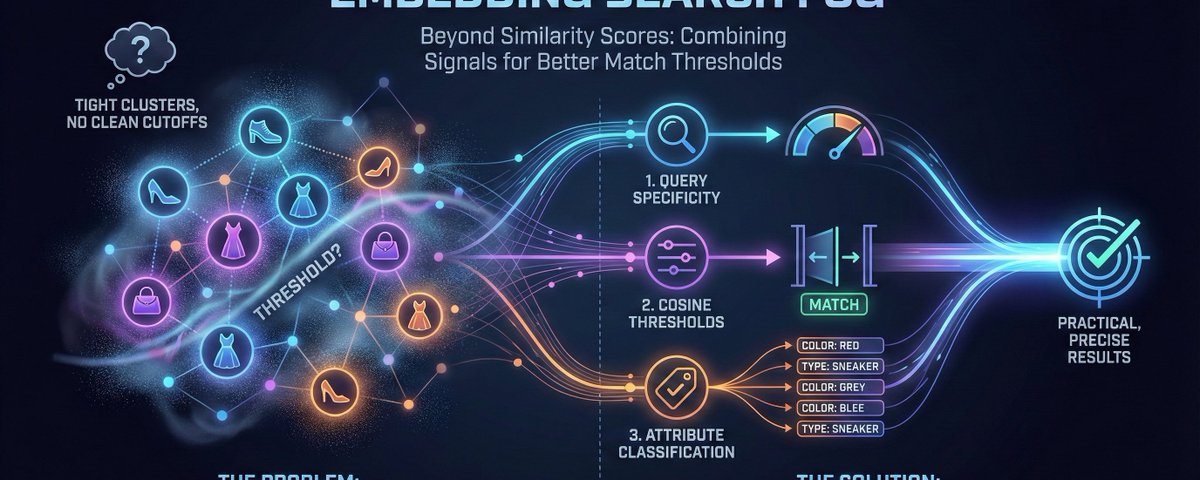
One of the key learnings from using vector search in production RAG is that it produces far more false positives than lexical search.
vLLM's with pipeline parallelism is straight-up the de facto standard for local inferencing. No cap, it's running circles around the rest!
It uses a new attention algorithm to deliver up to 24x higher throughput comparing to HuggingFace Transformers lib, all without requiring model changes.
Also, when OpenAI OSS model came out. Google as a provider and a few others were giving degradated performance. Only because they had their own custom fork of VLLM, and they didn't put a fix in.