

chinese hardware freak • reverse engineering obscure tech • se @mongodb prev @revenuecat • google dev groups organizer
网
Joined September 2025
- Tweets488
- Following354
- Followers39
- Likes638





Pinned Tweet
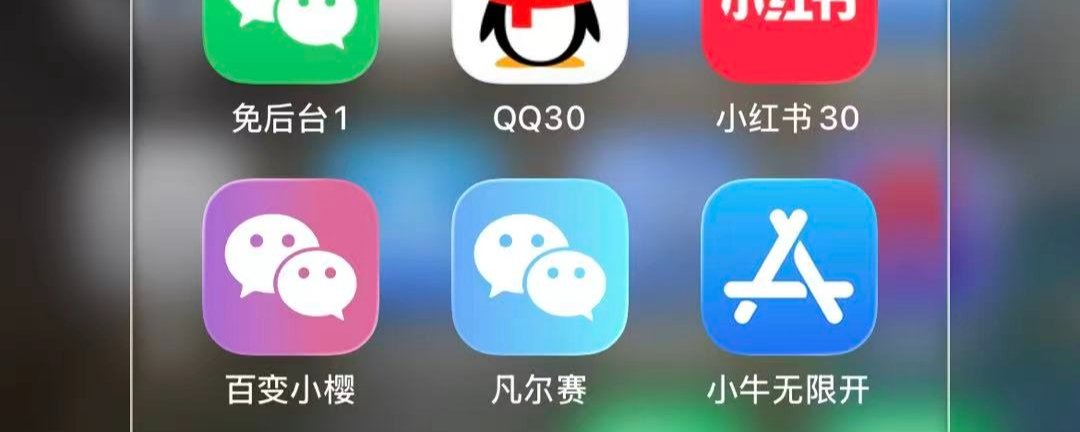
China has a massive sideloading app economy.
My friend bought a “WeChat theme” on Taobao for $2. Behind it: Apple Developer identities, app signing... Yet the vendor automated the whole process.
I spent the last week breaking down how it works.
Enjoy!🫡
Finally testing the Xiaomi 17 Ultra in Dublin's evening.
I have no words to express how insane night photography is in this phone.


1
1
92
You just found how to have temperature-aware fan lights!
Flash WLED on a spare ESP32.
Connect the fan's controller pins to 3.3V (ideally add a level shifter), GND and GPIO 16.
Create a small Linux daemon. Make it read from sensors, and report the data to WLED's local API.
1
30


Tough week for DJI fans.
The company has announced a global price increase in some articles, effective November 18.
The decision comes as a response to the growing cost in memory and semiconductors.
Source: DJI Store Guomao (Beijing) WeChat


44
A $15,000 crypto mining rig. The computing power of 12 PlayStation 5.
Then, the 2022 Ethereum merge shook the industry, and the rigs were bound to e-waste.
I sourced one of the blades from a seller in HK. Today, it's finally on my desk.
Meet the AMD BC-250.

107
Víctor Pérez retweeted
GIVEAWAY 1/5 🎁 Win a Xiaomi 18 Pro!
After all the excitement yesterday, there's only one way to kick this off. We're starting with THE phone!
The Back Display is full of possibilities, from notifications to everyday essentials.
Now your turn: "I'd use the Back Display for ______."
Repost + reply with your answer! Don’t miss the full entry rules in my first reply.


I had this idea back in 2022, but didn't have the resources nor the capacity to develop it. Now, with AI, I would've solved it in minutes.
Maybe next time I have an idea, I should just go and make it real.

Smart Grip now supports older models and third - party apps . Development Notes : Smart Grip now supports older models and third - party apps . Picture is of HarmonyOS 6 on the Mate X6. Mate 80 series , HarmonyOS 6, Mate X7, Huawei Phone.
#Notes #3rdParty #SmartNotes #biadangroup
Wake up babe we reverse engineered Apple keyboard's censorship engine!
Seriously this is some really cool shit

Apple didn't store a plaintext list of forbidden words in iOS. Instead, researchers discovered a compiled minimal perfect hash table of 32-bit fingerprints buried inside the keyboard's language-model files.
When you swipe-type or use autocomplete on an iPhone, the keyboard converts your input into token IDs and evaluates sequences of two to six words. It hashes those candidate n-grams using Bob Jenkins's public-domain hashword() function. If that 32-bit fingerprint matches an entry in the table, the predictive engine refuses to suggest it, or the swipe model actively diverts the word to an alternate match.
On November 6, researcher Derik Kauffman published Swipeblocked after exhaustively enumerating candidate word combinations against the table to reverse-engineer the hidden phrases. His conservative estimate is roughly 100,000 entries across 28 languages. In English, the prediction list holds 4,525 phrases and the swipe-typing list holds 2,794.
Most entries cover violence, slurs, and sexual content, but the table also silences geopolitical phrases like "Tibetan independence", "United Ireland", "dictator Trump", and Hebrew for "the occupied territories". In testing, swiping "United Ireland" consistently resolved to "United Iceland".
You can still type any phrase letter by letter. The suppression only touches autocomplete predictions and gesture paths. Apple told Reuters the system avoids offensive suggestions, but never addressed the political entries or the existence of the table.
Apple never published the list because it was never meant to be read. It took brute-forcing the hash table to show what the keyboard was quietly dropping.


This developer managed to boot his Xiaomi Pad 9 Pro straight into Omarchy. On power-up.
No Android framework, chroot, or PRoot.
Recently, the Xiaomi VP of XRING @shujishcn showcased how he booted Omarchy on his Xiaomi Pad 9 Pro Max.
The method leveraged the new Android AVF, an Android 16 specific feature that isn't compatible with some processors, such as many Qualcomms.
With the AVF way, you spawn a virtual machine within Android, but this dev's method doesn't boot Android at all.
We have turned tablets into actual Linux boxes. What a time to be alive.

Omarchy, running natively on the Xiaomi Pad 9 Pro. Here's the short version.
What it is: not a VM, not Termux, not Android's Linux Terminal. It replaces init_boot and boots Arch Linux ARM + systemd + Hyprland straight on Xiaomi's stock GKI kernel. Android's vendor daemons keep running beside it for audio, Bluetooth, sensors and touch. Android stays bootable.
Works: 120 Hz display, GPU (GL + Vulkan), touch, Wi-Fi, Bluetooth, speakers and mics, the Xiaomi keyboard and touchpad, Focus Pencil Pro, charging, suspend, Chinese input.
Not yet: cameras, modem, headset jack, auto-rotate, tap-to-wake.
Needs: an unlocked bootloader, a Pad 9 Pro on stock ROM OS4.0.5.0.XFPCNXM, a Mac, and an ARM64 Arch Linux machine to build on. No prebuilt images yet.
Other devices: it won't run as-is. The approach could carry over to other Snapdragon tablets and phones, but that's a porting job. The engineering log in the repo is the map.
github.com/nervouna/omarchy-…

1
3
266

Edward gave me an idea:
I'm building a supply chain map for my electronics!
You'll be able to see the HQ, the production plants, the legal entities and, most importantly, the cross-company relationships.
Perhaps I'll release it to the public to make an open database. 👀


Okay this gave me modern message in a bottle vibes.
I learnt about manufacturers "signing" their boards not long ago, and today it happened to me!
Edward, if you're reading this, say hello! 👋
This is a Meanwell LRS-350-24. X, are your units signed as well?

36
There was a State Cloud (天翼云) terminal in my hotel room in Xi'an.
I had no idea this existed, but turns out it's fairly standard tech and has quite a big economy behind. Cost effectiveness and security are the main advantages.
Let's break down how this thing works. 🧵


1
66
This is not exclusive to China.
Japan, Korea and India also market e-sports hotels, with different degrees of adoption.
Apart from hotels, some gaming cafes are starting to use hybrid physical-cloud PC installations for the same reason, though I couldn't find much info.
1
11
Anyway, I had never seen a thin terminal at a hotel room, and after some weeks switching hotels, I never did again.
I don't know if anyone ever used it (especially when you can just carry your laptop), if it's part of some provisioning agreement, or whatever.
But yes, these things exist. And there's quite a big economy behind them. Pretty cool.
4