

Remembering the lost innovations that might have changed the world and the imagination that still can.
Joined October 2025
- Tweets275
- Following8
- Followers5
- Likes0



In 2014, Google unveiled a contact lens with a chip and antenna built in, designed to measure glucose in the wearer’s tears so people with diabetes could monitor without drawing blood. Shelved in 2018 after studies found it did not track blood glucose reliably to guide treatment.

In 2008, the MS Beluga SkySails crossed the Atlantic towed in part by a 160 square metre computer controlled kite flying up to 300m above the bow, cutting fuel use by up to 15% while it flew. Averaged across real routes, the saving fell to around 5%, too small to justify the cost

In 1990, Northrop’s YF-23 Black Widow II flew as a contender for the US Air Force’s next fighter, designed to be stealthier and faster than its rival at the expense of close in agility. In 1991 the Air Force chose Lockheed’s YF-22, judged more manoeuvrable and lower risk.

In 1917, British artist Norman Wilkinson devised dazzle camouflage, painting ships in clashing stripes so U boat commanders could not judge their course or speed. Thousands were painted, but its effect was never proven, and radar later made fooling the eye irrelevant.

✨The next Worlds That Could Have Been essay asks: What if SpaceX’s first 5 launches had all failed and the company had been wound down in 2009? How would launch costs, commercial spaceflight, and our access to orbit have evolved?
👉 whatcouldhavebeenarchive.sub…

In the 1920s, shoe shops in the US and UK began installing Fluoroscopes, cabinets that used X rays to show customers the bones of their feet inside a new pair of shoes. The machines leaked radiation onto customers and staff, and were banned from 1957.

In 1870, Alfred Beach opened New York’s first subway, a Pneumatic Railway that used a giant fan to blow a carriage through a tunnel beneath Broadway, as an alternative to the steam trains of the day. The arrival of elevated railways ended plans to extend it.

In 1890, the USS Vesuvius mounted 3 fixed 15 inch guns that fired dynamite shells by compressed air, avoiding the shock of gunpowder. The ship had to turn to aim, with a range of barely a mile and poor accuracy, and conventional guns soon outclassed it. #WhatCouldHaveBeen

✨ In 1983, the Steinwinter Supercargo 2040 proposed tucking a truck’s cab beneath the front of its trailer, giving the full legal length to cargo and carrying a third more freight on every journey.
👉 Read here: whatcouldhavebeenarchive.sub…
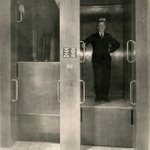
In 1866, architect Peter Ellis patented the Paternoster, a lift built from open compartments moving on a continuous loop, letting passengers step on and off at any floor without waiting. Its open doorways led to falls and trapped limbs, making it unsafe. #WhatCouldHaveBeen

In 1941, the Soviet Zveno system carried 2 I-16 fighters beneath a TB-3 bomber, releasing them close to targets far beyond their own range. It destroyed a bridge that conventional bombers had failed to hit, but was too vulnerable to enemy fighters and the system was withdrawn.

In 1970, Matra’s Aramis offered Paris automated cars that coupled electronically without touching, running as a train before splitting for separate destinations. Its software could not keep the cars reliably spaced, and it failed qualification trials in 1987 after 500m francs.

In 1979, Fort St Vrain entered commercial service with a reactor cooled by helium rather than water, running hotter and more efficiently than any conventional nuclear plant. Water leaking from its helium circulators troubled it for a decade and repair was judged too costly.

In 2014, the Aerion AS2 was a business jet built to fly at Mach 1.4 over water and slow over land so its sonic boom faded before reaching the ground. It needed a new engine to cruise without an afterburner. As development costs neared $4b, production funding could not be achieved

✨ New to the Archive: In 1942, Britain’s Project Habbakuk proposed building an aircraft carrier from pykrete, a frozen mix of wood pulp and water, to close the gap in Atlantic air cover without using scarce steel.
whatcouldhavebeenarchive.sub…

In 1858, Ross Winans built a steamer with a long cigar shaped hull, designed to cut straight through waves instead of riding over them. It performed poorly in trials, and none of the versions that followed over the next 8 years ever went into regular service.

In 1925, Mochet’s Velocar gave French families a 2 seat pedal car with a light aerodynamic body, at a time when a motor car was beyond most budgets. Sales grew until cheap motor cars became affordable in the late 1930s, and Mochet turned to small engines before closing in 1958.

In 1982, Kodak’s Disc camera held its film on a flat rotating disc rather than a roll, making it small enough for a pocket. Its 10mm x 8mm negatives needed special printing lenses, but most labs used standard equipment and the prints came back grainy and soft. #whatcouldhavebeen

In 2014, Hyperloop One set out to send passenger pods levitating through low pressure tubes at airline speeds, carrying its first people at 172km/h on a Nevada test track in 2020. Unable to secure the funding, it never progressed beyond its test track and closed in 2023.

✨ In 1987, Europe committed to Hermes, a reusable spaceplane that would carry crews into orbit for the first time. But its cost climbed as its capability shrank, and when the USSR dissolved, Moscow began selling the seats it was built for.
👉 Read here: whatcouldhavebeenarchive.sub…
