
Director of Marketing CBD American Shaman, SEO, Partial Hippie, Techie, News #Crypto Obsessed. CBD evangelist. Research nut on topics needing exposed.
Kansas City, MO
Joined October 2007
- Tweets57.4K
- Following46.4K
- Followers82.7K
- Likes15.6K




Joel Mackey retweeted

Pretty much.
As of the past few weeks, debt markets have almost entirely shut off access to money for any company that doesn’t have substantial revenue independent of AI data centers.
SpaceX closed $40B of debt for GPUs, but we’re investment grade and have Starlink & launch revenue.
That means the 200+ neoclouds are going to see guppy-level death and consolidation. Some will make it through, but not many.
Joel Mackey retweeted

The end of human readable computer code.
Computers were built so a human could read every state. Once AI optimized machine code lives inside the GPU—it’s no longer in a human-readable form. Input arrives as sensors or tokens. Output leaves as actuator commands. The terminal is a debug port.
readmultiplex.com/2026/10/25…

Joel Mackey retweeted

Emergency WAF ruleset update for 2026-10-25 adds two new detections for CVE-2026-111497. They default to log mode so you can audit impact. Check existing overrides to avoid false positives.
developers.cloudflare.com/ch…

Joel Mackey retweeted

I wrote a quick new post on "Digital Hygiene".
Basically there are some no-brainer decisions you can make in your life to dramatically improve the privacy and security of your computing and this post goes over some of them. Blog post link in the reply, but copy pasting below too.
Every now and then I get reminded about the vast fraud apparatus of the internet, re-invigorating my pursuit of basic digital hygiene around privacy/security of day to day computing. The sketchiness starts with major tech companies who are incentivized to build comprehensive profiles of you, to monetize it directly for advertising, or sell it off to professional data broker companies who further enrich, de-anonymize, cross-reference and resell it further. Inevitable and regular data breaches eventually runoff and collect your information into dark web archives, feeding into a whole underground spammer / scammer industry of hacks, phishing, ransomware, credit card fraud, identity theft, etc. This guide is a collection of the most basic digital hygiene tips, starting with the most basic to a bit more niche.
Password manager. Your passwords are your "first factor", i.e. "something you know". Do not be a noob and mint new, unique, hard passwords for every website or service that you sign up with. Combine this with a browser extension to create and Autofill them super fast. For example, I use and like 1Password. This prevents your passwords from 1) being easy to guess or crack, and 2) leaking one single time, and opening doors to many other services. In return, we now have a central location for all your 1st factors (passwords), so we must make sure to secure it thoroughly, which brings us to...
Hardware security key. The most critical services in your life (e.g. Google, or 1Password) must be additionally secured with a "2nd factor", i.e. "something you have". An attacker would have to be in possession of both factors to gain access to these services. The most common 2nd factor implemented by many services is a phone number, the idea being that you get a text message with a pin code to enter in addition to your password. Clearly, this is much better than having no 2nd factor at all, but the use of a phone number is known to be extremely insecure due to the SIM swap attack. Basically, it turns out to be surprisingly easy for an attacker to call your phone company, pretend they are you, and get them to switch your phone number over to a new phone that they control. I know this sounds totally crazy but it is true, and I have many friends who are victims of this attack. Therefore, purchase and set up hardware security keys - the industrial strength protection standard. In particular, I like and use YubiKey. These devices generate and store a private key on the device secure element itself, so the private key is never materialized on a suspiciously general purpose computing device like your laptop. Once you set these up, an attacker will not only need to know your password, but have physical possession of your security key to log in to a service. Your risk of getting pwned has just decreased by about 1000X. Purchase and set up 2-3 keys and store them in different physical locations to prevent lockout should you physically lose one of the keys. The security keys support a few authentication methods. Look for "U2F" in the 2nd factor settings of your service as the strongest protection. E.g. Google and 1Password support it. Fallback on "TOTP" if you have to, and note that your YubiKeys can store TOTP private keys, so you can use the YubiKey Authenticator app to access them easily through NFC by touching your key to the phone to get your pin when logging in. This is significantly better than storing TOTP private keys on other (software) authenticator apps, because again you should not trust general purpose computing devices. It is beyond the scope of this post to go into full detail, but basically I strongly recommend the use of 2-3 YubiKeys to dramatically strengthen your digital security.
Biometrics. Biometrics are the third common authentication factor ("something you are"). E.g. if you're on iOS I recommend setting up FaceID basically everywhere, e.g. to access the 1Password app and such.
Security questions. Dinosaur businesses are obsessed with the idea of security questions like "what is your mother's maidan name?", and force you to set them up from time to time. Clearly, these are in the category of "something you know" so they are basically passwords, but conveniently for scammers, they are easy to research out on the open internet and you should refuse any prompts to participate in this ridiculous "security" exercise. Instead, treat security questions like passwords, generate random answers to random questions, and store them in your 1Password along with your passwords.
Disk encryption. Always ensure that your computers use disk encryption. For example, on Macs this total no-brainer feature is called "File Vault". This feature ensures that if your computer gets stolen, an attacker won't be able to get the hard disk and go to town on all your data.
Internet of Things. More like @internetofshit. Whenever possible, avoid "smart" devices, which are essentially incredibly insecure, internet-connected computers that gather tons of data, get hacked all the time, and that people willingly place into their homes. These things have microphones, and they routinely send data back to the mothership for analytics and to "improve customer experience" lol ok. As an example, in my younger and naive years I once purchased a CO2 monitor from China that demanded to know everything about me and my precise physical location before it would tell me the amount of CO2 in my room. These devices are a huge and very common attack surface on your privacy and security and should be avoided.
Messaging. I recommend Signal instead of text messages because it end-to-end encrypts all your communications. In addition, it does not store metadata like many other apps do (e.g. iMessage, WhatsApp). Turn on disappearing messages (e.g. 90 days default is good). In my experience they are an information vulnerability with no significant upside.
Browser. I recommend Brave browser, which is a privacy-first browser based on Chromium. That means that basically all Chrome extensions work out of the box and the browser feels like Chrome, but without Google having front row seats to your entire digital life.
Search engine. I recommend Brave search, which you can set up as your default in the browser settings. Brave Search is a privacy-first search engine with its own index, unlike e.g. Duck Duck Go which basically a nice skin for Bing, and is forced into weird partnerships with Microsoft that compromise user privacy. As with all services on this list, I pay $3/mo for Brave Premium because I prefer to be the customer, not the product in my digital life. I find that empirically, about 95% of my search engine queries are super simple website lookups, with the search engine basically acting as a tiny DNS. And if you're not finding what you're looking for, fallback to Google by just prepending "!g" to your search query, which will redirect it to Google.
Credit cards. Mint new, unique credit cards per merchant. There is no need to use one credit card on many services. This allows them to "link up" your purchasing across different services, and additionally it opens you up to credit card fraud because the services might leak your credit card number. I like and use privacy dot com to mint new credit cards for every single transaction or merchant. You get a nice interface for all your spending and notifications for each swipe. You can also set limits on each credit card (e.g. $50/month etc.), which dramatically decreases the risk of being charged more than you expect. Additionally, with a privacy dot com card you get to enter totally random information for your name and address when filling out billing information. This is huge, because there is simply no need and totally crazy that random internet merchants should be given your physical address. Which brings me to...
Address. There is no need to give out your physical address to the majority of random services and merchants on the internet. Use a virtual mail service. I currently use Earth Class Mail but tbh I'm a bit embarrassed by that and I'm looking to switch to Virtual Post Mail due to its much strong commitments to privacy, security, and its ownership structure and reputation. In any case, you get an address you can give out, they receive your mail, they scan it and digitize it, they have an app for you to quickly see it, and you can decide what to do with it (e.g. shred, forward, etc.). Not only do you gain security and privacy but also quite a bit of convenience.
Email. I still use gmail just due to sheer convenience, but I've started to partially use Proton Mail as well. And while we're on email, a few more thoughts. Never click on any link inside any email you receive. Email addresses are extremely easy to spoof and you can never be guaranteed that the email you got is a phishing email from a scammer. Instead, I manually navigate to any service of interest and log in from there. In addition, disable image loading by default in your email's settings. If you get an email that requires you to see images, you can click on "show images" to see them and it's not a big deal at all. This is important because many services use embedded images to track you - they hide information inside the image URL you get, so when your email client loads the image, they can see that you opened the email. There's just no need for that. Additionally, confusing images are one way scammers hide information to avoid being filtered by email servers as scam / spam.
VPN. If you wish to hide your IP/location to services, you can do so via VPN indirection. I recommend Mullvad VPN. I keep VPN off by default, but enable it selectively when I'm dealing with services I trust less and want more protection from.
DNS-based blocker. You can block ads by blocking entire domains at the DNS level. I like and use NextDNS, which blocks all kinds of ads and trackers. For more advanced users who like to tinker, pi-hole is the physical alternative.
Network monitor. I like and use The Little Snitch, which I have installed and running on my MacBook. This lets you see which apps are communicating, how much data and when, so you can keep track of what apps on your computer "call home" and how often. Any app that communicates too much is sus, and should potentially be uninstalled if you don't expect the traffic.
I just want to live a secure digital life and establish harmonious relationships with products and services that leak only the necessary information. And I wish to pay for the software I use so that incentives are aligned and so that I am the customer. This is not trivial, but it is possible to approach with some determination and discipline.
Finally, what's not on the list. I mostly still use Gmail + Gsuite because it's just too convenient and pervasive. I also use 𝕏 instead of something exotic (e.g. Mastodon), trading off sovereignty for convenience. I don't use a VoIP burner phone service (e.g. MySudo) but I am interested in it. I don't really mint new/unique email addresses but I want to. The journey continues. Let me know if there are other digital hygiene tips and tricks that should be on this list.
Link to blog post version in the reply, on my brand new Bear ʕ•ᴥ•ʔ blog cute 👇

Joel Mackey retweeted

🚀Excited to announce Nanbeige4.3-33B!
To push the performance ceiling of small agents, our strategy in Nanbeige4.3 starts with building a powerful teacher first.
Nanbeige4.3-33B delivers SOTA agentic performance among open models at ~30B parameters:
* Strong results on agentic coding and cowork benchmarks.
* When integrated into mainstream agent harnesses, it tackles real-world tasks with cost-efficient inference.
* It will serve as a teacher for upcoming smaller Nanbeige models, starting with Nanbeige4.3-3B.
huggingface.co/Nanbeige/Nanb…
huggingface.co/Nanbeige/Nanb…
#LLM #Agent

Joel Mackey retweeted

In September I wrote that if the Chinese labs stop releasing weights, we're fucked, and that there should be many more teams like them.
Here is one more. Nanbeige, the LLM team of a Chinese job search app, just put out a 33B dense model under Apache 2.0. On their own table it beats Qwen3.8 27B on Terminal-Bench and DeepSWE.
Nobody expected them. Nobody begged them. They just shipped it.
I'm still afraid there will be fewer teams like this one day. Today there is 1 more.


🚀Excited to announce Nanbeige4.3-33B!
To push the performance ceiling of small agents, our strategy in Nanbeige4.3 starts with building a powerful teacher first.
Nanbeige4.3-33B delivers SOTA agentic performance among open models at ~30B parameters:
* Strong results on agentic coding and cowork benchmarks.
* When integrated into mainstream agent harnesses, it tackles real-world tasks with cost-efficient inference.
* It will serve as a teacher for upcoming smaller Nanbeige models, starting with Nanbeige4.3-3B.
huggingface.co/Nanbeige/Nanb…
huggingface.co/Nanbeige/Nanb…
#LLM #Agent
Joel Mackey retweeted

Holy Shit. A malicious website can plant a simple markdown file in your Downloads folder. An AI coding agent launched there can follow the attacker's instructions without you ever opening the file.
Forever Security caught a real attack on a customer's computer: an AI coding agent followed instructions in a malicious AGENTS.md file in its Downloads folder and tried to install a malicious npm package.
The researchers then reproduced the attack against OpenAI Codex and Anthropic's Claude Code:
-Codex succeeded in over 90% of tests, bypassing its sandbox and rewriting machine-wide configuration so malicious commands could persist across future projects.
-Claude Code was compromised in roughly 50% of tests, redirecting API traffic to an attacker-controlled server, exposing OAuth tokens and allowing attackers to impersonate the model and send executable commands.
The researchers say: "There is nothing here for OpenAI or Anthropic to patch."
The agent is doing exactly what it was designed to do.


Joel Mackey retweeted

New from OpenRouter: 7-day average token volume for Anthropic models is up 3.6x since the launch of Opus 5.5
Sonnet 5.5 and Haiku 5.5 have also been well received.

Joel Mackey retweeted

JUST IN: Jordan's central bank activates a Starlink internet backup to keep the country's banking system online during cyberattacks, war, or major outages.
Joel Mackey retweeted

Hear me out, I found a better way to win the lottery 🔽
1. Get 2,000 people to contribute $10K each.
2. Pool $20M into a bank account earning 3% annually.
3. Generate $600K/year, or $50K/month in interest.
4. Every month, randomly select one person to collect the $50K.
Once you win, you’re out of the lottery.
The $20M principal stays untouched.
Essentially, a lottery funded entirely by interest, without anyone losing their initial investment.
Joel Mackey retweeted

Elon Musk just posted this:
“As of the past few weeks, debt markets have almost entirely shut off access to money for any company that doesn’t have substantial revenue independent of AI data centers.”
“That means the 200+ neoclouds are going to see guppy-level death and consolidation. Some will make it through, but not many.”

Joel Mackey retweeted

I don't unpack in a hotel or an Airbnb anymore until Claude Code finishes one sweep.
Bags stay by the door. The laptop opens first.
One prompt, 5 steps, read only the whole way:
Wi-Fi: maps every device on the network and flags the camera brands and the ports cameras use to stream video
Bluetooth: listens for AirTag, Tile and SmartTag beacons that keep showing up after you leave the room
Your phone: runs Amnesty's open source spyware toolkit against known stalkerware indicators
Lenses: walks you through a flashlight sweep of everything that faces the bed and the shower
Report: one ranked table with the next move for each item, from asking for another room to calling the police
It never logs into anything, never touches a device that isn't yours, and tells you straight what it can't see.
I'd rather give it 10 minutes than spend the whole trip wondering.
The full sweep is below, copy paste ↓


Joel Mackey retweeted

𝗕𝗥𝗘𝗔𝗞𝗜𝗡𝗚: U.S. Assistant Secretary Catherine Austin claimed the government 𝗦𝗧𝗢𝗟𝗘 $𝟱𝟬 𝗧𝗥𝗜𝗟𝗟𝗜𝗢𝗡, used 𝗘𝗣𝗦𝗧𝗘𝗜𝗡 to launder some of it, then used 𝗧𝗢𝗫𝗜𝗖 𝗖𝗛𝗘𝗠𝗜𝗖𝗔𝗟𝗦 to 𝗣𝗢𝗜𝗦𝗢𝗡 𝗔𝗠𝗘𝗥𝗜𝗖𝗔𝗡𝗦 and shorten their lives
@grok TRUE FALSE.


Joel Mackey retweeted

🔥🚨DEVELOPING: Trail cameras near the U.S.-Mexico border captured a pale, hairless 'humanoid predator' that researchers claim could be ‘from another dimension’ and is unlike any animal on Earth, and it's reportedly been carrying off chickens, roosters and rabbits.
The creature was filmed in the Valley of Juárez, just across the Rio Grande from El Paso, Texas. Investigators say it measures nearly SIX FEET from head to tail and was spotted climbing over a brick wall.
UFO investigator Jaime Maussan: "It's a predator. I'm not saying it's extraterrestrial, but it is something scary."
Maussan claims it could be a being crossing over 'from another dimension,' while Juárez authorities say they have received no reports of a deadly creature in the area.
Readers added context they thought people might want to know
Juárez Civil Protection and El Paso authorities received no reports of such a creature or related attacks. Promoted footage shows only a quadrupedal animal with no verified evidence of humanoid traits, six-foot size, or interdimensional origin.
mexiconewsdaily.com/lifestyle/mexi…
elpasotimes.com/story/news/loc…
laopcion.com.mx/juarez/descart…
Joel Mackey retweeted

Jimmy Fallon asks Sam Altman if he uses ChatGPT to raise the baby he has with his husband, and his answer is hilarious
Jimmy Fallon: “You, you and your husband just had a baby. Congratulations, yeah. How old? How old is the baby?”
Sam Altman: “Eight month old?”
Jimmy Fallon: “Are you loving him?”
Sam Altman: “So much. I have no non-cliched thing to say, but it is by far so much better than anything anyone tells you. I just so incredibly happy.”
Jimmy Fallon: “And do you use ChatGPT when, when raising your baby?”
Sam Altman: “I do. I mean I feel kind of bad about it because I, we have this like genius level at everything, intelligence sitting there like waiting to unravel the mysteries of humanity.”
“And I'm like, why my kid stop dropping his pizza on the floor and laughing?”
“So I feel like I'm not asking a good enough question.”
“But it is, I don't know. I cannot imagine having gone through like figuring out how to raise a newborn without ChatGPT. Clearly people did it for a long time, no problem.”

Joel Mackey retweeted

🚨 DEMOCRATS HAVE BEEN HIJACKED! 🚨
Senator John Fetterman just dropped a nuclear truth bomb on his own party:
“The Democratic Party is DEAD. It’s been completely hijacked by pro-Hamas, anti-Israel radicals who cheer for October 7th, push antisemitism, want to ABOLISH ICE, DEFUND the police, and throw open the borders!”
This isn’t the party of old. It’s now run by socialists and extremists winning primaries while real Americans watch in horror.
Fetterman — one of the LAST pro-Israel Democrats left — is sounding the alarm.
Trump already crippled Iran’s nuclear nightmare and terror machine. Now we MUST keep winning to save this country from the radical takeover.
The hijacking is REAL. The betrayal is complete.
Are you awake yet, America? 🇺🇸
#DemocratsHijacked #FettermanSpeaksTruth #Trump2028
FOLLOW ME FOR MORE NEWS DROPS!
Joel Mackey retweeted

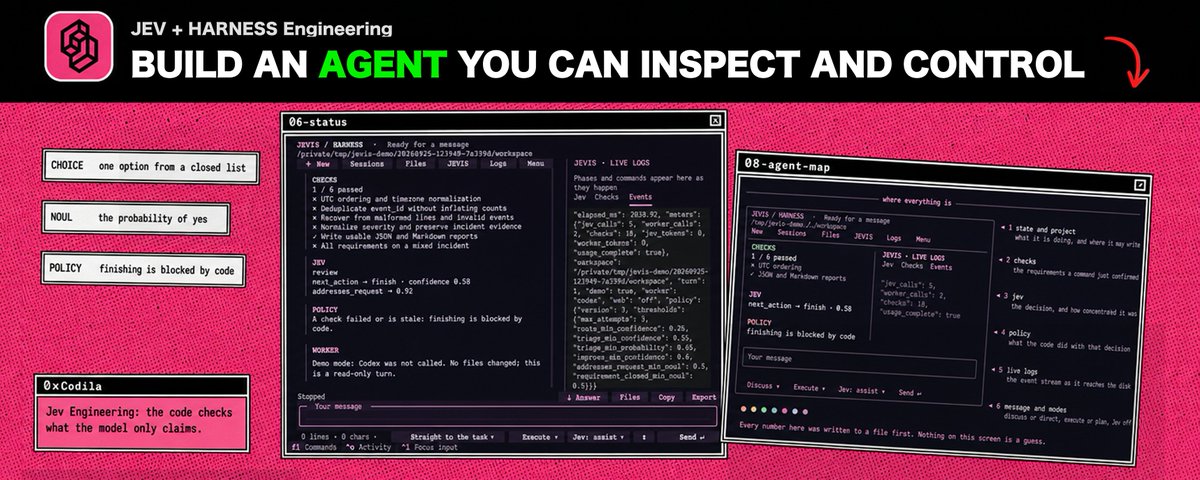
It is becoming f*cking dangerous: the NSA's own reverse-engineering tool now plugs straight into Claude Code - Ghidra has 94k stars, and GhidraMCP lets your agent read a compiled program instead of guessing what it does
Install Ghidra 12.1.4 from ghidra-sre,org (free, released by the NSA)
Download the GhidraMCP release and add it in File -> Install Extensions
Restart Ghidra and switch on GhidraMCPPlugin in File -> Configure -> Developer
Connect it: claude mcp add ghidra -- uvx --from git+github.com/LaurieWired/Ghidr… ghidra-mcp
Open a binary you're allowed to analyze and let Ghidra run its analysis
Ask Claude what a function does: it decompiles it, renames the variables and explains it in plain English
Ask for the map: every function, import, string and cross-reference, and where the interesting code lives
The decompiling runs in Ghidra on your machine, Claude just drives it
Malware samples, old firmware, your own builds: your agent reads the program itself, not the docs about it
Find the repo in the reply below

Joel Mackey retweeted

BREAKING: Newly released bodycam footage from the Butler, PA rally shows police officers losing it, slamming the Secret Service for ignoring their requests.
Holy sh*t.
"I f**king told them they needed to post the guys f**king over here... the Secret Service... I told them to post f**king guys over here," an officer was heard saying.
"What the f**k? I wasn't even concerned about it because I thought someone was on the roof," another officer said.
"Why were we not on the roof?"
The newly released footage also showed a new angle of Crooks' body on the roof.
The USSS is a total joke.