
senior scientist, PhD 2000 meteorology & oceanography (Utrecht Univ., NL). WMO O3/UV SAG, AGU, EGU, EUMETSAT roadmap AI/ML, WMO expert team nowcasting Africa
tweets and opinions are always personal …
Joined July 2010
- Tweets6.3K
- Following119
- Followers592
- Likes1.4K




Pinned Tweet
This expanding list of essays discussing emerging problems with science and scientific research will serve as a pinned tweet for a long time.
dr. Jos PhD retweeted

School trained us for twenty years to find the one right answer. AI now does that part. The two skills that are left are the ones nobody taught: how to cross-examine an answer until it breaks, and how to hold a problem with ten variables without collapsing it to one.
1/ I think the two most important skills in the age of AI are Socratic Dialogue and Multivariate Thinking. Neither is taught anywhere. Both used to be optional. Now they are the job.
2/ Socratic dialogue first. Most people use a model like a vending machine. Question in, answer out, done. The people getting 10x out of these tools treat the first answer as an opening statement, not a verdict. What are you assuming? What evidence would change this? Under what conditions does it fail? What am I overlooking? That is not prompt engineering. It is the oldest intellectual method we have, pointed at a new interlocutor.
3/ That last question flips the direction, and it is the one almost nobody asks. The most valuable thing a model can do is play Socrates to you. Hand it your plan and tell it to find the contradiction before your board does. Most people never get there, because they are using AI to confirm rather than to interrogate.
4/ The second skill is harder, because school spent twenty years training it out of us. Find the one right answer. Fill in the bubble. Pick the metric. Good or bad, 1 or 0. But almost no real problem is univariate. Pricing, hiring, a product bet, an org design: each is a dozen variables that trade against each other and, worse, change each other. Ship faster and reliability pays for it. Fix one team’s incentives and the team next to it starts behaving differently. The best answer is a frontier, not a point.
5/ Here is what AI changes. A human can hold four or five variables in their head at once, so we collapsed problems to one. Not because the problems were simple, but because we were. A model can hold all twelve, map how they trade, and show you the frontier in seconds. The constraint that forced univariate thinking is gone.
6/ What it cannot do is tell you where on that frontier to stand. That is a values question, and no amount of compute answers it. AI will compute the tradeoff. It will not tell you what you are willing to trade. Which is why these two skills are really one: keep asking until the binary dissolves, then own the choice that is left.
7/ None of this is an argument for more prompting. Execution should run in systems where the model finds the work and you are not in the loop. But those systems get designed in dialogue, and what they surface is never a 1 or a 0. The skills move up a level. They do not go away.
With the disintegration of the Antarctic stratospheric vortex a remnant thin in total ozone has moved to the southeastern Atlantic, resulting in a UV index of 14+ at 60 degrees South/5 degrees East (rounded locally even a UV index of 15). Extremely high but only for a few days.

1
47
dr. Jos PhD retweeted

Best nuttig zo nu en dan de relatieve positie van de EU27 op het wereldtoneel onder ogen te zien. #grafiekvandedag

Weermodellen op een termijn van twee weken zijn fascinerend vanwege hun onvoorspelbaarheid. Ze bieden primair inzicht in de chaotische natuur van het weer op die termijn. Twee opeenvolgende resultaten van het ECMWF AI weermodel voor 5 december 12 UTC.


49
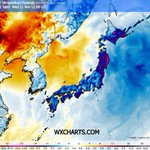
het was koud in Japan de afgelopen dagen.


🥶Early #cold records in #Hokkaido, Japan (11 Nov 2026):
Asahikawa: 🌡️−12.5°C — earliest ≤−12°C reading by 11 Nov in ~120 years (−13.0°C on 11 Nov 1906).
Horokanai: 🌡️−20.2°C — Japan’s earliest sub−20°C reading, breaking the 1988 record. Diamond dust observed.


35

dr. Jos PhD retweeted

I'm seeing increased organization of science academies to push government on issues.
I do not expect it to end well.
If the academies act like just another advocacy network they will deepen public distrust in science and lose government support.
nasonline.org/news/s20-press…

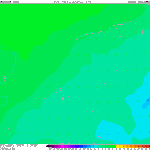
EUMETSAT MTG kleurencomposiet satellietbeeld van nachtelijke mist (gifgroen, 3-6 UTC; alleen bruikbaar 's nachts). Een dunne mistlaag: de Veluwe en Heuvelrug steken er bovenuit. De paarse plekken zijn thermische anomalien van industriele warmtebronnen (quiz: welke zijn te zien?).
1
96
dr. Jos PhD retweeted

Image of the Week: MTG-I2 in action! 🛰️
Last week we revealed the 1st visuals from MTG-I2 just over 2 months after launch.
Captured on 3-4 Nov this video shows convective clouds building over the NW Sahara, transitioning from true-colour to high-res visible & infrared imagery🧵
The 2026 Antarctic stratospheric vortex was stable and cold. Favorable for lots of ozone destruction but that did not materialize. Late to start, by the end of September it ran out of time for a deep ozone hole. The reason: much less ozone depleting substances than 25 years ago.

2
45
Bakken aan regen verwacht in vrijwel alle Europese regio's grenzend aan de Middellandse Zee de komende twee weken.

2
64
dr. Jos PhD retweeted

Before the Moho, there was the bora rotor 🌀
Andrija Mohorovičić is famous for discovering the crust–mantle boundary (1910).
Less known: about twenty years earlier, as a professor at the Royal Nautical School in Bakar, he published what appears to be the first drawing of a complete atmospheric rotor, including the reversed flow at the surface. It was in the bora (bura).
On 18 October 1888, during bora, he saw a large cumulus sitting still over Bakar Bay while clouds above it raced away in strong northeasterly flow. New cloudlets kept forming on one edge and fragments evaporated on the other, which meant rising air on one side and sinking air on the other. Surface winds over Rijeka Bay blew back against the bora. His conclusion was that the air was rotating about a horizontal axis.
The note appeared in Meteorologische Zeitschrift in 1889, with commentary by editor Julius von Hann, and was translated into English the same year. Hann, Wegener and Küttner all cited it.
Then the diagram, printed in a separate appendix, was forgotten until it was rediscovered in 2005.
Twenty years later Mohorovičić used the same approach, careful observation followed by physical reasoning, and found the Moho.
📄 Grubišić, V. & Orlić, M. (2007): Early observations of rotor clouds by Andrija Mohorovičić. Bull. Amer. Meteor. Soc., 88(5), 693–700. doi.org/10.1175/BAMS-88-5-69…
Animation: GPT6 Astra
#bura #bora #Mohorovičić #meteorology #HistoryOfScience
dr. Jos PhD retweeted

More data from the SMILE mission have just been released. Here are the images reprocessed into a polar projection. A stunning substorm progression can be seen with multiple onests spreading east, west, and poleward. These views are incredible!
dr. Jos PhD retweeted

A moment of silence for the NAM forecast model which is retiring tomorrow morning after 20 years.
dr. Jos PhD retweeted
Ik roep het al een tijdje. Nu concludeert de overheid het zelf ook: het overgrote deel (80%) van de 'klimaatwinst' door reductie van CO2-emissie in de NL industrie sinds 2021 is gevolg van productiedaling en is dus feitelijk slechts verplaatsing van emissies.
#grafiekvandedag

dr. Jos PhD retweeted

The jaw-dropping Sentinel-2 satellite pass of 190 MPH Hurricane Melissa, on this day in 2025.

dr. Jos PhD retweeted

A year ago I made this wild animation of Hurricane Melissa.
It broke my brain a little.
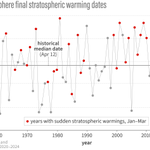
Er is wat "gedoe" over een mogelijk op hande zijnde verstoring van de polaire stratosferisch vortex en verzwakking van westenwinden (correct) en het opbreken ervan (incorrect). Het gaat primair om een verschuiving en een mogelijke tijdelijke splitsing ...
1
101

