







John Ababseh retweeted

Alexandr Wang says Meta has been working on Muse since February. the prototype took 1-2 weeks.
but they spent 7 months on this:
> 100+ specific agent behaviors were tracked in a spreadsheet
> each with its own eval and a launch-blocking threshold
> it was only after Muse Spark 1.3 that all 100 were green
> under 200 people across model + product
this explains the 7 month gap. OpenClaw had a magic moment but broke all the time, so most people just dropped it.
Meta understood from OpenClaw’s lesson that reliability IS the product. whether it holds up for millions of users is another story though.
I remember when it was so tedious trying to get the perfect clips in CoD, now we can just use the expert Clip in the @Auto_GPT platform

A few of you were asking how I've been making these videos.
The truth is, I'm not the one making them. It's all handled by my expert "Clip" on the AutoGPT Platform.
I literally just text him and describe the video concept and he edits it together. His outputs never fail to blow my mind!
He's a video showing how it's done (also make by Clip!)
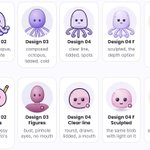
At @Auto_GPT we wanted our AI Experts to be a rock in your work life, so we made them rocks. Which one would you want on your desk?
It took multiple rounds and a few museum trips to get here. One round got called scary 😅
Every round, including the final version: agpt.co/blog/designing-otto-…
@nicktindle on our team has been 3D-printing some amazing figurines (here's an early preview), and we're bringing some to our booth at @github Universe in San Francisco on October 28 and 29. Come say hi.

Maria, our SEO Expert, even wrote the search title for the blog post about her own design. Try her and the rest of our Experts free for 7 days: platform.agpt.co/signup?plan…

The biggest challenge for me was finding the balance between cute, unique, and trustworthy enough for business owners to hand over real work. Grok Bot and Muse get to be cute because a household name carries the trust. What stuck came from different artworks at the Guggenheim in Bilbao.

We tried soft drops, calm busts, round line drawings, cut paper, and drawn people. One of our engineers said the drawn people looked scary, like a support bot that never actually works.

John Ababseh retweeted

The first autonomous agent grew up.
Meet your AI team: AutoGPT.ai

We've been heads down refining Otto and the Experts, help you manage your business and handle tasks.
What would you hand off first? Reply and I'll tell you which expert I'd put on it. AutoGPT.ai

John Ababseh retweeted

I resigned from Anthropic today. I spent the last three years doing pretraining research at both OpenAI and Anthropic. Neither company is acting responsibly. They are racing straight to self-improving superintelligence and gambling with our lives. More thoughts below.
John Ababseh retweeted

wrote down some of the design thinking behind Grok Bot.
persistent roles, clear state, scoped context, coordinated teams — an interface designed to move you from operating AI to delegating work.
x.ai/news/designing-grok-bot
John Ababseh retweeted

We were just targeted by a very convincing phishing attack against our X account.
With how easy it is to spin up a realistic clone of a website with AI now you've got to be really vigilant.
These are getting more and more believable each day.
Be careful out there!
John Ababseh retweeted

SpaceXAI engineer (ex-Cursor):
"I've got 15-25 GrokBot agents running right now. they cover most of what used to be my week
there's a Chief of Staff sitting on top of them. it knows every other bot I have and routes the work itself"
in a 50-minute podcast, a SpaceXAI engineer walks through building a team of agents that keeps working while you sleep
worth more than a $500 course on agentic engineering
watch today, then read how to build your own Grok agent team from scratch in the article below


John Ababseh retweeted

The problem with AI-generated code isn’t getting it written.
It’s deciding what deserves to be merged.
I joined @github to discuss what AutoGPT has learned about agent instructions, CI gates, and keeping humans in control of open-source contributions.
youtube.com/watch?v=Ro_VMXWb…

We built the first autonomous agents and grew a huge audience, and we've still only touched the surface of getting it in front of the right customers.
You'd work with a small team that ships quickly, watch your work show results fast, and the role is fully remote (sounds like a dream job)! Check out our website (agpt.co) and apply now 🚀
We’re hiring a Contract GTM Lead at AutoGPT.
We need someone hands-on who can find the channels and messaging that work, then turn them into repeatable growth.
If you’re an experimental GTM operator who cares more about outcomes than playbooks, apply ↓
auto-gpt.notion.site/Contrac…

It's so easy to get lost in your work and to not have agents constantly doing work for you. Putting them to work requires input, or thinking, or yourself "always being on." This is great for dreamers and tinkerers, but remember what in life is worth living for and make room for planting your feet in grass.
John Ababseh retweeted

Harvard and MIT Researchers Simulate the Entire Planet with 8.3 Billion AI Personas
It is big.
In a development that feels straight out of science fiction, a large collaborative team led by researchers from Harvard University and the Massachusetts Institute of Technology has unveiled MatrAIx: a population-scale AI simulation infrastructure designed to model the behavior of virtually every person on Earth.
MatrAIx centers on Persona 8B, a dataset containing 8.3 billion unique digital profiles. Each persona is defined across 1,290 categorical dimensions that capture everything from demographic background and psychological traits to spending habits, technical literacy, behavioral quirks, and lifestyle preferences.
I am using Persona 8B quite a bit and it is interesting.
The system is not merely a static database. Researchers bring these personas to life as agents powered by frontier large language models, including. These agents can then be dropped into four distinct digital environments: surveys, AI chat interfaces, live web browsing, and native desktop and mobile applications.
How MatrAIx Works
Persona 8B was constructed using a sophisticated dependency graph that preserves realistic correlations between attributes. Some records are synthetically generated while others are carefully extracted and grounded in real human data from biographies, reviews, surveys, and consented self-reports.
For practical research use, the team has released a high-quality coreset of approximately one million personas.
Once activated, the agents interact with real digital products and systems. Researchers have already run more than 18,000 evaluation trials across 1,010 tasks spanning commerce, software, finance, healthcare, and more than 20 other domains. The system records granular behavioral signals — how long an agent hesitates after a price increase, when it abandons a broken checkout flow, how much latency it will tolerate before closing an app, and whether it continues after an AI assistant fails.
Strong Validation Results
In a controlled study of 400 trials measuring adherence to ten behavioral attributes across all four environments, the agents successfully expressed or correctly suppressed their assigned traits 91.5 percent of the time. Human judges also rated the quality of the human-grounded personas highly (average 4.135 out of 5).
These results suggest that MatrAIx can generate coherent, demographically and psychologically consistent simulated users at a scale previously impossible.
Implications for Research and Business
Traditional market research and user testing are slow, expensive, and limited in sample diversity. MatrAIx offers a complementary approach: the ability to simulate how billions of different types of people might react to a new product feature, pricing change, interface redesign, or AI system — overnight, on a single server.
Product teams could stress-test ideas before expensive real-world launches. Researchers studying human-AI interaction could explore rare behavioral edge cases. Policymakers and social scientists might model the downstream effects of new technologies across highly diverse populations.
The project is open source. Code is available on GitHub, a project website has been launched at matraix.ai, and the one-million-persona coreset is being released for broader research use.
MatrAIx is not intended as a replacement for real human feedback. The researchers emphasize that it is a powerful tool for exploration, hypothesis generation, and large-scale stress testing.
As the underlying language models improve and the persona models grow more sophisticated, the fidelity of these digital populations is expected to increase further.
For now, the system represents one of the most ambitious attempts yet to create a usable, population-scale digital mirror of humanity a simulation infrastructure that lets us ask “what if” at planetary scale before deploying them in the real world.

John Ababseh retweeted

Vibe Coding Is the New Product Management
“There’s been a shift—a marked pronouncement in the last year and especially in the last few months—most pronounced by Claude Code, which is a specific model that has a coding engine in it, which is so good that I think now you have vibe coders, which are people who didn’t really code much or hadn’t coded in a long time, who are using essentially English as a programming language—as an input into this code bot—which can do end-to-end coding.
Instead of just helping you debug things in the middle, you can describe an application that you want. You can have it lay out a plan, you can have it interview you for the plan. You can give it feedback along the way, and then it’ll chunk it up and will build all the scaffolding.
It’ll download all the libraries and all the connectors and all the hooks, and it’ll start building your app and building test harnesses and testing it. And you can keep giving it feedback and debugging it by voice, saying, “This doesn’t work. That works. Change this. Change that,” and have it build you an entire working application without your having written a single line of code.
For a large group of people who either don’t code anymore or never did, this is mind-blowing.
This is taking them from idea space, and opinion space, and from taste directly into product. So that’s what I mean—product management has taken over coding. Vibe coding is the new product management.
Instead of trying to manage a product or a bunch of engineers by telling them what to do, you’re now telling a computer what to do. And the computer is tireless. The computer is egoless, and it’ll just keep working. It’ll take feedback without getting offended.
You can spin up multiple instances. It’ll work 24/7 and you can have it produce working output.
What does that mean? Just like now anybody can make a video or anyone can make a podcast, anyone can now make an application. So we should expect to see a tsunami of applications. Not that we don’t have one already in the App Store, but it doesn’t even begin to compare to what we’re going to see.
However, when you start drowning in these applications, does that necessarily mean that these are all going to get used or they’re competitive? No. I think it’s going to break into two kinds of things.
First, the best application for a given use case still tends to win the entire category. When you have such a multiplicity of content, whether in videos or audio or music or applications, there’s no demand for average.
Nobody wants the average thing. People want the best thing that does the job. So first of all, you just have more shots on goal. So there will be more of the best. There will be a lot more niches getting filled.
You might have wanted an application for a very specific thing, like tracking lunar phases in a certain context, or a certain kind of personality test, or a very specific kind of video game that made you nostalgic for something. Before, the market just wasn’t large enough to justify the cost of an engineer coding away for a year or two. But now the best vibe coding app might be enough to scratch that itch or fill that slot. So a lot more niches will get filled, and as that happens, the tide will rise.
The best applications—those engineers themselves are going to be much more leveraged. They’ll be able to add more features, fix more bugs, smooth out more of the edges. So the best applications will continue to get better. A lot more niches will get filled.
And even individual niches—such as you want an app that’s just for your own very specific health tracking needs, or for your own very specific architectural layout or design—that app that could have never existed will now exist.”
As AI makes execution cheaper, the bottleneck moves upstream: Can you define what “good” means precisely enough for agents to build it and independently verify it?
The next generation of software builders may spend less time writing every step and more time designing the rules, checks, and feedback loops
Prompts with well-scoped, hard requirement gates matter so much right now for engineering with AI agents.
Fable, Opus 5, and GPT-5.6 Sol will all run for 5+ hours and deliver essentially anything you can specify to a very high level of quality - so long as you take the time to define your requirements carefully, include a hard rule that all work must be checked against them by separate critique agents, and require those agents to give a direct pass on 100% of the listed requirements before the work is returned to you.
This, combined with running your agents in an always-on cloud environment or on a dedicated always-on machine, with no human-in-the-loop permission gates, is so incredibly effective that I’m struggling to wrap my head around it.