

Defi @auros_global| ex-US equity options mm | ex-fellow @panteracapital @areta_io | nfa If you look around the table and there is no fish, you are the fish 🎣
?
Joined June 2013
- Tweets462
- Following1.5K
- Followers1.4K
- Likes4.3K






Pinned Tweet
While @chameleon_jeff could be right that extra transparency improves execution specifically for whales (which implies rather non-toxic flow), this is generally untrue for larger institutional investors (especially if the known counterparty is very smart).
Additionally, while ideologically sound, I’m also personally unconvinced that a fully transparent orderbook (“L4”) with complete information (public and private) is the best solution long term for everyone (sorry not sorry @HyperliquidX)
Obviously every mm I know is willing to size up against @JamesWynnReal but imagine if you know the other side of the trade is RenTech, are you really sizing up the other side?
As @fiddybps1 pointed out as well, there is actually the opposite trend going on in TradFi with increase in dark pools activity over last few years (majority of US Equities trading now happens off-exchange in dark pools) and rise of RFQ/OTC platforms such as @Tradeweb where institutional investors could get much more tailored liquidity anonymously
Jeff makes the example of ETF rebalancing in TradFi (again non-toxic flow) being able to get deep liquidity. It is worth pointing out that even ETFs these days have strong preference for RFQ/OTC platforms such as @Tradeweb doing whole baskets of instruments (some of these bond ETFs have thousands of instruments both liquid and illiquid) via RFQs or a Portfolio-Trade (PT) where they can achieve even deeper and tighter liquidity than executing directly via an orderbook
A lot of people I know personally came to crypto/web3 to escape from the likes of Meta/Instagram/Facebook harvesting their personal data, misappropriating this information, and having these targeted ads on them. However, sophisticated market makers/prop firms can do the same with your public trading data - training models on your trading data/trading behavior. For example, it is possible they may even push prices against you if they can manipulate your trading behavior, readily being there in size on the other side when you are ready to puke - is this really the liquidity that you want?
In my view, having full transparency is akin to playing a hand of poker with your cards facing up. Obviously if your hand is bad, everyone willing to size up against you. (btw have you guys checked out the traders PnL data on HL dashboard?) However if you have a good hand or is known to be a really smart player, no one wants to play with you and you probably wouldn’t want to be playing with your cards facing up the first place.
I for one like to play poker with my hand facing down.

Why transparent trading improves execution for whales
Throughout Hyperliquid’s growth, skeptics questioned the platform's ability to scale liquidity. These concerns have been resolved now that Hyperliquid is one of the most liquid venues globally. With Hyperliquid’s adoption by some of the largest traders in crypto, discussion has shifted to concerns around transparent trading. Many believe that whales on Hyperliquid are:
1) frontrun as they enter their position
2) hunted because their liquidation and stop prices are public
These concerns are natural, but the opposite is actually true: for most whales, transparent trading improves execution compared to private venues.
The high level argument is that markets are efficient machines that convert information into fair prices and liquidity. By trading publicly on Hyperliquid, whales give market makers more opportunity to provide liquidity to their flow, resulting in better execution. Billion dollar positions can have better execution on Hyperliquid than on centralized exchanges.
This post covers a complex line of reasoning, so it may be more compelling to start with a real-world example from tradfi to demonstrate this universal principle. After all, actions speak louder than words.
Example
Consider the largest tradfi ETFs in the world that need to rebalance daily. Examples include leveraged ETFs that increase positions when prices move favorably and decrease positions in the other direction. These funds manage hundreds of billions of dollars in AUM. Many of these funds choose to execute on the closing auction of the exchanges. In many ways this is a more extreme version of whales trading publicly on Hyperliquid:
1. These funds’ positions are known almost exactly by the public. This is true on Hyperliquid as well.
2. These funds follow a precise strategy that is public. This is not true on Hyperliquid. Whales can trade however they want.
3. These funds trade predictably every day, often in massive size. This is not true on Hyperliquid. Whales can trade whenever they want.
4. The closing auction gives ample opportunity for other participants to react to the ETFs’ flows. This is not true on Hyperliquid, where trading is continuous and immediate.
Despite these points, these ETF managers opt into a Hyperliquid-like transparency. These funds have full flexibility to make their flows private, but proactively choose to broadcast their intentions and trades. Why?
History of transparency in electronic markets
A complementary example is the history of electronic markets. As summarized above, markets are efficient machines that convert information into fair prices and liquidity. In particular, electronic trading was a step-function innovation for financial markets in the early 2000s. Prior trading occurred largely in trading pits, where execution quality was often inconsistent and spreads wider. With the advent of programmatic matching engines transparently enforcing price-time priority, spreads compressed and liquidity improved for end users. Public order books allowed market forces to incorporate supply and demand information into fairer prices and deeper liquidity.
The spectrum of information
Order books are classified by their information granularity. Note that L0 and L4 are not standard terminology, but are included here as natural extensions of the spectrum.
L0: No book information (e.g. dark pools)
L1: Best bid and offer
L2: Levels of the book with price, total size of level, and optionally number of orders in the level
L3: Individual anonymized orders with time, price and size. Some fields including sender are private
L4 (Hyperliquid): Individual orders with complete parity between private and public information
Each new level of order book granularity offers dramatically improved information for participants to incorporate into their models. Tradfi venues stop at L3, but Hyperliquid advances to L4. Part of this is necessity, as blockchains are transparent and verifiable by nature. However, I argue that this is a feature, not a bug.
Zooming out, the tradeoff between privacy and market efficiency spans the full spectrum from L0 to L4 books. On this scale, L3 books can be viewed as an arbitrary compromise, not necessarily optimal. The main argument against L4 books is that some strategy operators prefer privacy. Perhaps there is some alpha in the strategy that is revealed by the order placement. However, it’s easy to underestimate the sheer talent and effort going into the industry of quantitative finance, which backs out much of these flows despite anonymized data. It’s difficult to enter a substantial position over time without leaking that information to sophisticated participants.
As an aside, I believe financial privacy should be an individual right. I look forward to blockchains implementing privacy primitives in a thoughtful way in the coming years. However, it's important not to conflate privacy and execution. Rather than hand-in-hand concepts, they are independently important concepts that can be at odds.
How market makers react to information
One might argue that some privacy is still strictly beneficial. But privacy is far from free due to its tradeoff with execution: toxic flow can commingle with non-toxic taker flow, worsening execution for all participants. Toxic flow can be defined as trades where one side immediately regrets making the trade, where the timescale of "immediate" defines the timescale of the toxicity. One common example is sophisticated takers who have the fastest line of communication between two venues running toxic arbitrage taker strategies. Market makers lose money providing liquidity to these actors.
The main job of a market maker is to provide liquidity to non-toxic flow while avoiding toxic flow as much as possible. On transparent venues, market makers can categorize participants by toxicity and selectively size up to provide as a non-toxic participant executes. As a result, a whale can quickly scale into a large position faster than on anonymized venues.
Summary
Finally returning to the example of ETF rebalancing, I imagine the conclusion of rigorous experimentation confirmed the points above. Addressing the specific subpoints in the introduction:
1) A transparent venue does not lead to more frontrunning than private venues. Rather, traders with consistently negative short term markouts benefit by broadcasting their autocorrelated flow directly to the market. Transparent venues offer a provable way for every user to benefit from this feature.
2) Liquidations and stops are not “hunted” on transparent venues more than on private venues. Attempts to push the price on a transparent venue are met with counterparties more confident to take the mean reversion trade.
If a trader wants to trade massive size, one of the best things to do is tell the world beforehand. Though counterintuitive, the more information that is out there, the better the execution. On Hyperliquid, these transparent labels exist at the protocol level for every order. This enables a unique opportunity to scale liquidity and execution for traders of all sizes.
Instead of fighting the banks and brokers, a common approach is to just kiss the ring and give them control
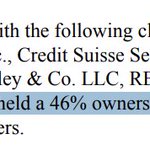
That was essentially what @Tradeweb did to survive and win the market - a collection of "Bank Stakeholders" owned 46% of the company prior to their IPO


story time 👇
i started my career on a derivatives desk at @keybank, first as an interest rate quant, then commodities.
rates had already been electronified. but commodities were still in the dark ages. there was no platform that could handle the complexity of an OTC commodity swap/option, and it drove me fucking crazy.
so i decided to build one. that was the first janky version of @tradeparadigm
then, through a series of very fortuitous events (that is s separate post by itself), i realized the better bet was to build that platform for crypto.
i could spend my years fighting the banks and the brokers, or be a first mover in a market that desperately needed the infrastructure.
i chose the latter.
i chose options because spot was already commoditized. the offshore exchanges had already won spot. and there was no way i was launching a derivs exchange being in the US
options had literally no infrastructure
10 guys in a Telegram pit negotiating and crossing prices on @deribit.
Paradigm had such great product market fit that for the first 2 years it was literally just 3-4 of us. and it was born out of this unrelenting motivation that traders shouldn't need to compromise.
trade anything. with anyone. settle anywhere.
Paradigm solved price/size/immediacy and privacy, which has allowed us to grow into critical market infrastructure for institutional traders. one of the coolest things is to walk on to a trading floor of the biggest firms in the world and see Paradigm on traders' desktops.
that is why we are 30% of Deribit.
but we could never solve the "anytime" because we didn't control listing new products.
markets close, and the products we can list are constrained by the venues that list them.
@paradex solves that.
24/7 options on everything, with no limit and no dependency on what we can add next. crypto, commodities, equity indices. everything, all the time.
today i put on a crude oil call spread on @paradex.
10+ years after i set out to build a platform where traders never need to compromise
that's the full fucking circle.
and this is just the beginning.
Paradexio ✊

2
11
636
Will Meng retweeted

It's only dead if you give up
I'm not giving up on privacy. I'm doubling down.
firefly.social/post/x/210138…
Frequently get asked why privacy is important
Idk about you but I certainly wouldn’t want anyone hunting my shorts
Have fun playing poker with your cards up @GarrettBullish

If you are willing to hunt this dude's $ZEC short with size, drop a DM, setting up a team right now and already got good size.
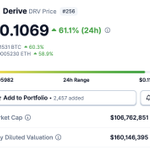
What an inflection point for @DeriveXYZ
Very well deserved, congrats to @ksett13 and team!
Today Derive is gaining on CeFi options, tomorrow it will be TradFi options
Sky is the limit

This moment feels like an origin story for @DeriveXYZ
5 years of persistence. Infrastructure that scales well beyond the walls of crypto. Shipping repeatedly, consistently…and then finally: traction 🧵

Will Meng retweeted

Auros (@Auros_global) is a leading algorithmic trading firm and strategic market maker. Auros supports projects end-to-end across their growth cycle, spanning DeFi and CeFi liquidity, OTC execution, treasury support, and incubation.
Meet our Platinum Sponsor at TOKEN2049 Singapore, 7–8 October.

dear @chameleon_jeff, you still ain’t called or wrote, I hope you have a chance
I ain’t mad, it must be tough to answer all the fans
if you didn’t want to talk to me on twitter, you didn’t have to
but you coulda left a note for @Turtle_Lair and his crew
that’s the author of the paper man, he’s passionate just like you
we want to advance the protocol man, he did more work than I do
I ain’t that mad though, I just don’t want the public being mislead to
remember in your last post? you said look forward to continuing that discussion
now fourteen months, that's a hell of an intermission
see, I’m just like you in a way: I never liked no TradFi neither
they’re used to rehypothecation and no fair access guarantee sir
I can relate to what you’re sayin in your songs
but building house of finance for all, many things can go wrong
see, everything you say is real, and I respect you 'cause you tell it
Tradfi’s jealous because Hyperliquid is 24/7
but institutions don’t like HYPE like we do, Jeff, not everyone does
they don't know what it’s like shaping finance for all ground up
we gotta figure out this transparency thing man, we’ll be the biggest platform all will ever use
sincerely yours, PS: we should TWAP together too

dear @chameleon_jeff, i wrote you but you still aint calling,
i wrote my address, my discord handle and my twitter handle at the bottom,
i sent two dms to back in autumn, you must of not got em,
there was probably a problem with the points system or something,
but anyways whats up with season 3?
i know you hear this everyday but im your biggest fan,
I got room full of your posters and your pictures man,
I like how you keep teasing us with farming these protocols, i hope something dope happens in singapore,
anyways i hope you get this man, hit me back, just to chat truly yours, your biggest fan.
P.S Hyperliquid
3
26
11,428

Will Meng retweeted

of course you can't, thats why impact is very useful.
I agree that what we found is because of segmentation rather then execution style, that is what we say at the end.
the problem with measuring liquidity with last hook is that in principle you only know it when you execute
Will Meng retweeted
Author here. i agree
teapawt.org/Turtle_Lair/status/209…

Hey @chameleon_jeff did you actually read the paper you just shared here sir?
First of all, the paper directly states that "During the active TWAP window, relative spreads are about 0.28 basis points higher than in the placebo comparison" suggesting that overall exchange liquidity may be worse during active TWAPs for everyone else despite possibly improved execution for the party involved.
Additionally, the paper points out that "86.6% of orders are generated by taker addresses that exclusively use one of the two mechanisms" and explicitly says that results should be interpreted as "an equilibrium comparison between visible and latent execution regimes, rather than a randomized treatment of order visibility".
What does this mean exactly?
It suggests that traders who select into TWAPs have lower impact, likely because uninformed flow self-selects into announcing and not that a given trader improves their execution by announcing.
In fact, as the authors seem to suggest, it is actually the segregation of flow that results in better execution. Note, there are many other ways to achieve flow segregation that do not involve transparency at all, and I will suggest two below:
1. Retail trading apps - Retail apps such as Robinhood and the introduction of PFOF (Payment for Order Flow) is one clear example. Note on Robinhood market makers do not get information on the account on the other side, and the orders are fully anonymous. However, MMs such as Jane Street are willing to pay for this flow. This order often execute inside the NBBO resulting in zero fees and better net execution quality for the retail users (exact PFOF numbers and improvements stats can be found on public Robinhood disclosures).
2. API/UI segregation - It is well known that retail taking flow from UI (user interfaces) are generally much less toxic compared to taker orders via API (sometimes referred to as "toxic takers"). Many exchanges recently including a host of both CeFi and DeFi venues have introduced RPI (Retail Price Improvement) orders or some flavor of these orders which are a type of maker orders that only matches with UI orders or offers some protection against "toxic takers". There are also plenty of public docs and visualizations on these over last couple of years published by venues that support these showing improved execution quality and much tighter RPI order quotes (or quotes available to UI traders) relative to regular maker orders.
While it could be true that fully transparent TWAP orders serve as a means of achieving order segregation and that this possibly leads to improved execution specifically for retail users or non-toxic flow using this mechanism (but as noted above this could also be achieved in numerous other ways), I do not believe it is the paper's conclusion (and a bit of a far stretch to claim based on this evidence) that transparency brings improved execution for all users. I for one am a believer that we can achieve flow segregation while retaining a certain degree of privacy.
Someone recently shared this paper with me, which rigorously studies the execution improvement of visible TWAPs on Hyperliquid: "Trading in the Sunshine or in the Shade: Market Impact and Adverse Selection on Hyperliquid," by Davide Barone and Fabrizio Lillo.
In physics, theorists can say all they want, but the case isn't closed until an experimentalist comes with the cold hard data. So thank you to the authors of this paper for their hard work! The paper demonstrates that liquidity net tightens as onchain TWAPs surface, improving the average execution of the TWAP order.
This has been a deeply personal question for me. Even before building Hyperliquid, I've defended from first principles that transparent trading ought to improve execution for non-toxic flow. This is a corrollary of the efficient market hypothesis, but the amount of pushback always surprised me. I've quote tweeted a previous post where I make the argument in detail.
Transparency and equal access bring improved execution over traditional private venues. It's an honor to build with everyone to upgrade the financial system with onchain technology.
Will Meng retweeted
On July 27 at 23:01 UTC, SKHYNIX mark price dropped from $1,127.9 to $917.25. This print was based on an executed trade which was relayed by multiple independent data providers. The XYZ oracle was live in external pricing and tracking that venue, which serves as the primary Korean pre-market venue. The oracle system worked as intended according to its specification.
While the system performed as designed, users are understandably upset about liquidations that were triggered. Market integrity is among Trade[XYZ]'s core values, and we understand the trust of our users has been, and will continue to be, earned.
With these values in mind, we have decided to cover liquidation losses attributable to this anomaly. Eligibility requirements will be conveyed soon, and distributions are anticipated to be completed in the coming days. This is a one-time discretionary decision and is not a guarantee of similar future action.
Going forward, our pricing systems will be further improved to handle tail events. We are accelerating our review of how prices are formed, including revisiting assumptions on external venues, and taking into consideration the price formation which occurs on our own orderbooks, which carry increasingly meaningful depth and signal in relation to external sources.
We will share further information soon.
1 in 30 of adult population collectively gets trillions of won margin called gambling in equities
Korea: Time to bring in the GOAT🫡
pcgamer.com/games/moba/faker…

1
6
679


Have personally been rooting for this team and this one stings
Always tough to see a team building consistently for a while get wiped by a likely preventable exploit
Especially as AI tools become increasingly powerful, systematically spotting vulnerabilities is easier than ever

An update on where things stand:
What happened
On July 15, Ostium’s LP (liquidity provider) vault was exploited for 23,752,746 USDC. Based on our ongoing investigation, the attacker compromised off-chain infrastructure related to the system that feeds prices into the protocol. The attacker then submitted illegitimate price reports that were manipulated to appear as valid, opening and instantly closing a series of large positions to extract an artificial profit from the vault. By design, trader collateral sits in a separate, isolated contract and is not affected, with all positions remaining open.
Our response
We are working with Mandiant, zeroShadow, Collisionless, and SEAL 911, alongside law enforcement, and coordinating with exchanges, bridges, and stablecoin issuers. Within 60 minutes of the first exploit transaction, we coordinated to pause trading and freeze all trading contracts. Currently, all of our engineering efforts are focused on isolating and hardening the infrastructure needed to enable a secure re-launch.
What is next
Impacted liquidity providers and the safe resumption of trading remain our top priority, and we are working around the clock towards the path forward. As a reminder, we will give at least 24 hours notice before trading contracts are unfrozen. Upon re-open, trader positions will be marked to the price at re-open, independent of interim price movements.
Please trust only official channels. We will never DM you first or ask for your keys, seed phrase, or funds.
If you have any leads, information, or resources to help with the investigation, reach us at: [email protected].
1
3
715
Already shared this a couple times recently but if you’re a Defi protocol security should absolutely be top of mind right now
auros.global/insights/securi…

1
221


This should really come without saying but protocols that want deep, reliable liquidity must first make themselves deeply trusted and reliable to liquidity providers.
2026 has already seen $500m+ in value extracted via hacks and exploits, and we still see this get overlooked time and time again.
While on-chain and smart contract security have without a doubt improved over the years, attack surfaces utilized by exploiters have also expanded.
As institutional capital moves on-chain, security shouldn't be just a checkbox - it is the foundation of durable liquidity/TVL and a core piece to the product itself.
Our latest article breaks down how protocol risks should be assessed, and why it should matter to every DeFi protocol.

Resilience is becoming a prerequisite for liquidity. Security is no longer just about audited code - it's governance, infrastructure dependencies, and operational resilience. Here's what protocols need to know to attract long-term liquidity 🧵
1/6

4
522